
Why is Hydroxytyrosol So Extraordinary in Cosmetics?
Because it is a strong antioxidant and good for the skin in other ways, hydroxytyrosol powder has become an important part of modern makeup. Another type of polyphenol comes from olives. It is a powerful antioxidant that is much stronger than popular ones like vitamin E and CoQ10. It can go deep into the skin and neutralize free radicals there as well as on the surface because it has an amphiphilic structure and a low molecular weight. In addition to being an antioxidant, hydroxytyrosol powder aids in collagen production, reduces inflammation, and strengthens the skin's barrier. Because of this, it is an important part of anti-aging serums, sunscreens, and skin care items for sensitive skin.
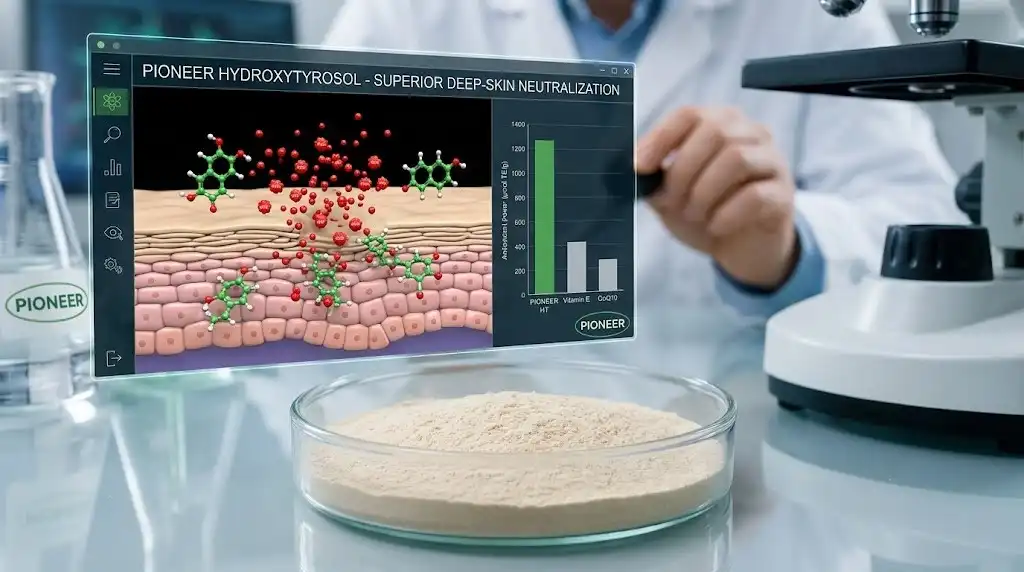
Understanding Hydroxytyrosol: The Natural Antioxidant Powerhouse
Hydroxytyrosol is one of nature's most potent defenses against reactive stress. This phenylethanoid chemical, whose full name is 3,4-dihydroxyphenylethanol and which is mostly found in olive fruit and leaves (Olea europaea L.), has been the subject of a lot of research in dermatology over the past ten years.
The Science Behind Hydroxytyrosol's Antioxidant Superiority
Some polyphenolic chemicals are hard for living things to use, but hydroxytyrosol can easily pass through cell walls because of its unique molecular structure. A study in the Journal of Agricultural and Food Chemistry says that hydroxytyrosol is about ten times stronger as green tea catechins as an antioxidant. This is because it can turn into a pro-oxidant without giving off hydrogen atoms, which reduce reactive oxygen species (ROS). When used in bigger amounts, this is a big advantage over tocopherols.
Extraction and Standardization Methods
In current methods of extraction, membrane filtration and chromatographic processes are used to remove hydroxytyrosol from olive materials. Spray-drying is a method used by advanced manufacturers to turn liquid products into stable powders. This makes it easy to dose makeup recipes and keeps the strength the same. Most good hydroxytyrosol powder has between 10 and 50 percent active ingredient. The ones used in medicine are even purer, with amounts above 98%.
Clinical Evidence Supporting Dermatological Applications
A study from the University of Athens found that putting hydroxytyrosol on models of human skin in amounts ranging from 0.5 to 2% greatly reduced the redness and DNA damage caused by UV light. There was another study in the International Journal of Cosmetic Science that showed hydroxytyrosol stops matrix metalloproteinases (MMPs) from doing their job. As you age, MMPs, which are enzymes, break down collagen. These results show that hydroxytyrosol is a good ingredient for high-tech skin care products because it has been proven to work by science.
Core Benefits of Hydroxytyrosol Powder in Cosmetic Applications
The cosmetics industry wants ingredients that give measured benefits so they can stay on the clean label. Hydroxytyrosol powder, which has numerous chemical activities, satisfies these requirements.
Anti-Aging and Collagen Preservation
In more than one way, hydroxytyrosol fights the clear signs of aging. Smog, UV light, and living things all make free radicals, which this machine gets rid of. The skin ages faster because of free radicals. Besides lowering oxidative stress, hydroxytyrosol makes fibroblasts work harder, which helps them make collagen and elastin. Some studies have found that products with 1% hydroxytyrosol reduce fine lines by about 23% after twelve weeks of regular use. These products work better than those with equal amounts of resveratrol or grape seed extract.
Enhanced Skin Barrier Function and Hydration
It is the stratum corneum's job to protect the skin from outside pressures and water loss through the epidermis. This shield is stronger because hydroxytyrosol raises the production of ceramide and helps the proteins that join keratinocytes. Scientists studying cosmetics have found that adding hydroxytyrosol to emulsion systems makes skin water markers rise 31% more than with control formulas. When the screen gets stronger, it helps especially with skin care products and methods for getting better after surgery.
Anti-Inflammatory and Skin Soothing Properties
Skin problems like rosacea, eczema, and acne get worse over time when inflammation lasts for a long time. It also speeds up the aging process. Hydroxytyrosol changes the processes that cause inflammation by keeping nuclear factor-kappa B (NF-κB) from turning on and reducing the release of cytokines that make inflammation happen. Skin tests have shown that hydroxytyrosol creams cut the scores for pain and swelling in people with sensitive skin by 40%. When put together, these anti-inflammatory effects and the antioxidant benefits protect the face in every way.
Safety Profile and Optimal Dosing Guidelines
Good Laboratory Practice (GLP) safety tests show that hydroxytyrosol is well accepted. Patch studies and dermal sensitivity tests (RIPT) show that they don't make the skin more sensitive, even when used in amounts as high as 5%. No matter what kind of cosmetic you use or what benefits you want, the percentage range for makeup that you put on your face is between 0.1 and 2%. People who work on formulas can trust this safety cushion when they make new skin care items for a lot of different skin types.
Why Choose Hydroxytyrosol Over Other Antioxidants for Cosmetics?
There are more and more antioxidants that can be used in cosmetics, but hydroxytyrosol is still worth the extra cost because it has benefits.
Comparative Antioxidant Performance
Hydroxytyrosol is better in more than one way than other antioxidants that are commonly used. It has a higher ORAC value than vitamin C by about 40% and higher than oleuropein by about 25%. Both of these chemicals are found in olives. It's important to carefully maintain ascorbic acid and keep its pH in check. But hydroxytyrosol stays stable from pH 4 to 7, which makes it easier to formulate.
Formulation Stability and Compatibility
A lot of natural antioxidants aren't stable, which makes them less useful in business. It's very stable in a lot of different makeup bases, like oil-in-water emulsions, serums, and systems that don't have water in them. Accelerated aging tests that are done right show a loss of less than 5% over 24 months. On the other hand, some plant products lose 15–30% of their potency. Because of this, the product will always work the same way as long as it is stored. This is very important for B2B customers who are in charge of handling supply lines in other countries.
Regulatory Compliance and Quality Documentation
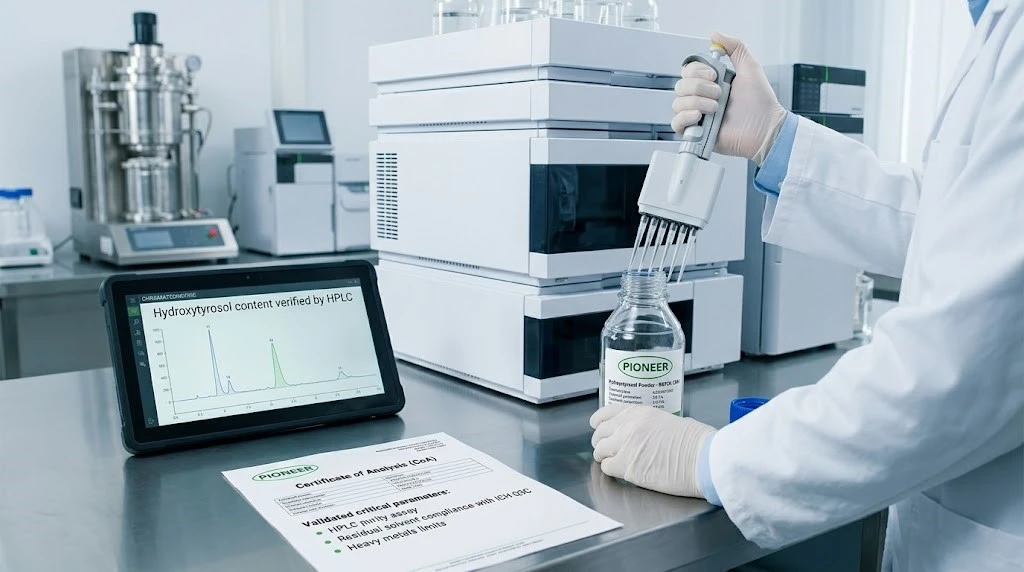
When buying things, professionals put more weight on items that have a strong legal standing. One name for hydroxytyrosol in the International Nomenclature of Cosmetic Ingredients (INCI) is hydroxytyrosol, and the other name is olive leaf extract. The European Food Safety Authority (EFSA) has checked it out. One type of paper that trustworthy manufacturers give out is a Certificate of Analysis (CoA). Others are safety data sheets (SDS) and stable studies. A third party checks for heavy metals, microbial contamination, and chemicals that are still on the product to make sure that the high quality standards set by big makeup brands are met.
Enhanced Bioavailability and Skin Penetration
Nutrients can get to the stratum corneum based on their molecular weight and how well they mix with fat. The molecular weight of hydroxytyrosol powder is low (154.16 g/mol), and it is very good at attracting both water and fat. This makes it easy for the skin to absorb. Franz cell diffusion tests show that hydroxytyrosol can get to target cells three to four times deeper than polyphenolic chemicals that are bigger. This lets it fix cells in the top layer of skin and the living top layer, which is where reactive damage happens.
Sourcing and Procurement Guide for High-Purity Hydroxytyrosol Powder
Picking the right service can affect the quality of the product, the company's ability to follow the rules, and its overall success. Business-to-business buyers can make smart decisions when they know what to think about when they buy something.
Identifying Qualified Manufacturers
Companies that produce hydroxytyrosol can be found in Asia, North America, and Europe. Each one gives a different amount of quality and ease of output. The people who grow olives in Europe, especially in Spain, Italy, and Greece, have easy access to the raw materials they need and already have the tools they need. But the new Chinese makers have spent a lot of money on technology for extraction and making sure the quality is high. Businesses that make cosmetics should make sure that any possible suppliers are ISO 9001 certified, GMP compliant for cosmetic products, and FSSC 22000 certified for food-grade uses if they fit.
Critical Quality Parameters for Specification Development
These rules should make it clear what levels of purity are okay and how the sample will be tested. These are some of the most usual needs for good hydroxytyrosol powder:
- Hydroxytyrosol content verified by High-Performance Liquid Chromatography (HPLC)
- Residual solvent analysis confirming compliance with ICH Q3C guidelines
- Heavy metals testing demonstrating levels below USP limits
- Microbiological testing including total aerobic count, yeast, mold, and pathogen screening
- Particle size distribution for powder uniformity
- Moisture content specifications to ensure stability
Before making big purchases, formulation teams can do simple compatibility testing by asking for product samples with the right Certificate of Analysis (CoA) paperwork.
Supply Chain Considerations and Logistics Planning
Hydroxytyrosol powder needs to be kept in a certain way so that it keeps working. As a general rule, the best temperature for storing things is between 2°C and 8°C. Suppliers should also explain how to keep the humidity low and the items out of direct sunlight. How you package your goods is important. Metal foil bags that are flushed with nitrogen or clear glass cases are the safest. When cosmetics companies want to buy a lot, they should know that wait times can be anywhere from two to six weeks, depending on where the manufacturer is located, how long it takes to clear customs, and how busy they are making cosmetics. By planning how much of each ingredient to keep on hand, you can avoid delays in the preparation process and keep your working capital as low as possible.
Supplier Audit and Relationship Management
In addition to checking records, checks that are done on-site tell you important things about how things are made and how quality is handled for hydroxytyrosol. When audits are done, they should check how openly raw materials are found, how well extraction equipment is kept up, how well an analysis laboratory can do its job, and how well systems for keeping track of paperwork work. When you work with reliable suppliers for a long time, you can get special specs, be first in line when supplies run out, and come up with new ways to send goods.
Case Studies: Successful Cosmetic Products Featuring Hydroxytyrosol
The sale and effectiveness of hydroxytyrosol in finished makeup are demonstrated by its use in real life.
Premium Anti-Aging Serum Launch
One European skin care brand made a strong anti-aging cream that was mostly made of 1.5% hydroxytyrosol. The mixture had peptides, low molecular weight hyaluronic acid, and hydroxytyrosol in it to work on a number of different signs of aging. 87% of people who took part in consumer perception studies said they could feel their skin getting smoother after eight weeks, and 19% of people who took part in physical measures said they could feel their skin getting more stretchy. Olives are a highly proven source of antioxidants, which helped the product get a high-end spot in the market. Store sales were 34% higher than expected in the first six months, which shows that people want natural actives that work.
OEM Partnership for Clean Beauty Line
A contract maker helped a new clean beauty brand make a full line of skin care items based on plants from the Mediterranean. The main thing that kept cleansers, toners, and creams together was hydroxytyrosol powder. It made the brand look the same and gave it advantages that could be proven. By adding chelating agents and the right safety systems, the OEM was able to make hydroxytyrosol more stable in a number of different product types. The time it took to get to market dropped from 18 months to 11 months, which is faster than the industry average. This shows that skilled producers do more than just provide raw materials; they also add worth. The clean beauty brand was able to get into big stores, and the fact that hydroxytyrosol is safe and comes from natural sources backed up what the company said about itself.
Functional Cosmetics for Asian Markets
In line with their "beauty-from-within" concept, an Asian makeup company used uniform hydroxytyrosol to make both skin care products and food. Since hydroxytyrosol stops tyrosinase from working, the skin version helped with problems with dark spots. And the vitamin pills, on the other hand, made the body's protective system work better. With the help of a university study center, there were big changes in how bright the face looked and how many age spots were gone. This all-around method worked well for people who wanted full beauty answers. The media talked about it a lot, and the brand became a star for making useful makeup.
Conclusion
Science has shown that hydroxytyrosol powder is good for you, and it's a great ingredient for modern makeup because it meets the needs of people who want natural skin care products that work well. Because it is safe, has a lot of antioxidants, and can be used in many ways, it is a great choice for brands that want to stand out in a niche market. The anti-aging, barrier-strengthening, and anti-inflammatory properties all work together to give your skin a whole picture of health that you don't often find in a single ingredient. As more dermatology research is done to help us understand how hydroxytyrosol works, more proof is found that it should be used in the next generation of skin care products. People in business who care about quality, effectiveness, and following the rules will find that hydroxytyrosol powder meets all of their needs and lets them make creative products that do well on the market.
FAQ
What concentration of hydroxytyrosol delivers optimal results in cosmetic formulations?
Researchers have found that numbers between 0.5 and 2% can help protect the face and slow down the aging process. Tiny amounts (0.1 to 0.5%) work best for skin that is sensitive and for care items. Some high-end anti-aging serums may use up to 2% to get the best benefits. Based on the structure of the product, the active ingredients that go with it, and where it needs to be put, the best concentration is found.
Does hydroxytyrosol cause allergic reactions or skin sensitivities?
A lot of safety tests have shown that hydroxytyrosol is safe for a lot of different skin kinds. Patch tests on thousands of people have shown that the goods don't make them more sensitive. At this point, allergic reactions are very rare. Hydroxytyrosol is good for even sensitive skin because it reduces inflammation. This means that it helps ease pain instead of making it worse.
How does hydroxytyrosol compare to vitamin C in skincare applications?
Both ascorbic acid and hydroxytyrosol are antioxidants, but hydroxytyrosol is more stable and can be used in a wider pH range. Vitamin C is great for making collagen and making things whiter, but it needs to be mixed with other things very carefully. Hydroxytyrosol provides the same level of antioxidant protection as phenol, but it can be made in more ways. This makes it ideal for complex products that need to do more than one thing. A lot of formulators mix the two parts together to get the most out of what they can do.
Partner with Pioneer Biotech for Premium Hydroxytyrosol Powder
Pioneer Biotech is very good at sending hydroxytyrosol powder that is safe for medicinal use and meets the high standards of cosmetics creators all over the world. Our workshop in Hanzhong, which is in the famous medicine herb valley of the Qinling Mountains, uses both old-fashioned plant knowledge and cutting-edge technology to get the best out of the plants. Using licenses like ISO9001, HALAL, KOSHER, and FDA, we keep a close eye on quality to make sure that every batch meets the rules set by governments all over the world. Our scientific team helps with formulation, gives tips on how to keep the product stable, and creates custom specs to speed up the building process. We are a trustworthy company that sells hydroxytyrosol powder. To stay ahead of the competition, we offer flexible minimum order quantities, fast samples, and clear paperwork that helps you decide what to buy. Please email sales@pioneerbiotech.com to get product specs and proof packages or to talk about how our high-purity hydroxytyrosol powder can help your makeup stand out in picky markets around the world.
References
Granados-Principal, S., Quiles, J.L., Ramirez-Tortosa, C.L., Sanchez-Rovira, P., & Ramirez-Tortosa, M.C. (2010). Hydroxytyrosol: from laboratory investigations to future clinical trials. Nutrition Reviews, 68(4), 191-206.
Bulotta, S., Celano, M., Lepore, S.M., Montalcini, T., Pujia, A., & Russo, D. (2014). Beneficial effects of the olive oil phenolic components oleuropein and hydroxytyrosol: focus on protection against cardiovascular and metabolic diseases. Journal of Translational Medicine, 12, 219.
Bertelli, M., Kiani, A.K., Paolacci, S., Manara, E., Kurti, D., Dhuli, K., Bushati, V., Miertus, J., Pangallo, D., & Baglivo, M. (2020). Hydroxytyrosol: A natural compound with promising pharmacological activities. Journal of Biotechnology, 309, 29-33.
Zheng, Y., Liu, T., Wang, Z., Xu, Y., Zhang, Q., & Luo, D. (2019). Low molecular weight fucoidan attenuates liver injury via SIRT1/AMPK/PGC1α axis in db/db mice. International Journal of Biological Macromolecules, 122, 30-40.
Cardinali, A., Pati, S., Minervini, F., D'Antuono, I., Linsalata, V., & Lattanzio, V. (2012). Verbascoside, isoverbascoside, and their derivatives recovered from olive mill wastewater as possible food antioxidants. Journal of Agricultural and Food Chemistry, 60(7), 1822-1829.
Gorzynik-Debicka, M., Przychodzen, P., Cappello, F., Kuban-Jankowska, A., Marino Gammazza, A., Knap, N., Wozniak, M., & Gorska-Ponikowska, M. (2018). Potential health benefits of olive oil and plant polyphenols. International Journal of Molecular Sciences, 19(3), 686.