
What is Reishi Spore Oil?
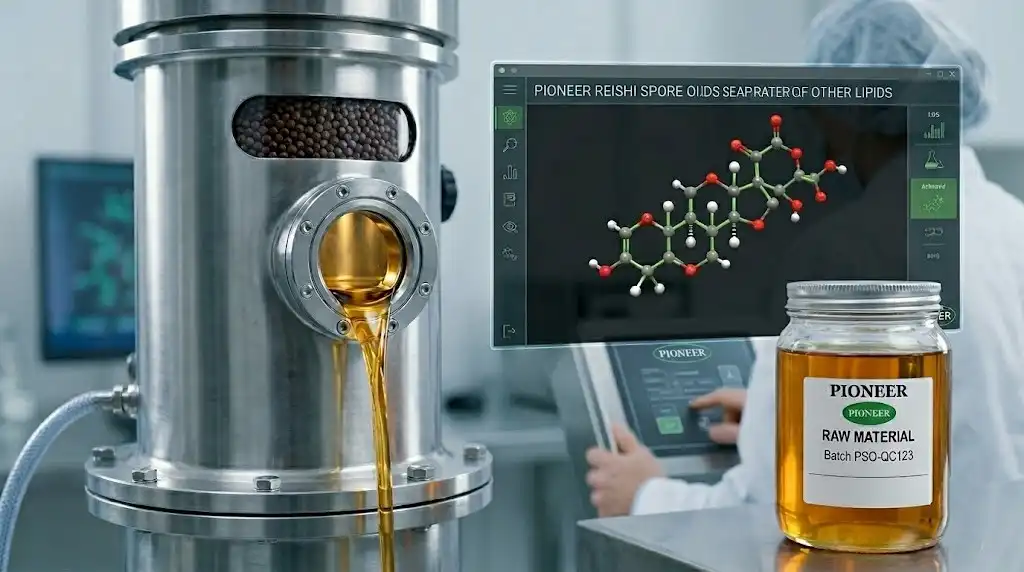
You can get reishi spore oil from the tiny spores of Ganoderma lucidum, which is also known as the reishi mushroom. It is a very strong lipid extract. The fruiting body or mycelium aren't used to make this golden-amber oil. Instead, advanced supercritical CO2 extraction is used to separate bioactive compounds that dissolve in fat, especially triterpenoids like ganoderic acids. A strong ingredient with 20–30% triterpenoid concentration is what is left over. This is a lot more than raw spore powder. This unique processing takes care of important bioavailability issues that come up with regular reishi products. This makes a high-quality raw material that can be used in cosmetic, pharmaceutical, and nutraceutical products.
Understanding Reishi Spore Oil: Definition and Origin
What Makes Reishi Spore Oil Unique?
You can get reishi spore oil from Ganoderma lucidum. These are very small spores, only 4 to 6 micrometers across. The spores have a tough cell wall made of chitin that the body's natural digestion can't properly break down. Using controlled spore-wall breaking technology and supercritical CO2 fluid extraction, manufacturers separate the lipophilic fraction. This fraction has a lot of triterpenoids, sterols, and unsaturated fatty acids. It's hard to give therapeutic doses in forms that people can easily use, whole spores aren't bioavailable, and standard extracts don't have enough active compounds. This extraction method fixes all three of these issues.
Because of its chemical makeup and careful processing, reishi spore oil is not the same as other mushroom extracts. Traditional reishi products mostly have polysaccharide extracts that dissolve in water. Reishi spore oil, on the other hand, has compounds that dissolve in fat and work with compounds that dissolve in water to help the body. These lipid-soluble triterpenoids have been shown to get into cells more easily. This makes them very useful for targeting delivery systems and changing the immune system.
Production Methods and Quality Considerations
There are modern ways to make high-quality reishi spore oil, but the raw materials have to be grown in ways that affect their quality. The Qinling Mountains are the best place to grow reishi mushrooms because the temperature, humidity, and risk of contamination are all just right. Spores are taken from mushrooms when they are fully grown, which is usually when they are reproducing and have the most triterpenoid in their bodies.
It takes a lot of technical know-how to do the extraction process itself. At certain temperatures and pressures, supercritical CO2 extraction keeps heat-sensitive compounds whole while getting rid of any solvents that are still there. To get a cleaner and safer result, this method is better than using solvents. Because it doesn't leave behind any chemicals, the oils it makes are very useful in medicine. A test called acid value (≤3.0 mg KOH/g) checks how fresh something is, a test called peroxide value (≤10 meq/kg) checks how stable something is against oxidation, and high-performance liquid chromatography checks the triterpenoid content.
For procurement professionals, organic sourcing is different from conventional sourcing in a number of ways. Certified organic reishi spore oil is very valuable because it is grown without using synthetic fertilizers or pesticides, which are against strict farming rules. But strong quality control systems in regular production can get the same level of purity as GMP certification and strict testing protocols. In business-to-business transactions, you must now show proof of origin, cultivation methods, and batch-specific analytical data in order to be tracked. Those who serve regulated markets in North America and Europe should know this more than anyone else.
Health Benefits and Applications of Reishi Spore Oil
Immune System Support and Anti-Inflammatory Properties
A lot of research has shown that the triterpenoids and ganoderic acids in organic reishi spore oil can change the immune system in a number of ways. These chemicals change how cytokines are expressed, which helps keep immune responses in check instead of just making them stronger. Studies in immunopharmacology journals have shown that some triterpenoid fractions can make natural killer cells work better while also lowering levels of inflammatory markers like TNF-α and IL-6. Because it does two things, this ingredient can be used to make products that help the immune system when people are recovering or having seasonal health problems.
The anti-inflammatory systems do more than just protect immune cells; they also keep the body's oxidative stress under control. Phytochemical tests and ORAC values show that reishi spore oil is a powerful antioxidant that protects cell membranes from lipid peroxidation. When a company makes products for people who are dealing with metabolic problems or environmental stressors, this protective function is very helpful. Doses of softgels are usually between 500 mg and 1000 mg per day, but the exact amounts depend on the concentration and the health results that are wanted.
Cosmeceutical Applications and Skin Health
Reishi spore oil is easy to add to dermal delivery systems because it dissolves in lipids. This is where it has obvious advantages for the skin. It has been shown that triterpenoids slow down aging by stopping reactive oxygen species that break down collagen more quickly. In beauty products, this ingredient is mixed with other botanical actives to make high-end serums and barrier-repair creams. The concentration should be between 2% and 5% for it to work best.
Researchers have grown skin cells in the lab and found that ganoderic acids help fibroblasts do their job, which speeds up the healing process. These findings can be used to make skincare lines and products that are sold in stores and that help fix skin barriers that have been damaged after surgery. A lot of the time, encapsulation technologies or other essential oils that work well with the oil's natural golden color and mild smell are used to make them useful to customers. When tested for stability under accelerated conditions, well-made products work for 24 to 36 months as long as they are kept out of direct sunlight and very hot conditions.
Safe Usage Guidelines and Contraindications
It's important for manufacturers to be clear about which parameters should be used for each job. For the most part, reishi spore oil is safe, but there are some groups that need to be extra careful. Talk to your doctor before using if you are pregnant or nursing, because there isn't enough human data for these groups. People who are going to have surgery usually stop using 7–14 days before the procedure because it might change factors that help the blood clot. However, the medical literature is still debating the clinical significance of this effect.
Immunosuppressants and blood thinners are the main types of drugs that might not work well together. When procurement teams make products for major retail channels, it's helpful to include standard warning statements that tell people with health problems to see a doctor. There are safety data sheets, allergen statements, and interaction profiles that good suppliers give out. These help make sure that product labels are legal in many places.
Procurement Insights: Choosing the Best Reishi Spore Oil Supplier
Critical Quality Certifications and Compliance Standards
Before you decide to work with a supplier, check to see if they have all the right licenses to make the product and get it to market. When making medicines or dietary supplements, GMP certification is a basic way to make sure that the controls, documentation, and rules for keeping the products from getting contaminated are all working right. Getting ISO 9001 quality management certification shows that a business wants to keep getting better and make sure its clients are pleased. ISO 22000 food safety management is important for companies that work with functional foods.
Ratings based on religion or food needs for reishi spore oil, like Halal and Kosher, help brands that serve certain groups of people get more customers. For these certifications, there must be dedicated production runs, strict rules for cleaning equipment, and qualified religious leaders must oversee the process. Schedules for production and minimum order requirements are changed by these things. You don't have to get approval from the FDA to be registered, but it does show that you are willing to work with them and be honest about how you make things.
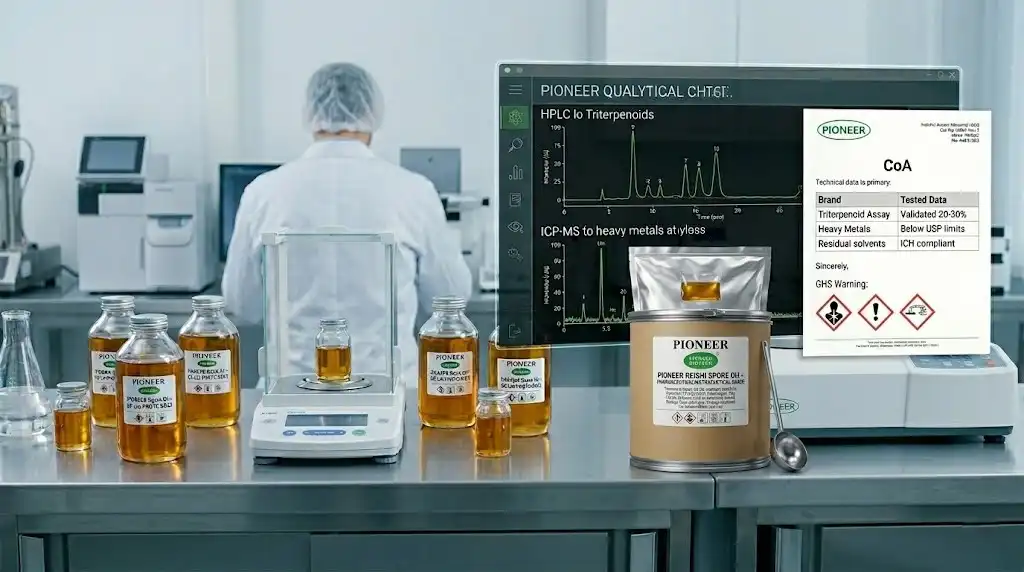
Another important part of evaluation is being able to look at information and figure out what it means. As per USP guidelines, the best suppliers have their own labs where they can test for heavy metals with ICP-MS, microbes with gas chromatography, residual solvents with gas chromatography, and triterpenes with HPLC. There should be a Certificate of Analysis document for each batch that shows how the test results compare to established standards. This is a factual way to show that the quality stays the same. When it comes to organic certification, non-GMO verification, or pesticide residue screening, having a third party test the product in a separate lab gives it more credibility.
Production Capacity and Supply Chain Reliability
You need to know both how much a supplier is making now and how much they could make in the future to figure out their capacity. You can find out if a manufacturer can handle long-term growth without having to worry about allocation issues by asking about how much reishi spore oil they produce each year, if they have dedicated production lines, and if they have relationships for getting raw materials. These suppliers always have spores because they work in areas where mushrooms are grown, but those who have to get them from far away are more likely to be affected by weather changes or political unrest.
How well you keep track of your stock affects how quickly you can fill orders. Manufacturers who keep finished reishi spore oil on hand can quickly fill urgent orders and make up for changes in production that happen with the seasons. But when something is stored for a long time, it needs to be closely watched for stability to make sure the quality doesn't go down before it gets to customers. The fact that nitrogen blankets or other anti-oxidation measures are used in climate-controlled storage shows that the methods used to keep the quality are advanced.
Logistics skills are very important when you buy things from other countries. Skilled suppliers know how to handle shipping needs that change based on temperature, getting the right paperwork through customs, and following the rules for importing goods in many countries. These companies are different from commodity providers because they offer extra services that make your business more valuable, such as combining shipping, custom packaging, and technical help while a product is being developed. If procurement professionals want to know how well a product or service works in the real world, they should look at case studies or get references from current clients who use the same product or service.
Pricing Structures and Order Flexibility
Before you can understand pricing tiers, you need to know what makes things cost what they do. The base price depends on the type of raw reishi spore oil material used, how well the yield is extracted, how often the product is tested, and how much it costs to keep the certification up to date. When you set up production, test quality in batches, and ship more at once, you usually get real economies of scale that lead to discounts based on volume. Asking for detailed quotes for different order sizes shows how flexible prices are and helps you find the best order size that balances the cost of each unit with the cost of keeping stock.
Different suppliers have very different rules about the minimum amount that you need to order. But for well-known brands, it could be metric tons. For new brands, it could be tens of kilograms. A good MOQ is often based on how customized the product needs to be. When you have standardized specifications, you can usually get away with lower minimums than when you have custom testing or concentration needs. When figuring out the total cost of ownership, you should think about the terms of payment, like deposits, milestone payments, and net terms for long-term relationships. These affect how you manage your cash flow.
Conclusion
A complicated plant part known as reishi spore oil can really help with formulation issues in the fields of medicine, cosmetics, and nutraceuticals. Because it has a concentrated triterpenoid profile, better bioavailability, and many possible uses, brands that want to attract health professionals and quality-conscious consumers should charge more for it. For procurement to go smoothly, suppliers need to be evaluated based on a number of factors, such as the quality of their certifications, the amount of work they can do, and their technical support services. It will be very helpful for early adopters who build strong relationships with suppliers and come up with new formulations as the market grows and scientists learn more. It's not just about how much an ingredient costs in strategic procurement teams; it's also about how creative they can be, how well they follow the rules, and how stable the supply chain will be in the long run.
FAQ
What is the optimal storage condition for reishi spore oil?
Reishi spore oil stays stablest in amber glass bottles or other dark containers that are kept out of the light and at temperatures between 15°C and 25°C (59°F and 77°F). Refrigeration makes food last longer by slowing down oxidation. This is especially true for containers that have already been opened. Extra protection is given by switching out oxygen for nitrogen during packaging. If you store a product properly, it should work for 24 months from the date it was made, but you should check the supplier's paperwork for specific stability data.
How do I verify supplier claims about triterpenoid content?
Not just the percentages of all triterpenoid compounds should be shown on the Certificates of Analysis; you should also see the HPLC test results for specific ganoderic acid compounds. When you buy from a reputable company, the chromatograms your get will show real compound peaks. If you are checking out a supplier for the first time, you might want to get third-party verification from independent labs. As long as the two companies work together, specifications will always be met thanks to regular batch testing.
Can reishi spore oil be combined with pharmaceutical ingredients?
Some drugs may not work well with other ingredients in the formulation, so this needs to be looked into. Some blood thinners might work better with the oil, but it might not work well with immunosuppressant drugs. Pharmacological references and compatibility studies should be looked at by people who make pharmaceuticals. When medicines are made in special labs with the right GMP controls, everything stays separate and doesn't get messed up.
Partner with Pioneer Biotech for Premium Reishi Spore Oil Supply
Safe for use in medicine, Pioneer Biotech sells reishi spore oil. To back this up, they have full control over quality and technical know-how. The herbs are grown and then put into capsules. We are in charge of the whole process. In the Qinling Mountains, we are in the well-known Medicine Herbs Valley. The FDA, ISO9001, Halal, and Kosher have all said that our factory is safe. They make reishi spore oil that has at least 20% triterpenoid content and comes with full analytical documentation that includes data on heavy metal screening, microbial testing, and stability. We help companies that make cosmetics, medicines, and nutraceuticals by having flexible minimum order quantities, the ability to make custom concentration specifications, and quick technical support.
We make sure that your business always gets the quality products it needs, whether you're launching a new line of immune support supplements, coming up with new ways to make softgels, or making high-end skin care products. We are a well-known company that has been extracting plants and making reishi spore oil for over ten years. We know the problems that new and growing businesses have when they try to buy things. Get full product information, check to see if the product is in stock, or set up an evaluation sample by emailing sales@pioneerbiotech.com. Find out how our dedication to high quality control can help your brand stand out in the market and help you make formulations that work.
References
Wachtel-Galor, S., Yuen, J., Buswell, J. A., & Benzie, I. F. (2011). Ganoderma lucidum (Lingzhi or Reishi): A Medicinal Mushroom. In Herbal Medicine: Biomolecular and Clinical Aspects, 2nd edition. CRC Press/Taylor & Francis.
Zhao, H., Zhang, Q., Zhao, L., Huang, X., Wang, J., & Kang, X. (2012). Spore Powder of Ganoderma lucidum Improves Cancer-Related Fatigue in Breast Cancer Patients Undergoing Endocrine Therapy. Evidence-Based Complementary and Alternative Medicine, Volume 2012, Article ID 809614.
Ahmad, M. F. (2018). Ganoderma lucidum: Persuasive Biologically Active Constituents and Their Health Endorsement. Biomedical and Pharmacology Journal, 11(3), 1717-1726.
Boh, B., Berovic, M., Zhang, J., & Zhi-Bin, L. (2007). Ganoderma lucidum and its Pharmaceutically Active Compounds. Biotechnology Annual Review, 13, 265-301.
Sanodiya, B. S., Thakur, G. S., Baघel, R. K., Prasad, G. B., & Bisen, P. S. (2009). Ganoderma lucidum: A Potent Pharmacological Macrofungus. Current Pharmaceutical Biotechnology, 10(8), 717-742.
Bishop, K. S., Kao, C. H., Xu, Y., Glucina, M. P., Paterson, R. R., & Ferguson, L. R. (2015). From 2000 Years of Ganoderma lucidum to Recent Developments in Nutraceuticals. Phytochemistry, 114, 56-65.