
What is Valerian Root Extract Powder?
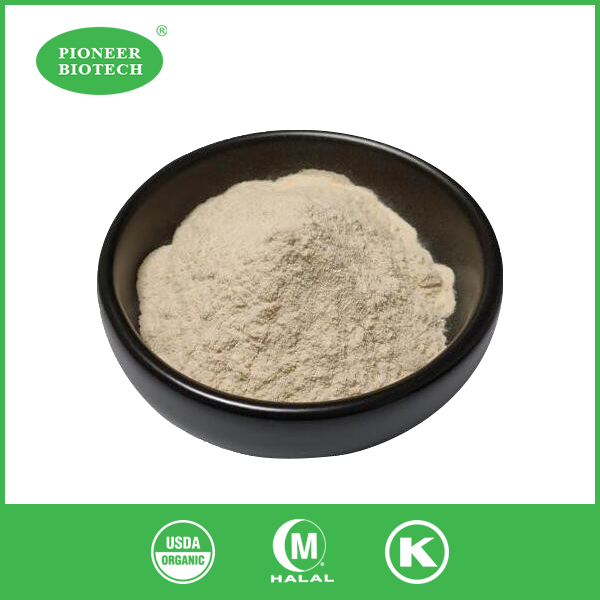
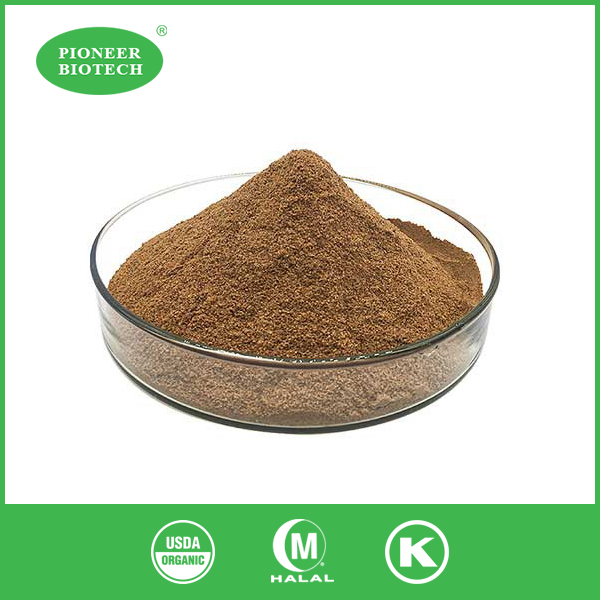
Valerian Root Extract Powder comes from the roots of Valeriana officinalis, a flowering plant that grows back every year and is native to parts of Asia and Europe. Specialized extraction methods are used on this fine, brown to tan powder to separate and concentrate medicinal chemicals, mostly valerenic acids and valepotriates. These methods usually involve ethanol-water solvents. These chemicals are what give the extract its calming and relaxing effects. Powder forms are more stable, last longer, and can be mixed in more ways than liquid ones. This is why nutraceutical makers, pharmaceutical formulators, and cosmetic developers prefer them when they need high-quality plant actives that are standardized.
Understanding Valerian Root Extract Powder
Botanical Origins and Geographical Sourcing
The Valeriana officinalis plant does best in mild areas with rich, wet soil. The most valuable raw materials come from the Qinling Mountains in China and certain farming areas in Eastern Europe, especially Poland and Bulgaria. These areas of the world have the best growing conditions that make the concentration of medicinal sesquiterpenes higher. How the plants are grown has a big effect on the quality of the extract that comes out of them. Organically approved farms use sustainable picking methods that keep the roots whole and keep the environment as clean as possible. It is now necessary for procurement workers to be able to trace goods from the field to the factory in order to meet strict regulatory standards and meet customer demands for openness.
Key Active Compounds and Standardization
The healing power of valerian extract depends on certain phytochemical factors. Valerenic acids, such as valerenic acid, acetoxyvalerenic acid, and hydroxyvalerenic acid, are the most important parts for medicine. They are usually found in amounts between 0.4% and 0.8% by HPLC measurement. Even though they are less stable, valepotriates still add to the bioactivity makeup as a whole. Flavonoids, alkaloids (like actinidine and chatinine), and volatile oils with bornyl acetate are also found in high-quality extracts. Professional-grade goods list the amounts of marker compounds along with the extract ratios (for example, 4:1 or 10:1). As a result of this two-step standardization process, both the amount and quality of the active ingredient are guaranteed. This meets the needs of formulators who need to know that all output batches will have the same biological activity.
Manufacturing Specifications for B2B Applications
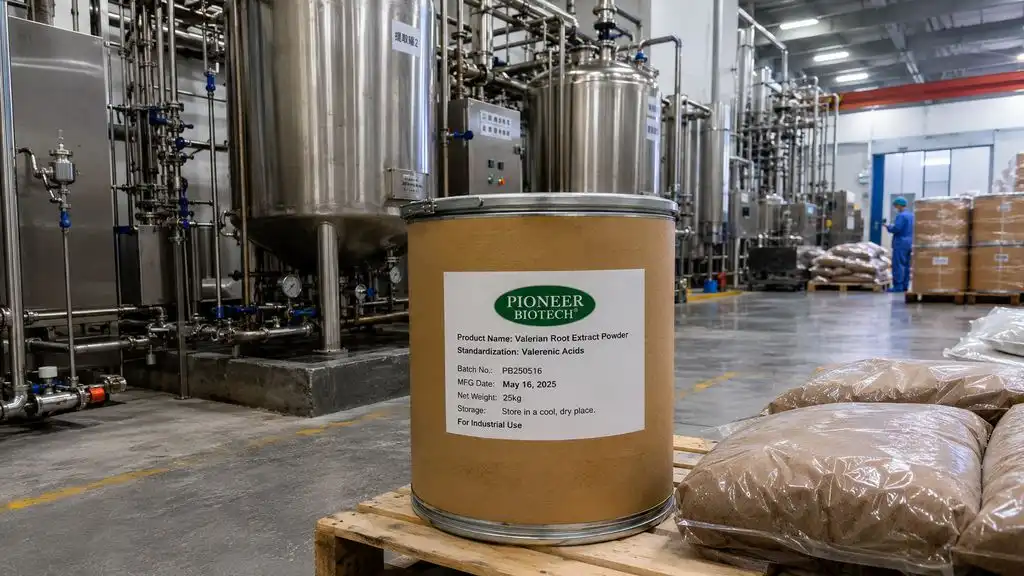
Technical excellence in production is what sets trusted providers apart from average ones. High-quality valerian extract powder has uniformly sized particles; 95% of it can pass through an 80-mesh sieve, which means it blends well when encapsulating and tableting. Because the powder is hygroscopic, the moisture level needs to be kept below 5% so that it doesn't clump when it's being stored or handled. The ash level stays below 5%, which means that there isn't much inorganic pollution. ICP-MS testing for heavy metals shows that the product meets the standards set by California Prop 65 and other foreign pharmacopeias. Usually, the total amount of heavy metals tested is less than 10ppm. Analysis of the residual liquid shows that the amount of ethanol is below the legal limit. These specs have a direct effect on how efficiently the product is made, how stable it is, and how well it meets regulations for use in later stages.
Benefits and Applications of Valerian Root Extract Powder
Core Health Benefits and Therapeutic Mechanisms
Valerian's status as a natural sleep aid and anxiety reliever has been backed up by clinical study. The product lowers sleeplessness and improves the quality of deep sleep by changing GABA-A receptors in the brain and increasing the flow of chloride ions, which has a calming effect on the nervous system. Unlike manufactured sedatives, valerian doesn't usually make you sleepy the next day or cause problems with dependence if it's used correctly. Through several mechanisms, such as adenosine receptor interaction and serotonin reuptake blockage, the substance calms the nervous system and reduces stress. In addition to helping people sleep better, new study shows that it may also help with digestive issues, muscle relaxation, and menstrual pain. Because these benefits have been proven by science, valerian is a useful active ingredient for many types of therapy.
Industry-Specific Application Scenarios
Valerian extract is used by nutraceutical companies to make sleep aid pills, stress relief tablets, and rest sweets. The powder form lets you precisely control the dose and mixes easily with plants that work well together, like passionflower or lemon balm. Functional drink makers use special water-soluble grades to add extra strength to "sleep aid" and calm drinks without causing sedimentation problems. Valerian extract is used in cosmetics to make calming facial serums and aromatherapy items that help with stress. It does this by using its anti-inflammatory effects and pleasant smell. Pharmaceutical companies look into regulated organic valerian root extracts for over-the-counter sleep aids and possible plant drugs. Contract makers like how flexible the powder's formulation is, which lets them make private-label goods in a range of delivery formats, from softgels to effervescent powders.
Comparative Analysis with Alternative Natural Sedatives
Procurement professionals can benefit from knowing how Valerian stands out from its competitors. Unlike melatonin, which mostly controls the circadian cycle, valerian affects the start of sleep by changing neurotransmitters. This means that the two work together instead of against each other. While magnesium helps you relax by working on your muscles and nerves, valerian has benefits that go straight to your brain. Unlike chamomile or lavender products, which have weaker effects, valerian has stronger sedative effects that can help with light sleep problems. This difference affects choices about how to make products and how to position them in the market. Combination recipes that use valerian with active ingredients that work well together often show synergistic benefits. This makes value-added goods that can command higher prices in competitive markets.
Dosage, Safety, and Side Effects
Evidence-Based Dosage Recommendations
In clinical studies, people usually take between 300 mg and 600 mg of a standardized extract (0.8% valerenic acids) 30 to 120 minutes before going to bed. For daytime stress control, smaller doses of 100 mg to 300 mg are given over two to three administrations. When formulators figure out similar doses, they have to take extract standardization into account. For example, a 10:1 ratio extract needs proportionally higher milligram amounts than a 0.8% standardized product to have the same biological effects. When used on children, they need special instructions and lower doses. Labels and dosing directions that are correct protect consumers and improve treatment results. When using high-potency versions, it's important to pay extra attention to the amount to avoid overdosing or other problems.
Safety Profile and Contraindications
Valerian herb is usually well tolerated by healthy adults when used correctly. Common side effects like headaches, dizziness, stomach problems, or strange morning sleepiness are still mild and not very common. People who already have problems with their liver should be extra careful because of a few reports of hepatotoxicity, though it's still not clear what caused what. Because it might make you sleepier, Valerian shouldn't be mixed with alcohol, benzodiazepines, barbiturates, or other CNS depressants without a doctor's guidance. When women are pregnant or nursing, they shouldn't use unless their doctors tell them to. Labeling rules and tools for educating consumers are based on these safety concerns.
Quality Assurance and Regulatory Compliance
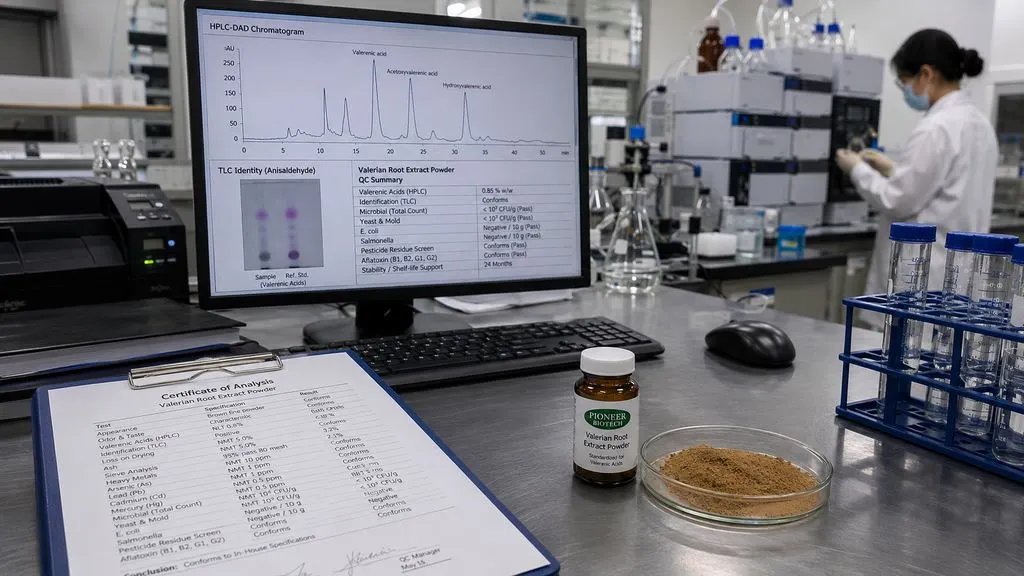
Reliable suppliers keep a lot of quality records, such as Certificates of Analysis for each batch of production, stability studies that back up claims of long shelf life, and microbiological tests that prove the lack of germs. GMP approval makes sure that factories follow the latest rules for good manufacturing practice. Kosher and Halal approvals make it easier for goods that are aimed at certain groups of people to reach more customers. Organic certificates and non-GMO proof meet the needs of consumers who want clean labels. Identification confirmation using TLC or HPLC fingerprinting, pesticide residue screening, and aflatoxin analysis should all be part of the testing procedures. Procurement experts can do their due research and meet legal standards across foreign markets when vendors offer full technical data packages.
Market Comparison and Supplier Selection Guide
Extract Format Comparison and Selection Criteria
Valerian extract comes in a number of different forms, and each has its own benefits. Powder extracts offer the most preparation options, long-term safety, and low cost for mass production. Liquid extracts can be absorbed quickly, but they can be hard to dose correctly and keep stable on the shelf. Tablets and capsules make it easier for people to use, but they don't let you change the way the medicine is made. Tinctures are popular in niche markets that like traditional preparations. Concerns about manufacturing include how well the equipment works with each other, the needed production scale, and the delivery methods that are wanted. Logistics for distribution like powder forms because they are easier to ship and don't change much in temperature. When making a purchase choice, the format should be chosen based on the intended use, the production skills, and the preferences of the end market.
Supplier Evaluation Framework
To find reputable valerian extract providers, you need to carefully look at a number of factors. Verification of product purity through testing by a third-party lab confirms the stated specs. Reviewing a certification collection makes sure that it meets quality standards like ISO9001, FDA registration, and certifications specific to the business. A production capacity estimate makes sure that providers can keep up with rising demand without lowering the quality of their products. The logistics skills, such as the types of packaging available, the shipping infrastructure, and the help with customs paperwork, decide how efficiently operations run. Customer service commitment is shown by how quickly technical help responds and how willing they are to try samples. Supply chain risks can be lowered by checking a company's reputation with industry references and looking at its past performance.
Pricing Dynamics and Procurement Strategies
The wholesale price of valerian root extract depends on how standardized it is, if it is certified, and how much you buy. Most of the time, conventional extracts are cheaper than organic approved ones, but if the product is positioned as a special product, higher input costs may be necessary. Standardized extracts are more expensive than simple ratio extracts because they offer more quality guarantee. Volume agreements give you negotiating power for better pricing models. Long-term supply deals with contracts that last a year usually get better terms than buying on the spot. Professionals in charge of buying things should ask for thorough quotes that include all the important details, like the extraction ratio, the level of standardization, the testing procedures, the certifications, the minimum order quantity, and the wait times. Clear conversations about prices build trust and make it easier for people to work together in ways that benefit both sides.
Procurement Process and Logistics Considerations
Bulk Purchasing Channels and Quality Verification
Professional ways to buy things include talking to makers directly, like Pioneer Biotech, going to trade shows in the industry, like SupplySide West, and using B2B platforms that focus on botanical products. When you work directly with a maker, you usually get better customization options, clearer information about quality, and lower prices. Trade shows make it easier to meet suppliers in person and do a thorough background check. Ordering samples is an important part of the proof process. Sample sizes that can be requested usually run from 100g to 500g for full testing. Organoleptic evaluation (looking, smelling, and tasting), solubility testing in the intended formulation matrices, and independent laboratory analysis confirming specs should all be part of quality verification procedures.
Packaging and Storage Requirements
Because valerian extract absorbs water and is easily damaged by oxygen, it needs to be packaged in a certain way. Multi-layer aluminized bags with heat-sealed ends are used for pharmaceutical-grade packing. These bags are often combined with desiccant packets to keep moisture out. Fiber drums with plastic liners are used for bulk shipments to protect the goods inside. Conditions of storage have a big effect on how long something will last; controlled settings with temperatures below 25°C and relative humidity below 60% will keep it potent for 24 to 36 months. Photosensitive chemicals break down quickly in light, so they need to be stored in cases that are dark or amber in color. Valerian should be kept separate from highly scented items in the warehouse so that smells don't get mixed up. Throughout the supply chain, these things affect the total cost of ownership and how well the product works.
Import Documentation and Regulatory Navigation
To make sure that customs inspection goes smoothly, deals that cross borders need to be carefully documented. Commercial invoices, packing lists, bills of lading or airway bills, and phytosanitary certificates that prove plant product compliance are all important papers. Customs checks are easier when you have Certificates of Analysis that show the product's specs and safety tests. Depending on the country, you may need to show extra paperwork, like an FDA Prior Notice for U.S. imports or a CITES permit if you are working with materials that were taken from the wild. Accurate Harmonized System (HS) codes make sure that tariffs are correctly classified. Suppliers with a lot of experience keep up with regulations and keep methods for keeping records that make foreign logistics run smoothly. Getting to know producers who know what the target market needs cuts down on delays and compliance risks.
Conclusion
Valerian Root Extract Powder is a plant ingredient that has been scientifically proven to work and can be used in a wide range of products, from pharmaceuticals to makeup. To be successful in procurement, you need to know how to source botanicals, how to standardize them, what the application needs, and how to evaluate suppliers. Quality assurance through thorough testing, the right licenses, and following GMP guidelines helps keep products safe and in line with regulations. The extract is in high demand across all customer groups because it is known to improve sleep quality and ease worry. When manufacturers form strategic relationships with suppliers that combine technical know-how, reliable production, and logistics skills, they can make unique goods that meet changing market needs while still staying competitive.
FAQ
Why does valerian extract have such a strong, distinctive odor?
The strong smell comes from isovaleric acid, which is a natural byproduct of valepotriates being broken down in the root. People often describe the smell this substance gives off as earthy or like old cheese. Interesting enough, this strong smell is a sign of trustworthiness that shows real valerian content rather than fakes. Some providers offer forms that have been processed to lower the strength of the smell for use in liquid formulations where the sensory profile is important. But harsh deodorization methods might break down volatile medicinal terpenes, which could make them less bioactive. Softgels and enteric-coated tablets are two encapsulation technologies that work well to hide the smell in finished goods without changing the therapeutic qualities of the extract.
What distinguishes ratio extracts from standardized extracts?
Ratio extracts, like 10:1, only show the mass relationship between the raw material and the end product. For example, 10 kg of dried root made 1 kg of powder. This measurement doesn't give any assurances about the quantity of active compounds, which can change a lot from batch to batch based on the quality of the raw materials and the conditions of processing. Standardized extracts list assured amounts of marker chemicals like valerenic acids (usually 0.8%), which makes sure that the biological activity stays the same even if the raw materials change. Standardized extracts are mostly preferred by professional supplement makers and pharmaceutical uses because they allow for consistent therapeutic results and doses, which are necessary for clinical effectiveness and regulatory compliance.
Can valerian extract powder dissolve in water for beverage applications?
Standard hydro-alcoholic extracts only partially dissolve in water and usually form sediment when added to water-based mixtures. Because of this, they can't be used in clear drinking uses. To get full solubility in cold water, some water-soluble grades use carrier systems or spray-drying methods with hydrophilic fillers. These products are safe for drinking and are designed to work well with functional drinks. They keep the drink clear without settling and keep the bioactive chemicals intact. When formulators are looking for valerian extract, they should make sure that it dissolves in water so that it works with the formulation matrix and gives the desired taste properties.
Partner with Pioneer Biotech for Premium Valerian Root Extract Powder
Shaanxi Pioneer Biotech Co., Ltd. is a reliable company that can supply you with valerian root extract powder. They have been extracting plants for over ten years and have state-of-the-art manufacturing facilities. Our factory in Hanzhong city, which is in the famous herbal valley of the Qinling Mountains, makes pharmaceutical-grade extracts that are standardized to exact valerenic acid amounts and come with full testing paperwork. We keep our ISO9001, HALAL, KOSHER, and FDA certifications up to date to make sure we meet world quality standards. Our expert team can help you with any recipe and offers a range of minimum order quantities (MOQs). This includes standardized extracts for nutraceutical formulations, water-soluble grades for functional drinks, and customized specs for private-label development. Contact sales@pioneerbiotech.com to get a free sample and full specification package and see for yourself how the higher quality improves your product line and makes you more competitive in the market.
References
Bent, S., Padula, A., Moore, D., Patterson, M., & Mehling, W. (2006). Valerian for sleep: a systematic review and meta-analysis. The American Journal of Medicine, 119(12), 1005-1012.
Fernández-San-Martín, M. I., Masa-Font, R., Palacios-Soler, L., Sancho-Gómez, P., Calbó-Caldentey, C., & Flores-Mateo, G. (2010). Effectiveness of Valerian on insomnia: a meta-analysis of randomized placebo-controlled trials. Sleep Medicine, 11(6), 505-511.
Hadley, S., & Petry, J. J. (2003). Valerian. American Family Physician, 67(8), 1755-1758.
Patočka, J., & Jakl, J. (2010). Biomedically relevant chemical constituents of Valeriana officinalis. Journal of Applied Biomedicine, 8(1), 11-18.
Shinjyo, N., Waddell, G., & Green, J. (2020). Valerian root in treating sleep problems and associated disorders—A systematic review and meta-analysis. Journal of Evidence-Based Integrative Medicine, 25, 1-12.
European Medicines Agency. (2016). Assessment report on Valeriana officinalis L., radix and Valeriana officinalis L., aetheroleum. Committee on Herbal Medicinal Products (HMPC), EMA/HMPC/611341/2015.