
The Unique Health Benefits of Astaxanthin Extract
Astaxanthin extract has become a game-changing ingredient in cosmetics, pharmaceuticals, and nutraceuticals because it has powerful antioxidant qualities that far beat other bioactives. This lipid-soluble keto-carotenoid (3,3'-dihydroxy-β,β-carotene-4,4'-dione) comes mostly from the microalgae Haematococcus pluvialis. It is a unique mix of cellular protection, anti-inflammatory benefits, and bioavailability. Researchers have confirmed that it can cross the blood-brain and blood-retinal walls. This makes it ideal for use in product creation for cognitive, ocular, and cardiovascular health.
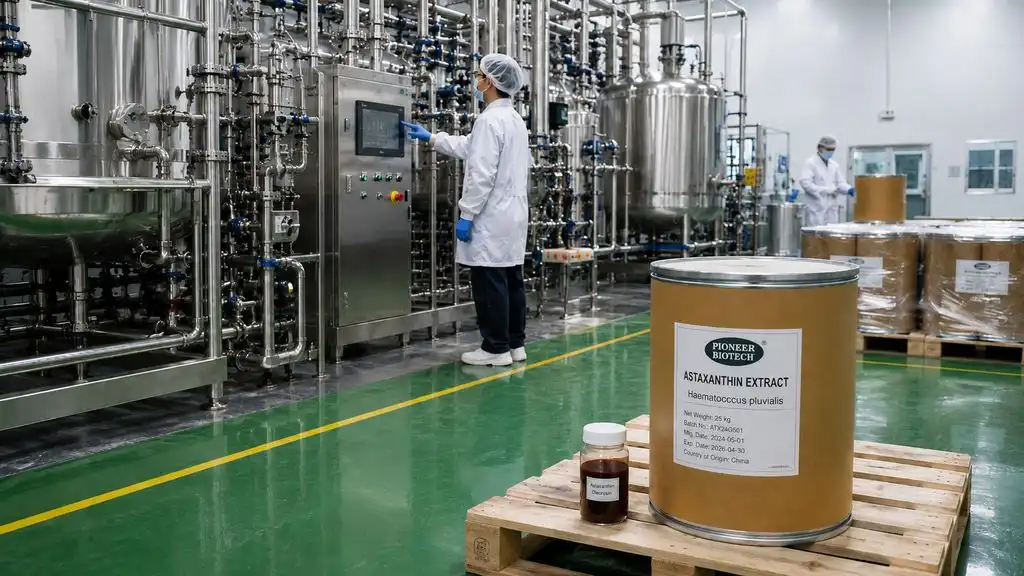
Understanding Astaxanthin Extract: Key Health Benefits and Mechanism of Action
The Biochemical Foundation of Antioxidant Power
This carotenoid works at the molecular level by getting rid of singlet oxygen and free radicals in both the lipid and water environments inside cell membranes. Many antioxidants change into pro-oxidants when they lose electrons. But natural astaxanthin's conjugated double-bond structure keeps reactive oxygen species stable without breaking down. Studies in humans have shown that it is 6,000 times more powerful as an antioxidant than vitamin C and 550 times stronger than vitamin E in some tests. This biochemical benefit directly affects how well the product works, especially for formulas that target oxidative stress-related conditions like skin damage caused by UV light, inflammation caused by exercise, and macular degeneration caused by getting older.
Natural Versus Synthetic: Critical Quality Distinctions
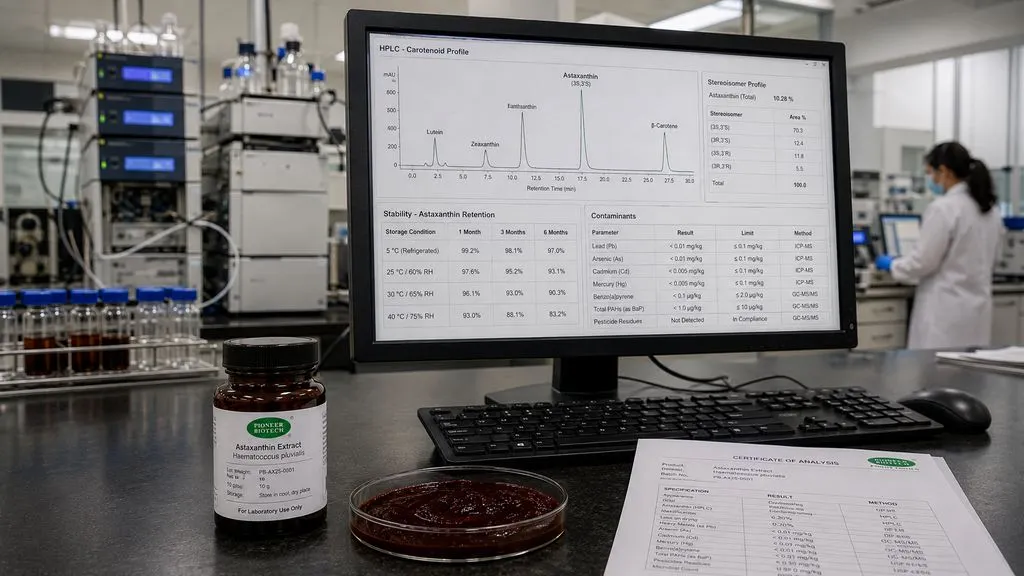
The source and stereochemistry of astaxanthin have a big effect on how biologically active it is and how well it is accepted by regulators. Astaxanthin that comes from H. pluvialis is the (3S, 3'S) stereoisomer in esterified form, which is more stable and bioavailable than manufactured versions. Most of the time, synthetic astaxanthin comes in the form of a racemic mixture with (3R, 3'R) and meso forms, which have not been tested in humans. Instead of using colorimetric methods, which can be hacked by cheaper carotenoids or fake dyes, procurement workers should use HPLC research to prove where the goods came from. The esterified form found in algae-derived extracts also makes them more resistant to oxidation during storage and processing, which is very important for keeping the product's effectiveness over time.
Diverse Applications Across Health Categories
Astaxanthin is useful in many healing and practical areas because it has many benefits. In skin care, it stops matrix metalloproteinase from working and lowers melanin production, which helps with both photoaging and acne. Ophthalmologic study shows that supplements can improve accommodation amplitude and reduce eye tiredness. This is especially important for digital eye strain formulas. Better lipid levels and endothelial function through nitric oxide pathway regulation are two cardiovascular benefits. Its ability to lower lactate levels and speed up healing by reducing muscle damage caused by exercise is used in athletic performance goods. These proven mechanisms give B2B clients who are making condition-specific formulations a good scientific stance.
Comparing Astaxanthin Extract to Other Antioxidants and Supplements
Superior Antioxidant Capacity and Synergistic Potential
A comparison of astaxanthin to other antioxidants shows that it has unique molecular benefits. Because it has polar terminal rings and a long conjugated chain, it can cross cell walls and protect both the inside and outside of cells at the same time. These "transmembrane antioxidant" properties set it apart from water-soluble vitamin C and fat-soluble vitamin E, which only work in certain parts of cells. Comparative studies show that astaxanthin does not increase oxidation even at high amounts. This is different from beta-carotene and vitamin E, which can do so in some situations. Because of these qualities, it works really well in mixed formulas, where it keeps other delicate ingredients, like omega-3 fatty acids, from going bad while still providing its own health benefits.
Format Considerations: Powder Versus Oleoresin
The shape of a product has a big effect on how easy it is to make and how stable the final product is. When supercritical CO2 is used to remove standard oleoresin, it turns into a dark red, thick liquid that is very bioavailable but not very compatible with water-based systems. Microencapsulated powder forms use cyclodextrin, gum arabic, or modified starch as binders to deal with two major problems: oxidation instability and water dispersibility. Cold water dispersible (CWD) grades use beadlet technology, which lets them be added to functional drinks, meal replacements, and beauty-from-within drinks without losing their color or phase separation when they are heated. Which version to use depends on the end use. Companies that make softgels and capsules usually choose oleoresin because it absorbs better, while companies that make food and drinks need CWD powder because it works with their processing and has a clean label.
Safety Profiles and Approval by Regulators
Astaxanthin that comes from algae is generally thought to be safe (GRAS) in the US and has been approved as a novel food in the EU. It has been shown to be safe for humans to eat up to 40 mg per day. Synthetic versions are okay to use as feed ingredients for fish, but they aren't as widely accepted for human use because they have different stereochemistry and less clinical validation. Procurement teams need to make sure that sellers give them batch-specific Certificates of Analysis (CoA) that prove identity through HPLC, purity requirements that include heavy metals and microbiological factors, and the right legal paperwork for the markets they want to sell to. Astaxanthin extract powders from algae are also in line with consumers' growing desire for naturally derived products, which supports claims of clean labels and clear supply chain stories.
Procurement Insights: How to Choose and Source High-Quality Astaxanthin Extract?
Essential Certifications and Quality Markers
To choose a good provider, you need to carefully look at the product paperwork and manufacturing standards. Some important certifications are GMP (Good Manufacturing Practices), ISO 22000 (for managing food safety), and organic approvals from the USDA or EU when marketing goods to organic consumers. FDA licensing gives you more confidence that the center is being watched and that it is following all U.S. rules. In addition to certifications, people who work in buying should ask for confirmation of analytical methods, especially HPLC techniques that can tell astaxanthin from other carotenoids and confirm the spread of stereoisomers. Data on stability that shows how well potency stays the same under different store conditions helps predict how long finished goods will last on the shelf. Suppliers of microencapsulation technology should give dissolution rates and particle size distribution data that are useful for the application.
Understanding technical specs has a direct effect on how well a recipe works. Astaxanthin levels in powders are usually between 2% and 10%, but higher levels are available for uses that need to save room, like tablets or gummies. The amount of astaxanthin in oleoresin is generally between 5 and 10 percent by weight. Powders with a moisture content of less than 5% stop microbes from growing and keep their flowability while they are being made. Consistency in particle size makes sure that colors and particles are spread out evenly in finished goods. Heavy metals (lead, arsenic, mercury, cadmium), herbicide residues, and PAHs are some of the trace contaminants that must be below the limits set by both the FDA and the European Pharmacopoeia. By asking for representative samples along with COAs, stated specs can be checked in-house before bulk orders are made.
Building Strategic Supplier Relationships
For long-term buying success, there must be clear communication and agreement on what needs to be produced. Reliable providers keep track of the process from growing the algae to extracting it and encasing it. This ensures stability from batch to batch, which is important for following the rules and keeping consumers safe. Supply chain problems can be avoided by talking about minimum order amounts (MOQ), wait times, and storage suggestions right away. Suppliers who offer expert support can help with things like formula improvement, dosage estimates, and the paperwork needed to submit a new product to the FDA. By making quality agreements that spell out acceptance criteria, testing duties, and procedures for handling deviations, you hold people accountable and lower your business's risk. Checking to see if a supplier can grow with your business makes sure that you don't lose any of your suppliers as the demand for their products grows in more than one market.
Safe Usage and Dosage Guidelines for Astaxanthin Extract
Evidence-Based Dosage Recommendations
Clinical study has found dosage amounts that work well for a number of health problems of astaxanthin extract powder. Nutraceutical pills that aim to provide general antioxidant support usually contain 4 to 12 mg per day, spread out over several meals that contain fat to help the body absorb them better. At a dose of 6 to 12 mg per day for 8 to 12 weeks, it shows skin-protecting and skin-elasticity effects. Formulations for athletic performance and healing use 12 to 20 mg per day, taken before or after exercise. When used in ophthalmology to treat vision problems and eye tiredness, 6 mg everyday works well. Cosmetics put on the skin have amounts that range from 0.001% to 0.1%, based on the type of formulation and the need for stability. These numbers come from published studies on humans and can be used as starting points for formulating astaxanthin extract powder. However, specific dosing should take into account the fact that powder and oleoresin forms have different bioavailability.
Safety Considerations and Regulatory Compliance
According to clinical studies, astaxanthin has a very good safety profile, with few side effects being noted. Mild stomach pain or short-term changes in skin color can happen at higher amounts, but they go away when the drug is stopped. There have been no reports of any major drug interactions, but there are possible worries about using it with blood thinners because they might affect platelet activity more than one at a time. Women who are pregnant or breastfeeding should talk to their doctors before taking supplements because there isn't a lot of specific safety data for these groups yet. To keep goods from being delivered with damaged material, manufacturing practices must keep them within acceptable peroxide levels and keep their effectiveness throughout their shelf life. Labels should make it clear how much astaxanthin is in the food, how much of it is recommended for each meal, and any allergen information that is important. This is especially important when the food comes from algae, which can be problematic for people who are allergic to fish.
Future Trends and Innovation in the Astaxanthin Industry
Emerging Delivery Technologies
Astaxanthin's solubility and market appeal are still being improved by cosmetic and pharmaceutical innovations. Liposomal encapsulation technology makes phospholipid bilayers around astaxanthin molecules. These bilayers act like natural cell walls and increase the rate of absorption in the intestines by up to 300% compared to regular forms. Nano-emulsion systems lower the size of particles to less than 200 nanometers, which makes it possible to make drinks that are clear and for topical goods to penetrate deeper into the skin. Phytosome complexes mix astaxanthin and phosphatidylcholine to make molecular shapes that make it easier for cells to take them in. These advanced delivery platforms allow for premium placement while solving the usual problems with carotenoid bioavailability. This creates chances for unique product claims backed up by pharmacokinetic data.
Market Dynamics and Consumer Preferences
As customers seek out naturally occurring ingredients with proven health benefits, the global astaxanthin market keeps growing. A rising market is beauty-from-within goods that combine taking supplements by mouth with putting them on the skin. This is especially true in Asian markets where skin health is a big deal. More and more, sports nutrition companies are replacing fake colorants with useful ingredients like astaxanthin that are good for you and look good at the same time. The clean-label trend forces companies to find non-GMO, organically approved ingredients with clear supply chains. This gives sellers who can show they use sustainable farming methods and care for the environment an edge in the market. While moves to harmonize regulations across markets may speed up the acceptance of new products, it is important to be aware that different regions have different rules about what claims are allowed and how much of a drug can be taken.
Sustainability and Supply Chain Transparency
As brands try to meet customer demands for ethical sources, environmental factors are becoming more and more important in their purchasing choices. Plant growth systems with closed photobioreactors for H. pluvialis reduce the amount of water needed and get rid of the risk of contamination compared to open pond ways, but they still cost more to set up. Brands can show they care about the environment and set their goods apart in a crowded market by calculating their carbon footprints at every step of the supply chain, from growing the plants to extracting the carbon and distributing the products. Blockchain apps for ingredient traceability keep permanent records of where an ingredient came from, how it was tested, and how it was handled. This helps consumers trust the product and makes regulatory checks easier. As buying teams add corporate social responsibility factors to the way they choose vendors, suppliers who show they are committed to sustainable practices and open operations will get a bigger share of the market.
Conclusion
Astaxanthin extract is a scientifically proven and marketable ingredient that can help health and wellness product brands stand out by giving them better biological performance. Its high antioxidant capacity, wide range of health uses, and high safety rating meet important customer needs in the nutraceutical, pharmaceutical, cosmetic, and functional food categories. To do buying right, you need to carefully look at the source material, have it tested analytically to make sure it is pure and effective, and work with your sellers to make sure they meet strict quality standards throughout production. Formulators can make sure that their products work as well as possible while still following the rules for each target market by learning about dose guidelines, format options, and new transportation technologies.
FAQ
How does natural astaxanthin differ from synthetic versions?
The astaxanthin found in Haematococcus pluvialis is mostly the (3S, 3'S) stereoisomer in esterified form. It has a lot more biological activity than manufactured racemic mixes that contain (3R, 3'R) and meso forms. The esterified structure makes it more stable during storage and processing, and most of the material used in clinical tests to show health benefits comes from algae, which makes it the best choice for human diet uses.
What analytical methods verify astaxanthin quality?
The best way to prove identity and measure strength is to use High-Performance Liquid Chromatography (HPLC) according to USP or JP monograph methods. This method correctly tells astaxanthin apart from other carotenoids and possible contaminants that could mess up less precise colorimetric tests. Suppliers should give COAs that are special to each batch and include HPLC data as well as tests for heavy metals, microbiology, and oxidative stability markers.
Can astaxanthin be incorporated into gummy formulations?
When making gummies, the heat and acidic conditions cause standard oleoresin to break down very quickly. Double-shell microencapsulated beadlets that are designed to survive temperatures above 80°C make it possible to successfully incorporate them into gummies while keeping their color and effectiveness throughout processing and shelf life. Making changes to the pH and antioxidant systems in the formula will help it work better in this tough situation.
Partner with Pioneer Biotech for Premium Astaxanthin Extract Supply
Pioneer Biotech sells astaxanthin extract that is safe for use in medicines. They back up their products with full analysis reports and make sure they follow all global regulations. Our 7,000m² GMP-certified plant is in Hanzhong's medical herb valley. It makes microencapsulated powder and supercritical CO2 oleoresin formats. It also has ISO 9001, HALAL, KOSHER, and FDA certifications. We have strict quality control that includes checking every production batch with HPLC to make sure that the strength standards stay the same, ranging from 2% to 10% astaxanthin content, and that stability data is recorded. Our expert team helps with formulations for vitamin, cosmetic, and functional food uses. This includes custom particle size distribution and grades that dissolve in water. Pioneer Biotech can help you with both small samples for product development and large amounts of astaxanthin extract for business production. They can do this quickly and easily. Get in touch with sales@pioneerbiotech.com to talk about your unique needs and get full product specs that are made to fit your formulation needs.
References
Guerin, M., Huntley, M.E., & Olaizola, M. (2003). "Haematococcus astaxanthin: applications for human health and nutrition." Trends in Biotechnology, 21(5), 210-216.
Capelli, B., Bagchi, D., & Cysewski, G.R. (2013). "Synthetic astaxanthin is significantly inferior to algal-based astaxanthin as an antioxidant and may not be suitable as a human nutraceutical supplement." Nutrafoods, 12(4), 145-152.
Tominaga, K., Hongo, N., Karato, M., & Yamashita, E. (2012). "Cosmetic benefits of astaxanthin on humans subjects." Acta Biochimica Polonica, 59(1), 43-47.
Fassett, R.G. & Coombes, J.S. (2011). "Astaxanthin: a potential therapeutic agent in cardiovascular disease." Marine Drugs, 9(3), 447-465.
Iwamoto, T., Hosoda, K., Hirano, R., et al. (2000). "Inhibition of low-density lipoprotein oxidation by astaxanthin." Journal of Atherosclerosis and Thrombosis, 7(4), 216-222.
Ambati, R.R., Phang, S.M., Ravi, S., & Aswathanarayana, R.G. (2014). "Astaxanthin: sources, extraction, stability, biological activities and its commercial applications—a review." Marine Drugs, 12(1), 128-152.