
Unlocking Reishi Spore Oil: Nature's Micro-Encapsulated Treasure
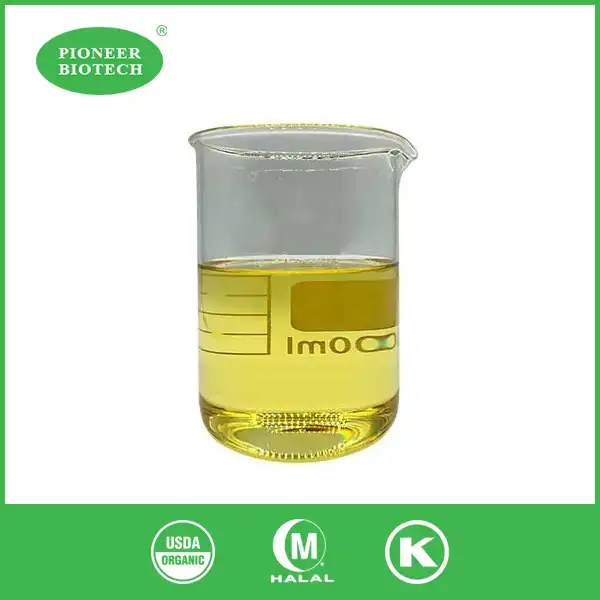
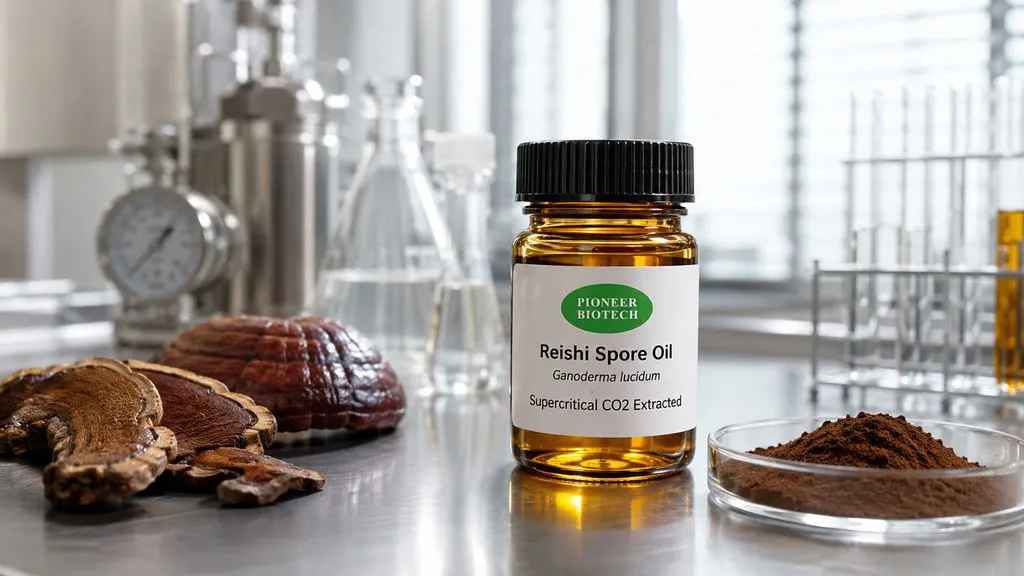
Reishi spore oil is the most concentrated plant extract found in nature. It is made from the tiny spores of Ganoderma lucidum using modern supercritical CO2 extraction. Unlike most fungus powders, this amber-colored oil doesn't have to deal with chitin walls that can't be digested. Instead, it delivers 20–30 times more triterpenoids than raw spore powder. Its special lipophilic makeup lets it go straight into cell membranes, which is a huge plus for formulation scientists who want to get the most bioavailability out of the smallest dosage forms. This is a huge benefit for supplement brands that want to make sure their products work and customers follow the directions.
Understanding Reishi Spore Oil: Extraction, Benefits, and Usage
What Distinguishes Spore Oil from Traditional Reishi Extracts?
How focus and absorption work is what makes them different. Traditional Reishi extracts use hot water or ethanol to pull polysaccharides from the growing body. This makes the doses bigger but not very strong. reishi spore oil, on the other hand, separates the fatty part that is locked inside fertile spores, which are structures that are so strong that people can't digest them when they're eaten whole. Using pressure CO2 at certain temperatures in supercritical fluid extraction breaks these tiny shells without damaging the ganoderic acids, ergosterol, and unsaturated fatty acids through heat. By getting rid of the fiber and cellulose, this method makes a thick golden oil that has healing properties in every drop. Analytical testing shows that the total triterpenoid content is usually between 20% and 30%, and the acid value is less than 3.0 mg KOH/g. These are signs that the product is stable and effective, and buying teams can check these with the COA paperwork.
Scientifically Validated Health Benefits
According to clinical studies, the main way it works is by changing the nervous system. A 2019 study in the journal Phytotherapy Research showed that ganoderic acids increase the activity of macrophages while controlling the production of cytokines. This prevents defensive reactions from being too strong. Because it does two things, the oil is useful for cancer support formulas that need to carefully balance immune function during intense treatments.
Antioxidant power is also important to note. DPPH radical scavenging tests done in the lab show that reishi spore oil has the same level of activity as vitamin E. This is because its ergosterol and triterpenoid compounds work together. This lowering of oxidative stress can be used in dermocosmetic products, where formulation makers add 2-5% concentrations to barrier repair serums that target damage from the atmosphere on the skin. The lipid structure of the oil makes it easier for anti-inflammatory chemicals to get through the stratum corneum and into the dermal tissue. This is a big benefit over water-based plant extracts that have trouble being bioavailable.
Practical Dosage and Formulation Guidance
Standardized doses for nutritional uses are usually between 500 mg and 1000 mg per day. The medicine is put into softgels that keep it from going bad and make sure it gets to the right place. Softgel encapsulation is still the best way to go because it keeps the oil from going bad by closing it up tightly and letting you mix it with other active ingredients, such as astragalus polysaccharides or vitamin D3.
Emulsification is very important when making useful drinks or foods that are enriched. Because the oil doesn't like water, it needs to be kept in suspension in water using microencapsulation technology or phospholipid-based liposomal carriers. For the best stability during shelf life tests, product makers should aim for particle sizes below 200 nanometers. Food-grade formulas also need to take into account the oil's characteristic earthy smell, which can be hidden with natural flavorings without hurting the clean-label stance.
One way to improve absorption of organic reishi spore oil is to eat fats at the same time as the oil, since the bioactive chemicals in the oil follow lymphatic routes instead of liver first-pass processing. This pharmacokinetic profile makes it different from water-soluble polysaccharides because it has a long-lasting presence in the plasma. This is an important fact to stress in product information materials aimed at health-conscious customers.
Reishi Spore Oil in the Market: Quality, Forms, and Brand Differentiation
Extraction Method Comparison and Bioavailability Superiority
The choice of extraction method has a direct effect on the quality of the end result. Although ethanol extraction is cheaper for the equipment, it leaves behind solvents and breaks down heat-sensitive triterpenoids. When supercritical CO2 extraction is done at temperatures below 40°C and high pressure, it leaves no liquid traces and keeps the full phytochemical profile. Independent lab tests show that oils extracted with CO2 keep 92–96% of their original ganoderic acid content, while oils extracted with ethanol only keep 70–78%. This is a 20% difference in effectiveness that affects the result of therapy.
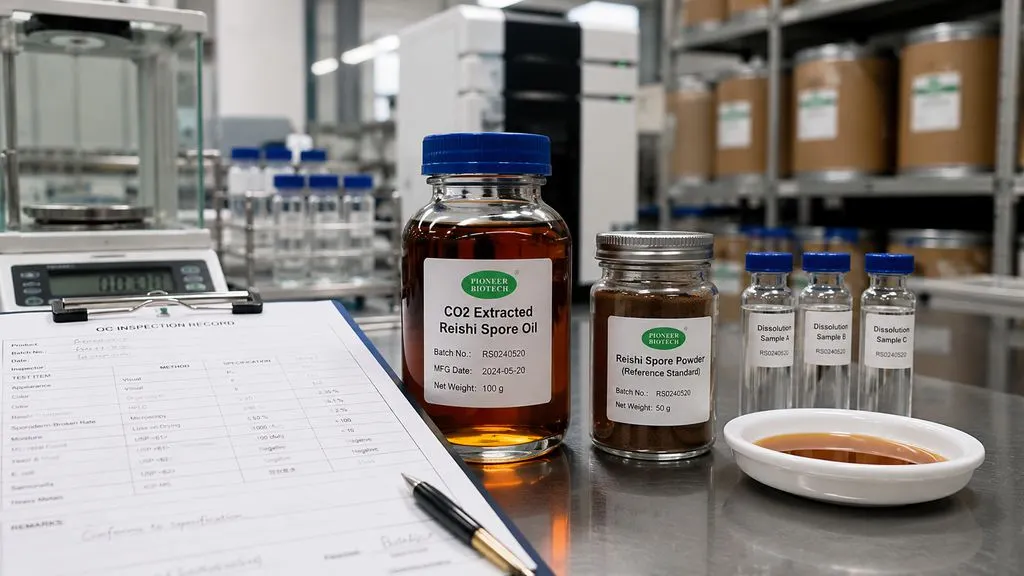
Bioavailability tests with fake gastric juice shows that reishi spore oil dissolves 85% of the way within 30 minutes, while raw spore powder only dissolves 40-55% of the way within the same time frame. This fast uptake is because the oil is in a fatty form that is already broken down by enzymes, so it doesn't need to be broken down first. When purchasing managers look at a supplier's skills, they should ask for both dissolution studies and strength tests to make sure that each batch is the same.
Organic Certification and Sourcing Transparency
In today's clean-label market, the argument over organic vs. standard is important. Certified organic reishi spore oil ensures that the plants were grown without using manmade fertilizers or pesticides, which makes it appealing to brands that want to sell in high-end health food stores. However, organic approval covers more than just farm practices; it also needs proven tracking from making the substrate to packing it in the end. Suppliers with USDA or EU Organic seals have been through strict third-party exams that check the land, water quality, and cleanliness of manufacturing equipment.
The validity of natural sources adds another level of proof. Under a microscope, real Ganoderma lucidum spores look a certain way: they are cylindrical, 8–12 micrometers in size, and their outer walls are rough. Chromatographic fingerprinting with HPLC-MS proves the species identification by comparing the amounts of ganoderic acid to standards. Buyers should insist on batch-specific testing results that include both chemical profiling and visual spore identification. This will protect them from cheaper fungal species being mixed in or fake triterpenoid added to make it stronger.
Delivery Form Evaluation for Procurement Decisions
Softgel pills are the most popular type of vitamin because they are easy for people to use and contain exactly the right amount of oil (350–500 mg per unit). For bulk reishi spore oil supplies, amber glass bottles with nitrogen cleaning are needed to stop peroxide from forming. When negotiating a purchase, it is important to pay close attention to the container specs.
Microencapsulation with spray drying can turn oil into free-flowing granules that can be used for sachet packing or pill compression. This form gives formulators more options, but it also adds to the cost of processing and could cause strength loss during heat drying. Tinctures mix reishi spore oil with carrier oils like medium-chain triglycerides and allow doses with a dropper, which is appealing to the personalized health market. Each format has its own storage needs and stability profiles that quality assurance teams have to compare to their output skills and the markets they want to reach.
Supplier Credibility Assessment Framework
Facility approval review for reishi spore oil is the first step in checking out makers. GMP-compliant businesses keep written standard operating procedures for every step of the production process, from receiving raw materials to checking the finished product before releasing it to the market. Systematic quality management is shown by ISO 9001 approval, and HACCP methods deal with contamination risks that are unique to processing plants. Facilities should offer auditing options, either online or in person, so that purchasing experts can check records of equipment accuracy and data from environmental tracking.
Lab checking that is open and clear is another sign of trust. Full panel tests from reputable sources include testing for heavy metals like lead, cadmium, mercury, and arsenic, as well as microbial loads like total plate count, yeast/mold, and coliforms, and pesticide residues compared to EPA tolerance levels. Look for COAs with stamps from an approved laboratory. ISO 17025 accreditation verifies the testing facility's ability by checking it with an outside organization. You can have more faith in a product's shelf life estimates if the supplier shares stable study data that shows the product will still be effective after 24 to 36 months of storage under certain conditions.
Reishi Spore Oil Applications and Industry Use Cases
Immune Health Supplement Formulations
When reishi spore oil is added to immune-supporting goods, it's important to think about which ingredients work best together and how the oil is delivered. The triterpenes in the oil work well with beta-glucans from yeast or mushrooms to change the immune system in two ways, affecting both natural and adaptive reactions. Formulation scientists usually put 500 mg of reishi spore oil and 250 to 500 mg of beta-glucan into veggie or gelatin softgels and package them together per dose.
Data on clinical proof and steadiness under accelerated conditions are performance measures that matter to B2B clients. Products aimed at professional healthcare outlets benefit from published human studies that show immunity markers (like natural killer cell activity or immunoglobulin levels) that can be used to back up what the labels say. Stability tests should show that triterpenoid retention is higher than 90% after 6 months at 40°C/75% RH. This is the normal accelerated technique, which predicts a 24-month shelf life at room temperature.
Scalability for organic reishi spore oil is affected by manufacturing issues. To make softgels, you need special tools and technical know-how for making the shell, making sure the fill weight is correct, and making sure the seal stays intact. Contract manufacturers that can only make mushroom extract have an edge because they follow set processes to avoid cross-contamination and have tested and proven cleaning methods. When brands are making their own private label lines, they should look at potential partners based on their minimum order amounts, wait times, and ability to make custom formulation changes while the products are being refined.
High-Value Ingredient in Skincare Innovation
More and more, the makeup industry sees reishi spore oil as a top-notch active ingredient that can help with inflammatory skin problems and oxidative aging. Its ability to bind to fats gives it technical benefits over plant extracts that dissolve in water. This is especially true in oil-based treatments and serums that don't need to be emulsified. Usually, between 2% and 5% is used in face oils, barrier repair balms, and overnight treatment masks for people with old skin.
Formulation acceptance is driven by proof of effectiveness. In vitro studies that measure anti-inflammatory activity by blocking the COX-2 enzyme and in vivo clinical trials that show wrinkle depth reduction give beauty brands the scientific evidence they need to back up their marketing promises. A new study in the Journal of Cosmetic Dermatology found that products with 3% reishi spore oil cut transepidermal water loss by 18% after 8 weeks. This supports the idea of barrier repair.
Market trends support ingredients that can do more than one thing, making recipes easier to use while still providing a wide range of benefits. reishi spore oil protects against free radicals, reduces inflammation, and strengthens lipid barriers, so formulators can use fewer ingredients that aren't as complicated. People who read labels carefully are drawn to this clean beauty movement, which promotes mushroom-derived actives as natural options to manmade peptides or retinol derivatives.
OEM and Private Label Development Opportunities
Collaboration between ingredient suppliers and brands creates value through customized solutions addressing specific market gaps. OEM partnerships allow supplement companies to access proprietary reishi spore oil blends optimized for target demographics—such as elder-focused immune formulas combining reishi spore oil with coenzyme Q10 and vitamin D, or athletic performance products pairing it with cordyceps and rhodiola extracts.
Quality control protocols must align between partners to ensure consistent output. Establishing agreed-upon acceptance criteria for incoming raw materials, in-process checkpoints during production, and finished product release specifications prevents quality disputes before they happen. Shared access to testing data through secure cloud platforms facilitates real-time transparency, allowing both parties to monitor batch performance against established benchmarks.
When going from small pilot batches to large business production numbers, scalability problems often show up. Product features can be changed by changing the size of the mixing tools, the speed of the filling line, or the weather. Scale-up validation procedures are an important part of partnerships that work well. These make sure that pilot recipes work the same way at production scale, and analytical testing makes sure that this is the case before the full market launch.
Conclusion
The strategic worth of reishi spore oil goes beyond its amazing phytochemical profile and includes its ability to be used in a wide range of business areas. Nutraceutical names get immune-supporting ingredients that are concentrated and only need small doses. Cosmetic formulators can use lipid-soluble actives that can get through the skin's defenses. Standardized triterpenoid content that meets strict purity standards is useful for pharmaceutical uses. reishi spore oil is a key ingredient for forward-thinking product developers because it can be used in many different industries and more and more people are becoming aware of how useful mushrooms can be. To be successful in procurement, you need to pay attention to the extraction method, the analytical proof, and the quality of your relationships with suppliers—factors that separate commodity purchasing from strategic sourcing partnerships delivering competitive advantage through superior product performance.
FAQ
What Constitutes an Effective Daily Dosage for Immune Support Applications?
According to clinical research, taking 500 to 1000 mg everyday, usually split into one or two doses, can help the immune system. Based on standard 20–30% extracts, this range gives you about 100–300 mg of total triterpenoids. Some brands may make their products at the higher end for situations where they need a lot of help, like during tough times of the year or during healing periods. On the other hand, maintenance health products are priced at 500 mg. Dosage suggestions should be on labels, along with proper disclaimers telling people to talk to a doctor, because everyone reacts differently and immune-modulating drugs may mix with each other.
How Can Buyers Verify Purity and Organic Certification Authenticity?
The first step in verification is to compare the certificate to records kept by the granting body. The registration numbers on USDA organic certificates can be searched through the Organic Integrity Database to prove that the certificates are still valid. Third-party testing by independent labs is another way to make sure of something. During checks, ask for split samples so that both the buyer and the seller can test the same material. Organic purity is maintained throughout the supply chain by keeping track of products from approved farms through processing and recording the chain of custody. Microscopy and DNA barcoding are advanced methods of identification that can find species substitution or the presence of an adulterant, techniques increasingly accessible through specialized testing laboratories.
Do Known Drug Interactions Require Labeling Considerations?
In lab tests, reishi products like reishi spore oil have been shown to have antiplatelet activity. This means that they might interact negatively with blood thinners like warfarin or blood thinners like aspirin. On product labels, there should be warnings telling people who are taking blood-thinning drugs to talk to their doctors before using the product. Immunosuppressant interactions are another thing to think about, since the qualities that boost the immune system might, in theory, work against drugs that are meant to lower immune function. Although there aren't many reports of clinical interactions yet, these warnings should be included on all labels because they protect both customers and brands from liability and show responsible product management.
Partner with Pioneer Biotech for Premium Reishi Spore Oil Supply
Pioneer Biotech delivers pharmaceutical-grade reishi spore oil backed by comprehensive quality assurance systems that B2B clients depend on for consistent production outcomes. Our facility in Hanzhong's Medicine Herbs Valley maintains complete control over cultivation conditions and extraction parameters, ensuring batch-to-batch uniformity across orders from sample quantities through multi-ton commitments. As a trusted reishi spore oil manufacturer holding ISO9001, HALAL, KOSHER, and FDA registrations, we provide the documentation infrastructure required for regulatory submissions in diverse global markets. Technical support teams collaborate with your product development specialists to optimize formulation performance, while flexible MOQ policies accommodate both established brands and emerging companies building new product lines. Contact our procurement specialists at sales@pioneerbiotech.com to discuss bulk pricing aligned with your volume requirements, request analytical samples demonstrating our quality standards, or explore customized OEM solutions tailored to your brand's specific positioning. We transform botanical potential into commercial success through partnership excellence.
References
Wachtel-Galor, S., Yuen, J., Buswell, J. A., & Benzie, I. F. (2011). Ganoderma lucidum (Lingzhi or Reishi): A Medicinal Mushroom. In Herbal Medicine: Biomolecular and Clinical Aspects. 2nd edition. CRC Press/Taylor & Francis.
Zhao, H., Zhang, Q., Zhao, L., Huang, X., Wang, J., & Kang, X. (2012). Spore Powder of Ganoderma lucidum Improves Cancer-Related Fatigue in Breast Cancer Patients Undergoing Endocrine Therapy: A Pilot Clinical Trial. Evidence-Based Complementary and Alternative Medicine, Article ID 809614.
Ahmad, M. F. (2020). Ganoderma lucidum: A Rational Pharmacological Approach to Surmount Cancer. Journal of Ethnopharmacology, 260, 113047.
Sliva, D. (2006). Ganoderma lucidum (Reishi) in Cancer Treatment. Integrative Cancer Therapies, 2(4), 358-364.
Boh, B., Berovic, M., Zhang, J., & Zhi-Bin, L. (2007). Ganoderma lucidum and its Pharmaceutically Active Compounds. Biotechnology Annual Review, 13, 265-301.
Hapuarachchi, K. K., Wen, T. C., Deng, C. Y., Kang, J. C., & Hyde, K. D. (2015). Mycosphere Essay 1: Taxonomic Confusion in the Ganoderma lucidum Species Complex. Mycosphere, 6(5), 542-559.