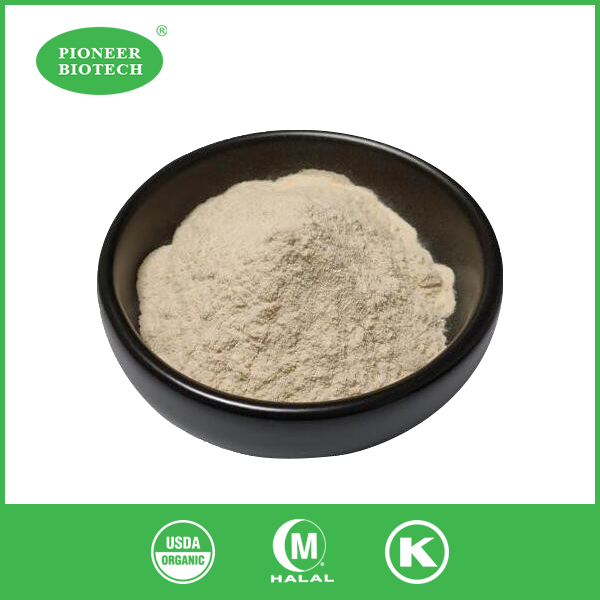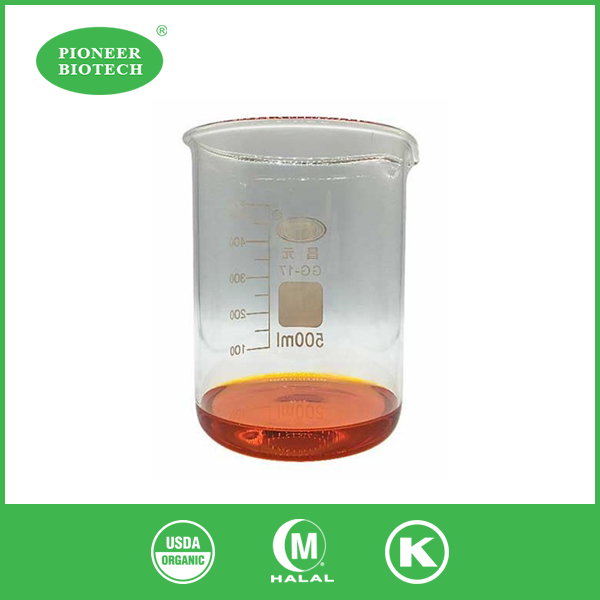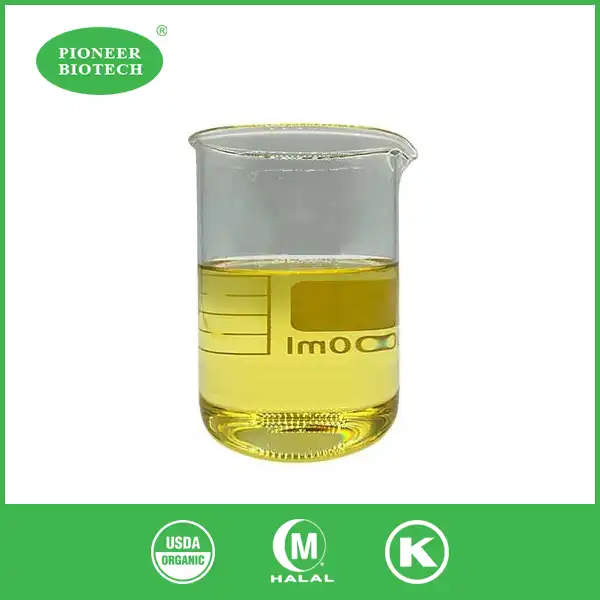

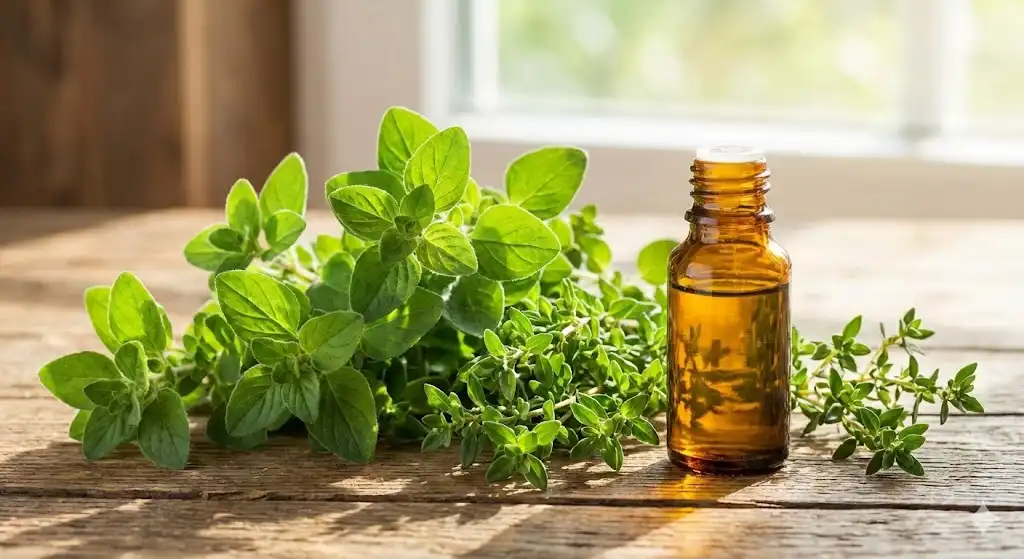
Carvacrol oil is one of nature's strongest antimicrobial chemicals. It comes from flavorful herbs such as oregano and thyme. As businesses move toward more natural ways of preserving things, this essential oil has gotten attention all over the world. The compound has amazing antimicrobial qualities and is very safe. This makes it more and more useful for drug, cosmetics, and food companies that want to find eco-friendly options to man-made preservatives.
Understanding Carvacrol Oil: Composition, Properties, and Extraction
This natural antimicrobial works well because of its unique molecular structure and bioactive ingredients. Carvacrol is the most important phenolic part of high-quality oils; it makes up 70–80% of the mixture and has amazing abilities to fight germs.
Chemical Composition and Active Components
Carvacrol has a hydroxyl group connected to an aromatic ring. Its molecular formula is C₁₀H₁₄O. In this setup, the chemical can break up bacterial cell membranes. Aside from the main part, the quality oils include complementary terpenes, like p-cymene and γ-terpinene. These terpenes work together to boost the total antimicrobial activity.
Standardized extracts with uniform carvacrol concentrations have been shown by research to work the same way in all uses. The "entourage effect," as scientists call it, means that these secondary compounds make carvacrol less effective than when it is mixed with other components.
Extraction Methods and Purity Standards
For making oils that are good enough to be used in medicines, steam distillation is still the best method. This way of doing things keeps chemicals that are sensitive to heat and gets purities over 95%. Other ways to remove are:
- Supercritical CO₂ extraction: This method gets rid of all solvents and produces the cleanest concentrates. It is perfect for pharmaceuticals that need to have no solvents left in them.
- Hydro-distillation This is a traditional method that works well for making cosmetics because it gives good results and only moderately high levels of purity.
- Microwave-assisted extraction: a new method that speeds up processing times without damaging the compounds.
These ways of extracting directly affect the quality of the product. For example, steam distillation and CO₂ extraction make materials that meet the standards of the USP and the European Pharmacopoeia.
Benefits and Uses of Carvacrol Oil in B2B Applications
The broad range of uses of this natural antimicrobial has changed many businesses by providing options that are both effective and safe. These days, apps are used for everything from making complex medicines to coming up with new makeup items.
Pharmaceutical Industry Applications
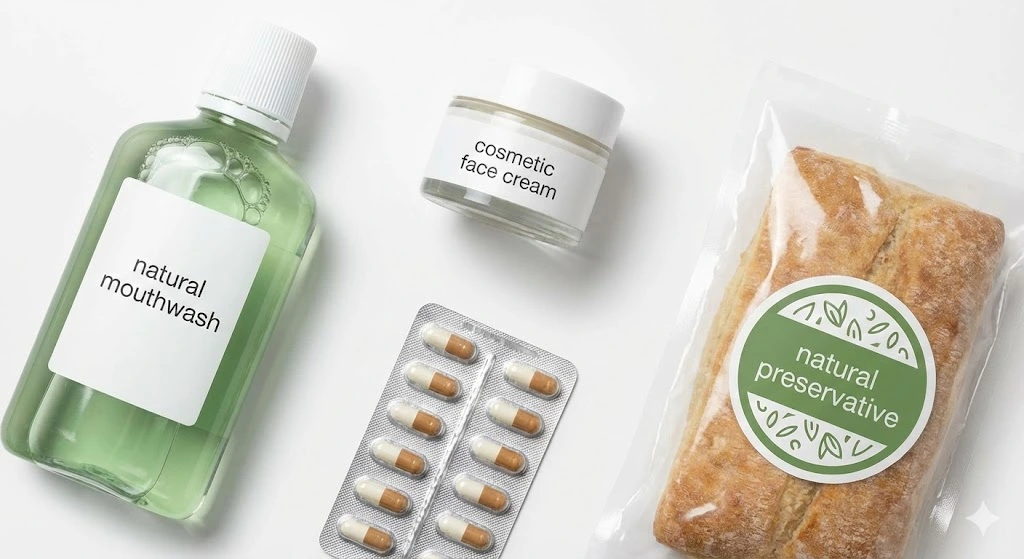
More and more, drug companies are using this chemical, carvacrol oil, in goods that help with respiratory issues, digestive problems, and skin infections. It has been shown to work against germs that are resistant to antibiotics, which makes it useful for finding new ways to treat people.
The compound shows a lot of potential in oral health products because its antimicrobial qualities help fight germs that cause periodontal disease. Research has found that common oral bacteria can be killed by as little as 0.1% of a substance, which makes it possible to create useful medicines that only need to be taken in small amounts.
Cosmetic and Personal Care Integration
This ingredient is important to cosmetic formulators because it can protect and heal the skin. The compound is used in many different ways in skincare goods.
- Natural preservation: Supports clean beauty efforts by making products last longer without artificial additives.
- Acne treatment: targets P. acnes bacteria and lowers inflammatory reactions, providing softer options to harsh chemical treatments
- Anti-aging products: These keep the skin layer working and protect against environmental damage with antioxidants.
These applications are in line with the rising customer demand for natural, effective skincare options that work like medicine without chemicals.
Food and Beverage Preservation
Food makers use this natural preservative to keep foods safe for longer while meeting clean label requirements. At levels from 0.01% to 0.1%, which are common, the compound successfully stops bacteria, yeasts, and molds from breaking down. Its GRAS (Generally Recognized as Safe) standing makes it easier for regulators to approve it in markets around the world.
Comparative Insights: Carvacrol Oil vs Other Essential Oils and Antimicrobials
Understanding how this compound stacks up against other antimicrobial agents helps procurement workers make good sourcing choices. Carvacrol-rich oils often work better than standard oils because of their unique qualities.
Essential Oil Comparisons
When carvacrol is tested against commonly used antimicrobial oils, it always shows better action against a wide range of pathogens. Thyme oil has similar phenolic compounds and works in a similar way, but it usually needs to be used in stronger amounts. Carvacrol has a broader antimicrobial range than tea tree oil, which only works against certain diseases.
Oregano essential oil, which naturally contains a lot of carvacrol, can offer similar benefits, but its strength varies with the plant source and how it was grown. This variability is removed by standardized carvacrol concentrates, which make sure that all production runs work the same way.
Synthetic Antimicrobial Alternatives
People and regulators don't like old manmade preservatives like parabens and chemicals that release formaldehyde anymore. The natural option has a lot of benefits, such as
- Regulatory acceptance: Most big markets see it as safe, so it doesn't need to be tested for safety a lot.
- What customers want: Fits with the clean label movement and the idea that products should be natural
- Environmental impact: This option is biodegradable and has a much smaller effect on the environment than similar man-made products.
For companies that want to make long-term progress toward making environmentally friendly products, these reasons make natural antimicrobials, such as carvacrol oil, an important choice for their formulations.
Global Procurement Guide: Buying, Pricing, and Supplier Selection
When you buy something, knowing how the market works, what quality means, and what the suppliers can do will help you get what you want. The world market for natural antimicrobials is still growing. This creates opportunities and challenges for people who want to buy them.
Quality Standards and Certifications
ISO 9001 certification, HACCP implementation, and cGMP compliance are all parts of a quality management system that good providers use. Important papers are:
- Certificate of Analysis: confirming the amount of carvacrol, the bacteria limits, and the heavy metal standards
- Information on stability: Showing how long the product lasts in different types of storage
- Organic certifications: USDA Organic, EU Organic, or similar standards when needed
These licenses make sure that goods meet strict standards and help the target markets follow the rules.
Supplier Evaluation Criteria
Choosing trustworthy partners means looking at more than just the price. For long-term success, the ability to make things, technical support, and a reliable supply line are very important. Top providers back product development efforts with custom concentrations, analytical method creation, and help with formulation.
Geography also plays a role in choosing suppliers. For example, it is easier to get raw materials and lower production costs when working with established makers in China, India, and countries in the Mediterranean.
Pioneer Biotech: Premium Natural Antimicrobial Solutions
Since 2012, Shaanxi Pioneer Biotech Co., Ltd has been a top maker of high-quality plant extracts. Our facility covers 7,000 m² and is located in Hanzhong City's famous "Medicine Herbs Valley of Qinling Mountains." It blends old ways of doing things with modern manufacturing technology.
Our broad quality control system includes ISO9001, HALAL, KOSHER, and FDA approvals. This makes sure that our products meet the best global standards. Our specialty is making standard carvacrol oil that consistently has the same level of strength and purity. This oil supports pharmaceutical, cosmetic, and nutritional uses.
The company promises quality in all areas of its work, from making products to providing expert support, helping with analytical method development, and working with customers to make sure their unique needs are met. Our experienced team works closely with clients to find solutions that meet their exact needs and are still affordable.
Conclusion
Carvacrol oil is a better natural antibacterial option for today's businesses that are looking for effective and safe substitutes for man-made preservatives. It is a great choice for drug, skincare, and food companies because it is effective, approved by regulators, and can be used in many ways. Because of its unique qualities and the fact that more and more people want natural products, the substance is a good choice for companies that want to stay ahead of the curve. This strong natural antimicrobial can be successfully added to a wide range of products as long as people know about quality standards, what suppliers can do, and how the product will be used.
FAQs
In business settings, what is the usual concentration of carvacrol oil?
The effective percentage changes depending on the application. In food, it can be anywhere from 0.01% to 0.1%. In cosmetics, it can be 0.1% to 0.5%, and in drugs, it can be up to 2%. The exact level relies on the target pathogens, the product, and the rules that apply.
How useful is carvacrol oil compared to man-made antimicrobial drugs?
In comparison to synthetic alternatives, studies show that carvacrol oil has equal or better antimicrobial activity against many pathogens. It has a wide range of activities and antioxidant qualities that often help in ways that man-made chemicals can't.
What do you need to do to keep oil fresh and effective?
As long as the goods are kept in sealed containers, away from light and heat, and at temperatures below 25°C, they will be safe. In these settings, high-quality oils stay effective for two to three years. Some sellers use nitrogen flushing to make better packaging that keeps the product fresh for longer.
Partner with Pioneer Biotech for Premium Antimicrobial Solutions
Pioneer Biotech is a known carvacrol oil producer that provides businesses with natural antimicrobial ingredients they can count on. Our uniform ways of making things guarantee that all product batches have the same quality and strength. At the same time, our knowledge of the field helps with the development of new products.
To meet your needs, we offer flexible minimums for large orders, in-depth analysis of the data, and help with making custom formulations. Our foreign licenses and quality management systems make sure that goods comply with rules in all markets.
If you want to talk about your antimicrobial ingredient needs and learn how our high-quality carvacrol oil options can help your products work better and support your sustainability goals, email us at sales@pioneerbiotech.com.
References
Nostro A, Papalia T. Antimicrobial activity of carvacrol: current progress and future prospectives. Recent Patents on Anti-Infective Drug Discovery. 2012;7(1):28-35.
Sharifi-Rad M, Berkay Yılmaz Y, Antika G, et al. Phytochemical constituents, biological activities, and health-promoting effects of the genus Origanum. Phytotherapy Research. 2021;35(1):95-121.
Hyldgaard M, Mygind T, Meyer RL. Essential oils in food preservation: mode of action, synergies, and interactions with food matrix components. Frontiers in Microbiology. 2012;3:12.
Ahmad A, van Vuuren S, Viljoen A. Unravelling the complex antimicrobial interactions of essential oils-the case of Thymus vulgaris (Thyme). Molecules. 2014;19(3):2896-2910.
Burt SA, Ojo-Fakunle VT, Woertman J, Veldhuizen EJ. The natural antimicrobial carvacrol inhibits quorum sensing in Chromobacterium violaceum and reduces bacterial biofilm formation at sub-lethal concentrations. PLoS One. 2014;9(4):e93414.
Llana-Ruiz-Cabello M, Gutiérrez-Praena D, Puerto M, et al. Evaluation of the cytotoxicity and genotoxicity of carvacrol and thymol using the Allium cepa test. Food and Chemical Toxicology. 2015;85:106-115.