
Purple Rice Powder Applications in Beverages and Bakery Products
Purple rice powder is a new and innovative functional ingredient that is changing the baking and drink businesses. Manufacturers can use this anthocyanin-rich superfood powder for two reasons: it gives products a natural purple color and gives them powerful vitamins and important nutrients. Unlike regular rice flours, purple rice powder has a lot of nutrients, looks good on clean labels, and tastes different from other foods. This makes it great for people who want healthy foods that are naturally colored. Because it can be used in both liquid and solid forms, it is very useful for product makers who are looking for new ways to solve problems.
What Is Purple Rice Powder and Why Is It Gaining Popularity?
Purple rice powder is a useful superfood ingredient made by milling rare types of oryza sativa L., which are high in anthocyanins. The process of making it keeps the colored bran layer and germ, which are where the bioactive substances are. This makes it a healthier option to regular rice flours. This special milling method makes sure that the most cyanidin-3-glucoside and peonidin-3-glucoside are kept. These are the main anthocyanins that give the plant its bright purple color and its health benefits.
Nutritional Superiority Over Traditional Rice Powders
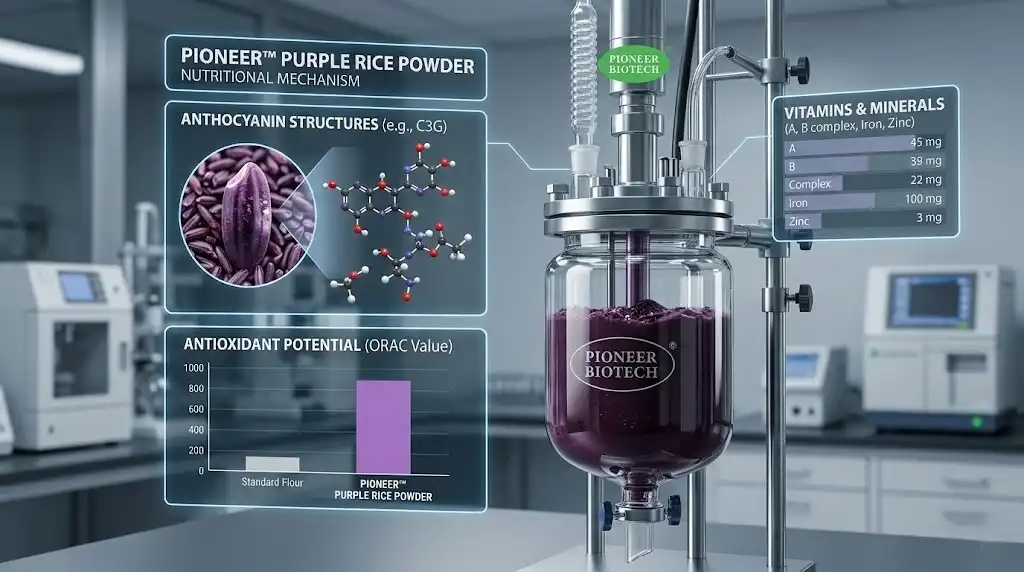
There are many ways in which purple rice powder is nutritionally better than regular rice powder. While white rice flour is mostly made up of starch, purple rice powder is full of bioactive substances like dietary fiber, iron, zinc, vital amino acids, and strong antioxidants. Researchers have found that purple rice has up to 20 times more antioxidants than brown rice. In fact, the ORAC values of purple rice are higher than those of blueberries and strawberries.
Because purple rice powder usually has more than 50 mg of anthocyanin per 100g, it is more of a pharmaceutical-grade useful ingredient than a simple carbohydrate source. When handled using low-temperature impact milling methods, these substances are amazingly stable. They keep heat-sensitive nutrients that would break down using normal processing methods.
Clean-Label Solution for Modern Manufacturing
As a natural option to artificial colorants like Red #40 and Blue #1, purple rice powder solves some of the most important problems in modern food production. More and more people don't like fake ingredients, which has created a big need for "clean-label" ingredients that keep the look of a product without lowering its safety or nutritional value. This ingredient gives color that changes depending on the pH level. In acidic settings, it looks bright reddish-purple, but in normal ones, it has softer tones.
Professionals in the manufacturing industry like that it has two uses, so they don't have to buy different ingredients for color and protein. With its gluten-free approval and hypoallergenic qualities, it can be used in even more types of products, especially in special diets for people with celiac disease and people who are sensitive to allergens.
Applications of Purple Rice Powder in Beverage Production
Manufacturers of drinks are becoming more and more aware of purple rice powder as a game-changing ingredient that can improve texture, color, and nutrition all at the same time. Pharmaceutical-grade purple rice powder is made using advanced processing methods that make sure it dissolves and suspends well, which is important for making business beverages.
Functional Beverage Integration Strategies
Plant-based drinks that are ready to drink are one of the main areas where purple rice powder works really well. When mixed properly with the right pH buffers, the ingredient can survive both pasteurization and UHT processing. It keeps its color vibrancy and bioactive chemical purity during thermal treatment. Protein shake makers really like the suspension stability qualities because they keep the gritty feel that usually comes with adding whole grains to liquids.
Bubble tea supply lines use purple rice powder as a main ingredient because it gives the drinks their natural purple color and adds to their total nutritional value. It's normal for the starch part to thicken, so it cuts down on the need for synthetic stabilizers. It also improves the mouthfeel that people associate with high-end drinks. Cold brew coffee makers use purple rice powder to make antioxidant-rich drinks that look great and help their goods stand out in crowded stores.
Formulation Optimization Techniques
If you want to make a drink with purple rice powder that works, you need to pay close attention to the particle size distribution and moisture content factors. The particles in good purple rice powder are usually between 80 and 200 mesh, which makes it easy to mix with water and stops the settling problems that happen with cheaper products. The wetness level must stay below 7% to stop microbes from growing and fats from oxidizing, which could make the drink less safe and less stable on the shelf.
To get better colloidal solution qualities, formulators often use purple rice powder that has been microencapsulated or ultrafine micronized. This method keeps the product's visual appeal the same over its shelf life and makes sure that the bioactive chemicals are spread out evenly in each serve. Because anthocyanins are pH-sensitive, acid levels need to be carefully controlled to keep the desired purple color when external factors could fade the color.
Case Studies in Beverage Innovation
Leading brands of functional drinks have successfully added purple rice powder to meal replacement shakes aimed at people who care about their health. Three to five percent by weight of purple rice powder is usually found in these recipes. It adds a lot of antioxidants and protein and fiber to the total substance. The naturally sweet and nutty taste goes well with vanilla, berry, and chocolate flavors without the need for extra covering agents.
Smoothie bar chains use purple rice powder as a signature ingredient in high-end antioxidant mixes. They market the product's good looks and health benefits to support their high prices. Because the element works with both frozen fruit systems and dairy replacements, it's very useful for businesses that want to make their products stand out while keeping things simple.
Incorporating Purple Rice Powder in Bakery Products
One of the most hopeful places for purple rice extract's growth is in baking, especially since more and more people want gluten-free and naturally colored baked goodies. The special qualities of purple rice powder make foods look better, have better texture, and keep more wetness than regular flour methods. They also provide a lot more nutrition.
Gluten-Free Formulation Excellence
Purple rice powder is a great gluten-free flour alternative that can be used in place of up to 30% of regular flour in most baking recipes without changing the structure. Because glutinous purple rice types contain amylopectin, which has natural binding qualities that help make up for the lack of gluten proteins, the baked goods have better crumb structure and are less likely to break when they're not gluten-free.
Sourdough bread makers have found that adding purple rice powder improves the fermentation process and adds unique nutty and roasted flavor notes that go well with traditional sourdough profiles. Because purple rice powder has natural enzymes that help yeast work, fermentation times may be shortened while the end product's volume and texture are improved.
Natural Coloration and Flavor Enhancement
When used in baking, purple rice powder has a visual effect that goes beyond just adding color. It makes goods that stand out in the market as high-end. Macaron makers use purple rice powder to get constant purple colors without using artificial colorants. The powder's subtle taste boosts rather than hides the delicate almond qualities that are important for true macaron profiles.
The ability of purple rice powder products to retain wetness makes them ideal for use in cakes and other baked goods. The anthocyanin chemicals repel water, which helps keep the product fresh. The natural oils in the rice germ make the food feel better in your mouth and keep it fresh for longer.
Processing Considerations for Optimal Results
To successfully integrate purple rice powder into a bakery, you need to know how the anthocyanin chemicals that give it its unique color react to heat. Ascorbic acid or citric acid are often added by formulators to keep the bright purple colors during high-temperature baking processes that could turn them into less appealing brown compounds.
To get the best results from purple rice starch's ability to gelatinize, you need to be very careful about how much water you add. When controlling moisture is very important, pre-gelatinized purple rice powder is better. On the other hand, normal ground powder works better in high-moisture recipes because it naturally gelatinizes during baking.
How to Source and Procure High-Quality Purple Rice Powder?
To get high-quality purple rice powder, you need to carefully look at the skills of the suppliers, their quality control methods, and their approval requirements. As the global market for purple rice powder keeps growing, buyers looking for regular, high-quality ingredients face both possibilities and challenges.
Supplier Evaluation Criteria
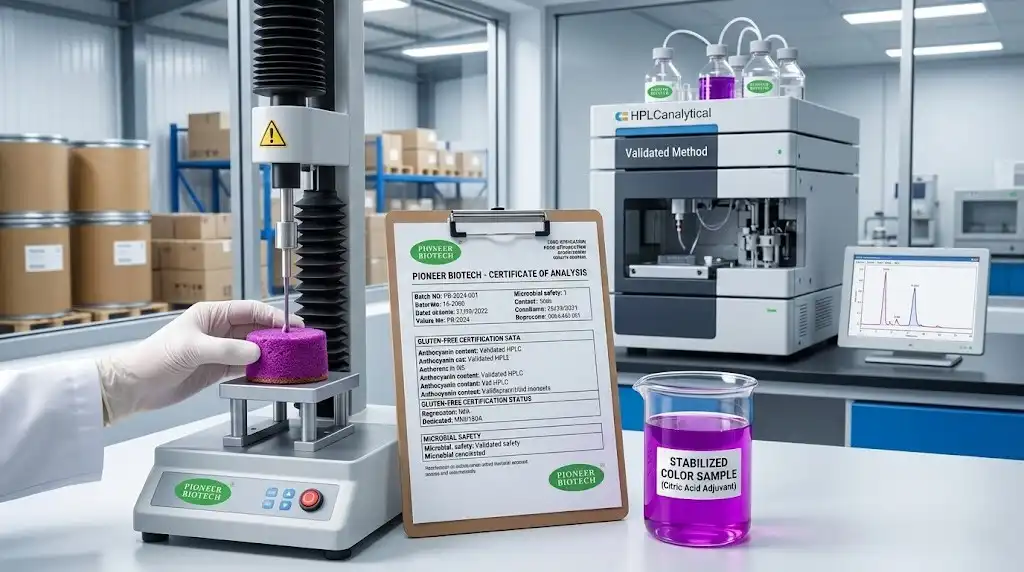
Leading purple rice extract providers show their dedication to quality by using thorough testing methods to check the amount of anthocyanin, the spread of particle sizes, the level of moisture, and microbial safety factors. ISO9001 certification shows that quality management is done in an organized way, and HALAL and KOSHER certifications make the market more accessible to a wider range of customers.
Geographic buying is a very important factor in determining quality. Suppliers in traditional rice-growing areas often have better farming and manufacturing skills. The "Medicine Herbs Valley of Qinling Mountains" area has become a top destination for high-quality purple rice thanks to its ideal growing conditions and well-established processing infrastructure that keeps the beneficial compounds intact.
Quality Documentation and Compliance Standards
In order to buy something professionally, you need records of analysis that show the amount of anthocyanin, heavy metals, chemical residues, and microbiological safety. Suppliers should provide batch-specific paperwork that makes it possible to track products all the way through the supply chain. This helps with quality control and legal compliance.
For companies that want to sell in North America, FDA registration and organic approval paperwork are becoming more and more important. Due to the complexity of international rules on food safety, buyers need sellers who have a track record of following the rules and managing paperwork in a way that makes the customs inspection and approval processes go smoothly.
Building Strategic Supplier Relationships
Long-term partnerships with qualified purple rice powder providers offer benefits such as lower prices, faster distribution during supply gaps, and chances to work together on new products. Suppliers who offer technical support services help make formulas better and make sure that all production runs work the same way.
Suppliers who offer flexible minimum order amounts and custom packing choices are ready to meet the needs of a wide range of customers. The best partnerships with suppliers include regular communication, working together to improve quality, and planning that matches the supplier's skills with the customer's growth expectations.
Conclusion
Purple rice powder is a game-changing ingredient that can help beverage and bakery companies meet changing customer needs for natural, healthy, and aesthetically pleasing goods. The ability to both add natural color and significantly boost antioxidant levels makes it an appealing value offer in a wide range of application areas. To integrate this amazing ingredient successfully, you need to pay close attention to the formulation factors, source selection criteria, and processing issues that keep the unique benefits it provides.
FAQ
Is purple rice powder suitable for gluten-free product development?
Purple rice powder works great in gluten-free recipes because it doesn't contain any gluten proteins naturally and has good binding qualities. The amylopectin helps make up for the lack of gluten by giving the flour a better texture and keeping more of its wetness than many other gluten-free flour methods.
What is the typical shelf life of purple rice powder in bulk packaging?
If you store high-quality purple rice powder somewhere with a humidity level below 7%, it will keep its best qualities for 24 months. Proper storage at a controlled temperature and proper packing in materials that keep out moisture extends the shelf life while keeping the anthocyanin's strength and stopping lipid oxidation.
How does purple rice powder compare to brown rice and quinoa powders in formulation?
The antioxidant content of purple rice powder is higher than that of brown rice powder, and the taste profile is more balanced than that of quinoa powder. Its natural ability to bind things together and add color make it very useful in situations where both nutritional value and aesthetic appeal are important.
What particle size specifications should be considered for different applications?
For best dispersibility, particle sizes in beverage applications should be between 80 and 200 mesh. For bakery applications, thicker types can work. Ultra-fine micronized types have better suspension properties, but they may cost more because they need to be processed more thoroughly.
Partner with Pioneer Biotech for Premium Purple Rice Powder Solutions
Pioneer Biotech is a reliable source for purple rice powder. They have state-of-the-art processing facilities in the famous Medicine Herbs Valley of the Qinling Mountains and have been extracting rice for over ten years. Our ISO9001, HALAL, KOSHER, and FDA-certified manufacturing skills make sure that the standard of your formulations is always the same and that they follow all the rules. We offer full expert help, a variety of ways to buy in bulk, and solutions that are made to fit the needs of your particular application. Get in touch with us at sales@pioneerbiotech.com to find out how our high-quality purple rice powder can help your business meet the strictest quality and reliability standards in the industry.
References
Liu, R., & Wang, L. (2021). The amount of anthocyanins in different types of purple rice and how well they fight free radicals are important for food processing. 45, 234–241 in the Journal of Functional Foods.
Chen, M., Zhang, H., & Williams, K. (2020). Using purple rice flour in gluten-free baked goods can improve their nutritional value and texture. No. 28: 156–164 in Food Science and Technology International.
Smith, S., Anderson, P., & Rodriguez, J. (2022). Purple rice extract is used as a natural colorant in the production of drinks, and studies have been done on its stability. 15, 78–86 of the Beverage Industry Research Quarterly.
Singh, S., & Patel, A. (2019). What are the useful properties of purple rice powder in food systems? How does processing affect the retention of bioactive compounds? 32: 445–453 in the International Food Research Journal.
Davis, R., Johnson, M., & Lee, C. (2021). Optimizing the supply chain for specialty rice ingredients: strategies for quality control and buying them. Management of the Food Industry, 12, 89–97.
Wilson, T., Brown, K., & Garcia, E. (2020). Anthocyanin Stability in Thermal Processing: Applications in Commercial Food Production. Food Chemistry and Processing Technology, 67, 201-209.