

How To Use Glycolic Acid Powder?
Understanding how to properly use glycolic acid powder is fundamental for formulators, procurement managers, and quality assurance teams working in cosmetics, pharmaceuticals, and specialty chemical industries. This anhydrous alpha-hydroxy acid (AHA) requires precise dissolution techniques and controlled concentration management to unlock its full keratolytic and exfoliating potential. When properly integrated into formulations, pharmaceutical-grade crystalline powder delivers superior stability, extended shelf life, and precise dosing control compared to liquid alternatives. The key steps involve accurate weight measurement, selection of appropriate solvents, gradual pH adjustment, and comprehensive stability testing to ensure batch consistency and consumer safety across diverse product applications.
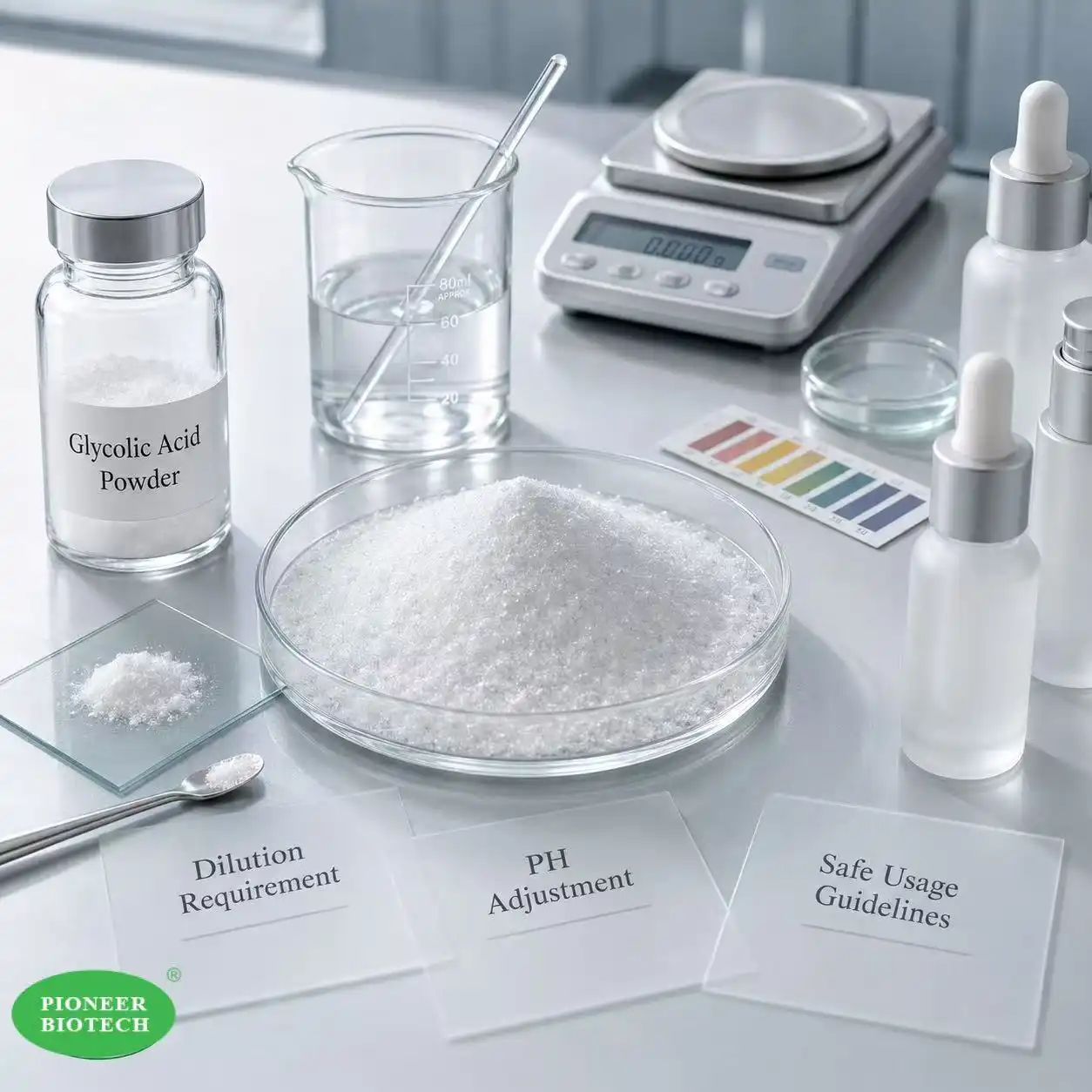
Understanding Glycolic Acid Powder and Its Benefits
The Chemical Nature of Glycolic Acid Powder
Hydroxyacetic acid (CAS 79-14-1) is the smallest molecule in the alpha-hydroxy acid family. Glycolic acid powder is the best form of this acid. This white crystalline solid can get deeper into the stratum corneum than bigger AHA molecules because its molecular weight is only 76.05 g/mol and its formula is C₂H₄O₃. Standard liquid solutions contain 30% water. The dry powder format gets rid of this water, giving formulators full control over the end product concentration and getting rid of the extra shipping costs that come with moving water weight.
When kept properly in sealed cases away from moisture, the crystalline structure stays very stable. This natural steadiness makes the shelf life two years, which is a lot longer than pre-diluted liquid forms that break down when they get wet. The pharmaceutical-grade purity level of 99%+ makes sure that there aren't many impurities that could change the consistency of batches or change the color of finished products in a way that isn't wanted.
Key Cosmetic and Pharmaceutical Advantages
Putting this active ingredient into professional formulations can help with a lot of different types of therapy. As a keratolytic agent, it breaks the ionic bonds between corneocytes, which speeds up the skin's natural peeling process and shows off the fresher skin layers below. This mechanism is very helpful for anti-aging serums, acne scar treatments, and products that get rid of hyperpigmentation.
In addition to being used on the skin, its chelating qualities make it useful in pharmaceutical formulas that need to remove metal ions. Two carboxyl and hydroxyl groups work together to make stable complexes that stop oxidative catalysis in delicate mixtures. This feature makes the product more stable and keeps the active ingredient's effectiveness throughout its lifecycle.
Optimal pH Ranges and Concentration Guidelines
Keeping the right pH levels and concentration ranges for the planned uses is very important for the success of formulation. The pKa value of 3.83 means that the acid works best between pH 3.5 and 4.0, where it is mostly in its protonated, membrane-permeable form. Concentrations are very different depending on the use. For example, daily exfoliating toners usually have 5–10%, therapeutic serums have 10–15%, and professional chemical peels can have 20–70% for controlled dermatological procedures.
Concentration methods need to be customized for each skin type and state. Skin types that are sensitive should start with 5-8% concentrations and pH levels that are balanced around 4.5. Skin types that are average to oily can handle 10-15% concentrations at pH levels of 3.8-4.2. Professional goods need to come with a lot of safety information and clear directions on how to use them so that they don't get messed up or cause bad responses.
How To Use Glycolic Acid Powder Safely and Effectively
Preparing Glycolic Acid Solutions: Step-by-Step Protocol
To make solutions from crystalline powder, you have to pay close attention to how you measure and dissolve the powder. First, figure out the exact mass that you need by using the batch volume and final concentration that you want. For small amounts, use calibrated scientific balances that are accurate to at least 0.01 g. For large quantities, use scales that are accurate to 0.1 g.
The choice of solvent has a big effect on how well the product dissolves and what its properties are in the end. For simple water-based mixtures, deionized water works. For anhydrous or emulsion systems, propanediol, propylene glycol, or ethoxydiglycol make it easier to dissolve. Warming the mixture slowly to 70–80°C speeds up the breakdown process without damaging the active ingredient. Magnetic stirring makes sure that the material is spread out evenly and reduces aeration, which can cause oxidative stress.
Never dump all of the glycolic acid powder into the liquid at once; doing so could cause it to clump together or not dissolve completely. Keep an eye on the temperature throughout the process and make sure it stays the same so that results can be repeated between runs. After the ingredients are completely mixed, let the solution cool to room temperature. Then, measure and change the pH.
Application Methods and Dosage Guidelines
Effective application methods weigh the healing benefits against the risk of discomfort. To keep skin from becoming too sensitive, daily scrubbing products should have a pH level above 4.0 and a dose of 5–10%. These formulas can be used every day as long as they are applied once a day, preferably in the evening, so that photosensitivity issues don't happen during sun exposure hours.
Usually, 10-15% amounts are applied two to three times a week as part of treatments for acne scars, melasma, or photoaging. This sporadic plan gives the skin barrier enough time to heal between treatments. Care must be taken when using complementary actives. For example, hyaluronic acid, niacinamide, and ceramides work well together. On the other hand, using retinoids or benzoyl peroxide at the same time may make itching worse.
Professional chemical peels with 20–70% concentrations need special training and places where they can be used that are monitored. These strong formulas should only be used by licensed professionals who follow strict safety rules, such as checking the skin before the treatment, applying them at the exact time, and neutralizing them properly.
Potential Side Effects and Risk Mitigation
Temporary erythema, tingling, and dryness are some of the most common side effects, especially when the product is first introduced. As the face gets used to regular cleansing, these effects usually go away. Chemical burns, long-lasting inflammation, or post-inflammatory hyperpigmentation are more serious problems that can happen when there is too much concentration, too much contact time, or the wrong pH levels.
Putting in place thorough patch testing procedures saves end users and limits your risk. Tell people to put a small amount on the inside of their forearm or behind their ear and wait 24 to 48 hours to see if they have any bad reactions before putting it all over their face. Gradual introduction tactics, which start with lower doses and less frequent use and then increase them, help people build tolerance while keeping an eye on their own sensitivity limits.
Because AHA makes you more sensitive to light, product labels must make it clear that you need to protect your skin from the sun. Broad-spectrum SPF 30+ sunscreen should be worn during treatment and for one week after stopping treatment. Keeping track of these warnings shows that you're following the rules and lowers the risk of product liability.
Comparing Glycolic Acid Powder with Other Alpha Hydroxy Acids and Formats
Molecular Differences Between AHA Types
Knowing the differences in structure between different alpha-hydroxy acids helps you choose the best active ingredient for your recipe needs. The smallest molecular size of glycolic acid powder (76.05 g/mol) lets it penetrate the stratum corneum the deepest, but it also irritates the skin the most. Lactic acid (90.08 g/mol) is better for sensitive or dry skin because it exfoliates more gently and adds moisture to the skin.
With its larger aromatic structure, mandelic acid (152.15 g/mol) is great for dark skin tones that are worried about the risks of post-inflammatory hyperpigmentation because it removes dead skin cells on the surface. The bigger molecule goes deeper more slowly, which lowers the chance of inflammation while still providing good comedolytic and antibacterial effects. In spite of being a beta-hydroxy acid, salicylic acid is better at healing oily, acne-prone skin because it can get into the pores and dissolve them.
The selection criteria should take into account molecular weight, target depth, skin sensitivity profiles, and the results that are wanted. Larger AHA molecules may be better for products that aim to improve surface texture and barrier function, while smaller molecular options are better for products that aim to reduce deep wrinkles and boost collagen production.
Format Comparison: Powder vs. Liquid vs. Cream
Each delivery format has its own pros and cons that affect decisions about procurement and formulation flexibility. Powder forms don't contain any water, which cuts shipping costs by up to 60% and makes it possible to make anhydrous products that can't be made with liquid forms. The solid structure stays stable for 24 months when stored properly, which is a lot longer than the 12 to 18 months that most pre-diluted liquids stay stable.
Liquid forms are easy to use right away because they don't need to be dissolved, which requires special tools and trained people. However, the natural water content limits the highest amounts that can be used and brings the risk of microbial infection, which calls for preservative systems. Cream bases act as buffering matrices that lower the risk of irritation but limit the flexibility of formulations and the accuracy of concentrations.
A cost study shows that powder is more cost-effective in the long run, even though it costs more per kilogram at first. When shipping costs, storage space needs, and the fact that powder formats can be used to make different products from the same raw materials, are all taken into account, manufacturers who make a wide range of products get the best return on their investment.
Purity Grades and Quality Implications
Pharmaceutical-grade quality standards have a big effect on how well a product works and how well it follows the rules. Technical-grade materials that are 70–80% pure still have flaws that can change color from batch to batch, make them less stable, and make them more irritating. These lower-quality materials work well for cleaning industrial spaces, but they aren't good for use in cosmetics or medicines, where consistency and safety records are important.
Pharmaceutical-grade powder that is 99% or more pure makes sure that all production runs will work the same way. Heavy metal levels below 10 ppm, leftover solvent levels below 5000 ppm, and microbial numbers below 1000 cfu/g are all strict enough to meet legal standards in all important markets. Certificates of Analysis that show that these standards have been met by a third party are the quality assurance proof that is needed for regulatory submissions and customer checks to go smoothly.
Organic certification makes things more difficult for brands that want to make natural positioning claims. Synthetic production through ozonolysis of oleic acid comes from plant oils, but the chemical change process might not meet the requirements of some organic certifications. To make sure claims are true, procurement teams have to check supplier paperwork against the standards of the relevant certification group.
Procuring Glycolic Acid Powder: What B2B Clients Should Consider
Supplier Evaluation and Certification Requirements
Examine their production abilities, quality control methods, and compliance papers to find trustworthy suppliers. GMP is required for pharmaceutical and cosmetic uses. Documented process parameters, rigorous contamination control, and cleaning techniques are shown. ISO9001 quality management certification implies processes are in place to assess customer satisfaction and guarantee improvement.
HACCP and ISO22000 certifications for hazard analysis protocols and food safety management systems are required for food applications. Kosher and Halal approvals help dietary supplements and useful foods reach new markets. Organic USDA and EU certifications show that clean-label brands source and process their products sustainably.
Unlike brokers without manufacturing control, sophisticated sellers may audit. Get a tour of the factory or accept third-party audit reports on its physical status, quality lab capabilities, and raw material tracking systems. Before buying, check if a supplier won't disclose how they make glycolic acid powder.
Logistics and Supply Chain Considerations
Supply chains that are dependable reduce production issues that delay product launches and cost money. Look at the supplier's inventory rules, delivery locations, and wait times. Compared to suppliers who only ship from foreign factories, which take 6–8 weeks, regional stores allow for quick replenishment.
Minimum order number talks weigh the costs of owning goods against lower prices for larger orders. Saving money and avoiding overstock by placing blanket buy orders with scheduled releases. Storage space and material movement depend on packaging like 25 kg fiber drums, bulk bags, and isotanks.
Hygroscopic items like solid acids need steady conveyance. Moisture-barrier bags with desiccant packets prevent caking and breakdown after extended transportation. Material Safety Data Sheets, Certificates of Analysis, and customs declarations must accompany every shipment to minimize delays.
Price Analysis and Contract Negotiation Strategies
Raw material costs, production capacity usage, and competition affect market prices. Currently, purity, order quantities, and delivery terms determine pharmaceutical-grade material prices. Consider the overall cost of ownership, including freight, tariffs, and quality control testing, from various recognized providers.
Volume purchases bring you better pricing and show suppliers that you're serious about purchasing, encouraging them to invest in your relationship. Annual supply agreements with quarterly price reviews protect against market volatility while accommodating demand changes. Include quality performance clauses to minimize specification drift and promote excellence.
To optimize cash flow and reduce supplier risk, negotiate payment conditions. Net terms are 30–60 days, and letters of credit protect foreign deals with strangers. When cash flows allow faster settlement, 2%–3% early payment discounts can yield good annualized returns.
Practical Case Studies and Industry Applications
Successful Cosmetic Formulation Examples
Pharmaceutical-grade crystalline material is used by top skincare brands to make innovative, expensive products. A global cosmetics business developed a 15% two-phase serum solution with hyaluronic acid capsules and ceramide complex. The anhydrous glycolic acid powder allowed accurate dose control, while water's delayed effect reduced discomfort on the initial application. 94% of clients were happy, and the anti-aging industry made a lot of money.
Contract manufacturers with aestheticians created 20%–50% progressive peel systems. The powder format is stable, so kit configurations with longer shelf lives reduced waste from liquid formulas that went bad too soon. Precise reconstitution techniques ensured consistent treatment outcomes, giving practitioners confidence and encouraging repeat visits.
Pharmaceutical and Therapeutic Applications
Prescription acne vulgaris and photodamage treatments use pure ingredients. An FDA-approved composition with a 12% concentration employs microsphere delivery technology to adjust release rates to make the drug simpler to manage while maintaining its therapeutic power. Clinical trials showed significant improvements in comedone count, inflammatory lesion size, and quality of life compared to regular tretinoin.
Smaller pharmaceutical companies can use proven formulation platforms through OEM partnerships instead of investing in research. These partnerships speed up product launch by providing legal paperwork, stability data, and production process specs. Sharing industrial resources allows flexible production while meeting GMP standards for pharmaceutical approval.
Overcoming Common Formulation Challenges
The most prevalent product development technical issue is pH instability. It strongly acidifies simple water solutions, lowering their pH to 2.5 to 3.0, requiring buffering systems. The molecule stops working when sodium hydroxide neutralizes too much acidity and makes the solution too alkaline. Controlled titration, maintaining the temperature below 40°C, and monitoring pH prevent heat damage during adjustment.
Too much saturation or temperature variations during storage cause final items to crystallize. Keep concentrations below solubility limits at the lowest predicted storage temperatures to avoid precipitation. Propanediol or film-forming polymers that capture dissolved molecules impede crystallization. Accelerated stability testing at different temperatures identifies weak formulations before commercialization.
Skin irritation treatment must be thorough and user-friendly. Anti-inflammatory herbs, including allantoin, bisabolol, and green tea polyphenols, reduce inflammation without impairing exfoliation. Polymer frameworks and lipid vesicles prolong active ingredient release while maintaining dosage. Consumer education that emphasizes moderate exposure and hydration works best.
Conclusion
When formulators, procurement teams, and quality managers know how to use pharmaceutical-grade crystalline alpha-hydroxy acid correctly, they can make better products for uses in cosmetics, drugs, and specialty chemicals. Compared to liquid options, the anhydrous glycolic acid powder format offers more formulation options, longer stability, cheaper shipping, and more accurate concentration control. To be successful, you need to know how to dissolve substances, how to control pH levels, how to use different concentrations for different purposes, and how to make sure that your product works well with other active ingredients. By carefully choosing suppliers based on their certifications, quality systems, and supply chain skills, businesses can build strong partnerships that will help them grow in the long run. By following the technical guidelines, risk-reduction strategies, and best practices for purchasing listed in this guide, B2B clients can confidently add this strong active ingredient to new formulations that provide measurable therapeutic benefits while maintaining high safety standards.
FAQ
1. What safety considerations apply when using glycolic acid powder across different skin types?
Checking the skin type is very important before suggesting the right concentrations and how often to use them. Normal and oily skin types can usually handle 10-15% concentrations at pH 3.8–4.2 when used twice or three times a week. For sensitive skin, use products that are softer, starting at 5-8% and having a pH above 4.5. Only use them once or twice a week. People with darker skin are more likely to get post-inflammatory hyperpigmentation, which is why careful concentration selection and patch tests are required. If you have acne, eczema, or have recently had cosmetic procedures, you shouldn't use it until your skin barrier function returns to normal. A full study of the patient's medical background and the creation of a personalized procedure help lower the risk of adverse reactions to glycolic acid powder.
2. How do I convert powder concentration into usable formulation percentages?
Simple weight-to-weight formulas are used for concentration conversion. To make 100g of a 10% solution, weigh out 10g of powder and add enough solvent to make the whole thing 100g (usually 90g of solvent, which accounts for some volume loss). (final concentration you want in percent) x (total batch weight) = (powder weight you need). When working with non-aqueous solvents, you need to account for changes in density by figuring out amounts separately. Check the final pH after the whole thing has dissolved and cooled down, and make any necessary changes to get it back to the target range. Keeping detailed records of each batch shows that the process can be repeated.
3. What certifications should I require from glycolic acid powder suppliers?
For pharmaceutical and cosmetic uses, procurement requirements must require GMP approval, which includes proof of contamination control systems and approved production methods. The ISO9001 quality management and ISO22000 food safety certifications give you even more peace of mind about the quality controls. Product-specific certifications like USDA Organic, EU Organic, Kosher, and Halal make it easier for dietary supplements and cosmetics with clean labels to get into more markets. Ask for proof that the product is registered with the FDA, certificates of analysis that have been checked by a third party, and stable data to back up the stated shelf life. Suppliers who are ready to allow facility checks or provide detailed paperwork show that they understand how to make things well and are committed to quality.
Partner with Pioneer Biotech for Pharmaceutical-Grade Glycolic Acid Powder
Pioneer Biotech has pharmaceutical-grade crystalline alpha-hydroxy acid that meets the strictest quality standards and is ready to help you develop new medicines and meet your buying needs. As a company that has been making glycolic acid powder since 2012, we have GMP-certified production facilities, as well as foreign certifications like ISO9001, ISO22000, HACCP, Kosher, and Halal. We also keep a lot of stock in regional warehouses so that we can serve quickly. Our 99%+ pure white crystalline powder (CAS 79-14-1) has great batch uniformity, comes with a full Certificate of Analysis, stays stable for two years with proper storage, and meets all legal standards for your market. You can talk to our technical team at sales@pioneorbiotech.com about your specific application needs, ask for free samples to try, or get competitive bulk pricing quotes that are based on your volume needs.
References
1. Smith, W.P. (1996). Epidermal and dermal effects of topical lactic acid. Journal of the American Academy of Dermatology, 35(3), 388-391.
2. Tang, S.C. & Yang, J.H. (2018). Dual effects of alpha-hydroxy acids on the skin. Molecules, 23(4), 863-879.
3. Kornhauser, A., Coelho, S.G. & Hearing, V.J. (2010). Applications of hydroxy acids: classification, mechanisms, and photoactivity. Clinical, Cosmetic, and Investigational Dermatology, 3, 135-142.
4. Rotsztejn, H., Ermosilla, N. & Obursztyn, M. (2018). Comparative study of the cutaneous effects of cosmetic formulations containing different concentrations of glycolic acid. Dermatologic Therapy, 31(6), e12707.
5. Green, B.A., Yu, R.J. & Van Scott, E.J. (2009). Clinical and cosmeceutical uses of hydroxyacids. Clinics in Dermatology, 27(5), 495-501.
6. Tung, R.C., Bergfeld, W.F. & Vidimos, A.T. (2000). Alpha-hydroxy acid-based cosmetic procedures: Guidelines for patient management. American Journal of Clinical Dermatology, 1(2), 81-88.