

Berberine HCl Powder Testing Standards and Specification Guide
Berberine HCl powder is an important part of many nutraceutical, pharmaceutical, and cosmetic products, so it needs to be made according to strict quality control rules. When buying berberine hydrochloride for business use, this guide talks about the important testing standards and requirements that procurement professionals, product development directors, and QA/QC managers need to know. By knowing these parameters, buyers can check the reliability of suppliers, keep consistency from batch to batch, and meet regulatory standards in global markets. The hydrochloride salt form of berberine is better at dissolving in water and being bioavailable than crude extracts. To make sure that finished goods are therapeutically effective, they must be tested using exact methods.
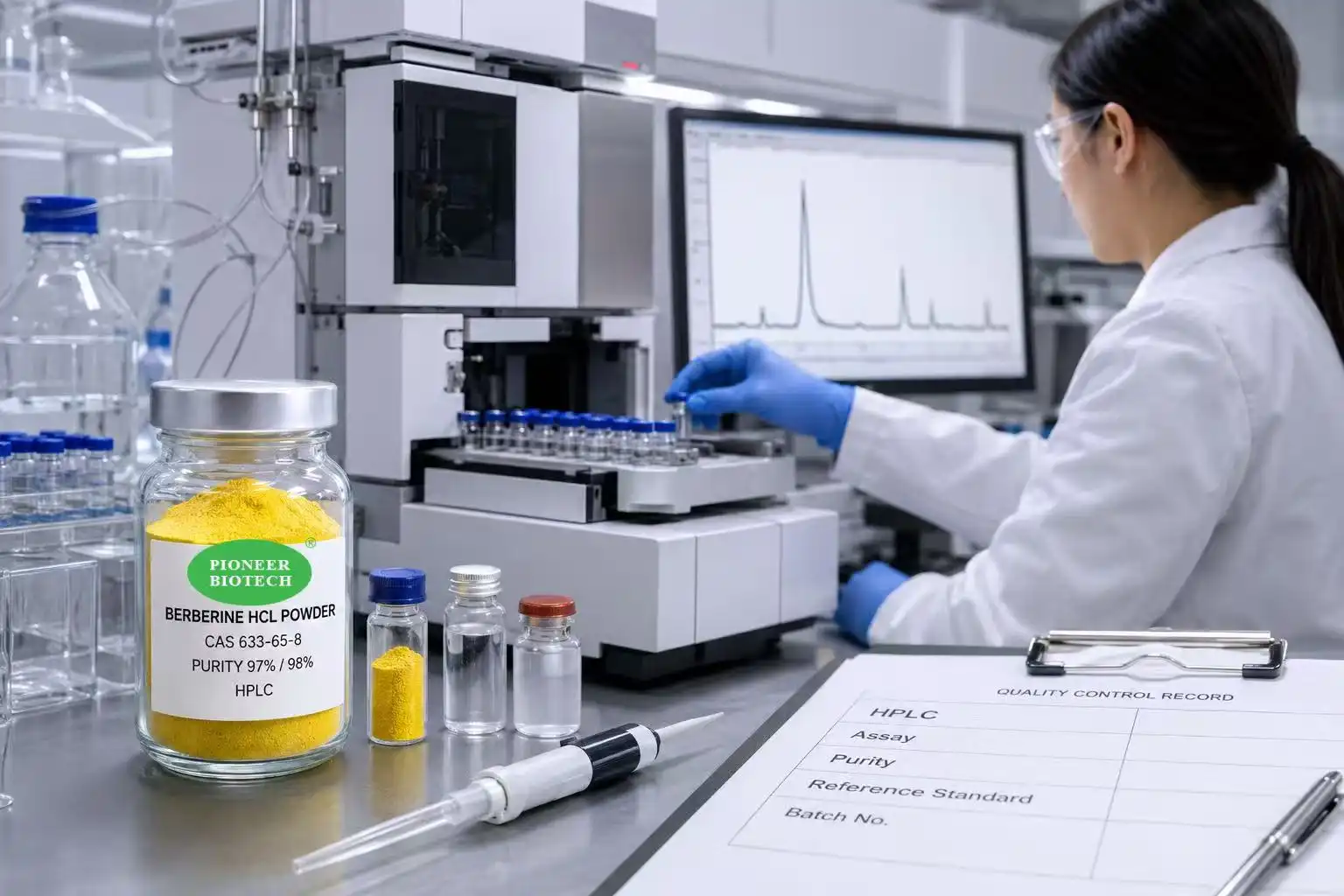
Understanding Berberine HCl Powder Quality Parameters
It is the first step in quality control to make a list of the important things that determine whether berberine HCl powder can be used in pharmaceutical-grade goods. Teams in charge of buying things have to look at a lot of different things to make sure they are of good quality.
Purity Assay Through HPLC Analysis
The best way to find out how much berberine HCl powder is in hydrochloride powders is to use High-Performance Liquid Chromatography (HPLC). With this method, berberine HCl powder is separated from alkaloids like palmatine and jatrorrhizine, which have structures that are very similar and are often found together in plant extracts. By comparing retention times to reference standards, HPLC gives a precise identification. On the other hand, basic measurement methods may give purity numbers that are too high. Usually, 97-98% of pharmaceutical-grade material is pure by HPLC. This can be shown by using approved testing methods. To prove that there aren't any structural isomers that could change how well the therapy works, suppliers should show HPLC chromatograms with single-peak profiles and little interference.
Physical Characteristics and Identification Tests
Tests of sight and touch are used to make sure the object is real before chemical study begins. Berberine HCl powder is a bright yellow crystalline powder with a strong bitter flavor and a consistent particle size. Infrared spectroscopy (IR) makes unique fingerprints of spectra that match reference spectra in drug books. This is a good way to tell what drugs are. More proof comes from UV-Visible spectroscopy, which finds absorption peaks at certain wavelengths, most often around 345 nm. Particle size distribution analysis is usually needed to make sure that 95% of the particles can pass through 80 mesh screens, which are about 180 microns in size. This is done to make sure that the particles can be used in manufacturing. Setting the right particle size makes it easier for automatic encapsulation machines to do their job and makes sure that pill formulas mix evenly.
Moisture and Ash Content Analysis
Loss on drying tests find out how much water and volatile chemicals are left in a product after it has been dried. These can change how stable it is and how long it lasts. The standard says that the wetness level must be 12.0% or less. So that we can find this level, we have to heat samples at 105°C until their weight stays the same. If something is too wet, microbes can grow and break down faster while it's being kept. A test for ash content measures the amount of solid matter that is left over after something is burnt at a high temperature. Most of the time, less than 0.2% is fine. Lower ash values mean that the water is being cleaned better and that mineral-rich plant materials or processing tools aren't making it too dirty. It is directly linked to these things that determine how stable a product is and how well it keeps working over time.
Regulatory Frameworks and Documentation
The most important thing that needs to be done to make sure quality is kept in global trade for berberine extract powder is compliance paperwork. This is what the Chinese Pharmacopoeia (CP2015), the US Pharmacopoeia (USP), and the European Pharmacopoeia (EP) all say about what quality levels are acceptable. There needs to be a Certificate of Analysis (CoA) for each batch that shows the identity, purity, heavy metals, microbes, and solvent residue tests that were done. Companies that are FDA-registered follow Good Manufacturing Practices (GMP). Companies that have ISO9001 and ISO22000 certifications show that they handle quality in a structured way. It is easier for companies that use dietary supplements to get into new markets now that they have HALAL and KOSHER approvals. Buyers should check that the CoA results are in line with what the pharmacopoeia says they should be and that it has the dates of the tests, the batch numbers, and the signatures of qualified staff who have been given permission to sign.
Core Specifications and Their Impact on Product Performance
The material specs have a direct effect on how well the end formulations work and how safe they are. When you know about these links, you can choose wisely about where to get things that will work for the final product.
Purity Thresholds and Therapeutic Efficacy
Being between 97% and 98% pure is the best range for uniformity so that cells continue to work the same way. AMPK (AMP-activated protein kinase) activity will stay steady at this level, which is the main way that metabolic health benefits happen. There may be differences between batches because of the different amounts of companion alkaloids or processing residues that are present in lower purity grades. These can lower the active content. Standardization is needed to make sure that the doses are always the same across production runs for pharmaceutical companies that make over-the-counter (OTC) metabolic health products. The hydrochloride salt form of berberine HCl dissolves better in water than the free-base powder form. This makes it more accessible and better at dissolving in stomach fluids. Due to P-glycoprotein efflux mechanisms, clinical research shows that it is still hard for the body to absorb berberine HCl powder. To get effective plasma concentrations, the purity needs to be at its best.
Heavy Metal and Contaminant Limits
Botanical sources pick up pollutants in the surroundings that need to be kept below the limits set by the pharmaceutical industry. Lead, arsenic, cadmium, and mercury amounts must all stay below 3.0 ppm to keep buyers safe. Berberine HCl powder from Phellodendron amurense (golden cypress) or Coptis chinensis may have heavy metals from the time the plants were grown. Modern ways of cleaning, like activated carbon treatment and recrystallization, lower the levels of these impurities to a safe level. To find out if grown plants still have pesticide residues, you need to do a multi-residue study that looks at organophosphates, pyrethroids, and other agricultural chemicals. As long as the total heavy metal level is less than 10 parts per million, it's easy to guess how much of a vitamin to take every day. When it comes to lead content warnings, contract manufacturers that sell in the U.S. need to make sure they follow Proposition 65.
Solvent Residue Testing
In the process of extraction and purification, ethanol, methanol, and other organic solvents are often used. These solvents need to be taken away until safe amounts are reached. The International Conference on Harmonization (ICH) set the rules for how to group chemicals based on how dangerous they are. It is possible to use more Class 3 solvents, like ethanol, up to 5000 ppm. But it is only possible to use 3000 ppm of Class 2 solvents, like methanol. Gas chromatography with headspace analysis is a precise way to find out how much residual solvent is present. This gives medicinal uses important safety information. Nutraceutical brands that sell their products as "clean label" must follow very strict solvent limits in order to meet customer expectations for natural processing. Formulators should be able to fully evaluate the risks based on the material safety data sheet (MSDS). The MSDS should make it clear what kinds of solvents were used during production.
Stability and Storage Requirements
How chemicals are stored affects how they stay intact throughout the supply chain and how long a product can be kept on the shelf. Berberine HCl powder is very stable at high temperatures as long as it is kept away from light, moisture, and things that can break it down. To keep the things safe, they should be kept between 20°C and 25°C in containers that are tightly sealed and in dry places. We set the expiration dates by testing the goods' stability at ICH-defined conditions (40°C/75% relative humidity). If the goods are properly packed, they should last for 24 to 36 months. If you put something in full sunlight, it will break down. The colors are getting darker, and the brightness is getting worse to show this. Moisture-barrier liners and desiccant boxes are needed to keep bulk items sent in fiber drums in good shape while they are being shipped abroad.
Procurement Considerations: Testing Standards for Bulk Buyers
Strategic buying calls for organized evaluation methods that go beyond just comparing prices and include checking the quality of the goods and figuring out how reliable the seller is.
Supplier Qualification and Audit Protocols
Building good supplier relationships starts with thorough facility audits that assess manufacturing capabilities, quality systems, and regulatory compliance. Site visits demonstrate the equipment's sophistication, cleanliness, and staff's expertise, which CoA paperwork cannot. FDA registration, GMP approval, and ISO certification verify quality infrastructure. Requesting three batch CoAs successively shows consistency over time, not batch compliance. Supplier questionnaires should cover extraction procedures, source material controls, and testing laboratory accreditation (ISO/IEC 17025). Customers' references can reveal the company's delivery reliability, technical assistance speed, and problem-solving ability. It may take three to six months to qualify, but it establishes connections on success rather than empty promises.
Incoming Material Verification
Even with certified suppliers, receiving inspection standards can prevent shipping errors, transit damage, and documentation issues. Make sure the packaging is intact and free of wetness or contamination as a first step. UV spectroscopy or HPLC verifies that the substance matches the order specifications and CoA. Statistical sampling plans like the square root of N plus one ensure representative tests at low expense. When working with new suppliers or adding new materials to controlled pharmaceutical production, third-party laboratory testing provides independent assurance. The material can't be used until analytical release standards are met, per quarantine. These enhanced quality controls have saved the sector from costly production issues and regulatory findings.
Cost-Quality Balance and Risk Assessment
Due to competition, buyers are motivated to buy cheaper materials, yet large price variations frequently mean lower quality. Materials sold at low prices may indicate poor purity, purification, or source identification. Sometimes cheaper synthetic berberine HCl powder manufactured from petrochemicals enters supply chains, but it lacks the "clean label" appeal of plant-based powder. If you buy from unregulated sources, cheaper alkaloids or coloring compounds may be added to make the product look real. Quality issues, including batch rejects, production delays, regulatory findings, and brand harm, cost significantly more than cutting prices. Failure costs should be compared to unit prices in risk assessment frameworks. This will illustrate that high-quality materials from well-known vendors have reduced TCO. Long-term relationships with honest manufacturers stabilize the supply chain better than price-chasing techniques.
Comparative Insights: Berberine HCl Powder Testing vs. Alternatives
Knowing the differences in testing between different types of berberine HCl powder and related plant materials lets you choose materials strategically based on your application needs.
Berberine HCl Versus Other Salt Forms
Berberine sulfate is another commercial salt. It dissolves less than hydrochloride. The chloride counterion allows the medication to dissolve in water, improving bioavailability. All salts are tested the same way, although HPLC procedures are altered to accommodate for retention times. Free-base berberine HCl powder is chemically purer, but it doesn't dissolve in water, limiting formulation options. Different salts have different chemical weights; thus, you must adjust equations to acquire the same doses. Hydrochloride is still the most often utilized form since it is ideal for pills, capsules, and functional foods.
Bulk Powder Versus Finished Dosage Forms
Tests for raw materials focus on chemical purity and contamination limitations. Testing completed dosage forms includes dissolve rates, disintegration timeframes, and content consistency. To see how they respond to fillers like magnesium stearate, microcrystalline cellulose, and enteric coating polymers, berberine HCl powder tablets must undergo additional stability testing. To avoid affecting release patterns, gelatin or veggie capsule shell cross-linking must be examined. Liquid formulations face pH stability and preservative compatibility issues. Finishing producers must develop and test their formulations as well as use high-purity raw ingredients to ensure product quality. Drug firms and nutritional brands invest heavily in formulation research, which goes beyond chemical discovery, due to its complexity.
Comparison with Other Botanical Alkaloid Powders
Botanical alkaloids have distinct chemical structures and come from different plants, making testing difficult. Separating curcumin, demethoxycurcumin, and bisdemethoxycurcumin from turmeric curcuminoids requires HPLC. Due to their light sensitivity, they need special light shielding. Finding the melting point and keeping moisture below 0.5% are crucial to caffeine anhydrous tests. Due to its stable crystalline structure and simple analytical methods, berberine HCl powder is easier to test than these materials. Quaternary ammonium is more chemically stable than phenolic compounds, which oxidize. Berberine HCl powder's stability makes it ideal for long-lasting formulations when therapeutic efficacy is crucial to market success.
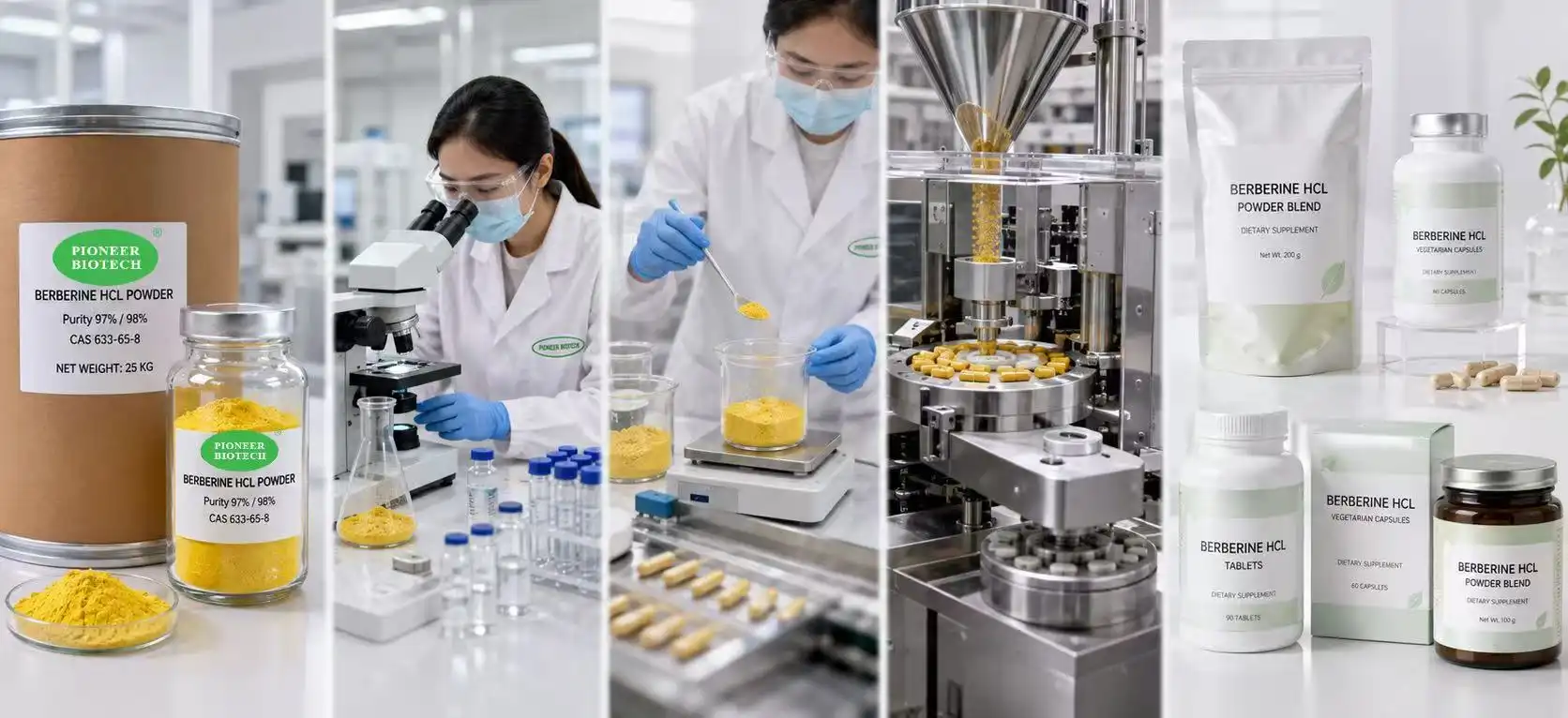
Best Practices for Ensuring Compliance and Quality Assurance
Using organized quality management methods changes quality control from checking things after the fact to preventing problems before they happen throughout the supply chain.
Developing Comprehensive Material Specifications
Before making comprehensive material specifications, list the most relevant quality features for your application. The standards should list identity (HPLC retention time, IR spectrum), purity (assay limits, related chemicals), physical attributes (particle size, bulk density, appearance), and safety factors (heavy metals, microbiological, pesticides, solvent residues). Acceptance criteria must balance pharmacopeial requirements and actual production needs. Standards that are overly rigid may limit suppliers' choices without cause, and ranges that are too broad can make quality monitoring tougher. The specification paper should describe the tests using official pharmacopeial methodologies or tried-and-true in-house processes. By specifying acceptability levels and typical values, you give vendors performance targets beyond baseline criteria. Every year, specifications should be reviewed for legal changes, new scientific information, and better product manufacturing methods.
Third-Party Testing Integration
Lab tests provide objective quality assurance that differs from supplier data. ISO/IEC 17025-certified labs demonstrate technical competence through external audits and competence testing. Third-party testing is useful for qualifying a source, modifying a procedure, or investigating quality issues. The supplier's history and berberine HCl powder importance determine testing frequency. New suppliers require 100% batch verification, while long-term partners may justify statistical sampling. Working with numerous qualified labs reduces delays and provides comparison data when investigating issues. Third-party testing is quality insurance against failures and regulatory findings that could be costly. Regardless of vendor background, many drug companies require third-party certificates for all botanical products.
Continuous Monitoring and Supplier Performance Management
Partnerships must continue to communicate and track success after qualification. Using KPIs like on-time delivery, proper documentation, and analytical concordance creates objective evaluation frameworks. You should review trending data, discuss methods to improve, and agree on future needs during regular business reviews with key providers. Regular facility inspections help audit programs monitor things. This ensures initial qualifying standards are maintained. Change notification systems alert personnel to source material, process, and tool changes that potentially affect quality. Supplier scorecards outline expectations and rewards for good performance. This approach transforms vendor relationships into strategic partnerships that commit to quality and growth.
Conclusion
To receive pure, safe, and effective berberine HCl powder, you must understand testing requirements. HPLC purity, heavy metal screens, solvent residue testing, and physical characterization ensure the material is suitable for medical, nutraceutical, and cosmetic goods. Partnerships with competent suppliers can reduce botanical ingredient supply chain quality concerns through facility checks, incoming verification testing, and performance tracking. The finest industry standards for product quality and consumer safety include 97-98% purity, regulated heavy metals below 10 ppm, adequate moisture limits, and proven processes. Procurement experts that apply these standards ensure regulatory compliance, consistent production performance, and corporate success in competitive global marketplaces.
FAQ
What are the most important testing parameters for verifying berberine HCl powder quality?
The HPLC purity analysis is the most important test because it confirms that the substance contains 97-98% berberine HCl powder while excluding alkaloids that have a similar structure. Heavy metal screening for lead, arsenic, cadmium, and mercury makes sure that food is safe to eat every day. Testing for residual solvents makes sure that the right amount of extraction chemicals are gone, as set by the ICH. Microbiology tests show that germs like Salmonella and E. coli are not present. Identity confirmation through IR spectroscopy or retention time matching to prove identity stops substitution or wrong recognition. The amount of moisture affects how stable the product is and how long it will last on the shelf. The distribution of particle sizes affects how well the encapsulation and tableting processes work.
How can buyers ensure batch-to-batch consistency when purchasing bulk quantities?
When you ask for CoAs from three production batches in a row during seller qualification, you can see trends of consistency over time. Variability can be cut down by setting tight standard ranges above and beyond the minimum pharmacopeial requirements. Using representative sampling and independent lab testing for inbound quality control stops specification drift before the material goes into production. Making sellers tell customers about any changes to processes, updates to equipment, or changes to source materials keeps things open. When you build strategic partnerships with makers who put quality systems ahead of scale production, you usually get better consistency than when you work with commodity sellers who only compete on price.
Do testing requirements differ between berberine HCl powder and other berberine forms?
It is true that testing methods change depending on the form. Because it has different retention times, free-base berberine HCl powder needs different HPLC methods. It may also need better moisture protection because it absorbs water. As part of berberine HCl powder sulfate testing, the sulfate content is checked and the solubility profile is made. To separate palmatine, jatrorrhizine, and berberrubine from crude berberine HCl powder extracts that contain multiple alkaloids, longer HPLC methods are needed. The total alkaloid content must be given instead of just berberine HCl powder. Liposomal berberine HCl powder products need to be tested for encapsulation success and particle size distribution using dynamic light scattering. The hydrochloride salt form is supported by well-known pharmacopeial papers that set standard testing procedures that are used all over the world.
Partner with Pioneer Biotech for Premium Berberine HCl powder
Pioneer Biotech sells berberine HCl powder that is safe for use in medicines and comes with full testing records that meet the strict standards set out in this guide. As a reliable company that makes berberine HCl powder, our FDA-registered factory in Shaanxi Province uses cutting-edge extraction technology and strict quality control to make 97-98% pure material that can be checked using validated HPLC methods. We keep stock in nearby warehouses so that it can be shipped quickly. This cuts down on supply chain delays that mess up production plans. For formulation questions, regulation advice, and application creation, our expert team is available 24 hours a day, seven days a week. Full certificates, such as ISO9001, ISO22000, HACCP, HALAL, and KOSHER, make sure that the product is legal in all global markets. Request your free sample today and look over our detailed CoA paperwork to see for yourself why established brands trust our quality. Contact our team at sales@pioneerbiotech.com to talk about your unique needs and find out how our berberine HCl powder options can help you make better products with consistent quality and a steady supply.
References
1. United States Pharmacopeia. "Berberine Hydrochloride Monograph." USP-NF 2023, Official Monographs, United States Pharmacopeial Convention, Rockville, Maryland.
2. European Pharmacopoeia Commission. "Quality Standards for Herbal Alkaloids: Analytical Methods and Specifications." European Pharmacopoeia 10th Edition, Council of Europe, Strasbourg, France, 2022.
3. Zhang, Y., et al. "Quality Control and Standardization of Berberine Hydrochloride: A Comprehensive Analytical Review." Journal of Pharmaceutical and Biomedical Analysis, vol. 185, 2020, pp. 113-127.
4. International Conference on Harmonisation. "ICH Q3C(R6): Impurities - Guideline for Residual Solvents." ICH Harmonised Guideline, International Council for Harmonisation of Technical Requirements for Pharmaceuticals for Human Use, Geneva, 2019.
5. Chen, W., and Liu, Y. "Heavy Metal Contamination in Botanical Raw Materials: Risk Assessment and Control Strategies for Berberine Products." Food and Chemical Toxicology, vol. 148, 2021, pp. 111-119.
6. American Herbal Pharmacopoeia. "Berberis Species and Berberine: Standards of Identity, Analysis, and Quality Control." AHP Monograph Series, American Herbal Pharmacopoeia, Scotts Valley, California, 2018.