
Astaxanthin Extract : Science, benefits and why quality matters
Astaxanthin extract is always the best choice because it has the highest bioactivity when consumers and manufacturers are looking for natural antioxidants that will make their goods stand out. This pigment that dissolves in fats mostly comes from the microalgae Haematococcus pluvialis. It stays steady, is soluble, and has been shown by science to be good for your health. It can help with a lot of different health trends in people at the same time. Businesses can make smart purchases that make their products work better and help them compete in the market if they know about the science behind this powerful ingredient, problems with finding it, and signs of good quality.

Understanding Astaxanthin Extract: Science and Sources
Astaxanthin extract is a xanthophyll-family carotene. There are linked double bonds, hydroxyl groups, and keto groups in some places in its unique chemical structure. The molecule can fully cross over the walls of cells because of its shape. This means it can protect both the inside and outside of cells. It's not the same as beta-carotene or lycopene because of this.
Primary Natural Sources
Growing Haematococcus pluvialis microalgae is still the best way to make things for industry. If these bacteria are under a lot of stress, like not getting enough food or being in bright light for a long time, they store astaxanthin that makes up 3–5% of their dry bulk weight. This spontaneous fermentation process makes most of the (3S, 3'S) stereoisomer. A study in humans has shown that this stereoisomer is much more biologically active than manufactured alternatives.
Fish like krill and wild salmon, as well as the yeast Phaffia rhodozyma (now called Xanthophyllomyces dendrorhous), are also natural sources. What they eat, astaxanthin, gives them their usual red-pink color. Bioactive astaxanthin can be found in sea sources, but material made from algae is better for the environment and more reliable for large-scale uses.
Synthetic Versus Natural Considerations
To make manufactured astaxanthin, petrochemical intermediates are used. This makes a racemic mixture with equal amounts of all three stereoisomers. For aquaculture feed, synthetic forms are better because they are easy to make and cost less, but natural forms are becoming more common for people to eat. Bioavailability studies show that natural astaxanthin is better absorbed and stays in the body's tissues longer, which supports its high-end use in beauty and health goods.
Oxidative Stress Protection Mechanisms
It can get rid of free radicals and singlet oxygen because it is an antioxidant. Some tests have shown that it is 6,000 times stronger than vitamin C as an antioxidant. It is very safe for people who are making high-dose things because the molecule can reduce reactive oxygen species without turning into a pro-oxidant, even at high doses. This ingredient works well in products that help with inflammatory conditions and the damage that comes with getting older because it stays firm under reactive pressure.
Health Benefits of Astaxanthin Extract: Evidence-Based Insights
In the last ten years, there have been a lot more peer-reviewed studies showing that astaxanthin extract powder is good for a lot of different parts of the body. This wide range of uses gives B2B clients in the medicine, functional food, and nutritional fields a lot of market opportunities.
Skin Health and Anti-Aging Properties
A study in dermatology found that taking astaxanthin pills by mouth lowers the damage that UV light does to the skin by slowing the production of melanin and collagen. In 2018, researchers looked at women who took 6 mg of a vitamin every day for 8 weeks. They found that it made their skin much more flexible and less wrinkled. These results show that this ingredient can be used in beauty-from-within products and skin cosmeceuticals because it protects against UV rays in a way that works well with normal sunscreen.
Ocular Health Support
Since the molecule can get through the blood-retinal barrier, it gives antioxidants straight to photoreceptor cells to protect them. It has been shown that long-term intake improves shift amplitude and lowers asthenopia symptoms in people who use computers a lot and have tired eyes. Based on these results, astaxanthin might be a good ingredient for eye health items for people who use computers and other electronics, a group that is growing quickly.
Cardiovascular and Metabolic Effects
As more studies are done, it becomes clear that eating astaxanthin can lower oxidative stress markers, raise fat levels, and make endothelial work better. After looking at all the controlled studies, it was found that inflammatory cytokines and signs of lipid peroxidation went down in a way that was statistically significant. We still need more large-scale studies to be sure, but what we know so far supports its use in heart health and metabolic exercise goods for people who want to stay healthy.
Immune Modulation and Exercise Recovery
Scientists have discovered that taking astaxanthin pills makes natural killer cells work better and lessens the damage that exercise does to muscles. Some athletes say that taking natural astaxanthin pills helps them have more energy and less delayed-onset muscle pain. These findings make it possible for sports nutrition and vitamins for people with busy lives to reach new customers. This is especially true when drugs that target mitochondrial function are mixed in.
Quality Matters: How to Source Premium Astaxanthin Extract
The quality of the product has a direct effect on how well it works in the clinic, how well it follows the law, and how well the brand is seen in the long run. Procurement professionals need to consider more than just price to ensure a steady flow of high-quality astaxanthin extract products.
Organic Versus Synthetic Quality Distinctions
Natural astaxanthin costs more because it's harder to grow, but it's better for you and looks better on the label. This means that the stereoisomer study should show that the source has more than 95% (3S, 3'S) content. Synthetic materials are built in a way that is similar to algae, but they lack the fatty acid framework and antioxidants that are found in whole algae goods. Things like these have a big impact on how quickly the materials are taken and how they hurt live things.
Microencapsulation Technology Assessment
High-quality powdered forms of astaxanthin use advanced microencapsulation techniques to deal with the fact that it is naturally unstable. The lipophilic molecule needs protection materials like modified starches, gum arabic, or cyclodextrin complexes to keep it from breaking down while it is being stored and processed. When better microencapsulation systems are exposed to air, heat, and light, they still work well. In fact, after 24 months of use in the right conditions, they lose less than 10% of their efficiency.
Cold water dispersible (CWD) grades use extra emulsification technology to turn a material that normally doesn't mix with water into a form that can be used in drinks. Through several pasteurization steps, these unique shapes keep the color and particle suspension fixed. This gives people who make useful drinks more ways to make their drinks.
Certification and Traceability Requirements
The first step in a strict quality promise is for the supplier to be certified. GMP certification checks that the processes used to make drugs are up to par, and ISO 22000 certification checks that the systems in place to control food safety are working right. Organic certifications from the USDA and the EU show that farming methods don't use manmade chemicals and fertilizers. This is becoming more and more important for showing natural products as unique goods.
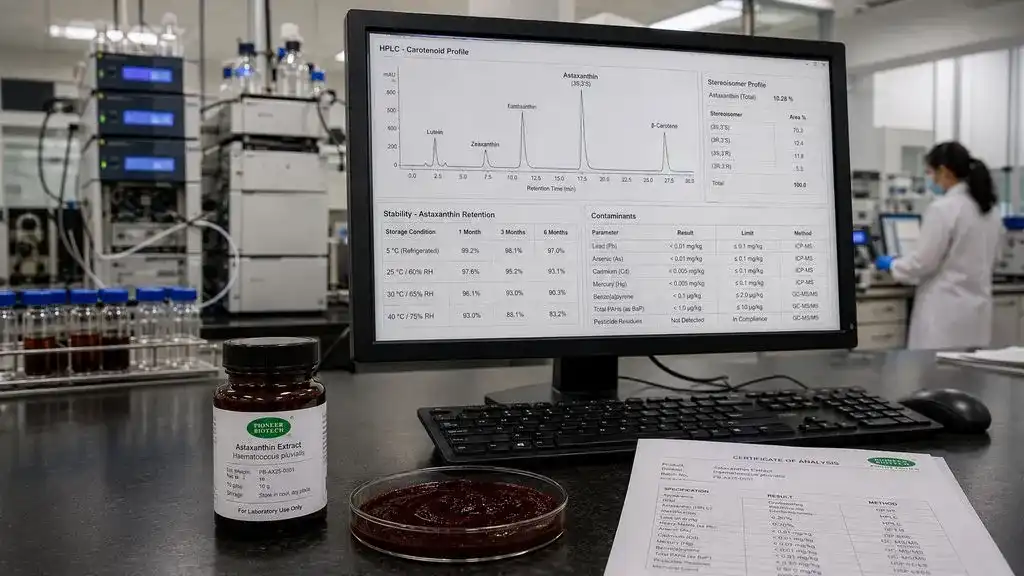
You should ask for more than just licenses. For example, you could ask for batch-specific certificates of analysis (COA) that explain:
- The amount of astaxanthin using HPLC methods that have been approved
- What the heavy metal test showed
- Trying to find bacteria harm
- A look at the chemical leftovers
- Profiles of how stereoisomers are made
Providers who are honest back up what they say about the shelf life with proof of how the product was made, approval from a third party test, and stability studies.
Supplier Evaluation Criteria
Manufacturing skill and the ability to grow have a direct impact on supply stability during times when the market is growing. Check out how possible partners handle materials, how big their cultivation infrastructure is, and how much they can take. Traders who get their goods from different main sources generally get less uniform amounts than sellers who do more than one thing, like growing algae and encapsulation.
Special sellers are different from commodity sellers because they can offer professional support. Partner companies that help with preparation, stable testing, and legal paperwork are worth a lot more than just giving raw materials. When coming up with new ways to send things or getting into controlled markets that have strict paperwork needs, this information is very helpful.
Procurement Guide: Buying Astaxanthin Extract for B2B Clients
In strategic buying, you need to find a balance between quality guarantee and cost-effectiveness when sourcing astaxanthin extract powder. This means that you need to carefully look at price structures, order factors, and supplier relationship models.
Format Selection for Manufacturing Applications
Each of the forms has its own pros and cons that depend on what the end result needs to be. Any microencapsulated powder can be used to break up pills and put them inside hard capsules. The machine can run on its own and measure doses correctly. For softgel encapsulation, oleoresin goods have the most content, but they need to be treated carefully so they don't turn brown. To make drinks and food more useful, CWD grades can be used when water compatibility is important.
When making a new product, the fact that different types have different bioavailability should be thought about. A lot of the time, lipid-based delivery methods like beadlets with carrier oils or oleoresins in softgels are better at absorption than dry powders that are eaten without fat. For formulators to get the most out of their goods, they should use the right fatty fillers or tell people to take them with food.
Minimum Order Quantities and Pricing Structures
For corporate buyers, the MOQ ranges from 25 kg for specialty types to 100 kg or more for normal specs. Different levels of concentration are used to set the prices. For example, 1-5% microencapsulated powders are priced to be cost-effective, while 10–20% high-potency grades are priced to be high-end supplements. Cost-of-goods figures are more accurate when people know about these price changes when they are planning a product.
When you buy something from another country, you have to pay for shipping, pay customs taxes, and watch the value of the currency change. Total landing costs can go down and delivery times can be sped up by working with companies that offer combined shipping or keeping local distribution centers open.
Factory-Direct Procurement Advantages
Dealing directly with makers saves you money because you don't have to pay markups to middlemen. You can also get detailed information that you can't get from wholesalers. With factory-direct relationships, you can get what you want, like changing the particle sizes, matrix makeup, or bulk packing. These requests help tactics for making new products stand out. It is also easier to fix quality problems quickly when you are in direct touch with the production teams, whether the production is small or large.
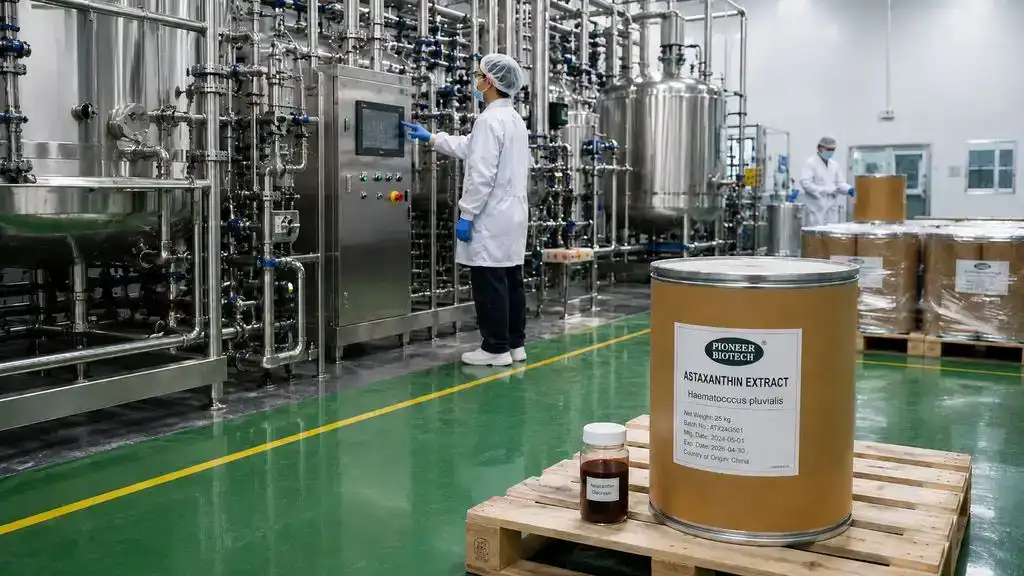
Dosage, Safety, and Side Effects: What Procurement Managers Need to Know
As a buying manager, you need to know about dosage, safety, and side effects of astaxanthin extract. The most important things to think about when picking ingredients and making new goods are still following the rules and making sure customers are safe.
Recommended Dosage Guidelines
Doses for general health that range from 4 mg to 12 mg per day are popular in clinical studies. Up to 40 mg has been used in some studies to reach certain treatment goals. The standard dose for most finished items is between 4 and 8 mg per serving. This is a good mix between cost and efficiency. People who make products should make sure that dosage recommendations are based on scientific proof that supports certain health claims. This will keep marketing honest and keep customers happy.
Safety Profile and Contraindications
Astaxanthin has been shown to be very safe in human tests. Adverse events are very rare and generally only involve small stomach issues or short-term changes in skin color when very high amounts are taken. There have been no reports of big drug problems, but people who take blood thinners should talk to their doctors because carotenoids may affect how well platelets work.
Most of the time, women who are pregnant or nursing are told not to take supplements because there isn't enough information about their safety. This is true even though there is no proof that the supplements will hurt them. When these groups buy something, the sticker should have clear warnings and maybe even more safety information.
Regulatory Frameworks and Compliance
A lot of people in the US think the ingredient is safe (GRAS) for certain uses and percentages. Astaxanthin that comes from nature is seen as a novel food in European markets and needs to get the right approvals. Manufacturers need to make sure that the material they buy meets the legal requirements for the places they want to sell it to. They also need to be able to back up what they say on their sales and labels.
As rules change, good providers keep up with them and offer proof such as regulatory status letters, specs that match known monographs, and suggested labeling language that follows FDA or EFSA rules.
Conclusion
To find high-quality astaxanthin extract in a smart way, you need to find a mix between scientific proof, quality control, and common sense. When it comes to bioactivity and market positioning, natural sources from Haematococcus pluvialis are better than manufactured ones. Because of this, it is a good idea to spend money on supply lines that are approved and can be watched. There is clinical evidence for many health benefits, such as protecting the skin and improving heart health. This means that there are many ways to prepare it for uses in nutraceuticals, pharmaceuticals, and functional foods. The most important part of buying is picking the right partner. It's important for sellers to show that they follow good manufacturing practices (GMPs), know their stuff when it comes to technology, and have clear quality paperwork that supports brand identity and legal standards throughout the lifecycles of products.
FAQ
Why choose natural over synthetic astaxanthin for nutraceutical formulations?
Natural astaxanthin extract from microalgae is mostly the (3S, 3'S) stereoisomer, which has been shown to be more soluble and biologically active than racemic mixes that are made in a lab. It is clear from many clinical studies that natural sources are better at beating free radicals and defending cells. Clean labeling works well with natural ingredients, and people want plant-based, sustainable ingredients. This is an important way for high-end goods to stand out in a crowded market.
How can procurement managers verify extract purity and potency?
Ask for full certificates of analysis (COA) for each batch. These will use a tried-and-true HPLC method to confirm the amount of astaxanthin. Heavy metal screens, microbial tests, chemical residue analysis, and stereoisomer profiles are all things that dealers you can trust give. Test proof from a third party gives you even more peace of mind. Find out if the provider is approved by GMP, ISO 22000, or an organic program, and ask for stability data to back up the shelf life claim in the shop.
Which product format best suits OEM manufacturing needs?
The choice is based on the end product type and the goal of absorption. Because it is stable and runs well, microencapsulated powder is good for pills and hard capsules. Because they have the biggest concentration and are better absorbed through fats, oleoresin products work well in softgel packaging. With cold water dispersible grades, useful drinks and foods can be used in places where they need to be able to mix with water. Talk to sellers about how they make their products to find the best forms for the tools you want to use and the doses you need.
Partner with Pioneer Biotech for Premium Astaxanthin Extract Supply
What kind of sources a product has affects how well it works and how well it does in the market. Pioneer Biotech is a trustworthy business that makes astaxanthin extract and sells chemicals that are safe for use in pharmaceuticals. They have a lot of quality records and technical know-how to back up their products. Our GMP-approved 7,000m² plant was built in 2012 and is located in the Medicine Herbs Valley of the Qinling Mountains, which is a great spot. It has strict quality control methods and the most up-to-date extraction equipment. Our FDA, HALAL, KOSHER, and ISO9001 licenses are always up to date so that we can follow the rules in all places around the world. Our team helps with unique formulas, gives you flexible MOQ options, and stays in touch with you throughout the whole buying process. Contact us at sales@pioneerbiotech.com to talk about your needs and get batch samples or information on how to buy in bulk to add high-quality natural ingredients that have been scientifically proven to work to your product line.
References
Capelli, B., & Cysewski, G. R. (2013). "Natural Astaxanthin: King of the Carotenoids." Cyanotech Corporation Scientific Monograph.
Davinelli, S., Nielsen, M. E., & Scapagnini, G. (2018). "Astaxanthin in Skin Health, Repair, and Disease: A Comprehensive Review." Nutrients, 10(4), 522.
Fassett, R. G., & Coombes, J. S. (2011). "Astaxanthin: A Potential Therapeutic Agent in Cardiovascular Disease." Marine Drugs, 9(3), 447-465.
Kishimoto, Y., Yoshida, H., & Kondo, K. (2016). "Potential Anti-Atherosclerotic Properties of Astaxanthin." Marine Drugs, 14(2), 35.
Tominaga, K., Hongo, N., Karato, M., & Yamashita, E. (2012). "Cosmetic Benefits of Astaxanthin on Humans Subjects." Acta Biochimica Polonica, 59(1), 43-47.
Yuan, J. P., Peng, J., Yin, K., & Wang, J. H. (2011). "Potential Health-Promoting Effects of Astaxanthin: A High-Value Carotenoid Mostly from Microalgae." Molecular Nutrition & Food Research, 55(1), 150-165.