
Because of its excellent biocompatibility, natural origin, and demonstrated effectiveness in improving skin health, chitin powder is a key ingredient in skincare formulations used by cosmetic brands. This biopolymer, which comes from the ocean, provides better hydration, barrier protection, and anti-inflammatory benefits. These features make it a good choice for environmentally conscious consumers who want to get effective skincare. The chitin powder cosmetics use more and more reflects the industry's drive to new products and the need for safe, natural ingredients.
Understanding Chitin Powder and Its Role in Cosmetics
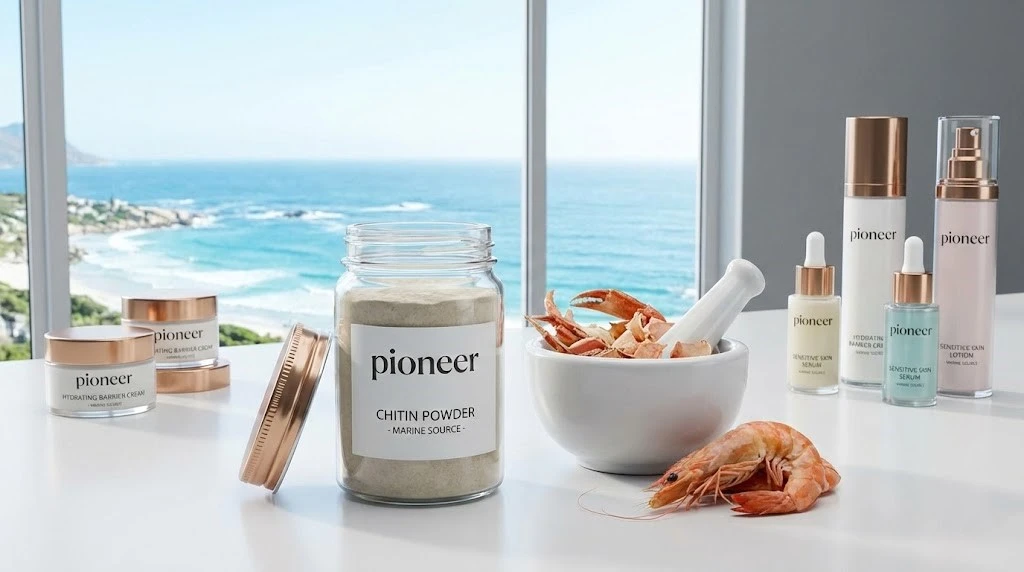
Chitin powder is a new natural biopolymer that is mostly made from the shells of crustaceans like shrimp, crabs, and lobsters. This amazing material is gotten from other substances using complex methods that make sure it is pure enough to be useful in cosmetics. Because of its molecular structure, chitin is very biocompatible with human skin, making it a great ingredient for advanced beauty products.
The extraction method carefully removes impurities while keeping the good qualities of chitin. Today’s methods of making things create different kinds of chitin powder, and each one is made for a certain use in cosmetics. The end product is very stable and works well with a lot of different kinds of recipe ingredients.
Cosmetic companies have changed how they choose ingredients because consumers have become more aware of which beauty goods are eco-friendly. Chitin powder meets this need by providing a sustainable replacement for man-made plastics that are often used in skincare. Using waste from fish processing for chitin extraction is an environmentally friendly method that makes sense to eco-conscious customers because it fits with the idea of a circular economy.
All over the world, rules are more and more supporting ingredients that are known to be safe and good for the earth. Chitin powder meets these tough standards, giving beauty companies faith in their ways of making new products. Regulatory approval processes in major markets use the ingredient's natural source and the large amount of study data that shows it works.
Core Benefits of Chitin Powder in Skin Care Products
Because of its distinctive molecular makeup and biological action, chitin powder has many different benefits for skincare products. Understanding these benefits gives cosmetic makers and buying experts the chance to think about how well this might work for their product lines.
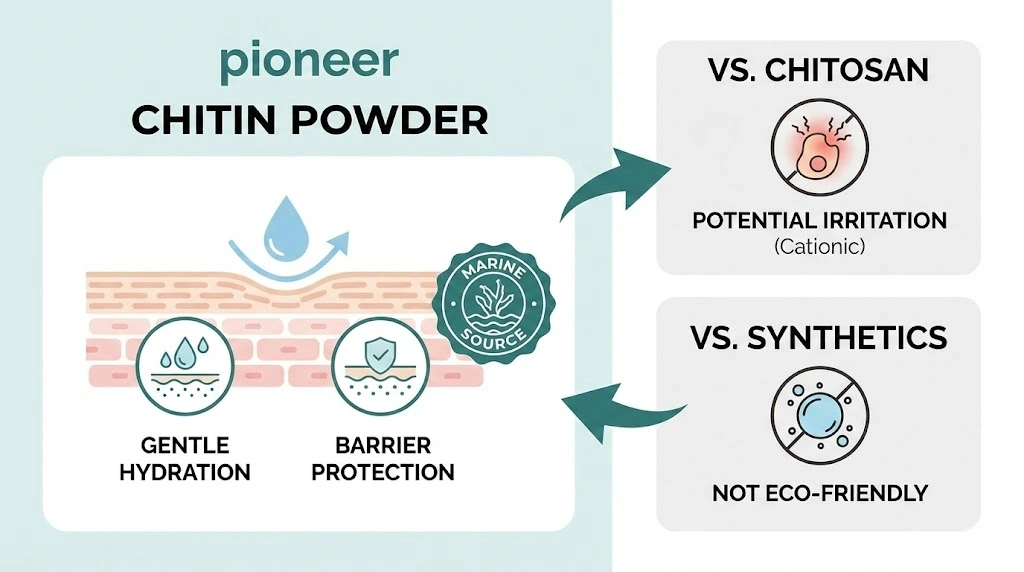
One of the most important things that chitin powder does for face is help it hold on to moisture. The biopolymer structure forms a protected layer on the skin, which stops water from leaving the skin and keeps it hydrated. Clinical tests show that chitin-containing products can make skin up to 25% more moist compared to groups that didn't use chitin.
Chitin interacts with natural skin lipids and proteins to make the skin layer stronger. The ingredient helps the skin's natural defenses, making the skin smoother and tougher generally. This affect that makes the barrier stronger is especially useful for skin that is older or has been damaged by the environment.
For sensitive or irritated skin, the anti-inflammatory qualities of chitin powder are very beneficial. The biopolymer naturally calms the skin, lowering heat and swelling. Research shows that using chitin lowers the production of inflammatory cytokines, which leads to quieter and more balanced skin.
Another important benefit of deacetylated chitosan for cosmetics is that it can protect the skin from damage by free radicals. The ingredient helps cancel out free radicals that cause skin damage and make you look older. This defensive step helps the skin stay healthy in the long run and keeps it looking young.
Incorporating Chitin Powder in Cosmetic Formulations
If you want to successfully add chitin powder to cosmetics, you need to think carefully about how compatible it is with other ingredients, how much you use, and how the product is made. Chitin can be used in many different types of products and delivery methods, which is helpful for formulation chemists.
Chitin powder can be used in a variety of cosmetic items, as shown by the following application techniques:
Creams and lotions: When mixed at levels between 0.1% and 2.0%, chitin powder becomes a smooth part of the mixture. The biopolymer improves structure and provides other benefits at the same time. The best results happen when chitin is spread out correctly during the water phase preparation. This makes sure that the end product is evenly distributed.
Serums: Water-soluble chitin derivatives are great at making serums that are light and easy to apply. Chitin makes a film around these goods without making them heavier, so they still feel light. The best result is seen with concentrations between 0.5% and 1.5%.
Mask formulations: Sheet and gel masks use chitin powder in a way that works well to give the skin deep treatment benefits. The biopolymer's ability to bind moisture makes the mask's hydration delivery method better. Higher concentrations, up to 3.0%, can be used for intense treatment.
By using a wide range of chitin powder application ways, cosmetic companies can use the powder in all of their products. This helps the companies make the most out of the chitin powder commercially while also meeting the needs of different customers.
Chitin powder has a great stability profile, according to compatibility testing with other active ingredients. Hyaluronic acid, peptides, and plant extracts are often used in high-end skincare products. The biopolymer works with these ingredients to enhance their effects. pH steadiness from 4.5 to 7.5 meets the needs of most cosmetic formulations.
Comparing Chitin Powder with Other Key Ingredients
When cosmetic formulators create new goods, they often have to make decisions about which ingredients to use. Knowing the pros and cons of chitin powder and other ingredients helps people make smart choices about what to buy and how to make new products.
Chitosan powder is made from chitin through deacetylation. It has different qualities than chitin itself. Both ingredients help films form, but deacetylated chitosan works better in sensitive skin products. Because chitosan has a cationic charge, it can sometimes irritate people who are sensitive to that sort of thing. For this reason, chitin is the better option for skincare products that are supposed to be gentle.
A study of collagen powders shows that these ingredients work together and not against each other. Chitin powder is great at keeping moisture in and protecting barriers, while collagen is more about supporting structure and fighting wrinkles. A lot of high-end products mix both ingredients to get the most out of their skincare benefits.
Customers are asking for more and more options that are natural and can break down over time. Synthetic polymers don't have these perks. Chitin powder works just as well or better than other options that are more environmentally friendly. When making budget plans, cost factors favor synthetic alternatives, but high-end names are using more natural ingredients lately.
Quality differences between chitin sources from the sea and other sources affect the performance of the mixture. Marine chitin powder usually has better clarity and consistency than fungal or insect-based powders. It is very important to have supplier certifications and analytical documents when choosing ingredients.
Procurement Considerations for Cosmetic Brands
To strategically buy chitin powder, you need to carefully consider the quality standards, business terms, and what the suppliers are capable of. Putting together a brand's needs and a market's place with a supplier's strengths makes partnerships work.
Quality assurance methods must look at a lot of different things when it comes to chitin powder specifications. The particle size distribution impacts both the performance of the formulation and the texture of the end product. Specifications for moisture content make sure that stability and shelf life standards are met. Microbiological tests show that cosmetics are safe. Heavy metal testing is a way to make sure that the products follow global rules for cosmetics.
Pricing structures for chitin powder vary based on grade requirements, the amount ordered, and what the supplier can do. Pharmaceutical-grade chitin is much more expensive than normal makeup grades. Long-term supply deals are appealing for established product lines because they often lead to lower costs for volume commitments.
Lead times, packaging choices, and logistics needs are all things that have to be thought about when dealing with the supply chain. The minimum order quantity usually falls between 25kg and 100kg, based on what each supplier is able to do. Custom packaging can make production easier and save money on handling.
Premium suppliers offer better technical help, which is how they stand out from the competition. In addition to providing raw materials, help with formulation, stability tests, and understanding regulations adds a lot of value. These services are especially helpful when new products are being worked on.
Conclusion
Chitin powder is a game-changing natural, effective, and long-lasting makeup ingredient that chitin powder gives cosmetic companies a chance to try. The biopolymer's proven benefits in keeping moisture in, protecting against barriers, and calming skin make it an important part of modern skincare products. Because chitin powder meets high standards for quality and safety and puts brands at the top of new products in the industry, it helps companies stay ahead of the competition as demand for natural ingredients grows. If you make strategic partnerships with experienced suppliers like Pioneer Biotech, you can be sure you get high-quality materials and full support during the entire product creation process.
FAQs
Can chitin powder be used on all skin types, even ones that are sensitive?
Yes, chitin powder is a great match for all skin types, even ones that are sensitive. The natural biopolymer structure helps the skin barrier and offers gentle, non-irritating benefits. Chitin powder formulations have a very low allergenic potential, according to clinical tests, making them safe to use on sensitive skin.
In cosmetic formulas, how does the stability of chitin powder measure up to man-made options?
When the temperature and pH level change, chitin powder stays stable better than many man-made plastics. The biopolymer keeps working in the normal pH range for cosmetics (4.5–7.5) and stays stable at high temperatures during the manufacturing process. If you store it correctly, its shelf life will be stable and equal to or better than that of fake options.
What are the minimum order quantities and usual lead times for chitin powder that is safe to use in cosmetics?
Standard lead times for cosmetic-grade chitin powder are usually between 2 and 4 weeks, based on the order size and the needs of the grade. For standard grades, the least amount that can be ordered is usually 25 kg, but for custom specs, 50 to 100 kg is needed. We keep strategic inventory levels on hand to help with immediate needs when we can.
Partner with Pioneer Biotech for Premium Chitin Powder Solutions
Shaanxi Pioneer Biotech Co., Ltd. is a top chitin powder maker that provides great support to cosmetic names around the world. Our facility in Hanzhong City, which is in the valley of the Qinling Mountains and has both natural benefits and advanced manufacturing skills, makes high-quality chitin powder for use in cosmetics.
Our promise to quality starts with strict quality control methods that make sure every batch meets the same standards. ISO9001, HALAL, KOSHER, and FDA certifications show that we are committed to making makeup ingredients that meet global standards. These skills give cosmetic companies faith in the choices they make about where to get their ingredients.
In the cutthroat market for makeup ingredients, our chitin powder stands out for the following reasons:
Customized grade specifications: We make chitin powder in a range of grades for different uses in cosmetics, from gentle formulas for daily use to products for more thorough treatments. Our expert team works directly with customers to get the particle size, purity, and other features just right for each person's needs.
Full technical support: Our formulation chemists help with all parts of product creation, from the first idea to the launch. We do regulatory paperwork, stability studies, and compatibility tests to help you speed up your development schedule.
Flexible business terms: We offer customizable minimum order amounts and packing options because we understand that cosmetic brands have different needs. Our fair prices help both new and well-known brands find affordable ways to get the ingredients they need.
These broad features help cosmetic companies use chitin powder's benefits while avoiding common problems with product creation and getting the product to market quickly.
Our promise to sustainability means that we are environmentally responsible in all parts of our business, not just the quality of our products. We get our raw materials from certified suppliers and follow methods that reduce waste in line with the cosmetic industry's growing environmental awareness. This method helps brands reach their own sustainability goals while also giving customers better goods.
Are you ready to find out how high-quality chitin powder can improve your beauty products? Our team of professionals is ready to talk with you about your exact needs and offer tailored solutions that will help make new products and get them to sell well in the market. If you want to ask for examples, technical specs, and good prices on your next cosmetic development project, email us at sales@pioneerbiotech.com.
References
Kumar, M.N.V.R. "Chitin and chitosan polymers: Chemistry, solubility and fiber formation." Progress in Polymer Science, vol. 25, no. 7, 2000, pp. 961-1017.
Rinaudo, Marguerite. "Chitin and chitosan: Properties and applications." Progress in Polymer Science, vol. 31, no. 7, 2006, pp. 603-632.
Younes, Ibrahim, and Marguerite Rinaudo. "Chitin and chitosan preparation from marine sources: Structure, properties and applications." Marine Drugs, vol. 13, no. 3, 2015, pp. 1133-1174.
Abdou, Eman S., et al. "Extraction and characterization of chitin and chitosan from local sources." Bioresource Technology, vol. 99, no. 5, 2008, pp. 1359-1367.
Dash, Mamoni, et al. "Chitosan: A versatile semi-synthetic polymer in biomedical applications." Progress in Polymer Science, vol. 36, no. 8, 2011, pp. 981-1014.
Shahidi, Fereidoon, et al. "Food applications of chitin and chitosans." Trends in Food Science & Technology, vol. 10, no. 2, 1999, pp. 37-51.