

What Is Heme Iron Polypeptide Powder?
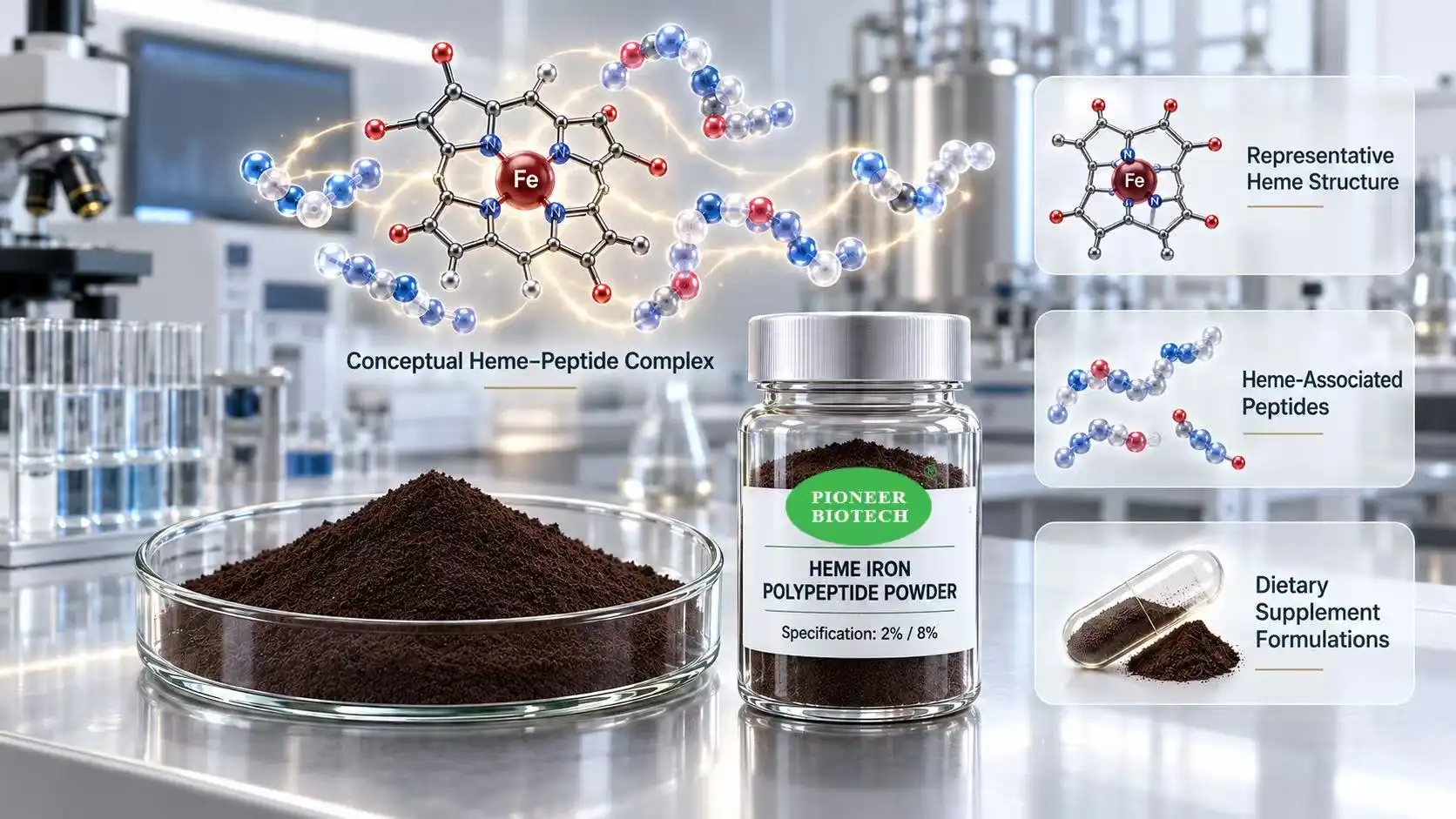
Heme iron polypeptide powder is a high bioavailability iron supplement of animal haemoglobin, generally produced from pig or bovine blood. This ingredient is different from the usual inorganic iron salts because it keeps the entire heme structure intact and can be absorbed through a special intestinal pathway, the Heme Carrier Protein 1 (HCP1 mechanism) regardless of the usual divalent metal transporter. This unique pathway of absorption provides heme iron polypeptide powder with a large bioavailability advantage, making it the active ingredient of choice for supplement companies, pharmaceutical makers and functional food developers that want to supply clinically meaningful iron.
Understanding Heme Iron Polypeptide Powder
What Sets It Apart Biochemically
Molecularly, heme iron is iron complexed within a porphyrin ring, and is wrapped into short-chain peptides formed when haemoglobin is broken down by enzymes. The iron molecule is held stable by the polypeptide framework while it is digested. It is done by protecting it against oxidative decomposition and by preventing it from reacting with dietary inhibitors, such as calcium, phytates and tannins. This makes a substance that operates substantially differently in the digestive tract than ferrous sulphate or iron bisglycinate.
Absorption Pathway and Bioefficacy
It has been shown over and over that heme iron is taken two to three times faster than non-heme iron when eating normally. The HCP1 transporter finds the whole heme molecule and takes it inside, getting around pH-sensitive dissolution problems that make inorganic iron less effective. For people in charge of product creation who are looking at iron sources, this molecular difference means lower effective doses and better results for consumers.
Benefits and Applications of Heme Iron Polypeptide Powder
This ingredient has a strong case for being used in medicine. It has been shown in clinical tests to help treat iron deficiency anemia, with patients seeing significant improvements in their hemoglobin and serum ferritin levels within weeks of starting the supplement. What makes it even better is that it is well tolerated. This is because the polypeptide structure greatly lowers the amount of free iron that enters the gut lumen. This is what causes nausea, constipation, and the metallic aftertaste that comes with ferrous salts.
In the following main areas of use, this ingredient provides measurable value:
- Clinical Nutraceuticals: Great for recipes that treat anemia in people with inflammatory bowel disease or who have lost a lot of iron after surgery, because inorganic iron is not well absorbed by the GI mucosa.
- Prenatal Supplement Lines: It is known that mothers have trouble following through on their prenatal nutrition plans. Heme-based iron makes nausea and constipation a lot less common, which supports a healthy daily intake without affecting how well iron is transferred to the fetus.
- Sports Recovery Nutrition: Endurance athletes need long-term support for hemoglobin and ferritin without stomach pain during high-intensity training stages. This ingredient works well in both healing drinks and capsules.
- Functional Food Fortification: It can be used in fortified drinks and nutrition bars that need to be labeled as "clean" because it comes in food-grade standards and water-dispersible versions.
Because of these use profiles, it is one of the most flexible iron actives that manufacturers can choose from in a number of different industries. This ingredient is flexible enough to work with a wide range of formulation techniques, whether you are making a clinical vitamin or a general health product.
Safety Considerations
People who have iron overload disorders like hemochromatosis or hemosiderosis or who are known to be allergic to meat-based products should not take heme iron polypeptide powder. Dosage advice should be in line with the rules in the target market, and safety information from the provider is needed before product claims can be finalized.
Comparison and Market Positioning
How It Stacks Up Against Other Iron Sources
Three options—ferrous sulfate, iron bisglycinate, and heme iron polypeptide powder—are usually brought up when procurement teams talk about iron raw materials. Ferrous sulfate is still the least expensive option, but it has the most GI side effects and isn't absorbed very well. A chelated type of iron called bisglycinate makes it easier to handle, but it still relies on DMT1 to be absorbed, which can be stopped by certain foods. Heme iron polypeptide powder has a completely different way of being absorbed, making it more bioavailable and easier for the body to handle than the other two.
When companies make premium supplements or medicines, they often choose heme iron over other ingredients despite it costing more. This is because it requires less of an amount to work, the claims on the label are stronger, and customers are more likely to stick with the product if it has fewer side effects.
Procurement managers should look at a supplier's GMP licensing, data on consistency from batch to batch, heavy metal testing results, and approved HPLC or spectrophotometric assay methods when judging their quality. Suppliers with HALAL, KOSHER, and ISO9001 licenses can cover a wider range of market areas with their compliance coverage.
How to Procure Heme Iron Polypeptide Powder Efficiently
It takes more work to find this ingredient than it does to find commodity minerals. Because the material comes from living things, it is necessary to have proof of its origin. This includes animal source certificates, pathogen testing records, and checks of the processing center in order to meet US market regulations.
Qualified procurement managers typically prioritize the following when shortlisting suppliers:
- GMP-certified manufacturing facilities with written process controls and a history of third-party audits
- Standardized assay specifications with standardized assay parameters, clear iron content % and peptide molecular weight distribution
- Comprehensive CoA packages that include heavy metals, microbiological limits, moisture levels, and profiles of leftover solvents
- Scalable MOQ structures that can be scaled up or down to accommodate early-stage product development without committing to full commercial volumes too soon
Beyond supplier credentials, understanding logistics is equally critical. Shipping at a controlled temperature and packing covered by desiccant help keep the stability of the polypeptide matrix while it's in transit. In order to keep the iron-porphyrin complex intact, it is usually stored in cool, dry places below 25°C with moisture levels kept below 5% to preserve the iron-porphyrin complex integrity.
Buying ingredients through well-known B2B platforms or directly from manufacturers who offer technical support speeds up the decision-making process and lowers the chance of getting material that has been tampered with or misrepresented.
Procurement Decision Support and Usage Guidance
Product creation and procurement work together to make sure that the specs of your ingredients match the way they will be used. For formulations that are used in medicine, purity standards and approved testing methods must be met. Standardized iron content, which is usually given as a percentage of total iron, and peptide profile documentation help back up label claims in nutraceutical and OEM applications for heme iron polypeptide.
In clinical use, the recommended amount of elemental iron per serving is usually between 5 mg and 12 mg, but this can change depending on the indication and the population being studied. Formulators should check with their supplier's technical team to make sure that the heme matrix works with other parts of the formula, especially vitamins and chelating agents that might combine with it.
One common risk in procurement is getting lower-quality non-heme iron concentrates that are mistakenly labeled as heme-derived material. Asking for molecular confirmation, like UV-Vis spectroscopy showing the Soret band at about 412 nm, is a good way to make sure the authenticity of something that experienced quality assurance teams use all the time.

Conclusion
Heme iron polypeptide powder has its own place in the market for iron ingredients that can be defended. Because it is more bioavailable, easier to tolerate, and can be used in a variety of industries, it is a great choice for vitamin brands, drug companies, and functional food companies that care about both clinical performance and customer experience. As important as the science behind the ingredients is choosing a qualified provider with strong quality paperwork and regulatory compliance infrastructure. When both factors work together, this ingredient really stands out in the market for iron supplements, which is pretty crowded.
FAQ
1.What is the recommended dosage for clinical use?
Depending on the level of deficiency and the people being treated, most clinical formulas give between 5 mg and 12 mg of elemental heme iron per daily dose. Before putting the finishing touches on product labels, you should always look at the most recent governmental standards and clinical literature to get advice that is specific to your area.
2.How does absorption compare to ferrous sulfate?
Under normal dietary conditions, heme iron is absorbed two to three times faster than ferrous sulfate. Dietary inhibitors like phytates, tannins, and calcium don't have much of an effect on its ability to be taken in because it uses the HCP1 route instead of DMT1.
3.Is heme iron polypeptide safe for all consumers?
People who are allergic to meat-based products or who have iron overload disorders like hemochromatosis or hemosiderosis should not take it. As much as you take in can be dangerous, especially for kids.
4.Are bulk purchasing and private labeling available?
Yes. A lot of good makers offer scalable bulk supply, variable MOQ choices, and full OEM/ODM support, which includes private-label brand-friendly custom specs, packing, and paperwork packages.
5.Does it cause black stools or constipation?
Because it is so well absorbed, a lot less iron that hasn't been absorbed makes it to the colon. This makes black stools and constipation much less common than with inorganic iron salts.
Partner with Pioneer Biotech for Reliable Heme Iron Polypeptide Supply
Pioneer Biotech has been making standard botanical and active ingredient ingredients since 2012. They do this from a GMP-certified factory in Hanzhong, China, which is also ISO9001, HALAL, KOSHER, and FDA-registered. As a reliable heme iron polypeptide powder supplier, we offer consistent batches, full COA documentation, and specialized technical support to nutraceutical, pharmaceutical, and OEM clients all over the United States. Reach our team directly at sales@pioneerbiotech.com or visit pioneerbioinc.com to request specifications and bulk pricing.
References
1. Lynch, S. R., & Cook, J. D. (1980). Interaction of vitamin C and iron. Annals of the New York Academy of Sciences, 355, 32–44.
2. Carpenter, C. E., & Mahoney, A. W. (1992). Contributions of heme and nonheme iron to human nutrition. Critical Reviews in Food Science and Nutrition, 31(4), 333–367.
3. Hallberg, L., Hulthén, L., & Gramatkovski, E. (1997). Iron absorption from the whole diet in men. American Journal of Clinical Nutrition, 66(2), 347–356.
4. Uzel, C., & Conrad, M. E. (1998). Absorption of heme iron. Seminars in Hematology, 35(1), 27–34.
5. Shayeghi, M., et al. (2005). Identification of an intestinal heme transporter. Cell, 122(5), 789–801.
6. Moretti, D., et al. (2006). Oral iron supplements increase hepcidin and decrease iron absorption from daily or twice-daily doses in iron-depleted young women. Blood, 107(11), 4497–4502.