

Ceramide Powder for Skin Health: Mechanisms and Formulation Applications
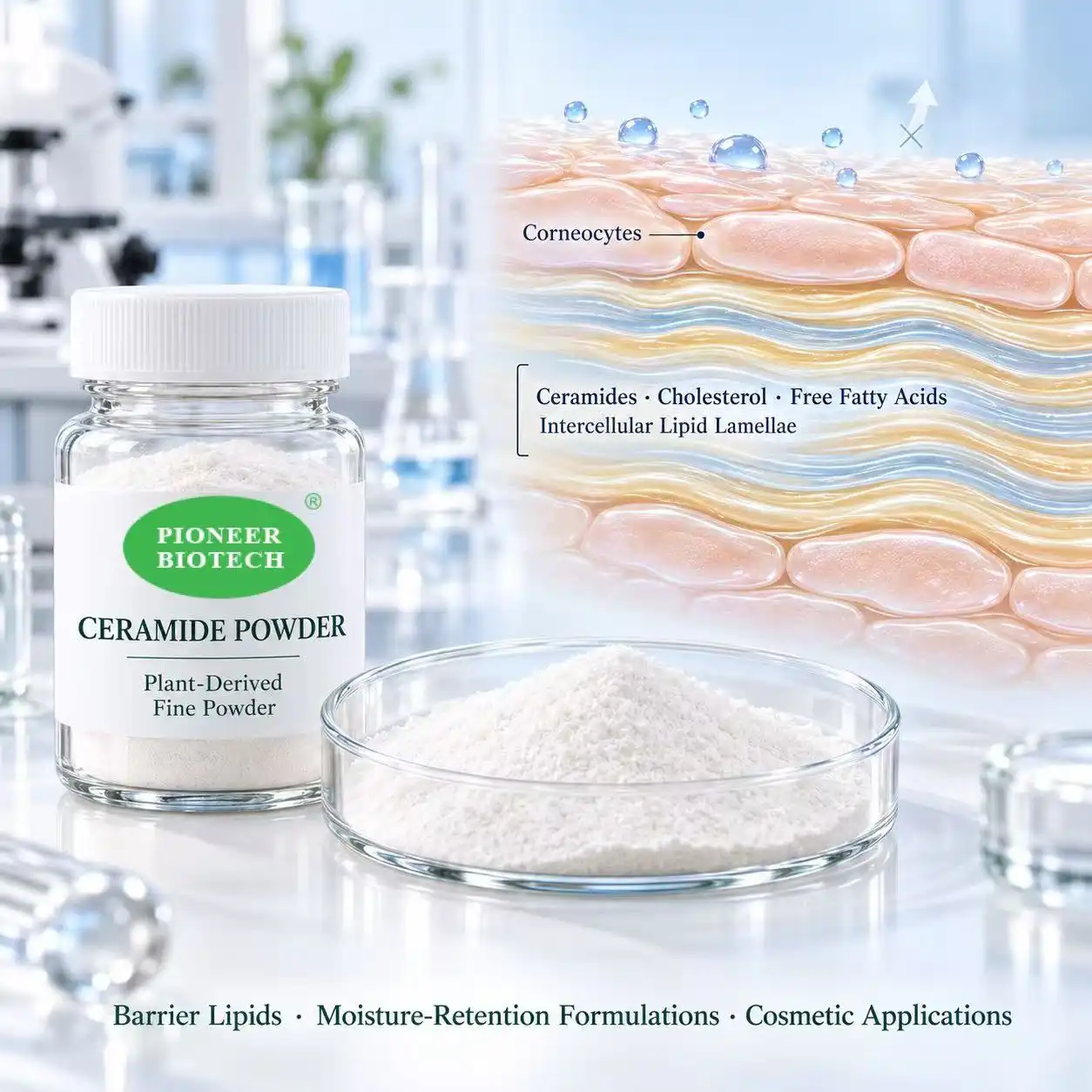
Ceramide powder is a high-purity, plant-derived sphingolipid concentrate that plays a structurally indispensable role in barrier-repair skincare formulations. Representing approximately 50% of the stratum corneum's intercellular lipid matrix, ceramides function as the molecular "mortar" that holds skin cells together, regulates transepidermal water loss (TEWL), and sustains long-term dermal hydration. For formulation directors and R&D teams sourcing cosmetic actives, understanding the precise mechanisms and application science behind this ingredient is not a secondary consideration—it is the foundation of any clinically credible barrier-repair claim.
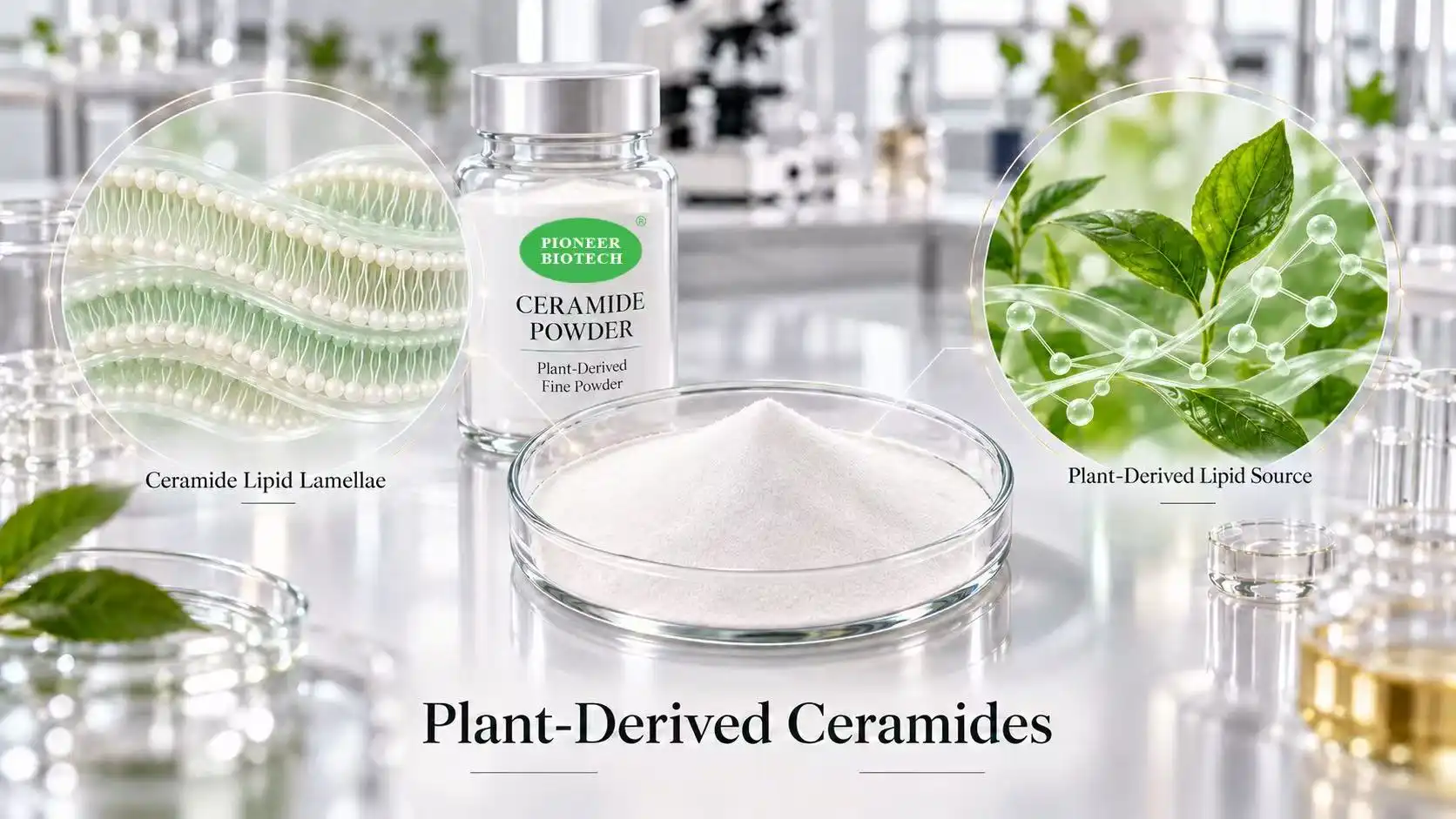
Understanding Ceramide Powder: Composition and Skin Health Benefits
What Sets High-Purity Ceramide Powder Apart
Not all raw materials for ceramide have the same functional output. When the ceramide powder is made with ≥98% purity, it has a number of benefits over reduced liquid dispersions, including a higher active concentration per gram, better heat stability in anhydrous systems, and tighter batch-to-batch consistency. Pioneer Biotech's material meets this standard because it is pure (HPLC-verified), has a moisture content of less than 2%, and has heavy metals managed to less than 10 ppm. These are all standards that are met by cosmetic-grade and nutritional products.
Biomimetic Lipid Ratio: The Formulation Logic
It's not just the ceramide part that makes a ceramide complex biomimetic; it's also how it relates to other lipids. Pioneer Biotech's special mix is based on the natural lipid structure of healthy skin:
- Ceramide — 30%: The primary sphingolipid responsible for lamellar bilayer formation and lower TEWL. Clinical studies show that people with atopic dermatitis have low amounts of ceramide, which supports topical replacement methods.
- Cholesterol — 25%: Controls the fluidity of the membrane and speeds up the barrier's recovery after damage, as shown by research on the stratum corneum.
- Fatty Acids — 20%: Linoleic acid and other long-chain fatty acids keep the lamellar stoichiometry, which directly affects the gel-to-liquid crystalline phase behavior that is important for barrier function.
- Phytosphingosine — 15%: A plant-derived sphingoid base with demonstrated antimicrobial and anti-inflammatory activity, supporting its use in skin care products for sensitive and reactive skin.
- Other Essential Lipids — 10%: Complementary lipid species that complete the intercellular cement makeup.
You can't just pick this ratio at random; it was calculated using public data on the stratum corneum lipidomics. This gives formulators a scientifically sound basis for their "barrier repair" promises. This lipid profile can be used for more than just skin. It can also be used in recovery lines after cosmetic procedures and oral beauty products that aim to give ceramide to the whole body.
Mechanisms of Action: How Ceramide Powder Enhances Skin Function
Stratum Corneum Integration and TEWL Reduction
Ceramide molecules self-assemble into organized lamellar structures between corneocytes once they are added to an emulsion or multi-lamellar emulsion (MLE) system. This structure makes it harder for water to move through the skin, which lowers TEWL, which is the usual way to measure how well a barrier is working. Independent TEWL testing (using Tewameter instruments) is still the standard validation step that purchasing and formulation teams should demand from any pure ceramide powder raw material supplier before using it on a large scale.
Synergy With Co-Actives
When combined with actives that work well with ceramide, their effects are amplified. Niacinamide increases the production of ceramide in keratinocytes. Hyaluronic acid hydrates corneocytes, and ceramides protect the health of the fatty layer between cells. These are two different but related ways of hydrating the skin. Vitamin E helps keep the antioxidants stable within the lipid membrane. These known synergies help formulators make multi-mechanism anti-aging and barrier-repair systems that are both interesting to read about and reliable in their function.
Formulation Applications: Integrating Ceramide Powder into Skincare Products
Pre-Dispersion Is Non-Negotiable
Because ceramide powder doesn't dissolve in water (melting point 70°C), mixing it directly with water leads to uneven particle distribution and lower absorption. Caprylic/capric triglyceride or squalane work well as emollients that can melt the powder before adding it to the oil phase of an emulsion. This is the right way to do it from a technical point of view. Pioneer Biotech gives formulation support documents that explain the best pre-dispersion methods. This cuts down on the time it takes for client labs to make new products.
Ceramide actives work with a lot of different products. In the following main types of applications, this chemical shows measurable results:
- Barrier-repair creams and moisturizers: Emollient systems lower TEWL in a way that is clinically meaningful at 0.5 to 2.0% while keeping the skin's natural sensory profile.
- Post-procedure recovery serums: The biomimetic lipid ratio speeds up the re-epithelialization of damaged skin, making it perfect for brands in the medical aesthetics and dermatology channels.
- Oral beauty capsules and softgels: Ceramide powder that has been microencapsulated to keep it stable in the gut has been shown to be transported throughout the body to the dermis, backing the "beauty from within" view.
- Hair care treatments: Ceramide lipids stick to broken cuticle surfaces and make hair fibers stronger by reducing porosity and increasing tensile strength.
Procurement Insights: Selecting a Ceramide Powder Supplier for B2B Clients
Verification Criteria That Protect Formulation Integrity
There is a well-known risk of adulteration in the pure ceramide powder raw material market. Cheaper lipid fractions can be added without being stated, which increases the perceived amount while decreasing the functional output. For buying teams, the bare minimum for a reliable verification system is HPLC chromatograms for all the important lipid components, certificates of analysis (COA) from the maker, and retesting by a third party before the formula is locked down.
Pioneer Biotech sends full analytical reports with every batch, which include HPLC profiles that prove the ceramide, cholesterol, fatty acid, and phytosphingosine fractions. The building has ISO9001, HACCP, ISO22000, HALAL, KOSHER, FDA, EU USDA Organic, and Kosher certifications. It has also been checked to make sure it is BSE/TSE-free and doesn't use GMOs. The business keeps ready-to-ship items in local stores so that orders can be filled quickly. They also give away samples so that customers can try out new formulations and help with all the paperwork for customs, regulatory files, and OEM documentation. Flexible MOQ structures allow for small-batch pilot runs without requiring minimum volume commitments that put a strain on the budgets of early-stage product development.
The Future of Ceramide Powder in Skin Health and Cosmetics
Fermentation-derived ceramides, which are made when yeast bioconverts plant materials, are becoming more popular as sustainable, scalable options to solvent-extraction methods. These biofermented versions have better molecular uniformity and less batch variability, which helps formulators who are making precision barrier-repair systems. At the same time, there is a growing demand for products that contain ceramide. This is because more and more clinical studies show that taking ceramide powder by mouth can improve skin hydration and barrier function over 8–12 weeks.
For business-to-business brands in the anti-aging, sensitive skin, or medical aesthetics categories, securing a reliable, well-documented ceramide supply chain puts them ahead of the market, which always values ingredient clarity and proof of function.
Conclusion
Ceramide powder isn't just a trendy ingredient; it's a structural biochemical must-have for any skin care product that claims to repair skin barriers. It is clear from research that low levels of ceramides in the stratum corneum are directly linked to poor barrier function, high TEWL, and sensitive skin. Filling in this gap with a biomimetic lipid complex that has been tested for purity leads to results that can be measured and tested in the lab. Formulation directors who believe that data backs up a product claim, not embellishes it, start the sourcing process with rigorous analysis and end it with a supplier who can maintain it for every delivery.
FAQ
1. What purity level should ceramide powder meet for cosmetic-grade formulation?
Cosmetic-grade ceramide powder should have a purity level of at least 95% by HPLC, and a purity level of at least 98% is better for high-end barrier-repair uses. Pioneer Biotech's products are guaranteed to be ≥98% pure, and full HPLC chromatograms are available for each batch.
2. Is plant-derived ceramide powder functionally equivalent to animal-derived sources?
It is true that Ceramide powder made from wheat germ, rice bran, or fermentation materials have the same sphingolipid backbone as ceramides made from animal products. The plant-derived label also helps meet the standards for being vegan, BSE/TSE-free, and clean beauty.
3. How should ceramide powder be incorporated into water-based formulations?
This ingredient doesn't dissolve in water but does dissolve in oil, so it needs to be mixed in with warm oil (usually above 70°C) first. Pioneer Biotech offers documentation for application support that includes optimized dispersion protocols for both O/W and W/O systems.
4. What documentation should B2B buyers request before finalizing a ceramide supplier?
Buyers should ask for HPLC chromatograms for each lipid fraction, a full COA, the ability for a third party to repeat, stability data, and the chance to sign an NDA or secrecy agreement. Regulatory certifications like FDA, ISO, HALAL, and KOSHER should be up-to-date and ready for an audit.
Partner With Pioneer Biotech — Trusted Ceramide Powder Manufacturer
Pioneer Biotech sells high-quality ceramide powder that is ≥98% pure, comes with full analytical documentation, and is certified to come from plants. It is designed to be used in barrier-repair and anti-aging products. We have been a supplier for a long time and have FDA, ISO22000, HALAL, and KOSHER certifications. We offer OEM customization, variable MOQs, and free samples for lab testing. To get your COA and sample right away, email our expert team at sales@pioneerbiotech.com or go to pioneerbioinc.com.
References
1. Elias, P. M., & Feingold, K. R. (2006). Skin Barrier. Taylor & Francis.
2. Mao-Qiang, M., Feingold, K. R., & Elias, P. M. (1993). Inhibition of cholesterol and sphingolipid synthesis causes paradoxical effects on permeability barrier homeostasis. Journal of Investigative Dermatology, 101(2), 185–190.
3. Coderch, L., López, O., de la Maza, A., & Parra, J. L. (2003). Ceramides and skin function. American Journal of Clinical Dermatology, 4(2), 107–129.
4. Loden, M. (2003). Role of topical emollients and moisturizers in the treatment of dry skin barrier disorders. American Journal of Clinical Dermatology, 4(11), 771–788.
5. Tominaga, M., & Takamori, K. (2014). An update on peripheral mechanisms and treatments of itch. Biological & Pharmaceutical Bulletin, 36(8), 1241–1247.
6. Imokawa, G., Abe, A., Jin, K., Higaki, Y., Kawashima, M., & Hidano, A. (1991). Decreased level of ceramides in stratum corneum of atopic dermatitis. Journal of Investigative Dermatology, 96(4), 523–526.