

What Is Fungal Chitosan? Benefits, Properties, and Applications
Fungal chitosan is a positively charged polysaccharide derived from fungal mycelium cell walls, e.g., Aspergillus niger, Agaricus bisporus and Ganoderma lucidum. ChitoRite is a 100% non-animal, allergen free alternative to typical crustacean derived chitosan, produced through controlled bio-fermentation and enzymatic deacetylation. Its unique properties such as tunable molecular weight, DDA from 80% to 95%, ash content < 1% and heavy metals below detection limits make it a precision ingredient for winemaking, biomedical, cosmetic and food industry applications where clean label compliance and batch consistency are a must.
Understanding Fungal Chitosan: Definition, Properties, and Extraction Process
What Sets Fungal-Derived Chitosan Apart Chemically
What Makes Fungal-Derived Chitosan Special Chemically
The major component of this biopolymer is the same β-1,4-linked glucosamine backbone as that found in shellfish, but the source material makes a considerable difference. Chitin is tightly interwoven with glucans . This is contrasted to the protein-heavy shells of crustaceans . This implies there are no shellfish proteins in the extract later on which produce IgE-mediated allergic responses that are identified by EU allergy labelling laws.
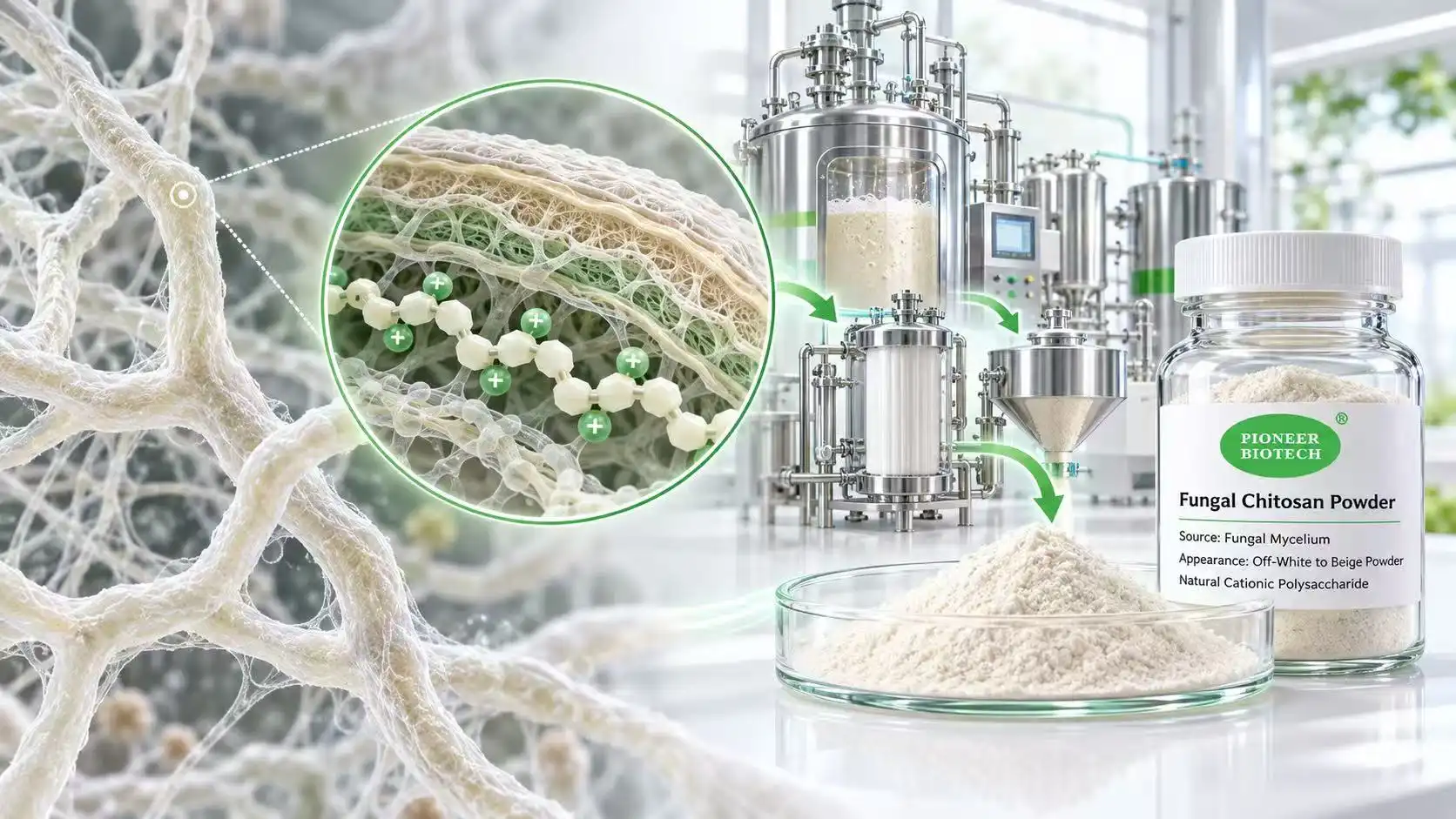
The final powder is off-white to beige in colour and dissolves readily in mild organic acids such as lactic, citric or acetic acid (pH < 6.0). The molecular weight can be changed from low molecular weight oligomers to high molecular weight polymers. This gives the formulator precise control over film thickness, film strength and solubility.
The Fermentation-Based Extraction Process
Instead of collecting marine waste during certain times of the year, makers grow certain types of fungi in bioreactors with strict controls. There are four steps in the process: fermentation biomass cultivation, alkaline treatment to separate raw chitin, deacetylation to turn chitin into chitosan, and purification and milling to the required specifications. Each step is done according to GMP rules. This is why batch-to-batch consistency, which is a common problem in supply chains that use marine products, is physically removed instead of just handled.
Pioneer Biotech's factory is in Hanzhong, Shaanxi Province, and is registered with ISO9001, ISO22000, HACCP, EU-Organic, USDA Organic, KOSHER, HALAL, and the USFDA. Every commercial batch can have a COA checked by a third party that is not connected to the company.
Benefits and Applications of Fungal Chitosan Across Industries
This ingredient goes from being a niche interest to a strategic procurement priority because there is a lot of written performance data across many sectors for chitosan powder. Here are the main areas of application where worth is well established.
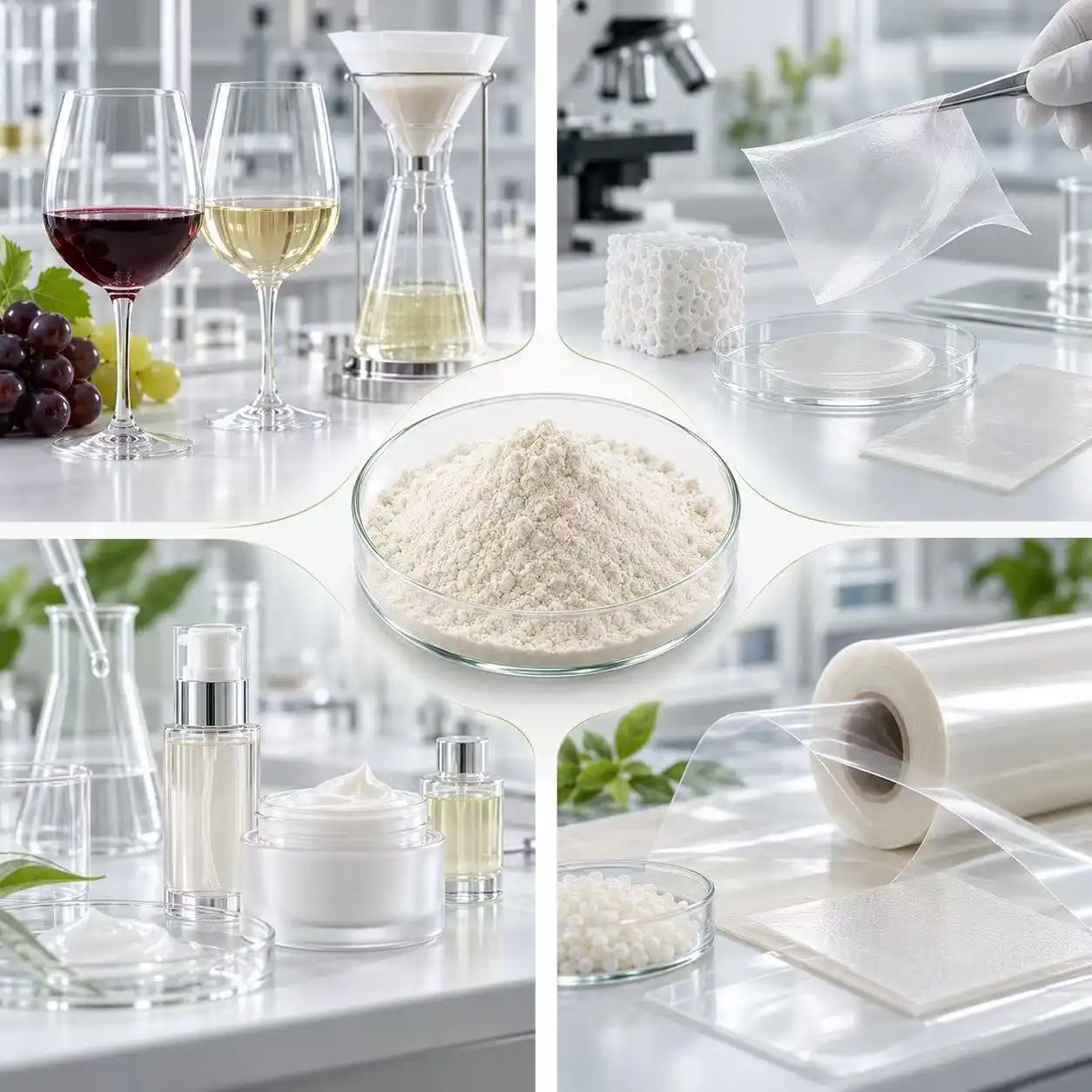
- Enology and fine winemaking: In enology and fine winemaking, fungal chitosan is allowed by OIV Resolution Oeno 338A/2009 and EU Regulation 606/2009 as a fining and antimicrobial agent. It stops spoilage yeasts like Brettanomyces and gets rid of unstable proteins without triggering labeling requirements for shellfish allergens, which is an advantage that no alternative derived from crustaceans can match.
- Biomedical and pharmaceutical use: Because it doesn't cause immune responses, it can be used to make wound dressings, materials that stop bleeding, and drug delivery systems. A study in the journal Carbohydrate Polymers (2019) showed that fungal chitosan was biocompatible to the same level as pharmaceutical-grade standards. When made under controlled fermentation, there were no endotoxin levels that could be found.
- Cosmetics and personal care: In personal care and cosmetics, it replaces synthetic polymers in hair serums and skin care emulsions by acting as a natural film-forming agent and metal chelator. Its cationic charge works with hair and skin surfaces that are negatively charged, making them more substantial without leaving behind any petrochemical residues. This is a feature that directly meets the standards for clean beauty and vegan certification.
- Food packaging and preservation: Food preservation and packaging: The biopolymer is added to edible coatings and compostable films to make them last longer by killing S. aureus and E. coli microbes and meeting standards for compostability that are important for sustainable packaging efforts.
These use profiles show why procurement teams in regulated industries put this ingredient at the top of their list when they are reformulating for cleaner, more believable label claims.
Fungal Chitosan vs. Other Types: A Comprehensive Comparison for Procurement Decisions
Purity, Allergen Risk, and Supply Chain Stability
The important differences that experienced technical directors look at before moving providers are shown below in a table.
Crustacean-derived chitosan has an inherent allergy risk, needs to be labeled according to EU Directive 2007/68/EC, and changes in quality as a result of changes in harvest times. Artificial chitosan doesn't come from living things at all, but it isn't as biocompatible and isn't recognized by regulators in food and drug monographs.
Fungal chitosan is the best because it has a stable supply that is driven by fermentation, doesn't contain any shellfish allergens, is GRAS, has EU Novel Food permission, and meets purity standards that regularly go above and beyond USP, EP, and FCC book levels. It has less than 1% ash and no heavy metals (Pb, As, Hg, or Cd) that can be detected. This is a level of purity that marine-derived batches rarely reach consistently.
The biocompatibility validation route is sped up for pharmaceutical procurement teams when immunogenic shellfish proteins are not present. This means that the development cycle is cut by a significant amount, from 6 to 12 months.
How to Select and Purchase High-Quality Fungal Chitosan: A Buyer's Guide
Critical Specification Checkpoints Before Committing to a Supplier
When looking for a trusted fungal chitosan powder provider, you need to look closely at a number of factors that have an impact on the performance of the final product and compliance with regulations. Here are the main rating factors that all procurement professionals should check:
- Degree of Deacetylation (DDA): Make sure that the DDA value is between 80% and 95%. A higher DDA level raises the number of free amino groups, which boosts the cationic charge and antibacterial activity. As usual, suppliers should give you titration data or FTIR bands.
- Molecular weight customization capability: Oligomers (< 10 kDa) are used for nutraceutical absorption, while high-MW grades (> 300 kDa) are used for wound dressings and fining agents. A trustworthy company sells this range right away, without having to wait for reformulation.
- Third-party COA and heavy metal testing: Make sure that the COA data for each batch shows that Pb, As, Hg, and Cd are below the detection levels. As a standard service, any reputable company that makes fungal chitosan will allow independent labs to test it again.
- Regulatory documentation package: For use in winemaking, OIV compliance documents are needed. For uses in medicine or beauty products, make sure that GRAS certification, EU Novel Food status, and vegan/allergen-free statements are real certificates and not just claims.
- Sample availability and application support: Before negotiating a minimum order quantity, suppliers that are worth doing business with offer trial samples and technical advice for fining tests, film-formation tests, or cell-compatibility studies.
These checkpoints directly lead to lower qualification risk and a shorter time to launch in every industry.
Future Trends and Sustainability: The Role of Fungal Chitosan in Green Procurement
In 2023, the global chitosan market was worth about USD 1.4 billion. As ESG procurement rules get stricter, fungal-source grades are getting a large part of the market. This material is better for corporate sustainability scorecards than alternatives made from oil or fish because it breaks down naturally, can be fermented in a way that doesn't release carbon, and is in line with the principles of the circular bioeconomy.
New precision-fermentation technologies are making the price difference between grades derived from crustaceans even smaller. This makes long-term supplier partnerships more affordable without sacrificing the integrity of the specifications. Both the EU and the US are continuing to move regulations in a way that supports non-animal, traceable biopolymers. This is good news for procurement teams that are making multi-year supply deals right now.
Conclusion
Fungal chitosan is a rare biopolymer that combines technical ability and regulatory insight. It doesn't contain any allergens, batches are always the same because of fermentation, and it can be used for a wide range of things, from making wine that is OIV-compliant to treating wounds with pharmaceutical-grade products. These features solve the main labeling and compliance problems that affect buying decisions in sensitive industries. For technical directors and sourcing professionals who need precise-grade ingredients backed by proof, switching from options drawn from the ocean is both a smart business move and an easy thing to do.
FAQ
1.What is the key chemical difference between fungal and crustacean chitosan?
Both have a β-1,4-glucosamine backbone, but the stuff from fungi doesn't have any shellfish proteins in it. This gets rid of the IgE-mediated allergy risk that EU and FDA rules say must be labeled on grades that come from crustaceans.
2.Is fungal chitosan validated as safe for pharmaceutical applications?
Yes. It doesn't cause immune reactions and doesn't contain any marine contaminants, so it meets USP and EP cleanliness standards. Biocompatibility data from peer-reviewed literature supports its use in wound dressings, hemostats, and drug-delivery materials, as long as the seller gives COA and endotoxin test results for each batch.
3.How do I verify purity and quality before placing a commercial order?
Ask for a COA that is specific to the batch and includes DDA, molecular weight, ash amount, moisture, heavy metals, and particle size. Compare with a re-test done in a different lab. Some reliable suppliers, like Pioneer Biotech, help with plant audits and offer free samples for testing purposes before full purchases are committed to.
Partner with Pioneer Biotech — Trusted Fungal Chitosan Supplier Since 2012
Pioneer Biotech offers fungal chitosan powder that is suitable for use in medicine, cosmetics, and enology. It comes with 90%, 95%, and 98% DDA standards and is certified by ISO22000, HACCP, EU-Organic, USDA Organic, KOSHER, HALAL, and the USFDA. You can get ready-to-ship items, free trials, help with all of your paperwork, and plant checks. To get your sample and COA package right away, email our technical team at sales@pioneerbiotech.com or go to pioneerbioinc.com.
References
1. Aranaz, I., et al. "Chitosan: An Overview of Its Properties and Applications." Polymers, 2021.
2. Beaney, P., Lizardi-Mendoza, J., & Healy, M. "Comparison of Chitins Produced by Chemical and Bioprocessing Methods." Journal of Chemical Technology and Biotechnology, 2005.
3. El Knidri, H., et al. "Extraction, Chemical Modification and Properties of Chitin and Chitosan." Heliyon, 2018.
4. Nwe, N., Chandrkrachang, S., & Stevens, W.F. "Production of Fungal Chitosan by Solid State and Submerged Fermentation." Carbohydrate Polymers, 2002.
5. Tayel, A.A., et al. "Fungal Chitosan from Aspergillus niger and Its Application as a Biopreservative." Carbohydrate Polymers, 2010.
6. Rinaudo, M. "Chitin and Chitosan: Properties and Applications." Progress in Polymer Science, 2006.