

Quillaja Extract Powder: Properties, Uses, and Health Benefits
Quillaja extract powder is a standardised triterpenoid saponin substance obtained from the inner bark of Quillaja saponaria Molina, a tree endemic to Chile and Peru, and having a surprisingly broad functional profile. It has gained notoriety throughout veterinary vaccine adjuvant development, clean label beverage formulation, nutraceuticals and personal care manufacturing as a natural foaming agent, emulsifier and bioavailability enhancer. Its GRAS status, organic certifiability and BSE/TSE-free compliance make it one of the most technically reliable botanical raw materials available to today’s B2B procurement teams.
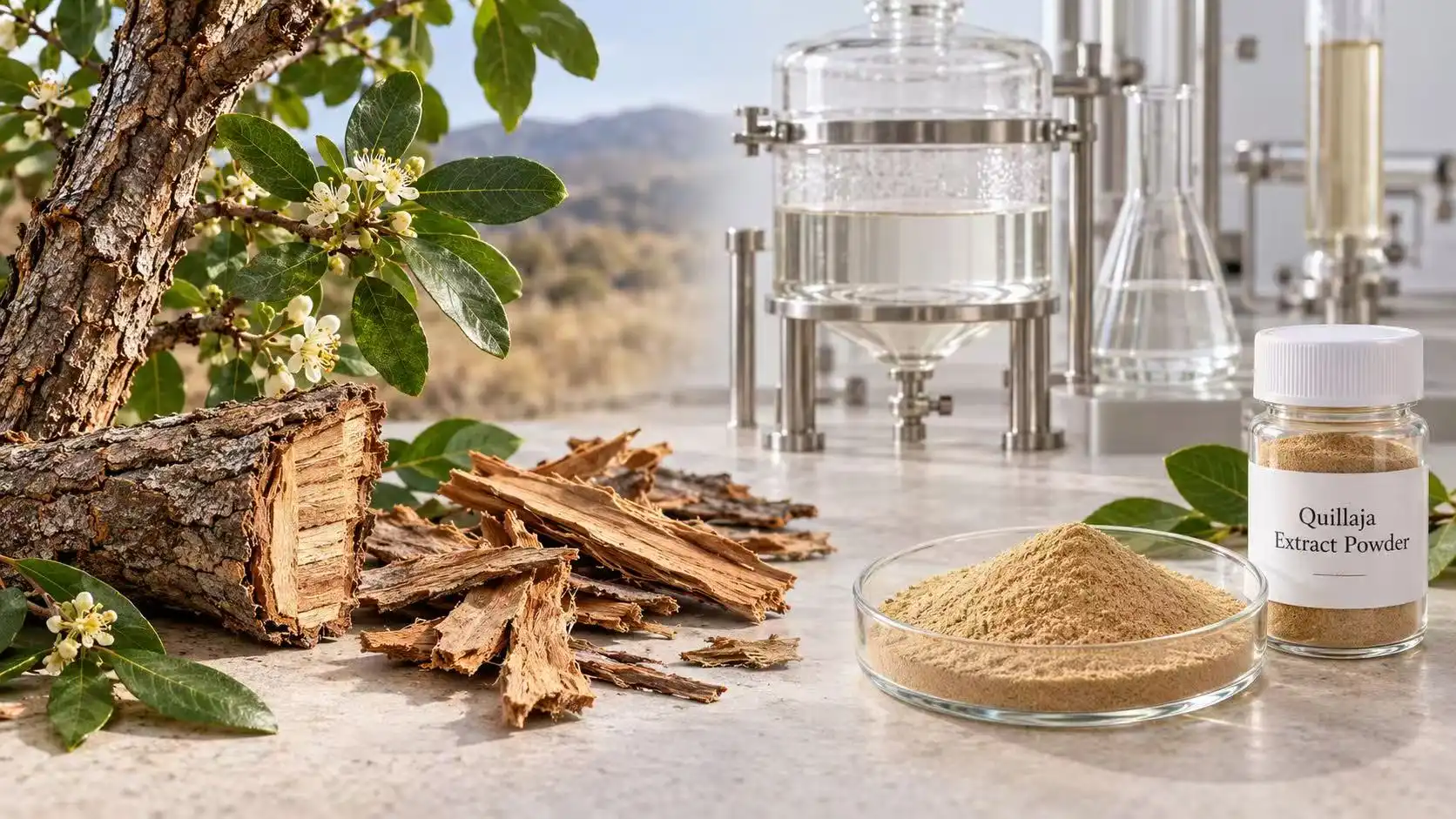
Understanding Quillaja Extract Powder: Definition and Properties
What Is Soapbark Extract, Exactly?
The bark of the soapbark tree (Quillaja saponaria) is rich in amphiphilic quillajic acid glycosides, a class of triterpenoid saponins that are both hydrophilic and lipophilic. This two-nature molecular architecture is what makes the extract so good at clinging to surfaces. Pioneer Biotech’s standardised soapbark extract powder is a brownish yellow powder with free-flowing characteristics. It is available in 60%, 90% and higher purity grades depending on the use.
Extraction, Purity, and Chemical Profile
The inner bark is pulverised and removed with hot water to enhance the active saponin fraction while maintaining the bioactive structure. It is subjected to a number of phases of filtering and chemical treatment to remove any undesirable chemicals. This yields a product that is ≤5.0% moisture, ≤10 ppm heavy metals and ≤2.0 ppm lead. The saponin profile is batch-consistent as shown by HPLC fingerprint analysis. This is a crucial consideration for vaccine adjuvant customers since compositional repeatability is directly related to efficacy.
60%-90% saponins are ideal for cosmetic and food grade usage, as they dependably maintain emulsion stability and foaming height without affecting the taste. Another safety element that procurement teams seek in an ingredient that is close to pharmaceuticals is microbiological controls such as confirmed negatives for E. coli and Salmonella.
Core Uses and Benefits of Quillaja Extract Powder in Various Industries
One of the few plant-based items that may be utilised in so many diverse ways is quillaja saponaria extract. Few raw ingredients can be an emulsion stabiliser, a stimulator of immunity adjuvant, a surfactant for skin compatibility, and a foam maker at the same time.
How each major industry uses this ingredient:
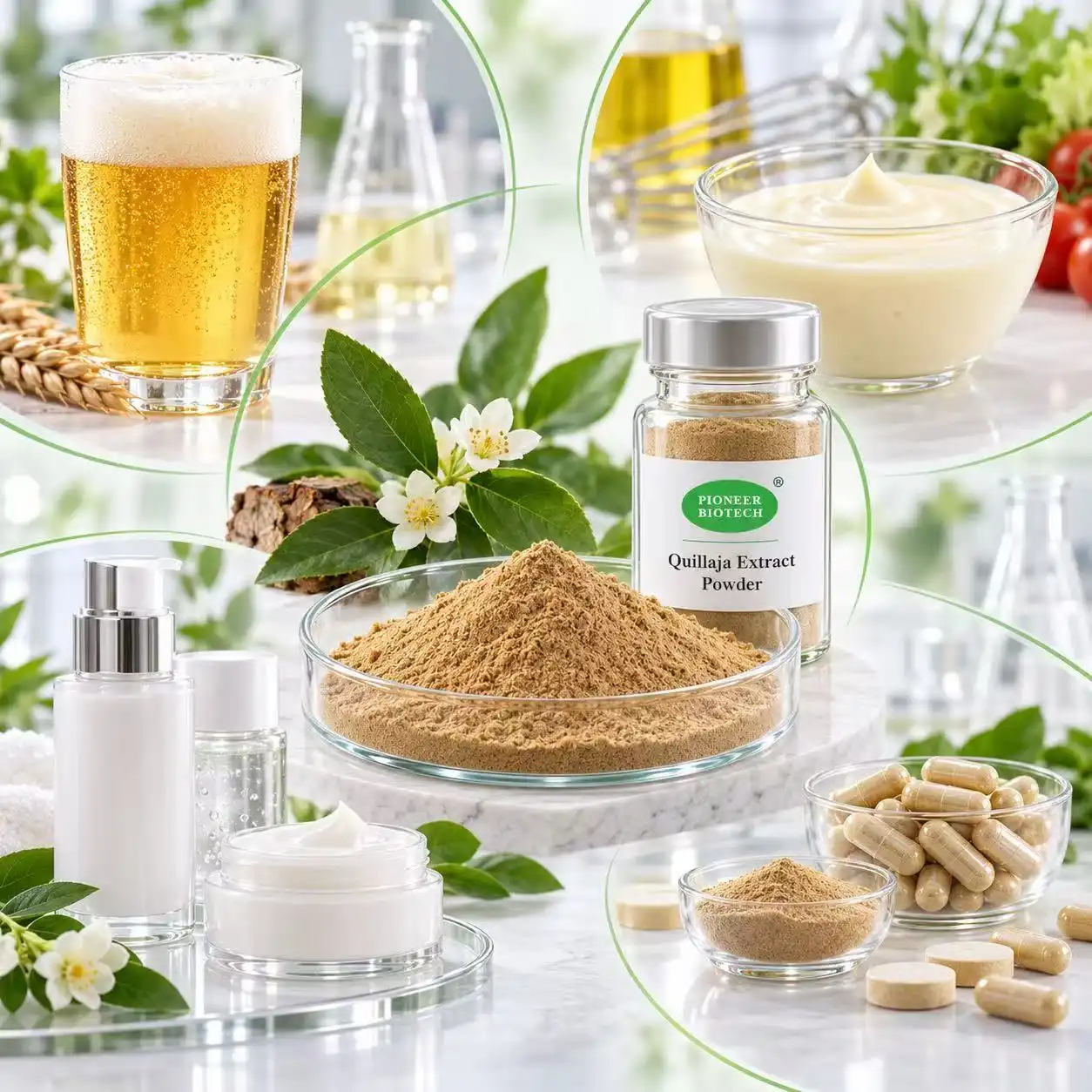
- Veterinary vaccine adjuvants: The Quil-A fraction, a purified saponin subfraction of Q. saponaria, has been utilised for many years in licensed animal vaccinations. It is in principle a crucial part of the adjuvant as it can enhance both humoral and cell-mediated immune responses. Batch consistency and documentation of HPLC fingerprints are of utmost importance at this application level.
- Clean-label carbonated drinks: Root beer, cream soda, and speciality craft sodas use natural foaming ingredients instead of polysorbates or synthetic surfactants to produce fine, lasting foam. Soapbark saponins are often effective foamers at concentrations below 200 ppm. And they don’t affect the taste of the drink, which is exactly what application engineers at beverage brands want.
- Enhancement of nutraceutical bioavailability Quillaja saponins’ amphiphilic nature favours micelle formation and hence absorption of lipid-based nutrients and fat-soluble vitamins (A, D, E, and K). This makes it a great ingredient for soft gels and liquid supplements.
- Cosmetics and oral care: The extract replaces synthetic substitutes for sodium lauryl sulphate in shampoos, body washes and toothpaste as a natural foaming agent. It also supports vegan and clean-label claims.
These purposes are why sourcing teams across a wide range of sectors consider quillaja saponin powder as a strategic element, not a commodity.
Procurement Insights: How to Source and Evaluate Quillaja Extract Powder
In this category sourcing decisions need to be quite accurate. The level of saponin content (60%, 90% or above) defines which grade is optimal for each application. But if you pick the wrong grade, there can be gaps in effectiveness or extra cost. When B2B buyers are looking for a quillaja extract powder provider, the following quality standards should be top of mind:
- Traceability to source – certified materials from Chile or Peru with safe collecting evidence. Supply chain transparency is essential for compliance and ESG reporting.
- Certification stack: Certifications that fulfil food, drug and export market needs include EU Organic, USDA Organic, HACCP, ISO 22000, Kosher, Halal, FDA-registered facility and BSE/TSE-free declaration.
- Analytical documentation: A complete COA is required for each commercial batch, including an HPLC saponin fingerprint, heavy metal panel (Pb ≤2 ppm, Cd ≤1 ppm, Hg ≤0.1 ppm, As ≤2 ppm), and microbiological safety data.
- Sample availability, MOQ flexibility: Select dependable vendors that provide you with free samples to examine before you buy in bulk. In the firm, the standard minimum order quantity for qualification batches is 25 kg.
Different industries have very different procurement processes. Customers who buy cosmetics or drinks usually finish qualification in one to two months. Before setting up yearly supply systems, companies that make vaccines for animals have three to six month validation periods that include pilot-scale trials and facility checks.
Quillaja Extract Powder vs. Alternatives: Making an Informed Decision
Most of the time, yucca extract (Yucca schidigera), quillaja saponin, and soapnut (Sapindus mukorossi) are tested as options for clean-label detergent uses. Each has its own performance traits that you should learn about before making a final recipe choice.
Yucca extract can help control smells and lower ammonia levels, which is useful in animal feed and housing for livestock, which is a different functional niche. quillaja extract Soapnut saponins can make a lot of different kinds of foam, but they aren't very good at cleaning and don't have as much regulatory paperwork as is needed for vaccines or medicines.
The adjuvant-active Quil-A fraction in Quillaja saponaria extract makes it stand out. There is no known equivalent in yucca or soapnut. The fact that it is GRAS (21 CFR 172.510), organic, and has been used in food for a long time makes it the most regulatory-defensible botanical surfactant on the market. If beverage makers want to replace polysorbate 60 or gum arabic, quillaja's foam persistence and emulsion stability data always show that it works better than other plant-based options at the same use levels.
Best Practices and Future Trends in Quillaja Extract Powder Usage
Keeping it in the right way keeps the saponin activity and stops hygroscopic caking. The usual advice is to keep the items cool and dry (below 25°C), seal the packages, and keep the relative humidity below 60%. When stored in these ways, the shelf life is extended to 24 months without losing any of its action.
The overall trend of the market clearly points to rising demand. People want brands to get rid of manufactured emulsifiers and foaming agents, and polysorbate-class additives are being closely watched by regulators in both the EU and North America. This is pushing formulation teams to find plant-based options. As spending on pet health care rises around the world, the veterinary biologics market is growing. New adjuvant systems that use purified saponin fractions are also starting to be developed. Sustainably sourced, certified-organic botanical products with full chain-of-custody paperwork will command preferential procurement status as ESG frameworks tighten. Serious B2B buyers will keep working with suppliers that can provide consistent HPLC fingerprint profiles across production batches, keep their logistics cold chain-compatible, and provide full regulatory dossiers.
Conclusion
When it comes to plant ingredients, quillaja extract powder is truly one of a kind. Its triterpenoid saponin chemistry makes it possible for a single clean-label, certified ingredient to do high-performance foaming, emulsification, adjuvant action, and bioavailability improvement. Whether it's a veterinary vaccine that needs Quil-A activity that stays the same from batch to batch or a craft soda that needs natural foam that lasts, the functional credentials are well-established. Supply chain resilience for this high-value ingredient will be built by procurement teams that put a lot of effort into carefully qualifying suppliers, putting HPLC uniformity, full certification paperwork, and long-term origin tracking at the top of their list of priorities.
FAQ
1. What saponin content grade should I specify for vaccine adjuvant use?
To get defined Quil-A fraction activity and batch-to-batch immunological consistency, the highest levels of purification are usually needed to make vaccine adjuvants. At this level of detail, the specifications must include HPLC fingerprint evidence and a full analysis COA.
2. Is quillaja saponin powder approved for food and beverage use in the United States?
Yes. Under 21 CFR 172.510, Quillaja saponaria extract is considered GRAS and can be used as a foaming agent in food at set amounts. It is used in a lot of fizzy drinks, like root beer and cream soda.
3. How do I verify supplier authenticity and batch consistency?
For each commercial lot, you should ask for a full COA that includes an HPLC saponin fingerprint, confirmation from an independent third-party laboratory, a heavy metal panel, and microbiological testing results. Certifications for the facility, such as FDA registration, ISO 22000, and HACCP, give customers even more peace of mind.
4. What is the standard shelf life and storage requirement?
A sealed package at temperatures below 25°C and relative humidity below 60% has a shelf life of 24 months on average. Stay away from direct light and water.
5. Is this product suitable for vegan, kosher, and halal-certified formulations?
Pioneer Biotech's product is plant-based, non-GMO, gluten-free, and paraben-free, and has Kosher and Halal certifications. It also meets the requirements for vegan and clean-label formulation.
Partner With Pioneer Biotech — Trusted Quillaja Extract Powder Manufacturer
Pioneer Biotech has been selling standardized plant products to business customers around the world since 2012. They do this from a building that is FDA-registered, ISO 22000-certified, and HACCP-certified. Our quillaja extract powder comes in grades with 60% to 90% saponin, is EU/USDA Organic approved, is BSE/TSE-free, and comes with full compliance paperwork. Ready stock means that orders can be sent out quickly, and free samples can be used to see how they work. Reach our team directly at sales@pioneerbiotech.com or visit pioneerbioinc.com to request specifications and begin your qualification process.
References
1. Kensil, C. R. (1996). Saponins as vaccine adjuvants. Critical Reviews in Therapeutic Drug Carrier Systems, 13(1–2), 1–55.
2. European Food Safety Authority (EFSA). (2015). Re-evaluation of quillaia extract (E 999) as a food additive. EFSA Journal, 13(3), 4031.
3. Oda, K., Matsuda, H., Murakami, T., Katayama, S., Ohgitani, T., & Yoshikawa, M. (2000). Adjuvant and haemolytic activities of 47 saponins derived from medicinal and food plants. Biological Chemistry, 381(1), 67–74.
4. Sparg, S. G., Light, M. E., & van Staden, J. (2004). Biological activities and distribution of plant saponins. Journal of Ethnopharmacology, 94(2–3), 219–243.
5. U.S. Food and Drug Administration. (2023). Substances generally recognized as safe (GRAS): Quillaia extract. Code of Federal Regulations, Title 21, Part 172.510.
6. Cheeke, P. R. (2000). Actual and potential applications of Yucca schidigera and Quillaja saponaria saponins in human and animal nutrition. Journal of Animal Science, 77(E-Suppl), 1–10.