

What Is Carvacrol and Why Is It Important in Oregano Oil?
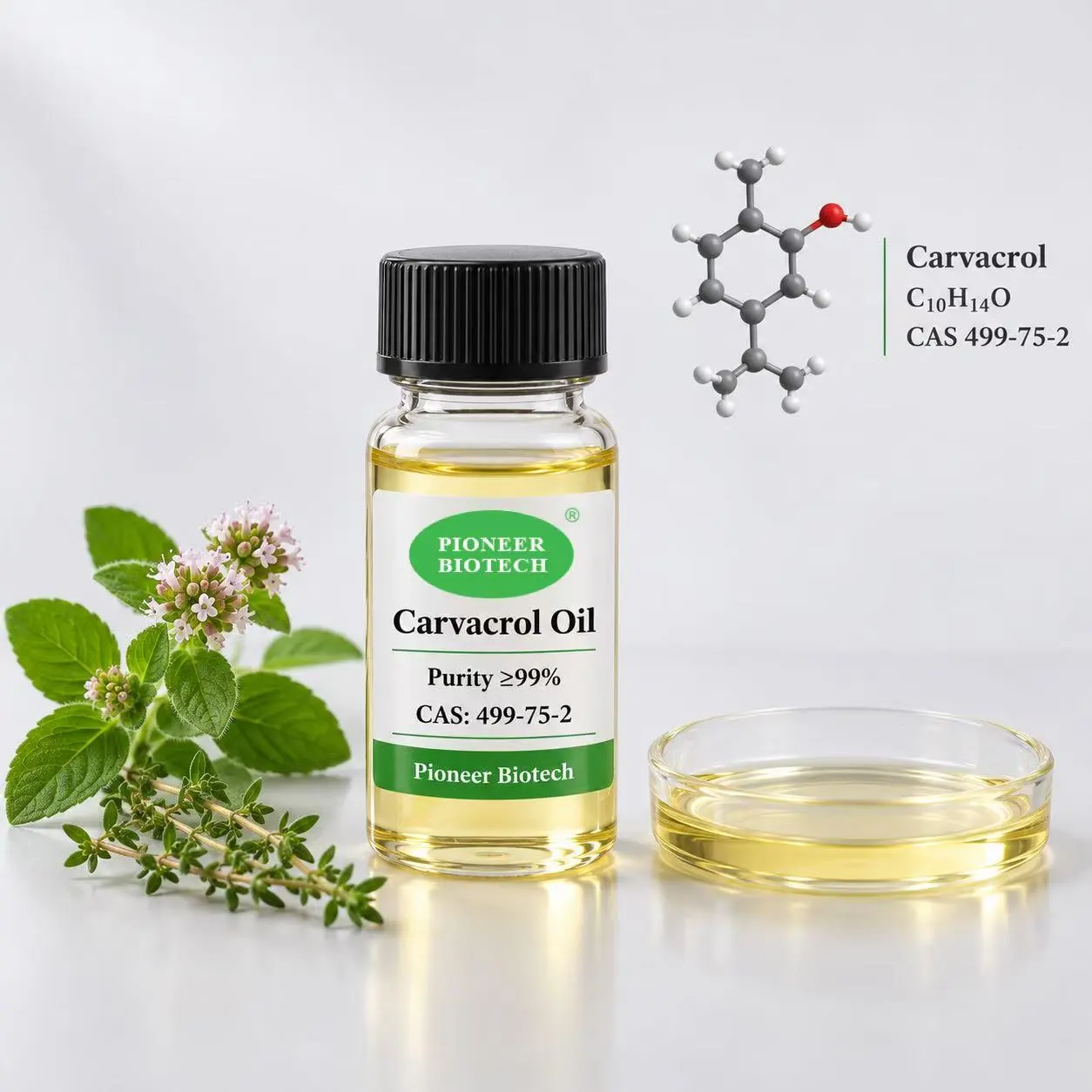
The main bioactive chemical in carvacrol oil is carvacrol. It has the CAS number 499-75-2 and is a monoterpenic phenol with the formula C₁H₁O. Most of the time, it makes up between 60% and 80% of Origanum vulgare essential oil. What is carvacrol, and why is it important in carvacrol oil? Answer is easy: when carvacrol oil doesn't have carvacrol, it loses most of its ability to kill germs, fungi, and free radicals. It's the molecule that turns a culinary herb into a scientifically proven functional ingredient. Right now, people who buy ingredients, make products, and come up with formulas are looking for it.
What Exactly Is Carvacrol, and Where Does It Come From?
A monoterpenic phenol is what carvacrol is. It is known as 5-isopropyl-2-methylphenol in chemical terms. Its isomeric cousin, thymol, has the same structure; the only difference is where the hydroxyl group is attached to the benzene ring. This small difference in structure causes big changes in how living things behave.
Carvacrol builds up in the leaf oil glands of plants in the Lamiaceae family in the wild. The most is found in Origanum vulgare (wild oregano) and Thymus vulgaris (thyme). The amount of carvacrol in raw oregano oil can be as low as 40% and as high as 85%, based on where the plant comes from, when it is harvested, the chemistry of the soil, and the height of the plant.
This natural variation is the main reason why commercial uses of separated, pure carvacrol are important. When you need a standard active ingredient for making capsules, coatings that kill germs, or systems that keep things fresh, you can't use crude essential oil. The numbers must be the same from one batch to the next.
Fractional distillation is used to get the essential oil for industrial use. The liquid part of the plant material is first taken out by steam distillation. After that, a fractional distillation column separates carvacrol from other terpenes like p-cymene, γ-terpinene, and thymol. This makes a product that is ≥98% pure by GC analysis. This is what the business world calls "high-purity" or "pharmaceutical-grade" carvacrol.
When the molecule is cleaned up, it looks like a clear to pale yellowish liquid. Anyone who has smelt oregano before will recognise its warm, strong, and phenolic scent. It boils at about 237–238°C, has a specific gravity of 0.976–0.981 g/mL at 25°C, and a refractive index of 1.520–1.525. In B2B procurement, these parameters are the main ways to check for identity and quality.
The Core Mechanisms: How Carvacrol Oil Actually Works
By understanding how carvacrol oil works, you can be sure that it will always work the same way in different situations. Carvacrol's ability to kill microbes and fungi works through a biophysical process that has been studied in great detail.
Carvacrol likes body fat. It doesn't let water stick to it and easily fits into structures made of lipids. Phospholipid bilayers make up most of the membranes of bacteria cells. Carvacrol splits into the membrane lipid phase when it comes in contact with a bacterial cell. This makes the structure of the membrane less stable. The potential of the membrane falls. A lot of ions and small molecules get lost. The cell stops being able to keep balance and breaks down.
This mechanism doesn't depend on the organism. Studies that have been published in reputable microbiology journals show that it works against both Gram-positive and Gram-negative bacteria, such as Staphylococcus aureus and Escherichia coli and Salmonella enterica. Carvacrol oil is useful for food safety and preservative purposes because it has been shown to kill a number of germs that are spread through food.
The antifungal mechanism works in a similar way. The ergosterol-based membranes of fungus cells are broken by carvacrol, which stops the growth of Candida albicans and Aspergillus species. This property is known to clinical researchers studying candidiasis protocols, and it is used in nutraceutical softgel formulations.
Another thing that carvacrol does is act as an antioxidant. Like other polyphenols, its phenolic hydroxyl group gives away hydrogen atoms to neutralise free radicals. This makes it a useful antioxidant in foods that contain lipids, personal care products, and vitamins that you take by mouth to fight oxidative stress.
Researchers are interested in how carvacrol oil can change inflammation in addition to its antimicrobial and antioxidant effects. Several studies show that it stops important pro-inflammatory substances like COX-2 and certain NF-κB pathway parts. This makes it more useful for developing nutritional products as a medicine.
Key Application Areas Across B2B Industries
Different types of carvacrol oil have different benefits based on how they are made and how much they are used.
The most busy market segment is nutraceutical and supplement formulations. High-purity carvacrol is put into softgels and delayed-release capsules to help with gut health, immune support, and antifungal routines. Because water doesn't mix with carvacrol, formulators usually mix it with emulsifiers or put it in lipid-based delivery systems to make it more bioavailable.
Carvacrol oil has food preservative qualities, which are used in active packaging and food preservation. It is used by B2B food processors to make edible films, biopolymer coatings, and spray treatments for the surfaces of fresh fruits and vegetables, cut meats, and cheese. It can stop the growth of microbes by evaporating, which is called vapour phase antimicrobial action. This contact-free way of preserving food is something that chemical synthetic preservatives can't do.
The main ways that carvacrol oil helps cosmetics and personal care products for the skin are by killing germs and protecting cells from damage. It is used in cleansers, serums, and scalp treatments at low amounts that have been carefully measured. Because it irritates skin at high concentrations, it needs to be diluted carefully, which is an important thing to think about when formulating.
For functional food and drink uses, water-soluble formats are needed. Nano-emulsion or Polysorbate 80-based dispersions make it possible for carvacrol oil to be used in health drinks and drinks with added vitamins and minerals while still meeting clean label requirements.
One of the biggest markets in the world is animal and fish feed, which is driven by rules that say output must not use antibiotics. Micro-encapsulated carvacrol can handle the pelleting process, which can get very hot, and it is released in the intestines, where it changes the gut bacteria and helps the feed conversion ratios.
Advantages, Limitations, and What to Watch Out For
The features of carvacrol oil make it really better than many man-made antioxidants and antimicrobials. Because it comes from nature, it supports clean-label positioning. At set levels, the FDA says it is GRAS, which stands for "Generally Recognised as Safe." EFSA has confirmed that it is safe to use in food uses. Its strength can be predicted and repeated when it is properly standardised, which is something that crude oregano essential oil can't promise.
However, there are some restrictions that need to be fully explained. Carvacrol is very irritating to the skin and mucous membranes when it is pure and in amounts above 90%. For chemical burns to happen, you need to be close to the burnt area. Handlers must wear gloves that are resistant to chemicals, eye protection, and work in well-ventilated areas. SDS compliance can't be negotiated.
Oxidation can happen to carvacrol. When the product is exposed to air, heat, or light, quinone derivatives are made that change its safety profile and make it less effective. For best keeping, use aluminium drums or amber glass containers that are airtight and nitrogen-blanked and keep them out of UV light. When kept this way, the shelf life is 24 months.
Water insolubility is a problem with formulation that needs expert work to fix. Brands that are making consumer goods that are based on water need to put research and development efforts into nano-emulsification or surfactant-based dispersion systems. This makes the time it takes to make a product longer and more complicated.
The problem of crystallisation also needs to be looked at. If your carvacrol oil is cloudy or forms solids at room temperature, this usually means it has a lot of thymol in it. Thymol melts at about 48–51°C, while carvacrol melts at about 1°C. This means that even a small amount of extra thymol will make the liquid cloudy. A normal quality checkpoint is GC analysis that shows the thymol content is below 1% to 2%.
Carvacrol Oil vs. Crude Oregano Essential Oil: A Direct Comparison
A lot of people who buy something ask if they can just use raw oregano essential oil instead of standard carvacrol.
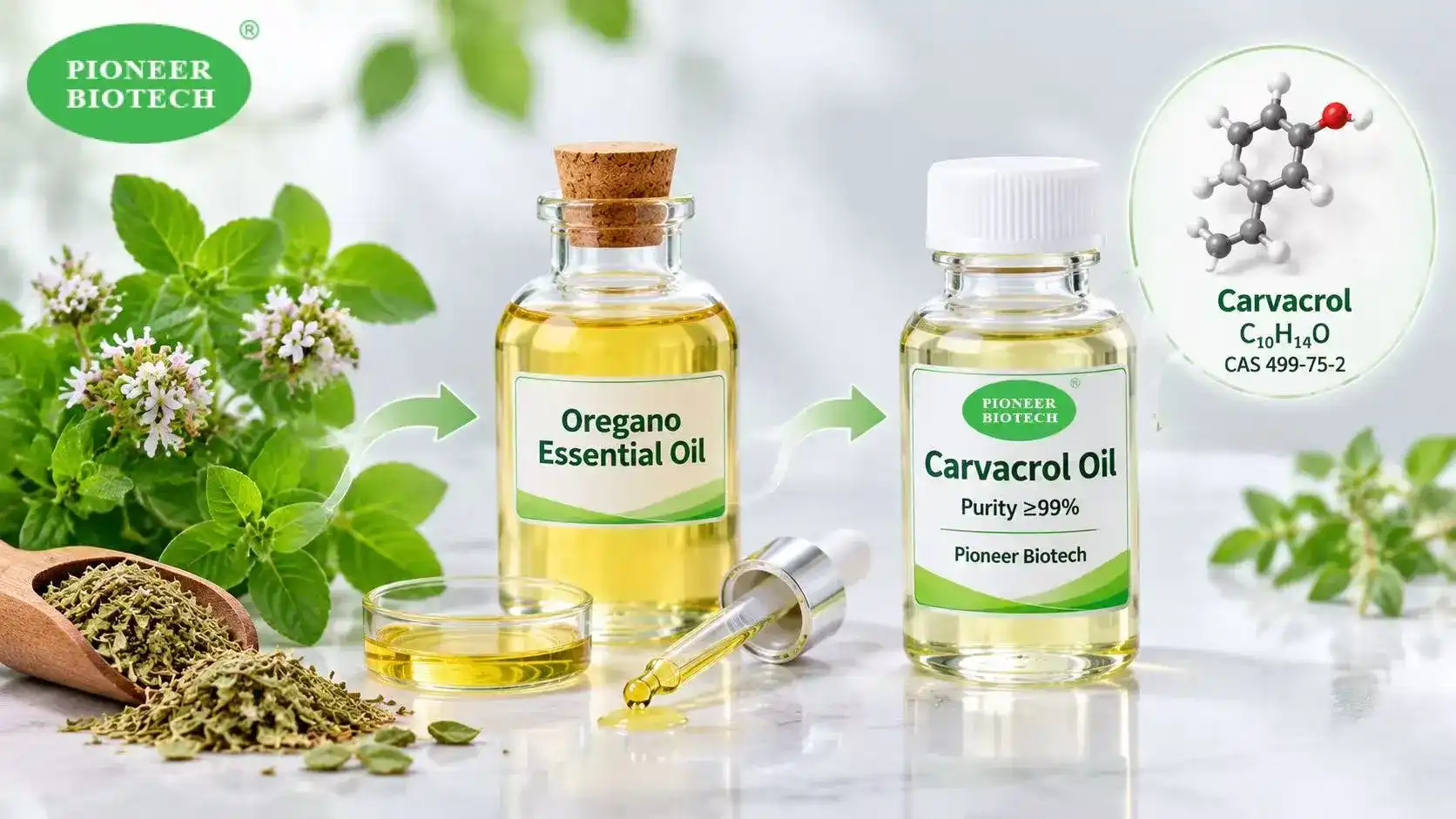
The answer is totally different depending on the situation. There are terpenes like p-cymene, γ-terpinene, linalool, and 60–80% carvacrol in crude oregano oil. The complex composition makes it more useful for aromatherapy or cooking. This level of complexity is not good for a pharmaceutical-grade capsule or a normal preservative system.
Carvacrol levels in crude essential oil can change by 20 percentage points or more from one batch to the next. A supplement that says it is "standardised to 80% carvacrol" can't be that with just raw essential oil. Label claims, regulatory paperwork, and clinical validation all need the accuracy that can only be found in GC-isolated carvacrol.
There is synthetic carvacrol that can be used instead of natural carvacrol. It is not made by extracting plants, but by chemically alkylating them. When marketing or regulatory teams work on natural or non-GMO claims, they should use Carbon-14 radiocarbon dating or Isotope Ratio Mass Spectrometry (IRMS) to prove where the claims came from. These analytical methods prove beyond a doubt that the substance came from plants and not petrochemicals.
Who Benefits Most From Standardized Carvacrol Oil?
The best people to buy high-purity carvacrol oil work in a number of industries that work together. The fastest growth is seen in nutraceutical brands that are making lines of products to support the immune system, gut health, or fight fungus infections. Pharmaceutical companies that make herbal medicines or over-the-counter antimicrobials rely on GMP-certified suppliers to provide them with pure products, consistent batches, and analytical documentation that has been checked and proven to be accurate.
The antioxidant and antibacterial profile helps cosmetic brands that focus on antimicrobial skin care or scalp health. It is used in active packaging and surface treatment systems by food companies that want non-synthetic, clean-label ways to keep food fresh. Contract manufacturers who are in charge of many private-label SKUs appreciate the supply reliability and formulation flexibility that a dedicated carvacrol supplier can offer.
Conclusion
It is carvacrol that gives oregano oil its useful properties. It works by well-known processes for disrupting membranes and scavenging radicals. Standardised, highly pure carvacrol gives you what pure essential oil can't: consistent potency, regulatory documentation, and the ability to predict how a formulation will work. Nutraceuticals, food preservation, and other industries are finding new ways to use it. As global rules on antibiotic-free production get stricter and demand for clean labels rises, standardised carvacrol oil will become even more important from a strategic point of view.
FAQ
It's not the same as carvacrol oil, is it?
No, oregano oil is a complicated essential oil that has many terpenes in it. Carvacrol usually makes up 60–80% of its makeup. In its standardised form, carvacrol oil is the active phenol that has been separated and is ≦98% pure. In B2B formulation situations, the two are related but have different functions.
What are the normal test requirements for carvacrol that is used in medicine?
For pharmaceutical use, carvacrol must be at least 98% pure by Gas Chromatography (GC), and the amount of thymol must be kept below 1% to 2%. Feed-grade material usually has an assay specification of 90% or more. Buyers should always ask for a Certificate of Analysis that includes GC chromatograms.
When making things with water, can carvacrol oil be used?
Carvacrol doesn't like water, so it doesn't dissolve in it directly. For use in water, high-shear emulsification with food-grade surfactants like Polysorbate 80 or nano-emulsion technology is needed. You can make stable water-soluble dispersions, but you need to make sure that your formulation procedures are correct.
Partner With Pioneer Biotech for Premium Carvacrol Oil Supply
Pioneer Biotech has developed and produced standardized botanical extracts since 2012. Our GMP-certified facility in Hanzhong carries ISO9001, HALAL, KOSHER, and FDA qualifications. As a trusted carvacrol oil manufacturer, we deliver GC-verified purity with complete batch documentation. Reach our team directly at sales@pioneerbiotech.com to discuss specifications, sampling, and scalable supply.
References
1. Bakkali, F., Averbeck, S., Averbeck, D., & Idaomar, M. (2008). Biological effects of essential oils — A review. Food and Chemical Toxicology, 46(2), 446–475.
2. Ultee, A., Bennik, M. H. J., & Moezelaar, R. (2002). The phenolic hydroxyl group of carvacrol is essential for action against the food-borne pathogen Bacillus cereus. Applied and Environmental Microbiology, 68(4), 1561–1568.
3. Nostro, A., & Papalia, T. (2012). Antimicrobial activity of carvacrol: Current progress and future prospectives. Recent Patents on Anti-Infective Drug Discovery, 7(1), 28–35.
4. Suntres, Z. E., Coccimiglio, J., & Alipour, M. (2015). The bioactivity and toxicological actions of carvacrol. Critical Reviews in Food Science and Nutrition, 55(3), 304–318.
5. Gutiérrez-Larraínzar, M., Rúas-Madiedo, P., Cuesta, I., de Los Reyes-Gavilán, C. G., del Valle, P., & de Arriaga, D. (2012). Evaluation of antimicrobial and antioxidant activities of natural phenolic compounds against foodborne pathogens and spoilage bacteria. Food Control, 26(2), 555–563.
6. Zengin, H., & Baysal, A. H. (2014). Antibacterial and antioxidant activity of essential oil terpenes against pathogenic and spoilage-forming bacteria and cell structure-activity relationships evaluated by SEM microscopy. Molecules, 19(11), 17773–17798.