

What Is Berberine Hydrochloride Powder Used For in Supplements?
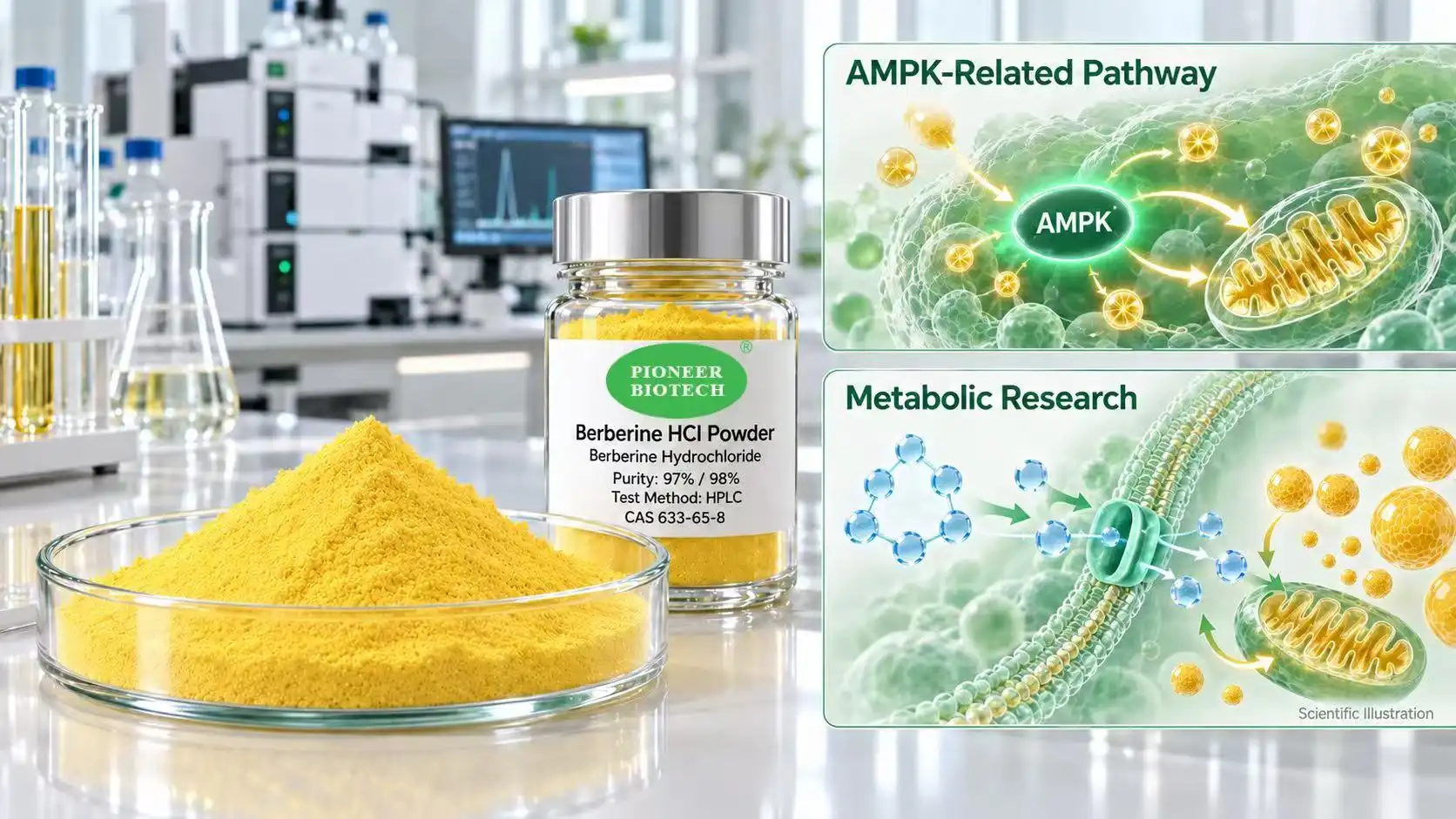
Berberine HCl powder is one of the most popular botanical actives in the supplement world today, and for good reason. This standardised isoquinoline alkaloid, which is extracted mostly from Phellodendron amurense (golden cypress bark), stimulates AMPK pathways that control blood glucose, lipid metabolism and cellular energy balance. It is used in the formulation of blood sugar support capsules, cardiovascular health blends and weight management formulae by nutraceutical, pharmaceutical and functional food formulators. Berberine HCl powder is a procurement priority for product development teams producing science-backed supplement lines with 97% purity by HPLC, a clean-label profile, and pharmaceutical-grade consistency.
Understanding Berberine Hydrochloride Powder
Chemical Identity and Why the HCl Salt Form Matters
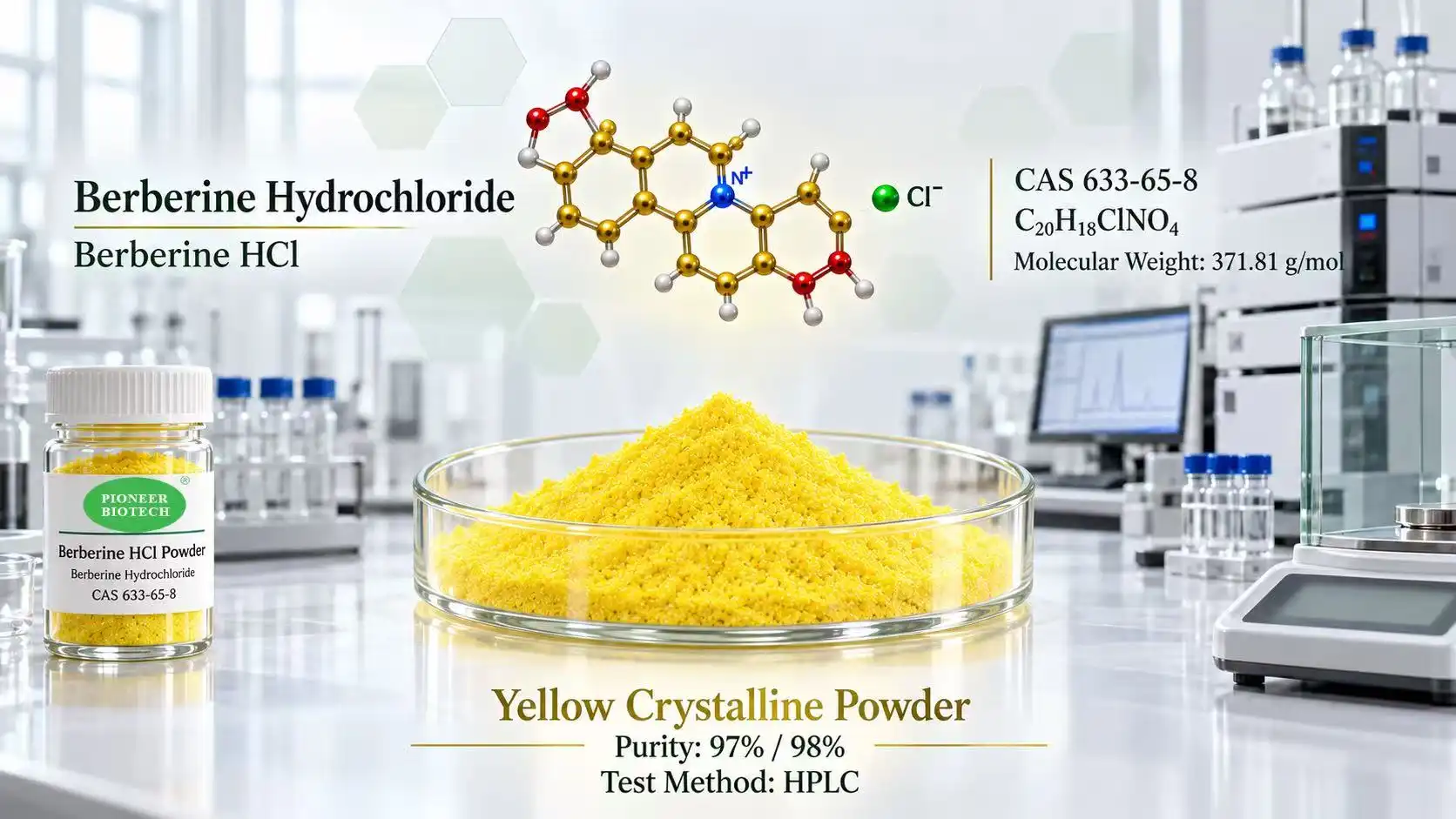
Berberine HCl powder is a chemical that has the formula C₂₀H₁₈ClNO₄ and the number 633-65-8. 371.81 g/mol is how heavy it is. It tastes very bitter and looks like a bright yellow chalky powder. For many reasons, the hydrochloride salt form is the best in the business. It mixes better in water and stays stable chemically longer than the free base alkaloid and sulfate forms. When pills, tablets, or functional mixes used as medicine are better soluble, they are also better bioavailable. In the long run, this means that sourcing teams will have to load fewer excipients, see more regular breakdown patterns, and have fewer formulation problems.
Mechanism of Action: The AMPK Connection
AMP-activated protein kinase is what berberine HCl powder does for the body. It is also known as the body's biochemical master switch. When AMPK is turned on, muscle cells take in more glucose, the liver stops making glucose, and the way fatty acids are burned changes. Metabolism published a large clinical study in 2008 that found berberine HCl powder lowered the fasting blood glucose of people with type 2 diabetes by 20%. This is about the same effect as metformin. When R&D leaders know about this route, they can put the ingredient in the right area for a supplement that helps with metabolic health, controlling blood sugar, or cutting lipids.
Benefits and Clinical Insights of Berberine Hydrochloride Powder
There is a lot of medical proof that berberine extract powder works. They looked at 14 randomized trials and found that it did work to lower LDL cholesterol, HbA1c, and fasting glucose. The study came out in the journal Evidence-Based Complementary and Alternative Medicine in 2012. These changes aren't small; they're clinically important and give formulators strong proof for claims about structure/function.
These are the most important areas of value that have a direct impact on how vitamins are made:
- Blood Glucose Regulation: Berberine HCl powder stops alpha-glucosidase from working and increases the expression of insulin receptors. This helps keep blood sugar levels healthy after a meal. A lot of people in clinical studies take 500 mg with food two or three times a day. In this case, the dose is fine for capsules and tablets.
- Cardiovascular Support: In 2003, The American Journal of Cardiology released a study that found people who took berberine HCl powder supplements had big drops in their overall cholesterol and triglycerides. Because of this, it makes a great ingredient for heart-healthy vitamins when mixed with omega-3s or CoQ10.
- Antioxidant and Anti-inflammatory Activity: As an antioxidant and an anti-inflammatory, berberine HCl powder changes the NF-κB pathways that cause inflammation. It has also been shown to be an antioxidant, which means it can be used in more areas of health, such as cell health and aging.
The way things are made changes because of these benefits. When you take a dose is important. Eating it with food slows down the passage through the intestines, which slightly boosts absorption of this chemical that would normally be badly absorbed. Companies that make things for people should put this information on the label directions. When it comes to safety, the most common side effects at clinical doses are short-lived stomach problems like nausea and loose stools. This medicine should not be taken by people who are pregnant or who are also taking an anticoagulant. This should be made clear on the box and in the paperwork by regulatory experts.
Berberine HCl Powder in the Competitive Landscape
How It Compares to Other Forms and Alternatives
The people who buy things often look at berberine HCl powder next to full-spectrum plant products and berberine sulfate. The way berberine sulfate dissolves is a little different, but officials don't like it as much and there aren't as many clinical data points on it. There is a chance that rough plant extracts won't be able to be standardized because the amount of alkaloid they contain changes based on where the herbs were harvested and how they were extracted. Pharmaceutical-grade berberine HCl powder, on the other hand, always gives the same ≥97% results in tests, batch after batch.
Berberine HCl powder is different from metformin because it comes from natural sources and can be labeled as a food product under the DSHEA. Metformin, on the other hand, needs to be prescribed. Because of these different rules, there is a big over-the-counter and direct-to-consumer market that metformin can't reach. Turmeric (curcumin) has a more general metabolic pathway, but berberine HCl powder has a lot more clinical proof for glycemic effects in particular.
When looking for a supplier, it's important to make sure that the following quality standards are met: at least 97% purity confirmed by HPLC; heavy metals below 10 ppm; no more than 12.0% loss on drying; no more than 0.2% ash content; and particle size at 95% passing 80 mesh. Compliance with the CP2015 Pharmacopeia is the basic requirement. For products that will be shipped, suppliers who offer extra USP or EP alignment give extra peace of mind.
Procurement Considerations for Berberine Hydrochloride Powder
You should do more than just compare prices to find good berberine extract powder in bulk. There should be a clear set of criteria you use to judge suppliers. The first thing you should look at is how many certifications they have. GMP manufacturing, ISO 9001 quality management, ISO 22000 food safety, HACCP, USFDA facility registration, and KOSHER/HALAL certification are all examples of documents that a provider must have in order to meet the requirements of both U.S. and European law.
A steady supply is just as important at the beginning as a good quality one. If sellers keep stock in warehouses in important places, there is no longer a chance that wait times will mess up production plans. Minimum order amounts that aren't set in stone can be used by both new brands doing small test runs and well-known brands making a lot of shoes. A full Certificate of Analysis should be sent with every delivery. It should list the product's purity, heavy metals, microbial limits, and physical parameters. This paperwork is important for your internal quality control and for any regulatory filings that you need to make.
The berberine HCl powder from Pioneer Biotech can meet all of these needs. We use HPLC to check each batch against CP2015 standards and make sure it is Non-GMO verified, gluten-free, allergen-free, paraben-free, and BSE/TSE free. A 7,000 m²+ GMP factory in Hanzhong, China, makes it. This city has a long history of plants. Items that are ready to ship can be kept in local stores safely and quickly, and you can use free samples to see how good the quality is before you buy.
Practical Applications and Future Prospects of Berberine HCl in Supplements
Current Formulation Categories
There are a lot of different kinds of finished vitamins that contain berberine HCl powder. A lot of people still use pills and tablets, and the standard dose for professionals is 500 mg per unit. You can mix it with chromium picolinate, alpha-lipoic acid, or cinnamon extract to make glucose control products that work better when taken together. When it comes to heart health, it goes naturally with red yeast rice and plant sterols. Contract manufacturers that make private labels like how well its controlled particle size (95% pass 80 mesh) and bulk density (0.4–0.6 g/ml) work with high-speed packaging equipment. This means that there is less downtime for production.
Emerging Delivery Technologies
Products with berberine HCl powder have had a problem for a long time: they are not well absorbed by the body when taken by mouth. Small particles called phytosome complexes (made up of berberine HCl powder and phospholipid conjugates) and liposome packaging are being used by businesses to try to solve this issue. As long as the active ingredient is high-purity crystalline berberine HCl powder, all of these can work. Taste-masking methods, such as micro-encapsulation or cyclodextrin complexation, are needed to hide the compound's strong bitter taste in functional drinks. But people are becoming more interested in these drinks at the same time that metabolic health drinks are. There are real chances for brands that are ready to spend money on new delivery methods to make their goods stand out.
Conclusion
Berberine HCl powder is a one-of-a-kind chemical that has been shown to be good for your health in many ways, such as keeping your metabolism healthy, protecting your heart, and killing microbes. Because it is pharmaceutical-grade regulated, clean-label, and works with new delivery forms, it is an important ingredient for people who make supplements, medicines, cosmetics, and contract manufacturers. Buying from a qualified maker protects both the quality of the product and the company's image with regulators. This is especially true for purchasing managers who care about pure paperwork, certification depth, and supply dependability. More and more proof is coming in, and if you can get ahead of the competition early on in this ingredient area, you'll be ahead in the long run.
FAQ
1.How long does berberine typically take to show measurable effects?
When people take 500 mg of berberine HCl powder two to three times a day for eight to twelve weeks, their fasting glucose and cholesterol markers change a lot. What each person does rests on how healthy their metabolism was to begin with.
2.Can berberine HCl powder be used alongside diabetes medications?
Because berberine HCl powder can make the effects of drugs like metformin stronger, the amount may need to be changed with the help of a doctor. The people who make products should make it clear on the label when they shouldn't be used to protect customers.
3.What certifications should I require from a berberine supplier?
Give GMP production, USFDA facility registration, ISO 9001, HACCP, and KOSHER/HALAL production more weight if they apply. You need to show proof that the supplement is non-GMO and a full COA with HPLC confirmation of purity if you want to sell it.
4.Is berberine HCl suitable for liposomal formulations?
Yes. Because the particles are very small and pure, berberine HCl powder can be used with liposomal and phytosome technologies, which are meant to make it more accessible than regular crystalline powders.
5.What is the recommended storage condition for bulk powder?
Put it somewhere cool and dry that doesn't get direct sunlight and wrap it up in a way that won't let water in. This is where the shelf life goes up to two or three years. It is important to keep the humidity low when working with the substance because it soaks up water.
Source Your Berberine HCl Powder Through Pioneer Biotech
Since 2012, Pioneer Biotech has been a trusted source for berberine HCl powder. They send pharmaceutical-grade plant-based ingredients to supplement brands and formulators in North America and other places. Our factory is FDA-approved, ISO 22000-certified, and HACCP-approved. It sells goods that are ≥97% to 98% pure (checked by HPLC), fully compliant with CP2015, in stock, and ready to ship right away. Buyers who meet the requirements can get free samples, change the amount they order, and get help from a real expert. You can email our team at sales@pioneerbiotech.com or visit pioneerbioinc.com to get the specs you need and begin the selection process.
References
1. Zhang, Y. et al. — "Treatment of Type 2 Diabetes and Dyslipidemia with the Natural Plant Alkaloid Berberine." Metabolism, 2008.
2. Dong, H. et al. — "Berberine in the Treatment of Type 2 Diabetes Mellitus: A Systemic Review and Meta-Analysis." Evidence-Based Complementary and Alternative Medicine, 2012.
3. Yin, J. et al. — "Efficacy of Berberine in Patients with Type 2 Diabetes Mellitus." Metabolism, 2008.
4. Kong, W. et al. — "Berberine Is a Novel Cholesterol-Lowering Drug Working Through a Unique Mechanism Distinct from Statins." Nature Medicine, 2004.
5. Lan, J. et al. — "Meta-Analysis of the Effect and Safety of Berberine in the Treatment of Type 2 Diabetes Mellitus, Hyperlipemia and Hypertension." Journal of Ethnopharmacology, 2015.
6. Imenshahidi, M. & Hosseinzadeh, H. — "Berberis Vulgaris and Berberine: An Update Review." Phytotherapy Research, 2016.