

Glycolic Acid: What does it do for the skin?
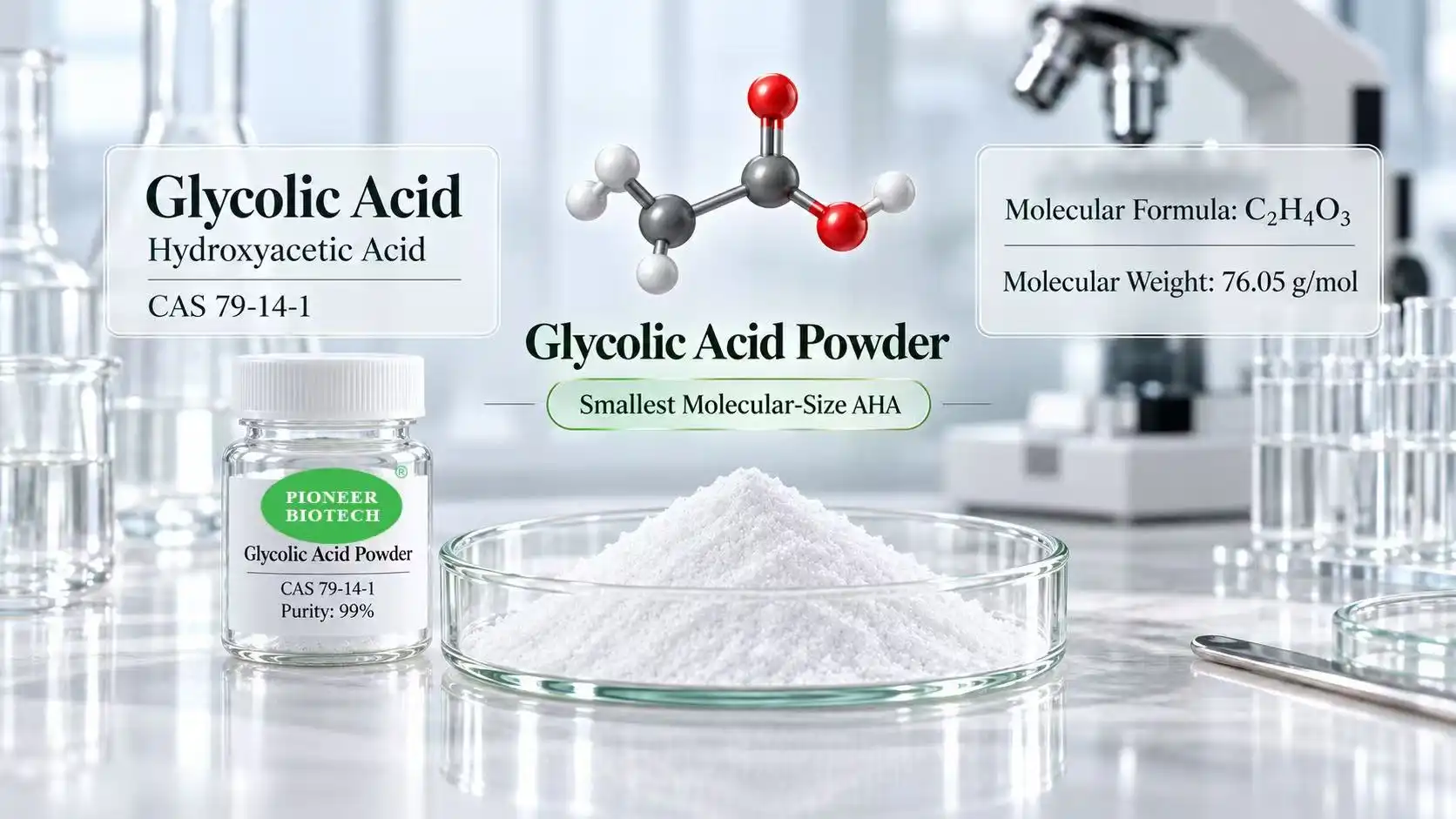
Glycollic acid is one of the best-researched alpha-hydroxy acids (AHAs) in modern skincare science. It is derived from sugar cane and has the lowest molecular weight of all AHAs at 76.05 g/mol, which enables it to permeate the skin deeply and effectively. Glycollic acid powder (CAS 79-14-1) in anhydrous form is a keratolytic agent that can provide the same efficacy as liquid formulations, but with enhanced formulation stability and logistical efficiency. Whether you are formulating professional grade chemical peels, everyday exfoliating toners or waterless skincare breakthroughs, it is imperative to know what this active ingredient accomplishes on a molecular basis before sourcing glycolic acid powder at scale.
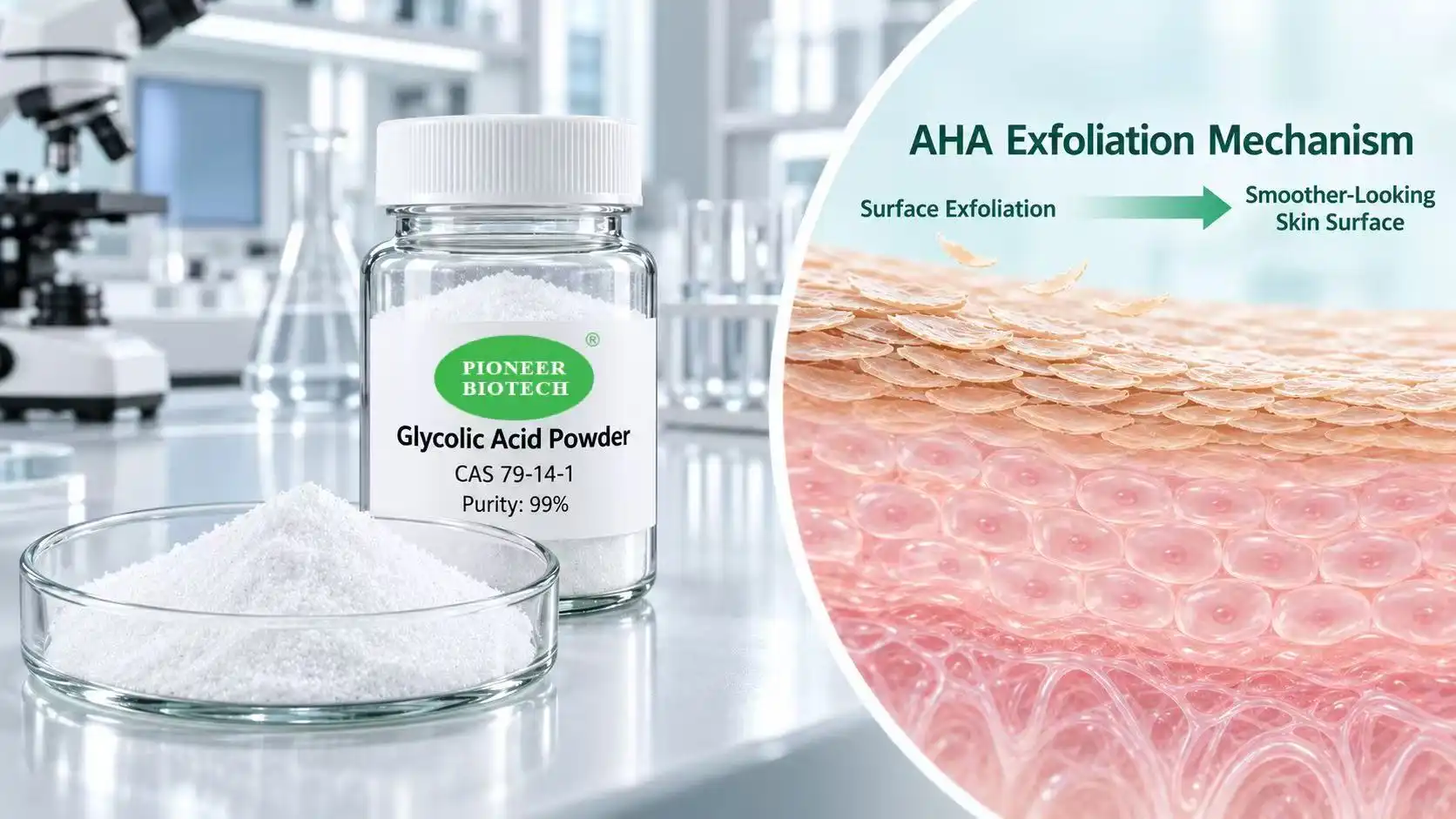
What Glycolic Acid Does for the Skin: The Science Behind It
Accelerating Cellular Turnover Through Keratolysis
Ionic connections hold together the stratum corneum cells. Dead skin cells. These bonds are broken down by glycollic acid. This is called keratolysis and it allows the skin to slough off dead skin cells naturally so that new skin may come through. According to a study published in the Journal of the American Academy of Dermatology, consistent usage of alpha-hydroxy acids (AHAs) has been shown to make the skin thicker and slow down the ageing process caused by the sun. The AHA with the lowest molecular weight is glycollic acid. This means it can more easily get into cells than lactic or mandelic acid. Therefore it is the finest active ingredient for anti-aging products that rejuvenate skin.
Texture Refinement, Acne Management, and Brightening
Glycollic acid accomplishes much more than only strip dead skin. It also helps with a number of facial disorders. Here are the well-known skin benefits that those who create cosmetics and personal care items use with gdl powder:
- Pore Refinement and Acne Control It reduces sebum and keratin waste from follicular holes to prevent comedones from developing and smoothens pores. It is useful for oily and acne-prone skin.
- Hyperpigmentation correction: It accelerates the shedding of melanin-rich skin cells from the surface, which evens out skin tone and colour abnormalities due to inflammation.
- Collagen stimulation: Glycollic acid has been proven, at concentrations over 10%, to increase fibroblast activity. This activity promotes the creation of skin collagen, a significant method that this acid slows ageing.
- Moisture retention support: A moderate humectant at lower concentrations, helping the skin to keep more wet while it scrubs.
That is why it is a major ingredient in many professional peels, serums and masks that smooth the face. So, if a formulator has a very pure glycollic acid powder, they may manage the concentration very precisely at the beginning of manufacturing a product.
How to Use Glycolic Acid Powder in Skincare Formulations
Preparation, Solubility, and pH Targeting
It is easy for glycolic acid powder to dissolve in water and polar liquids like ethanol and methanol. It breaks down almost 1,000 g/L at 25°C. It is important to add the powder slowly to the water when making mixes with water. Never add the water to the powder. This will keep the powder from rising too quickly and make sure it's spread out properly. The active ingredient's pKa value is 3.83, which means that formulas that work should aim for a pH range of 3.0–4.0 to keep the solubility of free acids high. If the pH level goes up, the acid can't break down keratin as well, so it is very important to make sure the pH level is just right during the preparation stage.
It is also very important to choose the right dosage. The amount of glycolic acid in everyday toners and serums is usually between 5% and 10%. On the other hand, the amount in professional peels for resurfacing ranges from 20% to 70%. Products for sensitive skin work better with buffered systems that are a little more acidic. That being said, these weaken the acid without losing any of their power.
Glycolic Acid Powder vs. Other AHA Forms and Acid Powders
Choosing the Right Acid for Your Target Skin Concern
In a recipe, not every acid active is used for the same thing. Lactic acid (MW: 90.08 g/mol) is better for sensitive or dry skin because it has a bigger molecule and holds more water. Salicylic acid is a beta-hydroxy acid (BHA) that works on sweat glands and dissolves in fats. This makes it a better choice for formulas that are made to treat acne. People with darker skin don't itch as much when mandelic acid (MW: 152.15 g/mol) goes deeper into the skin with gdl powder.
Glycolic acid can get into cells the deepest and turn over cells the fastest because its molecules are smaller. Formulators can use it because it is the strongest AHA. Anhydrous glycolic acid powder has many advantages over liquid forms. It can be kept for two years, doesn't need to be shipped in a cold chain, can be used with waterless product systems, and gives you more accurate dosing control than liquid concentrates.
Procurement Considerations for B2B Buyers
Supplier Certifications, MOQ, and Supply Chain Reliability
You need to do more than just look for a cheap glycolic acid powder provider to find a good one. QA managers and procurement leaders should use a structured set of criteria to decide which suppliers to work with. When choosing a seller, these are the key things you should look at:
- Specification of purity: Generally, the minimum purity for cosmetic and medical application is 99.0%. The lower grades of purity have contaminants which may make the product seem different and cause consumer annoyance.
- Certification Conformance: Look for ISO9001, ISO22000, HACCP, FDA registration, and USDA and EU Organic, Kosher and Halal certifications as proof that you are using appropriate production techniques and are ready to break into new markets.
- Heavy metal testing: "If finished things have more than 10 parts per million (ppm) of iron in them, they turn a discernible shade of brown." If the product is to be handled in stainless steel or used in highly pure cosmetics, chloride must be less than 10 ppm.
- Documentation support: Trustworthy vendors will provide you with a Certificate of Analysis (COA), a Material Safety Data Sheet (MSDS), and all the necessary papers you need to properly import the items into the country and submit with the government.
By making sure of these things before placing big orders, you lower the risk further down the line and make sure that your product line works the same way from batch to batch.
Best Practices for Storage, Handling, and Safety
Protecting Potency and Ensuring Workplace Safety
A lot of water can be soaked up by glycolic acid powder. There is caking and less accurate dosing when the relative humidity (RH) in the air is above 60%. This changes the consistency of the mixture. Keep it all in a cool, dry place that isn't in direct sunlight in containers that can't leak. Drums lined with aluminum foil and desiccants work especially well. This is how the powder should be kept for up to 24 months for it to really work.
When working outside, people who handle powder should put on the right PPE, like masks, gloves, and safety glasses. Solution aerosols are dangerous to breathe in and should be treated with care. All packages coming in should have up-to-date MSDS papers. This is required by OSHA and makes it easier to get goods from other countries through customs.
Conclusion
At present, glycollic acid is still one of the skin care substances with the most scientific proof. It is a significant component of professional peels, anti-aging treatments and brightening treatments as it contains tiny molecules, a well-studied keratolytic process and works effectively in different doses. B2B buyers need to locate a pharmaceutical grade glycolic acid powder with full certification documents, verified purity and reliable logistics. This can make the difference between a product that performs properly all the time and one that breaks down and costs big bucks to repair. You need to find a company that understands the commercial side and the technical side of your manufacturing operation. This will enable your brand to grow in the long term.
FAQ
1. Is glycolic acid powder suitable for sensitive skin formulations?
Yes, but you need to be very careful to set the pH and amount. Skin types that are sensitive are less likely to get irritated when they use buffering systems with a pH of 3.5 to 4.0 and values at or below 5%.
2. What pH level is optimal for glycolic acid formulations?
When the pH is between 3.0 and 4.0, the free acid form works best. When formulators want to make everyday items smoother, they can add a buffer toward the upper end of this range. However, this won't completely cancel out the active.
3. How do I ensure batch consistency when purchasing in bulk?
The acceptable range for the test should be between 99.0% and 100.5%, and the amount of iron should be less than 10 parts per million (ppm). When you ship something, make sure you get a certificate of analysis (COA). Make sure that the seller follows GMP rules when making the product and can show that they can do so through third-party testing.
4. Can the powder replace liquid glycolic acid in all applications?
The answer is yes for most beauty and personal care items. The powder gives you more ways to mix the ingredients, especially for things that are dry, arid, or lack water, since liquid forms can make them unstable.
5. What certifications should a qualified supplier hold?
In the very least, they should be registered with the FDA, have ISO9001, ISO22000, HACCP, and Kosher or Halal marks. Eco-friendly and natural product lines are more valuable when they have organic certifications from the USDA and the EU.
Partner With Pioneer Biotech — Your Trusted Glycolic Acid Powder Supplier
Since 2012, Pioneer Biotech has been manufacturing uniform active ingredients in a plant in Hanzhong, China, that is GMP-certified. Our CAS 79-14-1 glycolic acid powder is at least 99% pure and comes with all the paperwork you need to prove it. It is also in stock in local stores, and B2B buyers can choose from different MOQ options. Before you decide to buy a lot, you can get free samples. To start sourcing and get information, you can email our expert team at sales@pioneerbiotech.com or visit pioneerbioinc.com to request specifications and initiate your sourcing inquiry today.
References
1. Bernstein, E. F., et al. — "Glycolic Acid Treatment of Photodamaged Skin." Dermatologic Surgery, 2001.
2. Ditre, C. M., et al. — "Effects of Alpha-Hydroxy Acids on Photoaged Skin." Journal of the American Academy of Dermatology, 1996.
3. Van Scott, E. J., & Yu, R. J. — "Alpha-Hydroxy Acids: Procedures for Use in Clinical Practice." Cutis, 1989.
4. Stiller, M. J., et al. — "Topical 8% Glycolic Acid and 8% L-Lactic Acid in Photodamaged Skin." Archives of Dermatology, 1996.
5. Oresajo, C., et al. — "Protective Effects of a Topical Antioxidant Mixture Containing Vitamin C." Journal of Cosmetic Dermatology, 2008.
6. Sharad, J. — "Glycolic Acid Peel Therapy: A Current Review." Clinical, Cosmetic and Investigational Dermatology, 2013.