

What does sarcosine do to the brain?
Sarcosine powder — chemically known as N-Methylglycine (CAS No: 107-97-1) — exerts meaningful influence on brain function by acting as a competitive inhibitor of glycine transporter-1 (GlyT1). By blocking GlyT1, it elevates synaptic glycine concentrations, which in turn potentiates NMDA receptor activity. This glutamatergic modulation supports memory consolidation, synaptic plasticity, and neurotransmitter balance. Clinical research published in peer-reviewed psychiatric journals indicates that this mechanism may reduce symptoms associated with depression, schizophrenia, and cognitive decline. For product developers and procurement teams formulating neuroactive supplements or pharmaceuticals, understanding this mechanism is the foundation of a well-informed sourcing strategy.
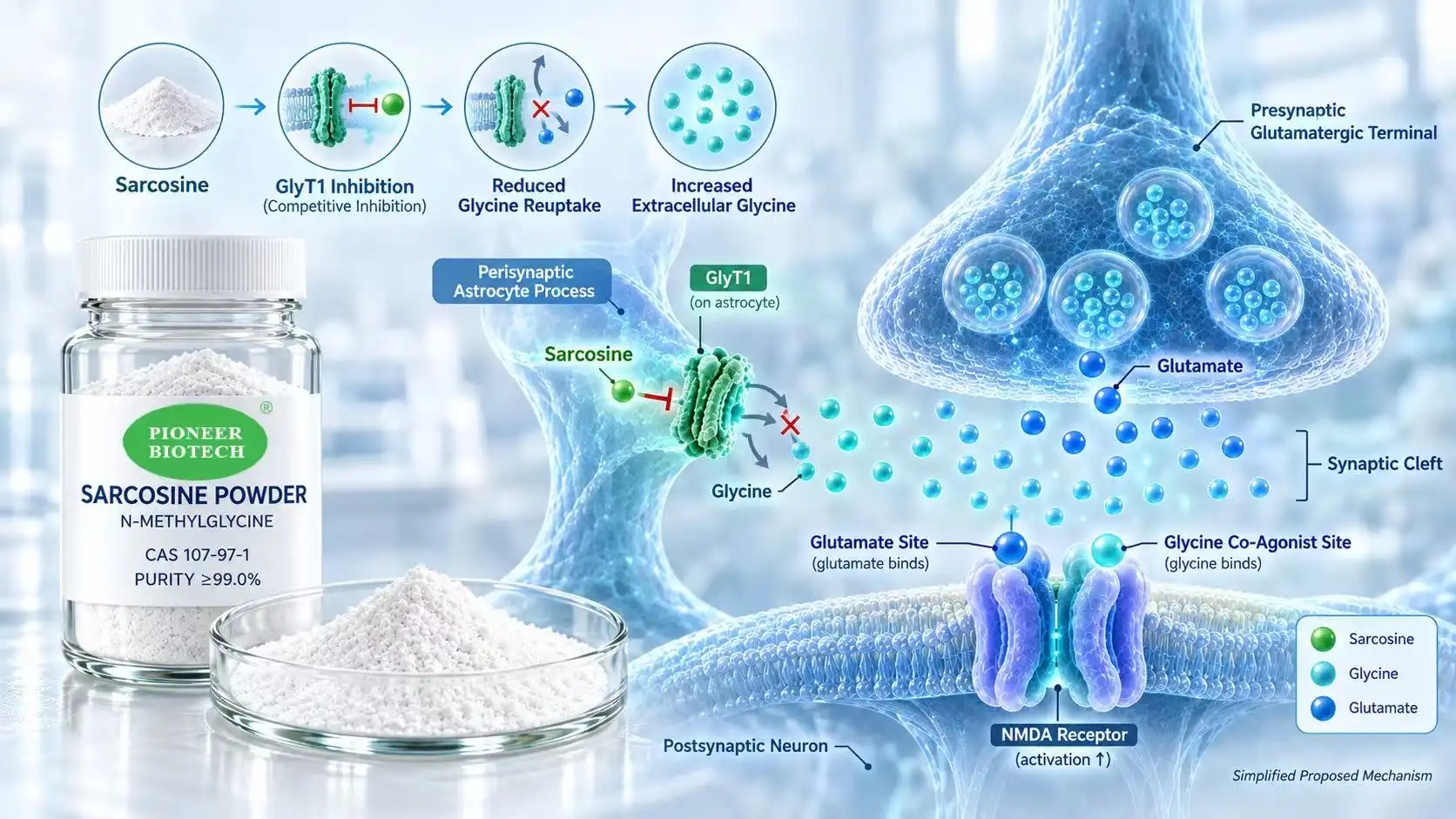
Understanding Sarcosine and Its Role in Brain Function
The Neurochemical Identity of N-Methylglycine
Sarcosine isn't just an amino acid in a different form. It fits into a certain place in the cell as a natural byproduct on the way from choline to glycine. C₃H₇NO₂ is its chemical formula. It is a white, solid powder that is easy to dissolve in water. So it's easier to turn into capsules, tablets, and other ways to deliver liquids. Unlike glycine, sarcosine changes how much glycine is in the cell without giving it to it. The chemicals in the brain are affected in a more controlled way, and the effects last longer. If your R&D team is looking at active ingredients for certain brain health uses, this difference is very important.
NMDA Receptor Modulation and Neuroplasticity
NMDA receptors drive long-term potentiation, a process in the brain that helps us learn and remember things. Glycine builds up at the synapses and works better with NMDA receptors if you stop GlyT1 from doing its job. A study that came out in 2010 in the journal Biological Psychiatry found that giving extra sarcosine to people with schizophrenia improved their mental and emotional symptoms a great deal. This backs up the idea that neuropsychiatric problems are caused by NMDA receptor dysfunction. With this proof, companies that make medicines and supplements are very interested in making the next wave of products that help the brain.
Key Benefits and Cognitive Effects Explained
More and more scientific proof is showing that adding N-Methylglycine to health products is good for the brain. The two types of perks that procurement workers are most interested in are those that control happiness and those that improve brain function.
Researchers who are experts in the field have found that the glutamatergic activity of sarcosine may help some groups of people deal with their mood better than some common antidepressants. A study that looked at the two drugs found that sarcosine worked better than cinnoxicam as an antidepressant in a controlled mental health setting.
Nootropic Potential: Memory, Focus, and Cognitive Clarity
Sarcosine has a small impact on working memory, the ability to focus for a long time, and the brain's ability to handle knowledge quickly. Studies using animals show that different doses help with tasks that need to do with spatial memory. These amounts are generally between 100 mg/kg and 800 mg/kg when they are used in preclinical studies. For humans, supplement methods generally recommend much lower amounts, about 1 to 2 grams per day. But the people who work on formulation should always make sure that the dose ranges they use are in line with clinical evidence and regulatory standards for the people they are tried to help, including sarcosine powder price.
Safety Profile and Formulation Risk Considerations
It is well known that sarcosine is well accepted. Many people have said that it causes mild to moderate stomach pain that goes away quickly when taken in larger amounts. For the most part, short- to medium-term clinical trials have not raised any big safety issues. It's important to know that sarcosine might not work well with some drugs that change the way the brain and spinal cord work, like antidepressants, antipsychotics, and CNS boosters. Formulation teams should make sure that this is clear on paper and on product labels.
Comparing Sarcosine Powder with Other Cognitive Supplements
When people in charge of buying things look at neuroactive raw materials, they need to compare them across different ways they work, formats they come in, and regulatory status so they can make decisions that can be defended.
Here is how sarcosine stacks up against commonly compared alternatives:
- Sarcosine vs. Glycine: Adding glycine to your diet raises the level of glycine in all synapses, but sarcosine raises the level even more specifically by blocking the transporter that allows it to be absorbed. This means that sarcosine has a better effect on brain processes connected to NMDA, which could lead to more accurate formulation results.
- Sarcosine vs. Creatine: Creatine helps muscles make new ATP, which helps keep energy levels steady. As a direct chemical precursor to creatine, sarcosine is higher up in the metabolic chain. It helps the brain work and the pathways that make creatine at the same time. This makes it perfect for things that are good for both brain health and sports diet.
- Sarcosine vs. Noopept: The difference between sarcosine and noopept is that noopept increases BDNF and makes AMPA receptors more responsive. Sarcosine, on the other hand, makes GlyT1 not work in a different way. In advanced nootropic stacks, both drugs are used together to get better results, even though they work on different parts of the brain.
When OEM makers have to choose between powdered and packed forms, bulk sarcosine powder gives them more choices, costs less per unit, and is easier to test for quality using standard analytical tools like HPLC and NMR.
Practical Guide to Procuring High-Quality Sarcosine Powder
You need more than just a good price to get neuroactive raw materials for limited markets. Experts in the supply chain, quality assurance, and procurement should use a structured evaluation method to look at each possible seller.
The following criteria represent the minimum threshold for credible sarcosine sourcing:
- Purity verification: material used in medicine needs to be at least 99% pure, as shown by valid HPLC tests and records of analysis that are unique to each batch.
- Regulatory certifications: It is possible to check a provider's quality systems at every stage of production if they have regulatory certificates like ISO9001, ISO22000, HACCP, and GMP.
- Organic and dietary compliance: Meeting EU Organic, USDA Organic, Kosher, and Halal standards makes the product easier to sell to more people and in more foreign legal settings.
- Supply chain transparency: For FDA or EU-regulated pharmaceutical and nutritional clients, suppliers who let plant checks happen and make sure that all raw materials can be tracked lower the risk of not following the rules.
These things make it less likely that there will be batch inconsistency, contamination, or supply problems, which are the three worst things that can happen when you buy active ingredients.
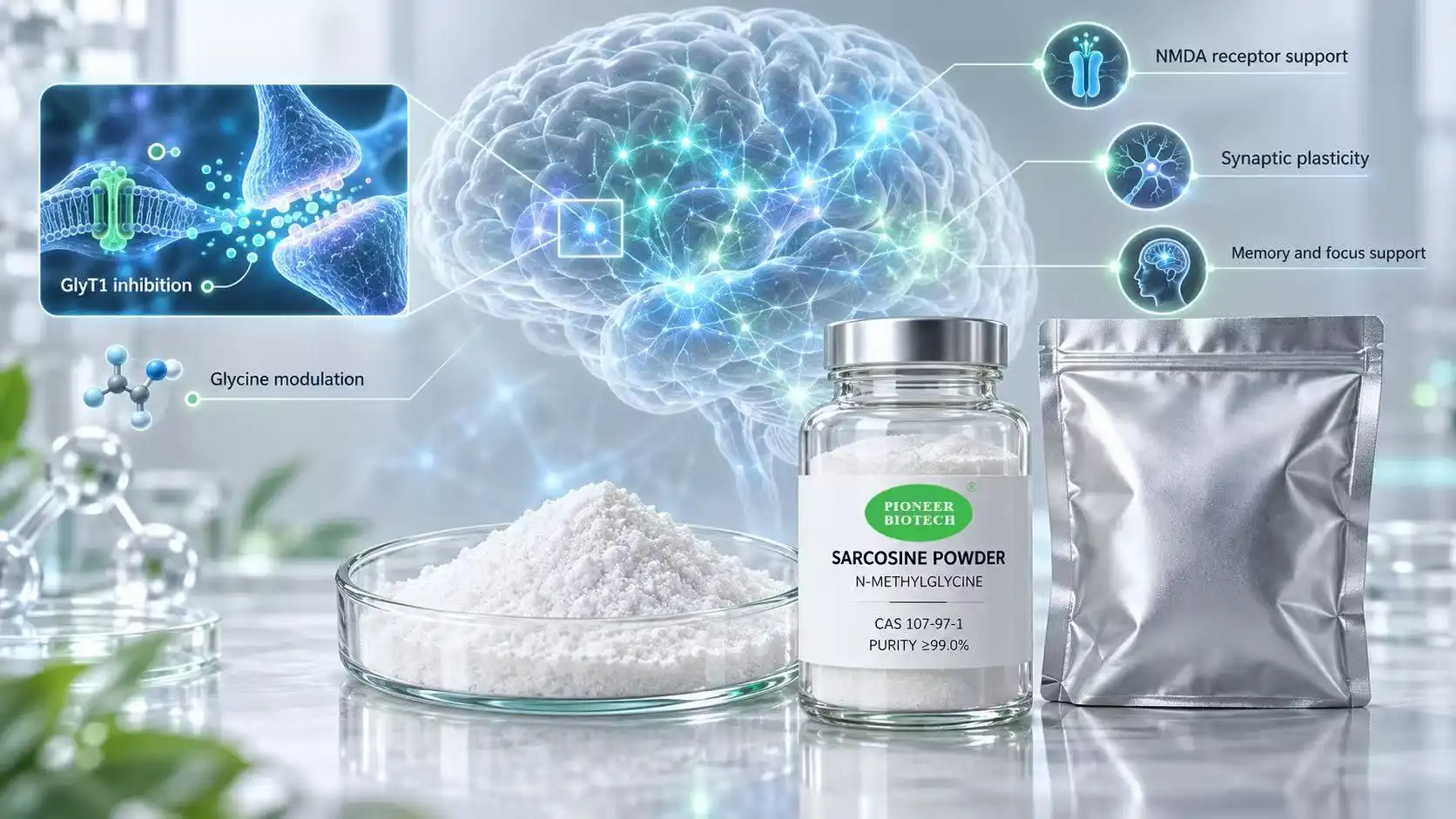
Industry-Specific Applications of Sarcosine Powder
Nutraceuticals, Pharmaceuticals, and OEM Manufacturing
There are more and more brain health supplements on the market that use sarcosine to help with memory, mental clarity, and mood balance. High-purity N-Methylglycine is used by pharmaceutical companies to make medicines that work with other medicines. Uniformity from batch to batch and tried-and-true testing methods are important for these formulations. Companies that make OEM parts like that it has a stable shelf life (up to three years at -20°C) and dissolves easily in water. It's easier to plan output and keep track of stock when these things are present, including sarcosine powder price.
Sports Nutrition and Emerging Wellness Markets
As a biosynthetic precursor upstream of creatine, sarcosine powder supports methylation cycle function and energy metabolism at the cellular level. This makes it a great ingredient for healing and pre-workout products, especially for people who don't work with creatine monohydrate or who have gut issues when they load up on creatine the normal way. Market experts think that demand will keep going up through the second half of this decade. This means that nootropic and mental health products will also see a lot of growth.
Conclusion
Animal and human studies have both made it clear that sarcosine powder changes the brain in a clear way. It blocks GlyT1 and boosts NMDA receptor activity, which helps with memory, mood regulation, synaptic plasticity, and neuroprotection. This synaptic structure is one of a kind and not many single-compound ingredients can match it. People who are making medicines, nutraceuticals, or OEM goods should find this raw material to be very useful because it works, is safe, and can be used in many ways. There is one important step between what experts say will happen and how well the product works when it's ready for sale. That step is getting it from a known, auditable source that is pure enough for medicinal use.
FAQ
1.Is sarcosine powder safe for long-term use in brain health formulations?
New research, like brain studies that went on for more than a month, shows that therapeutic amounts of sarcosine are well tolerated for a long time. People most often report having minor stomach problems as a side effect. To make sure they follow the law, recipe teams should include clear directions on how to use the product and check the most recent laws for the people they want to sell it to.
2.How does sarcosine compare to other nootropics in terms of mechanism?
The way sarcosine works is different from how racetams, adaptogens, and cholinergic agents work because it blocks GlyT1. Because of this, it works well with other nootropics and is especially helpful for brain processes that are linked to NMDA.
3.What purity level should procurement teams require from a sarcosine supplier?
Pharmaceutical-grade sarcosine powder should achieve ≥99% purity verified by HPLC, with a clear certificate of analysis per batch. Suppliers should also provide heavy metal screening results and residual solvent testing to satisfy GMP compliance documentation requirements.
4.Is sarcosine derived from animal sources?
Sarcosine used in industry is made through chemical synthesis, most of the time through Strecker synthesis. This means it's safe for vegans and doesn't pose a BSE or TSE risk, which is important for Kosher and Halal production lines.
Source Your Certified Sarcosine Powder Through Pioneer Biotech
Pioneer Biotech has supplied GMP-certified, pharmaceutical-grade active ingredients to global clients since 2012. Our sarcosine powder manufacturer capabilities cover ≥99% purity material backed by ISO9001, ISO22000, HACCP, EU Organic, USDA Organic, Kosher, and Halal certifications. With ready stock in local warehouses and shipment processing within 24–48 hours, we eliminate the lead-time uncertainty that disrupts production schedules. Plant audits are welcomed, and gift samples are available on request. Reach our team directly at sales@pioneerbiotech.com or visit pioneerbioinc.com to request your quote today.
References
1. Lane, H. Y., et al. "Sarcosine or D-Serine Add-On Treatment for Acute Exacerbation of Schizophrenia." Archives of General Psychiatry, 2005.
2. Tsai, G. E., et al. "Glycine Transporter I Inhibitor, N-Methylglycine (Sarcosine), Added to Antipsychotics for the Treatment of Schizophrenia." Biological Psychiatry, 2004.
3. Huang, C. C., et al. "Sarcosine as a Potential Treatment for Depression." Journal of Clinical Psychopharmacology, 2013.
4. Coyle, J. T., & Tsai, G. "NMDA Receptor Function, Neuroplasticity, and the Pathophysiology of Schizophrenia." International Reviews of Neurobiology, 2004.
5. Bhatt, D. L., et al. "Glutamate Receptor Modulation in Neuropsychiatric Disorders: A Review." Neuropsychopharmacology Reviews, 2018.
6. Javitt, D. C. "Glycine Transport Inhibitors in the Treatment of Schizophrenia." Handbook of Experimental Pharmacology, 2012.