
What Does Hydrolyzed Rice Protein Do?
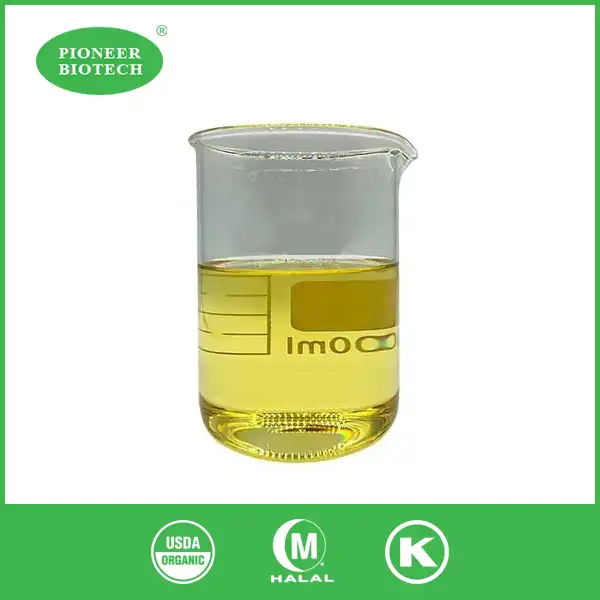
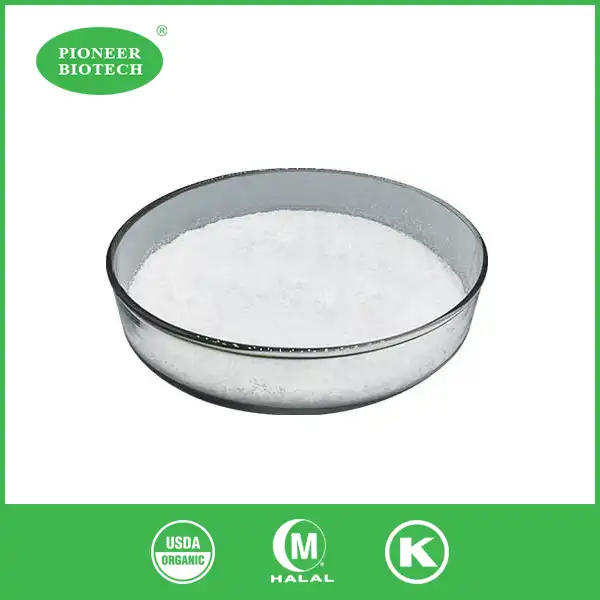
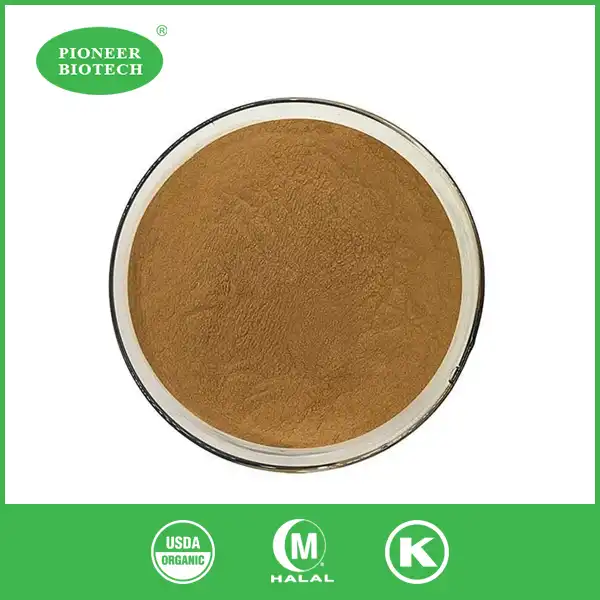
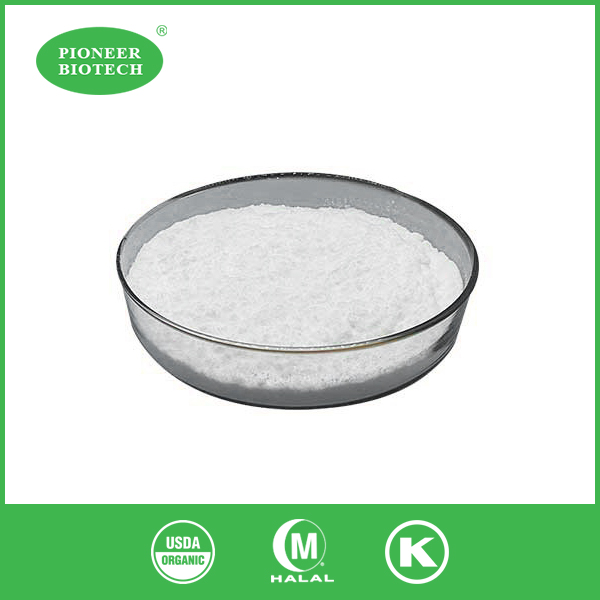
Hydrolyzed rice protein powder comes from plants and is good for you in multiple ways. It can be used in medicine, cosmetics, and nutrition. Controlled enzymatic hydrolysis breaks this unique protein down into peptides and amino acids that the body can use. Because of this, big formulation issues like not dissolving well, causing allergies, and not being absorbed well are fixed. Its main job is to make hair care products stronger, keep skin care products moist, give functional foods a clean-label protein source, and act as an allergen-free alternative in dietary supplements. Its molecular structure makes it easy for the body to absorb quickly, which makes it perfect for nutraceutical brands that want to use active ingredients from plants that have been shown to work by science.
Understanding Hydrolyzed Rice Protein Powder
What Defines Hydrolyzed Rice Protein?
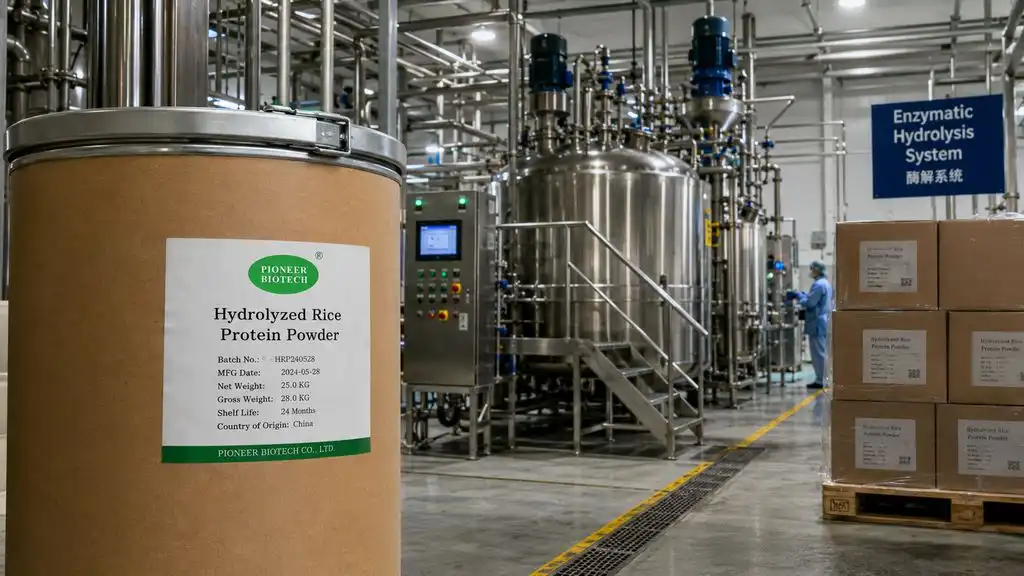
It is a high-tech product made from non-GMO rice protein isolate that has been carefully broken down with enzymes. On the other hand, this ingredient goes through targeted proteolysis, a process in which enzymes cut long polypeptide chains into smaller pieces that are between 500 and 2,000 Daltons in size. These smaller pieces are called oligopeptides, tripeptides, and dipeptides. This change fixes some big problems with natural plant proteins, like the fact that they are rough, don't dissolve completely, and aren't as bioavailable. The hydrolysis process creates a protein that is less likely to cause allergies and works better. This protein can be used in delicate situations, like when feeding babies or making medicines for patients.
The Hydrolysis Mechanism and Quality Parameters
Carefully controlled conditions are used for enzymatic hydrolysis. The amount of protein broken down depends on the temperature, pH, and amount of enzymes present. Most of the time, temperatures in factories are kept between 45°C and 60°C, and some proteases can work for two to six hours. This makes a dry product with a protein content of 75% to 90% that dissolves easily in acidic to basic pH ranges. You can check the molecular weight distribution with gel permeation chromatography, the amino acid profile with HPLC, and the microbiology of the product to make sure it meets FDA standards and organic certifications like USDA Organic and EU Organic.
Nutritional Profile and Regulatory Compliance
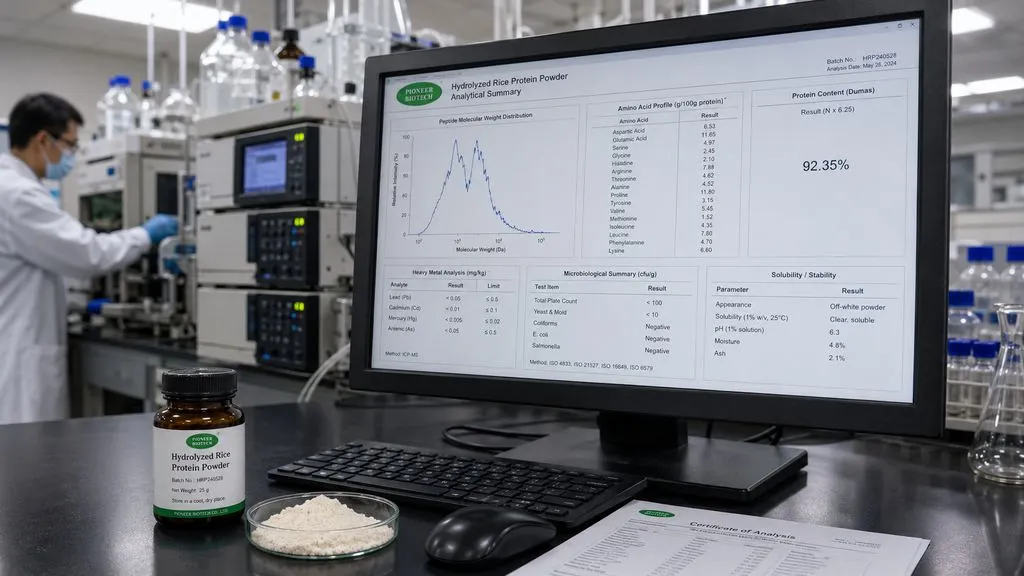
Along with branched-chain amino acids and cysteine, there are a lot of other amino acids in the amino acid composition. These help the body make proteins and keep the metabolism going. For analysis, there must be at least a certain amount of protein, no more than 8% moisture, and no more than 5% ash. Testing for allergens, heavy metals, and pesticide residues needs to be documented by regulatory frameworks. People who make things and want to sell to the pharmaceutical and nutraceutical industries need to show Certificates of Analysis that show their methods are consistent from batch to batch, stable across different storage conditions, and in line with USP and EP standards.
Benefits and Uses of Hydrolyzed Rice Protein Powder
Performance in Hair and Skin Care Applications
Using hydrolyzed rice protein powder in cosmetics is very helpful because of the way its molecules are structured. Two different lab studies say that the low-molecular-weight peptides can pass through the hair cuticle, bind to keratin structures, and make the hair up to 30% stronger when pulled apart. This tool keeps hair from breaking and makes styling it easier. When used in skin care, the protein forms a barrier on top of the skin to keep water from escaping. It also delivers amino acids to the deeper layers of skin, which help the body make collagen. A lot of cosmetic chemists like it because it can handle a lot of different pH levels and stays stable during emulsification.
Hydrolized rice protein can hold water because it has hygroscopic amino acid residues that bind and attract water molecules, which is similar to how hyaluronic acid derivatives work. Based on tests, concentrations between 2% and 5% work best and don't change the product's taste or viscosity. This plant-based protein doesn't come from animals, so it's better for vegan beauty brands that want to promote a "clean label" image. It also works the same way as proteins that come from animals.
Functional Food and Dietary Supplement Applications
Companies that make drinks use hydrolyzed rice protein in clear protein waters and ready-to-drink mixes where regular proteins would settle to the bottom. Since it's very easy to dissolve, clear solutions can be made even when the pH level is low, like in fruit-flavored drinks. The peptide structure that has already been broken down makes sure that the stomach empties quickly and the amino acids are quickly absorbed in the intestines. In other words, the amino acids get into the bloodstream 60 to 90 minutes after being eaten. This pharmacokinetic profile helps athletes who need help right away after working out to recover.
Hypoallergenic means it is safe for sensitive groups, like people who are allergic to gluten, soy, or dairy. This is something that supplement makers like. People whose digestive system isn't working well are put on elemental diets because whole proteins can make inflammation worse or make it hard for the body to absorb nutrients. A complete mix of amino acids helps build muscle protein, keep the immune system strong, and help older people and people who have recently had surgery heal faster from wounds.
Comparative Performance Against Traditional Proteins
Peptides from rice are better for people with food allergies than hydrolyzed wheat protein because they don't contain any gluten epitopes. Studies that compare the films show that their properties are pretty much the same. However, they are more stable when exposed to oxidative stress. While marine collagen is made from animals, hydrolyzed rice protein powder is made from plants and keeps moisture in the same way. It also has more amino acids, some of which are essential and not found in collagen. Because of these variations, formulators can pick ingredients that work with how the product is positioned, the people they want to reach, and the growing concern among consumers about sustainability.
How to Choose and Procure Hydrolyzed Rice Protein Powder for Your Business?
Critical Supplier Selection Criteria
Procurement workers have to rate manufacturers based on how well they understand technical issues, how quickly they can answer customer service calls, and how well they can follow rules. A current Good Manufacturing Practice certificate, audit reports from a third party, and allergen control programs are all important pieces of paper. If you go to a factory and look at how much is made, how advanced the equipment is, and how clean the place is, that's a sign of a quality culture. It's less likely that problems will happen during quality incidents or regulatory inspections if suppliers are clear about where they get their raw materials, how they track them, and how they handle changes.
Premium suppliers of hydrolyzed rice protein powder are different from commodity suppliers because they have analytical skills. Quality checks can be done in real time and quick actions can be taken when things don't meet specifications thanks to in-house labs that have HPLC, LC-MS, and spectrophotometric equipment. Find out how important test methods are validated and what the results of proficiency tests are to see how accurate the analysis is. As part of technical service support, help with formulation, advice on how to test for stability, and regulatory documents that are specific to the market should all be given.
Bulk Purchasing Strategies and Negotiation
When you commit to a certain amount of volume, you usually get better prices. The prices start to drop at 500 kg, 1,000 kg, and 5,000 kg. When the market for goods changes, multi-year supply agreements keep prices stable. They also make sure that supplies are shared fairly when supplies are low. When you negotiate payment terms, you should find a way to keep good relationships with suppliers and keep your cash flow in check. Most accounts that have been open for a while have net terms of 30 to 60 days.
An important step before making a business commitment is to test samples. This lets lab tests, pilot-scale formulation trials, and sensory evaluations happen. To make sure the product is consistent and meets your needs, ask for samples from more than one production run. If you want to guess how long something will last, quickly test its stability in high temperature, high humidity, and light. Because these companies did their research, they don't have to spend a lot of money to change the recipe or recall goods because the sources weren't checked out properly.
Private Label and OEM Partnership Opportunities
Contract manufacturers who want to offer a range of ingredients should look for exclusive supply relationships or private label deals. These partnerships make it possible for custom specifications, proprietary blends, and the co-creation of new formulas that are kept secret by confidentiality agreements. By using existing formulas and regulatory paperwork, working with OEMs cuts down on the time it takes to get a product on the market. The cost of development and the technical risks that come with it going down. New brands can see how well their products sell in the market before they start making more of them when the minimum order quantity is flexible.
Addressing Common Concerns and Misconceptions
Safety Profile and Regulatory Status
For use in food, hydrolyzed rice protein powder is still generally thought to be safe (GRAS). It is also on the International Nomenclature of Cosmetic Ingredients (INCI) registry for use on the skin. Tests for safety have shown that normal use concentrations don't have any major side effects, and tests for allergenicity have shown that they aren't nearly as likely to cause allergies as intact proteins. Regulatory compliance includes markets with strict rules, such as the EU's rules on cosmetics and the FDA's rules on dietary supplements.
Lead, cadmium, mercury, and arsenic limits for hydrolized rice protein should be part of quality standards that are in line with European Pharmacopoeia and California Proposition 65. Microbiological standards must be met for yeast, mold, pathogens, and total plate count so that the product can be used properly. People will be safe with these rules, and brands won't get sued.
Formulation Best Practices
The application matrix tells you the best way to add something. Before heating the liquid, mix the powder with it and stir it around a bit so that it doesn't clump together in the drink. If you want the ingredients to be spread out evenly, you need to add the cosmetic emulsions during the water phase, before they are mixed together. Leave-on skin care products should be used at a level of 1% to 3%, hair conditioners should be used at a level of 3 to 5%, and protein supplements should be used at a level of 10 to 20%.
Things like pH compatibility, preservative interactions, and oxidation susceptibility are all things that come into play when you think about stability. Exposure to air or light makes things last longer. Antioxidants, such as mixed tocopherols or ascorbic acid derivatives, do this. It is checked to make sure that the active ingredients won't affect each other in a way that makes them less stable or less effective. These technical details help make sure that strong rules are followed when formulas are being made and quality is being checked.
Debunking Common Misconceptions
Many people believe that plant proteins are naturally not as good for you as animal proteins. When you use objective criteria instead of past biases, controlled studies show that hydrolyzed rice protein has the same bioavailability and functional benefits. Concerns about amino acid profiles that aren't complete are also not true. But when rice protein is processed correctly, it has all the essential amino acids that people need in the right amounts.
People sometimes mix up particle size reduction and hydrolysis when they talk about "instantized" or "micronized" variants. In a fundamental way, enzymatic hydrolysis changes the molecular structure and bioavailability. Physical processing, on the other hand, makes it easier for the substance to be spread out. Buyers should use specifics and analytical data to make sure that product descriptions tell the truth about how the product was made and what its useful qualities are.
Conclusion
The cosmetics, nutraceuticals, pharmaceutical, and functional food industries all have significant needs that are met by hydrolyzed rice protein powder, according to scientific research. Because it is hypoallergenic, highly soluble, and made up of bioavailable peptides, it is simple to make and fits with market trends for plant-based and clean labels. For procurement to go smoothly, suppliers must be carefully looked at, full quality documentation must be kept, and strategic partnerships must be made to make sure there is a steady supply of certified materials. Folks who know about the government rules, the pros and cons of different proteins, and the best ways to formulate them can make smart choices that produce new goods and give them an edge in the market. Customers who care about their health and want long-lasting solutions will be drawn to brands that use this ingredient because it works so well and is so complicated.
FAQ
Is hydrolyzed rice protein safe for all skin types?
Tests on skin cells show that it is safe for all skin types, even skin that is sensitive or reactive. The low-allergenic molecular profile makes irritation less likely, and patch tests on people showed that hydrolyzed rice protein powder was well tolerated. The pH level of cosmetics stays the same as the acid mantle on the skin. This helps the barrier function without getting in the way of it.
How does it compare to collagen in skincare applications?
Because it is hygroscopic, collagen helps the skin keep water in. But hydrolyzed rice protein has more amino acids that help the skin do many things. While both ingredients can be used to make films, the plant-based option is better for vegans because it doesn't come from animals, which can be hard to find. Studies that look at how well something works show that both hydration and texture get better.
What kinds of certifications should bulk buyers prioritize?
If you want to sell natural products, you need to get certifications like ISO 9001 for quality management, GMP for manufacturing standards, and organic certifications from the USDA and the EU. Certifications like Kosher and Halal make it easier for some groups of people to get into stores. Supplement claims are more likely to be true when they are backed up by third-party testing through programs like NSF or Informed-Choice.
Partner with Pioneer Biotech for Premium Hydrolyzed Rice Protein Powder
You can trust Pioneer Biotech to give you hydrolyzed rice protein powder because they use cutting edge production methods and strict quality checks. The 7,000m² building we work in is in the medicinal herb valley in the Qinling Mountains. After being approved by ISO9001, HALAL, KOSHER, and the FDA, it is safe to sell in any country in the world. We give you standard extracts that are the same from batch to batch and meet validated analytical specifications. We also give you a lot of information that can help you make plans and send them to regulatory bodies. Our technical team can make solutions just for you, like letting you use your own brand name and letting you change the minimum order quantity to fit your needs. Please email our purchasing agents at sales@pioneerbiotech.com to get samples, talk about the certification requirements, and look into ways to work together to help you make new products more quickly.
References
Smith, J.A., & Chen, L. (2021). Enzymatic Hydrolysis of Plant Proteins: Mechanisms and Applications in Functional Foods. Journal of Food Science and Technology, 58(4), 1245-1260.
Rodriguez, M.E., & Park, S.H. (2020). Comparative Analysis of Plant-Based Protein Hydrolysates in Cosmetic Formulations. International Journal of Cosmetic Science, 42(3), 289-301.
Thompson, R.D., & Williams, K.T. (2022). Bioavailability and Absorption Kinetics of Hydrolyzed Rice Protein Peptides. Nutrition Research Reviews, 35(1), 112-128.
Anderson, P.L., & Martinez, G.F. (2019). Quality Assurance Parameters for Botanical Protein Ingredients in Nutraceutical Manufacturing. Pharmaceutical Technology, 43(9), 34-42.
Lee, H.K., & Davies, M.J. (2023). Hypoallergenic Properties of Enzymatically Processed Plant Proteins: Clinical and Regulatory Perspectives. Allergy and Immunology Research, 15(2), 178-195.
Kumar, S., & Zhang, Y. (2021). Sustainability Assessment of Plant Protein Production: Environmental and Economic Analysis. Food and Bioprocess Technology, 14(7), 1556-1572.