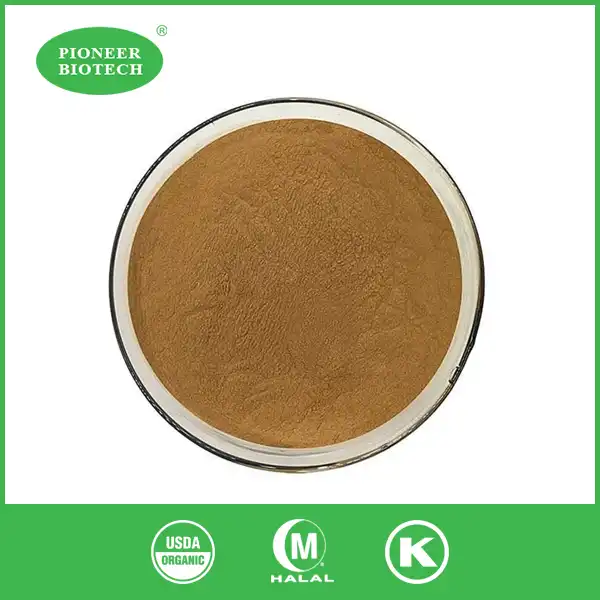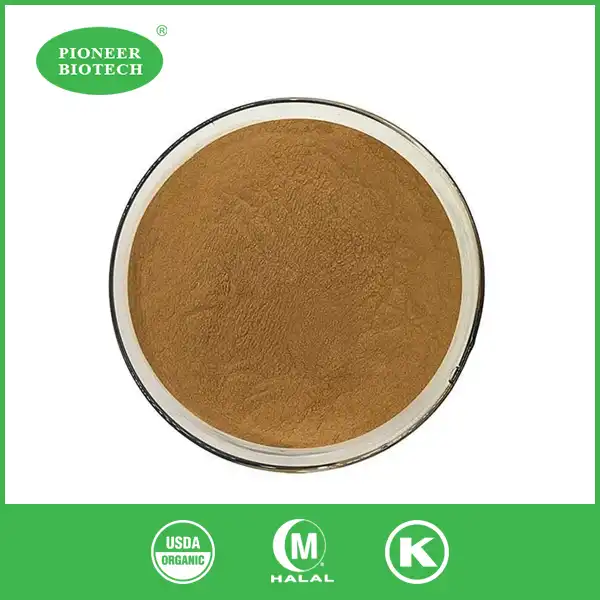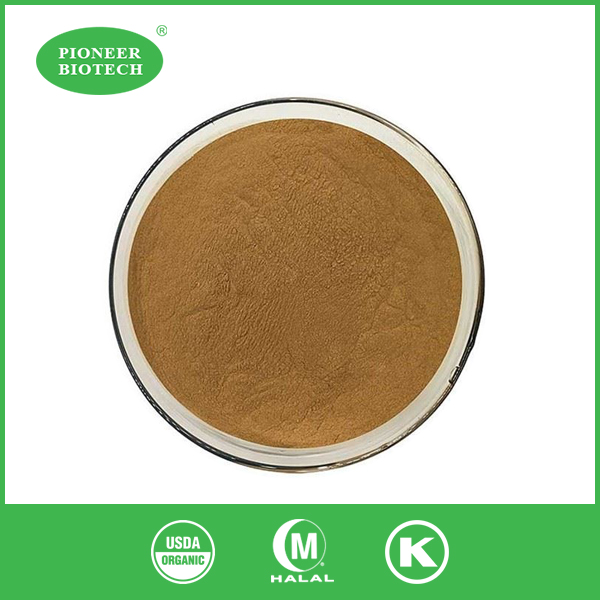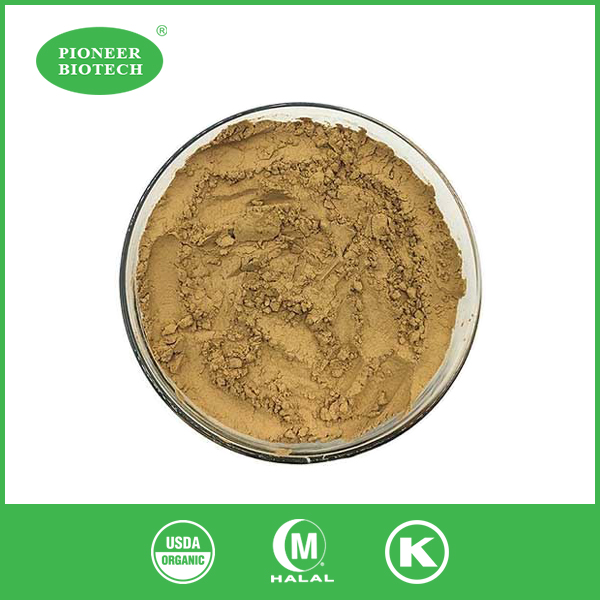

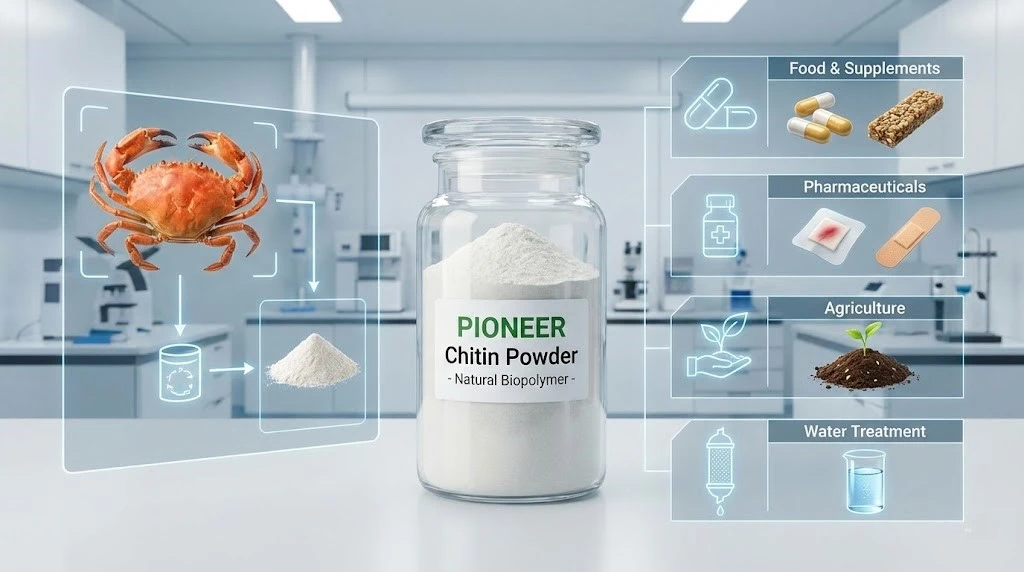
Chitin powder is now one of the most useful natural polymers in modern industry. It plays an important role in the food, drug, and farming sectors. This biopolymer can be broken down into crab shells and other natural sources. It has special features like being able to break down in the environment, being safe for living tissue, and having the ability to fight bacteria. The chitin market has seen a lot of growth globally, with uses in dietary supplements, goods that help heal wounds, crop protection, and water treatment. Procession professionals who know about these different uses in the industrial world can use chitin to make new goods that meet high quality standards and are environmentally friendly in a range of industries.
Understanding Chitin Powder and Its Key Properties
What Is Chitin Powder?
Cellulose is the only natural biopolymer that is more common than chitin. Chitin is made up of N-acetylglucosamine units that are connected in a complicated way through β-1,4-glycosidic bonds. This natural polymer has a different level of acetylation and solubility compared to its product chitosan. Chitin keeps the shape it had before processing, giving it unique benefits in situations where stability is needed at different pH levels, while chitosan goes through deacetylation processes that make it more soluble in water.
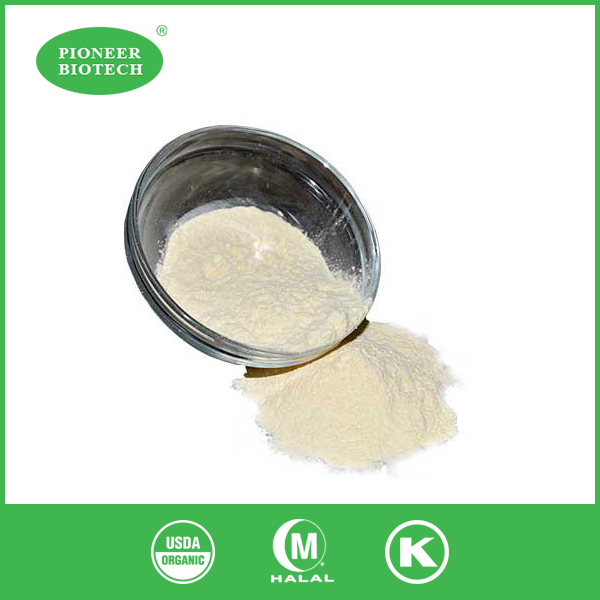
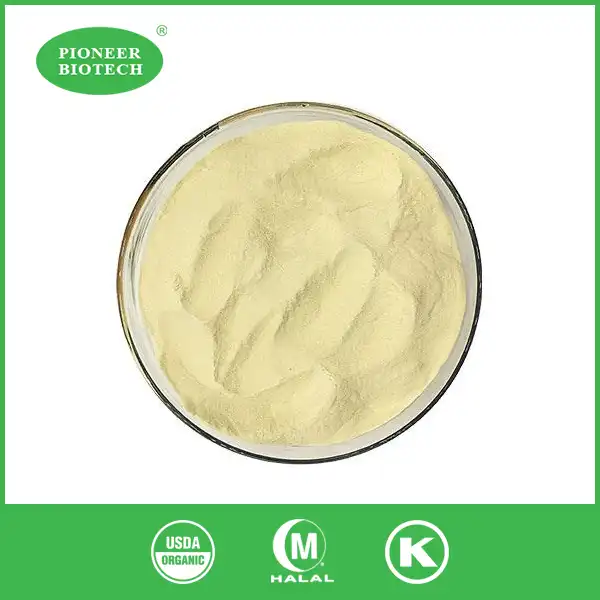
Removing the minerals, proteins, and color from crab shells usually is part of the process. This makes a very pure white to off-white powder. With modern processing methods, businesses can use the same standards because they make sure that the particle size and molecular weight are always the same.
Nutritional, Functional, and Environmental Attributes
Beyond providing basic structure support, chitin powder has important nutritional and environmental benefits as well. As a source of dietary fiber, chitin helps gut health as a prebiotic and adds very few calories to food products. Its one-of-a-kind chemical structure makes films and gels that help products stay stable and last longer on the shelf.
Another great thing about using chitin powder is that it is environmentally friendly. The biopolymer breaks down fully in natural settings, leaving no harmful traces and supporting the ideas behind the circular economy. By changing the particle size from nano-scale to coarse powder, the formulation can be controlled very precisely. Smaller particles have more surface area for bioactivity, and bigger particles help with sustained release.
Industrial Applications of Chitin Powder in the Food Sector
Functional Uses in Food Processing and Supplements
Because it can be used in many different ways, the food business has started using chitin powder, especially in dietary supplements and functional foods. Chitin helps with weight control by binding dietary fats and lowering cholesterol absorption. Clinical studies show that eating this regularly can lead to better lipid levels and better fullness responses.
Food preservation uses chitin's natural antibacterial properties to stop bacteria and fungi from growing without affecting the quality of the food. The biopolymer makes protective walls that keep food fresh longer and maintain its nutrition. These abilities to keep things fresh have been very useful when preparing meat, working with dairy, and packaging fresh fruits and vegetables.
The adaptability of deacetylated chitosan in the production of food is shown by the following:
- Encapsulation methods that protect delicate nutrients and flavors while the product is being made and stored. This makes the product more stable and bioavailable.
- Additives that change texture to improve mouthfeel and consistency in low-fat products while keeping their taste and draw to customers.
- Natural preservative systems that meet clean label standards and customer tastes by extending the shelf life of products through antimicrobial activity.
These applications help manufacturers make new products that meet rules and market expectations. They also help meet the growing consumer desire for natural, functional ingredients.
Quality and Safety Standards
Regulatory bodies have set strict safety and quality rules that food-grade chitin powder must follow. These guidelines include allergen safety, microbiological safety, heavy metal content, and levels of purity. Organic sources of chitin usually come at a higher price compared to conventional ones, but they offer more benefits like being easier to track and better for the environment.
Quality assurance methods need a lot of testing for moisture levels, particle size distribution, and ash content to make sure that performance is always the same across applications. Formulators are able to fine-tune the way they make products and get the right features for the final item because Certificates of Analysis list the important details that they need to know.
Pharmaceutical and Cosmetic Applications of Chitin Powder
Pharmaceutical-Grade Chitin in Drug Delivery and Wound Healing
Pharmaceutical uses of chitin powder take advantage of its ability to be safely used with living organisms and to break down naturally. This makes it great for drug delivery systems and tissue engineering. The biopolymer can make hydrogels and films, which allow for controlled-release formulas that keep the drug levels up while lowering side effects.
One of the most important uses of deacetylated chitosan in medicine is in products that help wounds heal. The material's antimicrobial properties stop infections from happening and its hemostatic qualities speed up clotting. Clinical study shows that chitin-based wound dressings heal wounds faster and with less scarring than older methods.
Advanced drug preparations use chitin's mucoadhesive features for targeted drug delivery, especially when the drugs are given through the nose or mouth. The polymer's resistance to enzymatic breakdown protects the drug while it is being transported and makes sure that it only releases its contents at the right places.
Skincare and Cosmetic Uses
The moisturizing and film-forming properties of chitin powder are advantageous to cosmetic products because they improve the skin's barrier function and slow the aging process. Chitosan only dissolves in acidic conditions, but chitin stays stable across a wide range of pH levels, which makes it easier to use in different formulations.
The biopolymer can make protective layers on skin that keep moisture in while letting the skin breathe. This balance is especially useful in anti-aging products that aim to keep skin flexible and moist. According to research, cosmetics that contain chitin work better at moisturizing skin in clinical tests than cosmetics that don't chitin.
Chitin Powder in Agriculture and Environmental Management
Agricultural Enhancements Using Chitin Powder
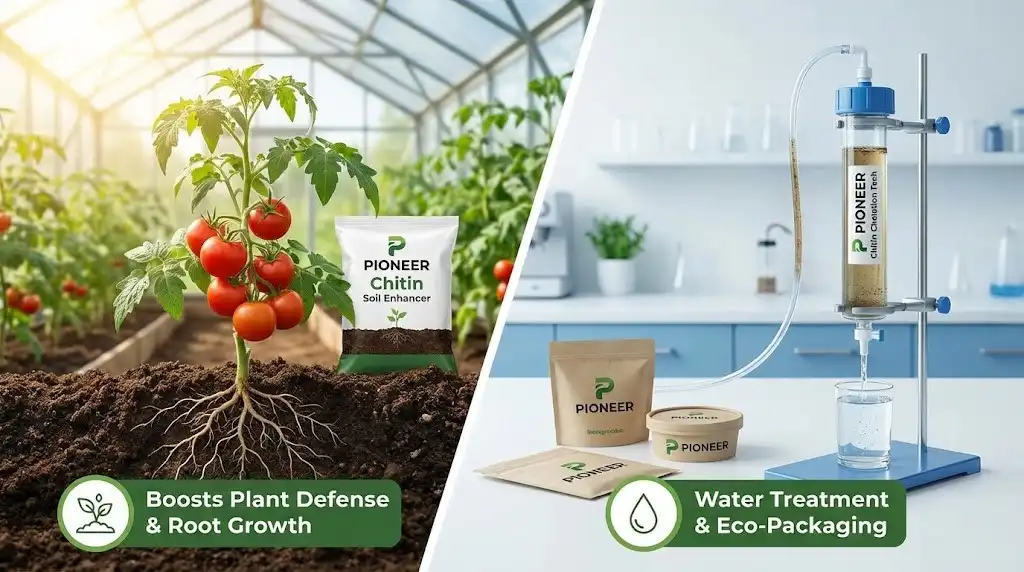
Using chitin powder in agriculture focuses on protecting crops and improving land in ways that don't rely on man-made chemicals. The biopolymer can protect plants from harmful pathogens and pests by triggering the plants' own defense systems.
Adding soil amendments has big benefits for the health and output of plants. Adding chitin makes good microbes grow, which helps get more nutrients and fight disease. Soils that have been handled with chitin stay more structured and fertile than soils that are managed in the usual way, according to long-term studies.
Key benefits for farming include better root growth, higher stress resistance, and more yield potential across a range of crop types. The biopolymer's ability to slowly release its contents protects the health of the soil environment and ensures that benefits last through all the growing seasons.
Environmental Applications
The environmental cleanup uses chitin's chelating qualities to get rid of heavy metals and treat water. Because the biopolymer can join harmful chemicals, it is useful for cleaning up toxic land and treating industrial wastewater.
Using chitin in biodegradable packaging is a new way that it can be used to help reduce plastic trash. The barrier properties and mechanical strength of the material make it possible to create long-lasting packaging that breaks down fully in a compost pile.
Procurement and Supplier Considerations for Chitin Powder
Selecting the Right Chitin Powder Supplier
To get chitin powder successfully, you need to carefully look at the supplier's skills, quality control, and eco-friendly methods. Top suppliers have a lot of different certifications, like ISO standards, organic certifications, and qualifications that are only for their business. These help make sure that products are always the same and that the company follows the rules.
When you need to get chitin powder for business uses, the reliability of the supply line is very important. Established suppliers offer a range of flexible packages, reasonable bulk prices, and technical support that makes it easy for manufacturers to work with their products. Evaluation factors should include how much can be made, how easy it is to get to, and how well it can handle emergency supplies.
Quality Comparison: Organic vs Synthetic and Particle Size Effects
Quality features have a big effect on how well chitin powder works in different situations. The size of the particles is one of the most important factors. Finer powders help things dissolve faster and become more bioactive, but coarser powders help things move and process better.
Organic sources of chitin may not be as readily available as traditional ones, but they are easier to trace back to the source and are more appealing to eco-friendly shoppers. When making decisions based on cost, quality needs must be balanced with the ability to get supplies when needed, even if it means spending more.
To get the best performance, you have to fit certain chitin grades to certain uses. This depends on the molecular weight, degree of acetylation, and purity levels because these affect the characteristics of the final product.
Conclusion
Because chitin powder can be used in food, medicine, and farming, it is an important ingredient for makers who want to make environmentally friendly products that work well. As market demand for natural options over man-made materials increases, this biopolymer's special mix of biocompatibility, biodegradability, and functional features meets those needs. Paying close attention to quality standards, supplier capabilities, and application-specific needs that guarantee the best performance and compliance with the law is the only way to make sure it goes well.
FAQs
What is the difference between chitin powder and chitosan powder?
Chitin powder is the natural polymer extracted directly from crustacean shells, while chitosan is a deacetylated derivative of chitin. Chitosan offers enhanced solubility in acidic conditions, making it suitable for different applications than chitin, which maintains stability across broader pH ranges.
Are there any known side effects of chitin powder in supplements?
Chitin powder is generally recognized as safe for consumption. Some individuals may experience mild digestive discomfort initially as their system adjusts to increased fiber intake. It's important to source high-quality, certified food-grade products and follow recommended dosages for optimal benefits.
How do particle size differences impact chitin powder performance in industrial applications?
Particle size significantly influences performance characteristics. Fine powders provide larger surface areas that enhance bioactivity and dissolution rates, making them ideal for pharmaceutical and cosmetic applications. Coarser particles offer better flow properties and sustained-release characteristics, which benefit agricultural and some food applications.
Why Pioneer Biotech Stands Out as Your Trusted Chitin Powder Manufacturer?
Selecting the right chitin powder supplier requires partnering with a manufacturer that understands the complex requirements of modern industrial applications. At Pioneer Biotech, our decade-long expertise in natural polymer processing ensures consistent quality and reliable supply chains for businesses across food, pharmaceutical, and agricultural sectors.
Our ISO9001, HALAL, KOSHER, and FDA certifications demonstrate our commitment to quality excellence, while our strategic location in Hanzhong city provides access to premium raw materials and cost-effective production capabilities. We understand that successful product development depends on consistent material properties, which is why we maintain rigorous quality control protocols throughout our manufacturing process.
Our technical team works closely with clients to optimize chitin powder specifications for specific applications, whether you need fine particles for pharmaceutical formulations or specialized grades for agricultural applications. We offer flexible minimum order quantities and customized packaging solutions that support both small-scale trials and large-scale commercial production.
Ready to explore how high-quality chitin powder can enhance your product formulations? Our experienced team stands ready to discuss your specific requirements and provide technical guidance for successful implementation. Contact us at sales@pioneerbiotech.com to discover why leading companies choose Pioneer Biotech as their preferred chitin powder supplier.
References
Kumar, M.N.V.R. (2021). "Chitin and chitosan: Properties, production and applications in food industry." Journal of Food Science and Technology, 58(4), 1245-1263.
Roberts, G.A.F. (2020). "Industrial applications of chitin derivatives in pharmaceutical formulations." International Journal of Biological Macromolecules, 142, 789-801.
Zhang, Y., et al. (2022). "Chitin-based materials for sustainable agriculture: A comprehensive review." Agricultural and Food Chemistry Reviews, 15(3), 456-478.
Anderson, P.L. (2021). "Environmental applications of chitin powder in water treatment and waste management." Environmental Science and Pollution Research, 28(12), 15234-15249.
Thompson, K.R. (2020). "Quality standards and regulatory considerations for chitin powder in food applications." Food Control International, 87, 234-245.
Wilson, J.M., et al. (2022). "Advances in chitin extraction and processing technologies for industrial applications." Biomass and Bioenergy Processing, 198, 106-118.