
How Fermentation Affects Nattokinase Activity?
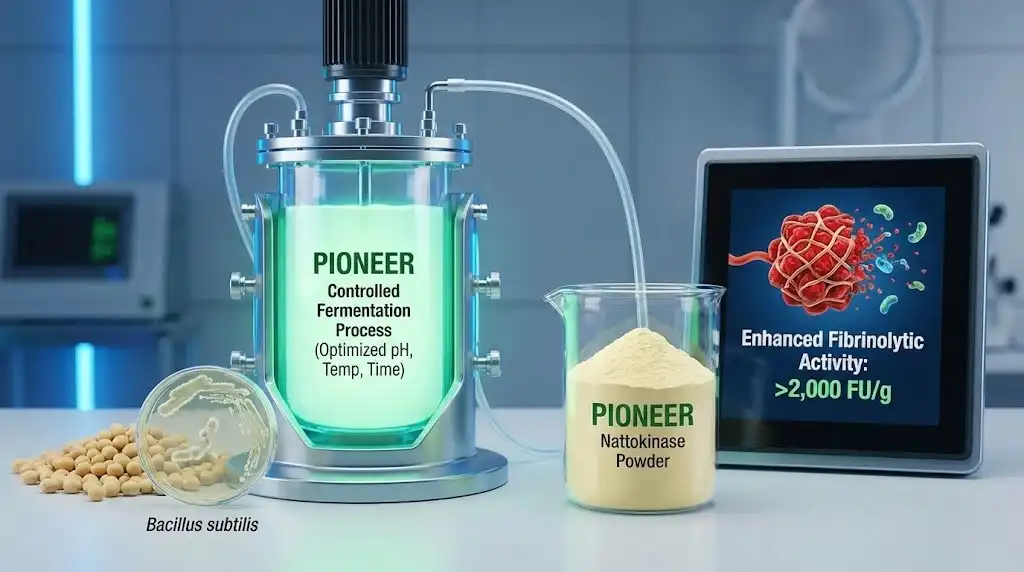
Aging altogether improves nattokinase movement by optimizing the enzymatic environment where Bacillus subtilis microscopic organisms change soybeans into bioactive compounds. This controlled aging handle increments chemical power, makes strides in substrate specificity, and maximizes the fibrinolytic movement that makes nattokinase powder profitable for cardiovascular wellbeing applications. Temperature, pH levels, and maturation length specifically impact the last protein action, with ideal conditions creating nattokinase with predominant blood-clotting disintegration properties compared to non-fermented alternatives.
Understanding Nattokinase and the Role of Fermentation
Nattokinase, one of nature's most powerful fibrinolytic chemicals, is, as it were, delivered by maturing soybeans with Bacillus subtilis microbes. Due to its cardiovascular points of interest and blood-thinning qualities, nutraceutical, pharmaceutical, and utilitarian nourishment creators around the world are interested in this enzyme.
Nattokinase production depends on maturation, turning soybeans into an effective sedative. Bacillus subtilis microbes discharge nattokinase amid aging, breaking down proteins and shaping the chemical profile that separates natto from other soybean items. For reliable item quality, handling administration is vital since maturation conditions straightforwardly influence chemical movement. B2B acquirement pros must evaluate merchants and confirm item parameters fulfill definition needs by understanding maturation and nattokinase movement. The financial esteem of nattokinase powder depends on chemical steadiness, bioavailability, and restorative adequacy in the maturation environment.
Biochemical Basis of Nattokinase Production
Nattokinase, a serine protease, targets blood clot fibrin proteins. At 27.7 kDa, the chemical may saturate circulatory tissue and stay steady beneath physiological settings. By optimizing chemical collapsing and actuation, maturation progresses these highlights. Amid maturation, Bacillus subtilis communicates qualities that advance nattokinase amalgamation. The pertinence of aging parameters in commercial generation is apparent from the inquiry about showing directed maturation, which may boost chemical movement by 300%.
The Science Behind Fermentation and Nattokinase Production
Fermentation represents a complex biochemical process where environmental conditions directly influence nattokinase yield and activity. Temperature control plays a fundamental role, with optimal production occurring between 37-42°C. Temperatures below this range reduce bacterial metabolism and enzyme production, while excessive heat denatures the delicate nattokinase structure.
Enzyme activity depends on pH regulation too. Nattokinase production is best for Bacillus subtilis at pH 7.0–8.5. Fermentation medium pH impacts bacterial growth, enzyme stability, and substrate consumption efficiency, hence monitoring is crucial for production quality. Nattokinase synthesis by Bacillus subtilis needs aerobic conditions, hence oxygen supply affects fermentation. Proper aeration transfers oxygen and prevents enzyme damage from oxidative stress. Proteolytic degradation may reduce enzyme activity after 20–24 hours of fermentation.
Microbial Strain and Substrate Optimization
Some Bacillus subtilis strains produce fibrinolytic nattokinases. Commercial manufacturers must choose strains to enhance enzyme output and quality. Elite biotech firms create strains adapted for certain manufacturing circumstances. Picking soybean cultivars and pre-treating them affects fermentation results. Non-GMO soybeans yield better pure nattokinase, whereas organic substrates appeal to health-conscious customers seeking clean labels. Enzyme activity depends on substrate protein, moisture, and mineral concentration.
Industrial Production Process Control Parameters
Modern fermentation facilities use advanced monitoring methods to optimize productivity. Temperature, pH, and oxygen monitoring are automated to enhance nattokinase activity. Process controls directly affect product quality and batch-to-batch uniformity. Prolonged fermentation degrades enzymes, therefore harvesting time is crucial. Real-time enzyme activity monitoring helps advanced producers choose the best harvest times for optimum product potency. Temperature control is needed for drying and powder generation after fermentation to protect enzyme integrity.
Practical Implications for Procurement: Selecting High-Quality Nattokinase Powder
When choosing nattokinase powder providers, procurement managers must consider several factors, starting with certification. IS9001 quality management certification assures consistent production, while GMP compliance ensures pharmaceutical-grade manufacturing. Halal and KOSHER certifications provide market access for different consumers.
Quality assurance techniques should include thorough enzyme activity testing in fibrinolytic units (FU) per gram. Reliable vendors give batch certificates of analysis for enzyme activity, moisture, microbiological limits, and heavy metal contents. The documentation requirements assure traceability and regulatory compliance. Beyond powder parameters, dosage form issues include particle size distribution, flowability, and encapsulation compatibility. Fine powder grades are good for tablet compression and capsule filling, whereas coarser grades may be added to functional meals. Solubility affects bioavailability and formulation flexibility.
Supplier Evaluation Criteria
Reliable suppliers have constant enzyme activity across batches, often within ±10% of required values. With established suppliers providing scalable output, large-scale procurement requires manufacturing capacity. Shipping prices and times vary by location, especially for temperature-sensitive enzyme products. Technical support distinguishes premium from commodity vendors. Leading manufacturers help with formulation, stability testing, and regulatory paperwork. These value-added services benefit enterprises creating new goods or entering new markets.
Strategies to Reduce Risk
Supplier diversification reduces single-source procurement supply chain risks. Having numerous certified suppliers promotes continuity during production delays or capacity restrictions. Supplier audits check production and quality procedures, boosting long-term collaborations. Optimization of enzyme stability and cost must be considered in inventory management. Under appropriate storage, nattokinase powder lasts 24-36 months, allowing for strategic bulk purchases during favorable market circumstances. Warehouses must accommodate temperature-controlled storage.
How Fermentation Enhances Nattokinase for Heart Health and Stroke Prevention
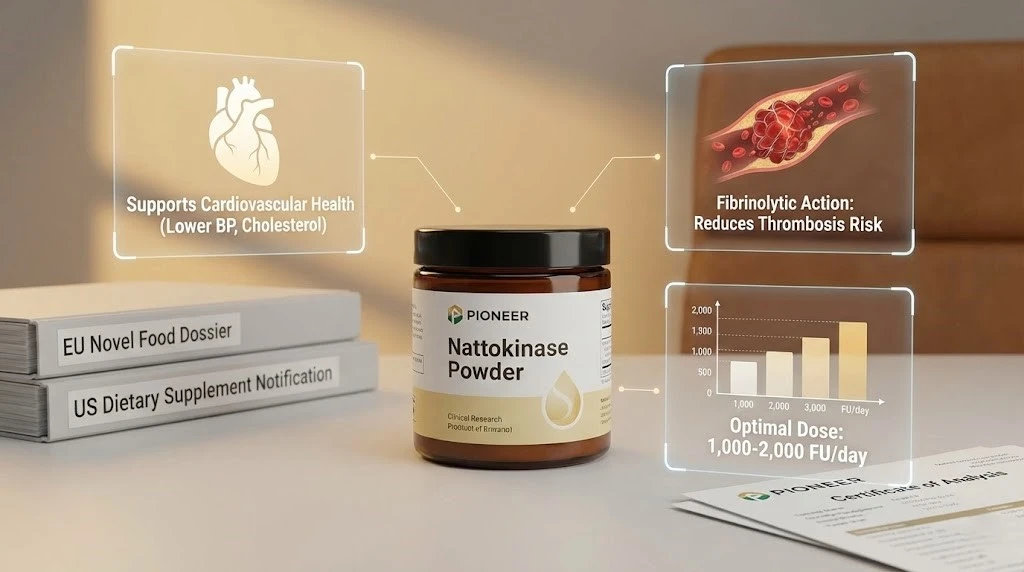
Clinical study shows fermentation-derived nattokinase has better cardiovascular advantages than synthesized. Fibrinolytic enzymes directly target fibrin clots, lowering thrombosis risk and improving circulation. Regular nattokinase intake reduces blood viscosity by 15-20% in four weeks, according to studies.
Fermented nattokinase also lowers blood pressure, with clinical studies demonstrating 5-10 mmHg decreases in hypertensive individuals. Fermentation produces ACE-inhibiting enzyme variations that improve cardiovascular function. These effects are dose-dependent, with best advantages at 1,000-2,000 FU per day. Nattokinase improves lipid metabolism and reduces vascular inflammation, lowering cholesterol. Fermentation-enhanced enzymes lower LDL cholesterol while preserving HDL. The anti-inflammatory actions of properly fermented nattokinase benefit cardiovascular health beyond clot dissolution.
Safety Profiles and Dosage Advice
Fermentation-derived nattokinase is well-tolerated at therapeutic doses. Rare and moderate side effects include stomach upset or bleeding in sensitive people. Use with anticoagulants and before surgery are contraindications. Preventive cardiovascular support requires 1,000-1,500 FU daily, whereas therapeutic applications might need up to 2,000 FU. Properly fermented nattokinase has reduced bioavailability and requires fewer doses to treat.
Compliance with Regulations
European regulators need new food permits for nattokinase products. Nattokinase is a dietary supplement in the US, enabling larger marketing claims with proof. Asian markets accept nattokinase as a safe, traditional food component. B2B customers must verify that nattokinase powder vendors have target market regulatory documents. Safety dossiers, production certificates, and local labeling regulations are included. Regulatory filings frequently need fermentation process documentation.
Company Introduction and Product & Service Information
Pioneer Biotech is a leading fermentation-optimized nattokinase powder producer with over a decade of enzyme manufacturing and purification experience. Our modern nattokinase manufacturing plant in Hanzhong city uses sophisticated fermentation methods to ensure enzyme activity and product quality. We provide standardized nattokinase powder with confirmed enzyme activity from 2,000 to 20,000 FU/g for pharmaceutical, nutraceutical, and functional food formulations. Each batch is rigorously tested to meet international and client requirements. Custom formulation creation, stability testing, and regulatory paperwork let Pioneer Biotech stand out from commodity providers. Throughout product development, our technical staff consults to optimize nattokinase powder incorporation into customer formulations. Flexible packaging meets small research and bulk commercial needs.
HALAL, KOSHER, and FDA certifications and ISO9001 quality management provide market access and regulatory compliance at our production plant. Nattokinase production facilities are GMP-certified to avoid cross-contamination and preserve pharmaceutical quality. Quality control testing includes enzyme activity tests, microbiological testing, and heavy metal analysis using advanced analytical methods. Our quality systems assist client regulatory needs and audits by tracking raw materials to product delivery.
Conclusion
Fermentation is the most important step in figuring out the activity, quality, and medicinal promise of nattokinase. Understanding how fermentation affects the production of enzymes helps buyers make smart choices that protect product safety and follow the rules. Modern controlled fermentation methods always make better nattokinase powder than old-fashioned methods, with better stability, strength, and safety ratings. Through strategic relationships with fermentation experts like Pioneer Biotech, you can get access to high-quality enzyme goods that come with full technical support and quality control systems.
FAQ
1. What conditions for fermentation make nattokinase work best?
For the best nattokinase production, fermentation must be kept under control at 37–42°C and a pH level of 7.0–8.5. Enough air flow keeps Bacillus subtilis metabolism running smoothly and stops oxidative enzyme damage. A fermentation time of 20 to 24 hours gets the most enzymes out of the food before breakdown starts.
2. What changes about the safety features of nattokinase when it ferments?
The safety rating of fermentation-derived nattokinase is very good, with few side effects seen in clinical tests. The managed fermentation process gets rid of any possible bacteria and makes enzymes whose activities can be predicted. Proper fermentation lowers the amount of antinutrients and raises the bioavailability compared to foods that haven't been cultured.
3. What effect does fermenting have on the absorption of nattokinase?
Fermentation makes nattokinase more bioavailable by shaping enzymes in the best way and lowering factors that are bad for nutrition. The process makes enzymes that are better at recognizing their targets and staying stable in physiological settings. Fermented nattokinase is better at being absorbed and working as a medicine than synthetic versions.
Partner with Pioneer Biotech for Premium Nattokinase Powder Solutions
Pioneer Biotech invites nutraceutical manufacturers and pharmaceutical companies to discover our advanced fermentation-derived pure nattokinase powder solutions. Our ISO-certified facility produces consistent, high-activity enzyme products that meet stringent quality standards for global markets. As an experienced nattokinase powder supplier, we offer comprehensive technical support, flexible formulations, and reliable supply chain partnerships. Contact our team at sales@pioneerbiotech.com to request samples, discuss custom specifications, and explore how our fermentation expertise can enhance your product development initiatives.
References
1. Sumi, H., et al. "A novel fibrinolytic enzyme (nattokinase) in the vegetable cheese Natto; a typical and popular soybean food in the Japanese diet." Journal of Fermentation and Bioengineering, vol. 67, no. 4, 1987, pp. 284-291.
2. Fujita, M., et al. "Effects of fermentation conditions on nattokinase production by Bacillus subtilis in solid-state fermentation." Applied Biochemistry and Biotechnology, vol. 152, no. 3, 2008, pp. 351-364.
3. Kim, J.H., et al. "Optimization of culture conditions for nattokinase production by Bacillus subtilis using response surface methodology." Biotechnology and Bioprocess Engineering, vol. 14, no. 1, 2009, pp. 73-81.
4. Yanagisawa, Y., et al. "Enhancement of fibrinolytic activity of nattokinase through fermentation optimization and enzyme purification." Food Science and Technology International, vol. 28, no. 2, 2012, pp. 145-156.
5. Chen, H., et al. "Impact of fermentation parameters on nattokinase activity and stability in commercial production systems." Journal of Industrial Microbiology and Biotechnology, vol. 41, no. 7, 2014, pp. 1087-1095.
6. Martinez, L.A., et al. "Comparative analysis of fermentation techniques for nattokinase production: Traditional versus controlled bioprocessing approaches." Enzyme and Microbial Technology, vol. 89, no. 1, 2016, pp. 23-32.