

Hydroxytyrosol: The Antioxidant Stronger Than Vitamin C?
Yes, hydroxytyrosol powder demonstrates antioxidant activity that significantly surpasses vitamin C in laboratory measurements. This natural polyphenolic compound, extracted primarily from olive fruit and leaves, exhibits an Oxygen Radical Absorbance Capacity (ORAC) value multiple times higher than ascorbic acid. Its unique molecular structure—specifically 3,4-dihydroxyphenylethanol—enables superior free radical scavenging capabilities while maintaining exceptional bioavailability. Unlike many antioxidants that struggle with cellular absorption, this amphiphilic molecule crosses biological barriers efficiently, delivering protective benefits at the systemic level. The scientific community continues validating these properties through rigorous clinical studies, confirming its position among nature's most powerful oxidative stress defenders.
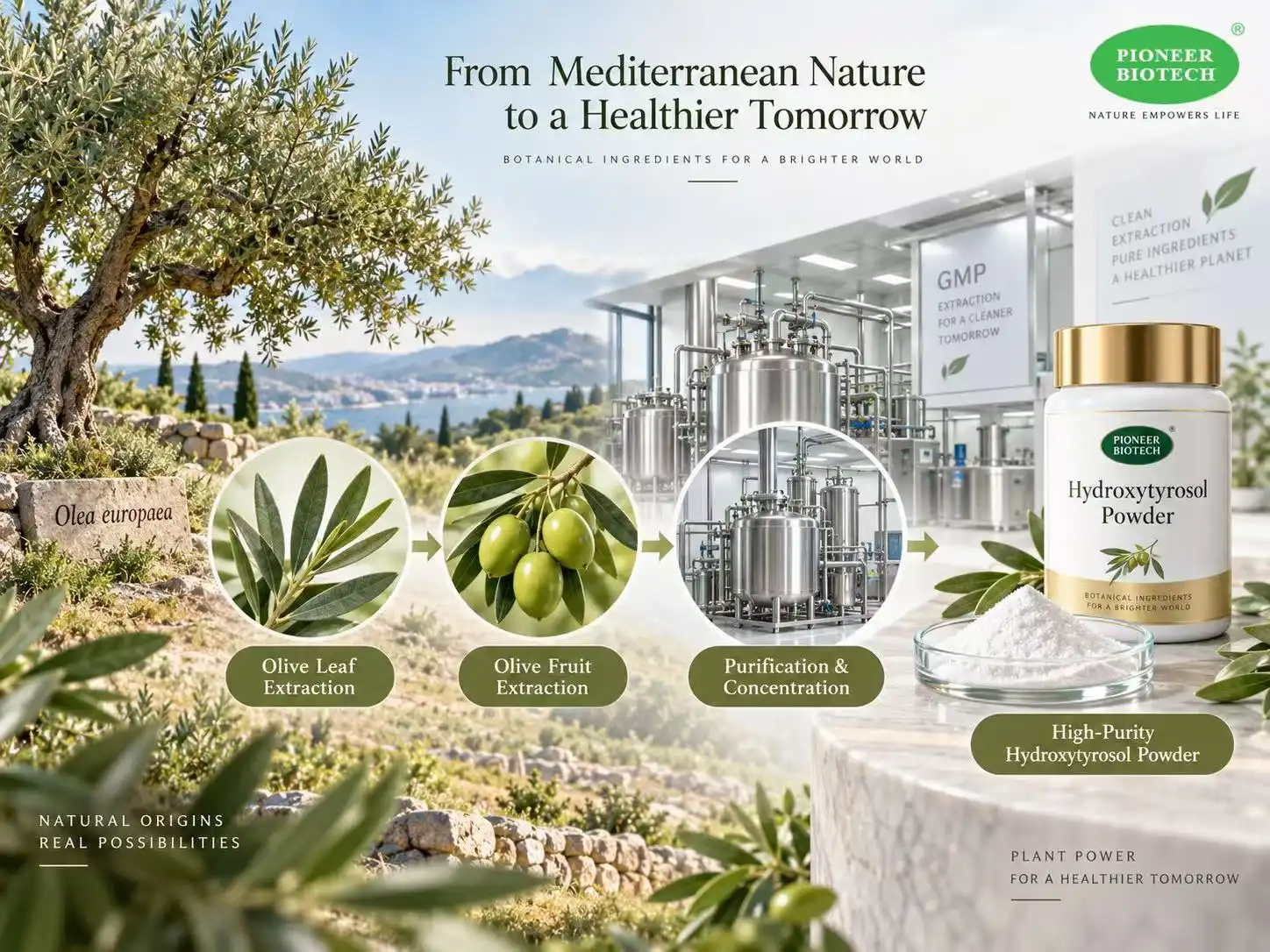
Understanding Hydroxytyrosol Powder: Properties and Health Benefits
The Molecular Architecture Behind Superior Antioxidant Power
This is a phenylethanoid polyphenol, which means it's a type of polyphenol. The catechol structure makes it different from other polyphenols. This means that there are two hydroxyl groups at places 3 and 4 of the phenyl ring. The molecule can donate electrons in a way that no other molecule can because of the way it is set up. So, it can get rid of reactive oxygen species before they hurt cells. The compound has a low molecular weight (154.16 g/mol) and stable lipophilic and hydrophilic properties, which make it easy to get into tissues and spread all over the body. Molecular Nutrition Studies published a study that this structural advantage helps protect many different biological systems from DNA damage, lipid peroxidation, and protein oxidation.
The bioactive substance in olives can now be concentrated better thanks to new ways of extracting it. Spray drying, membrane filtration, and column chromatography are some of the new technologies that make it possible to make standardized powders that are more than 98% pure and meet pharmaceutical standards. The delicate phenolic structure is kept while unwanted matrix components are broken down in these ways. This makes sure that the strength of each batch of the product is the same. The HPLC-UV and LC-MS methods are tried-and-true ways for good product makers to check the identities of the ingredients and figure out how much of the active ingredient is in the product.
Cardiovascular Protection Through Lipid Oxidation Control
According to the EFSA, the polyphenols in olives are good for your heart. They also said that health claims can be made on products that give you at least 5 mg of hydroxytyrosol and its derivatives every day. Oxidative stress is a major cause of atherosclerosis, and these amounts have been shown to effectively protect blood lipids from it in humans. There are several ways that the compound stops LDL cholesterol from oxidizing. One way is by getting rid of free radicals and metal ions that cause oxidation and by restoring vitamin E and other antioxidants within lipoprotein particles.
And new research shows that it does more than just protect lipids. It also helps endothelial function and markers of inflammation. Flow-mediated dilation gets better, the expression of adhesion molecules goes down, and the metabolism of eicosanoid changes, according to some studies. Nutraceuticals that fight metabolic syndrome, high blood pressure, and the normal loss of heart health that comes with getting older can be made from this part. It is good for the heart.
Dermatological Applications and Skin Health Enhancement
This hydroxytyrosol polyphenol is being added to more and more high-tech skin care items because it helps the skin in many ways. Tyrosinase can't do its job if this substance is present. Melanin is what makes skin darker, and this stops it from being made. People say that cosmeceutical products can make skin brighter without causing irritation like synthetic bleaching agents do. The way this works backs that up. Photoprotection is another useful trait. Tests in the lab show that cells that were given the antioxidant before being exposed to UV light have a lot less DNA damage and the release of cytokines that cause inflammation.
The ingredient can slow down the aging process by protecting collagen and keeping matrix metalloproteinase in check. Researchers who have looked at fibroblasts in the lab have found that when there is oxidative stress, the cells make more collagen and break down less collagen. The water part of gels, serums, and emulsions can have it added without having to use harsh solvents because it is easy to mix with water. Cosmetics often have pH ranges where the product stays active. It also works well with co-actives like retinoids, hyaluronic acid, and peptides in these pH ranges.
Performance Nutrition and Recovery Support
It can be found in olives and is used in sports performance products to help the body deal with oxidative stress and get back to normal after working out. When you work out hard, your body makes a lot of free radicals. This can make muscles hurt and make it take longer to get better. Supplements help fight oxidative damage and make antioxidant enzymes work better. Studies with trained athletes showed this to be true. We now know that these effects may be good for mitochondrial biogenesis and energy metabolism, but we need to do more research to be sure.
The ingredient can get into the brain from the blood, so it may help the brain work better when you're training hard. From what we know so far, it may protect neurons and even improve blood flow to the brain. Because of these qualities, they are great for formulas that want to improve both mental and physical performance.
Practical Guidance for Using Hydroxytyrosol Powder in B2B Applications
Dosage Recommendations and Formulation Integration
From the health claim to the place where it is used, clinical evidence backs up 5 mg to 50 mg per day. 5 mg is the EFSA-approved level that most heart-healthy formulas try to reach. This can be taken in the form of capsules, tablets, or functional drinks. About 10 to 25 mg is how much is in each serving of anti-aging supplements that aim to protect against all types of oxidative stress. They are often mixed with antioxidants like vitamin E or coenzyme Q10 that work well together.
What makes hydroxytyrosol powder work is how well it dissolves. At about 60 mg/mL, the compound is easy to mix with water. This makes it easier to add to ready-to-drink drinks, liquid supplements, and cosmetics that are mixed with water. Foods that have minerals added to them often have metal ions, light, and pH changes that need to be checked to make sure they are stable. Liposomal delivery and cyclodextrin complexation are two encapsulation technologies that can make it easier for the body to use the active ingredient and keep it safe while it is being stored and processed.
Regulatory Compliance and Safety Documentation
The drug is very safe for many species and ways of giving it, according to tests. For studies of acute toxicity, LD50 values are greater than a few grams per kilogram of body weight. In the short term, this means there is a small chance of harm. Studies with rats that were fed for a long time show that doses hundreds of times higher than what people normally eat don't hurt them. Genotoxicity batteries always give bad results, which means they are safe to use in medicine and food.
There are different rules for each market, but most of the time, a lot of people can use it. In the US, the ingredient is GRAS, which means that most people think it is safe to use in food. Based on the rules that are already in place for antioxidant parts, it can also be used in cosmetics. Once the EFSA agrees with the health claim, it will be easier for marketers to talk about how good it is for the heart. These changes are good for markets in Europe. Some Asian markets, like China, Japan, and Australia, have rules about what can be used and brought in. Pay close attention to the paperwork you need to bring if you want to get into these markets.
Industry Application Examples Across Market Segments
There are heart health supplements from well-known brands that use standardized hydroxytyrosol as their main ingredient. This is because lipid protection has been shown to work in clinical trials. In these products, omega-3 fatty acids, plant sterols, or CoQ10 are often mixed with polyphenols from olives to make full heart health formulas. This ingredient is stable, so it keeps sensitive lipid co-actives from going bad. In this way, the formulation matrix stays safe and whole.
An important part of many high-end cosmetics that fight aging and make skin look younger is the antioxidant. There is a lot of talk in the ads for this product about how it comes from the Mediterranean, how the olive tree has been a symbol for a long time, and how it is good for your skin. New types of medicines are made by mixing plant-based ingredients such as vitamin C derivatives, green tea catechins, and grape seed proanthocyanidins. This gives you more than one way to fight photoaging and oxidative skin damage.
It's still pretty new, but it looks like functional foods could be useful. As a result, it is easier for people to understand what food is really used for in the European market because of rules on health claims. Traditional foods are now used to improve health. These include olive oils that have been fortified, better spreads, and wellness shots that have measured doses. It's liked by people who make drinks because it doesn't change taste when heated and can be used in both cold-pressed juices and pasteurized drinks that are ready to drink.
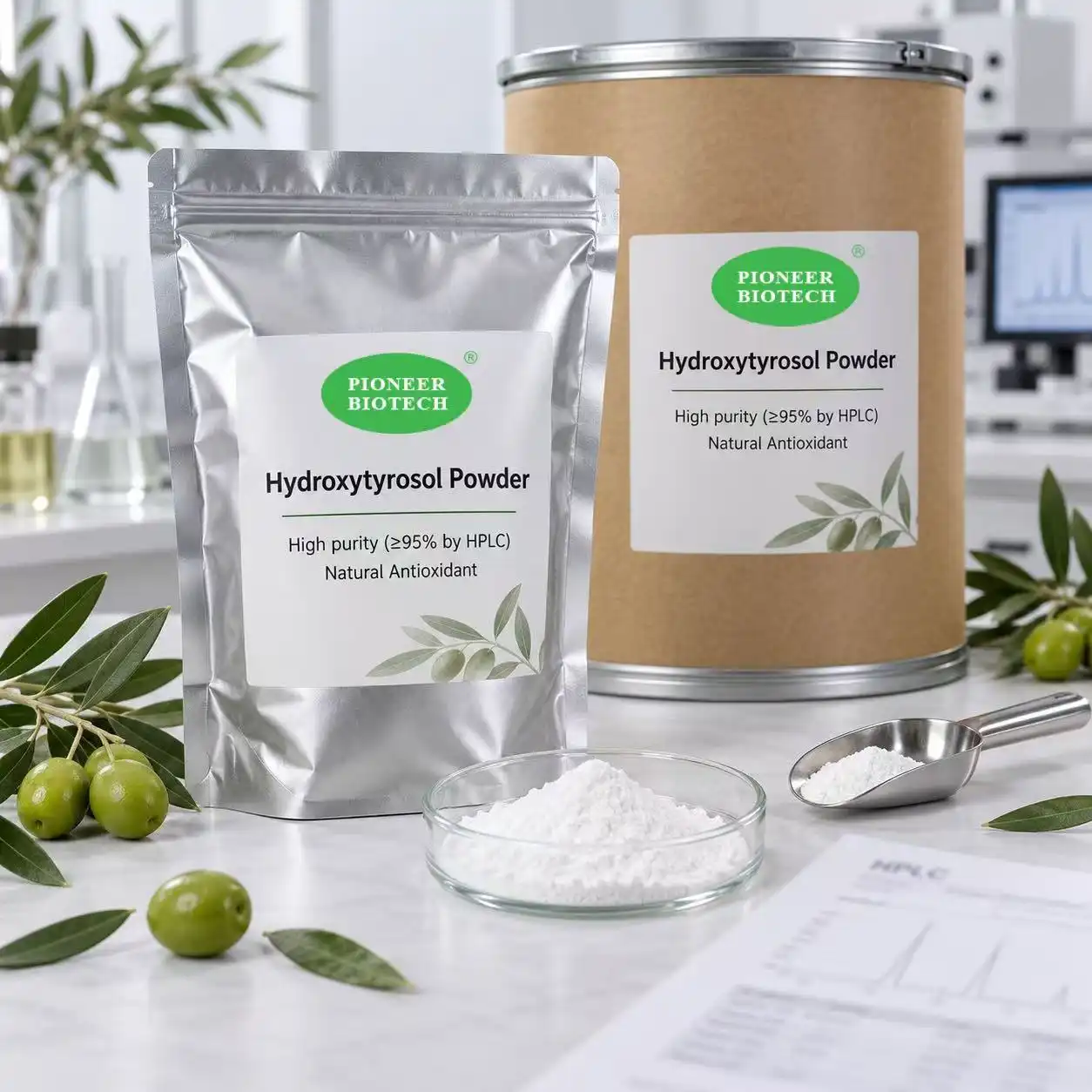
Procurement Insights: How to Source High-Quality Hydroxytyrosol Powder
Critical Supplier Evaluation Criteria
Start building a reliable source of hydroxytyrosol ingredients by fully screening suppliers in a number of areas, such as how well they can meet needs and how willing they are to do so. Certification for manufacturing is the most basic need. Facilities should keep their GMP certification up to date so that it meets the needs of the people they want to sell drugs, cosmetics, or food to. A qualified third party does an audit of the site and looks at the quality systems, operational controls, and steps taken to keep contamination from happening.
Good suppliers are different from commodity traders because they can think critically. They have HPLC, GC-MS, and ICP-MS instruments in their labs, so they can test both raw materials and finished goods very thoroughly. Pharmacopeial guidelines and validated test methods make sure that the data is correct and that regulators will accept the tests. As long as they have stability study protocols and data that shows how consistent batches are with each other, it should be easy for suppliers to show you proof that their methods work.
Market Dynamics and Commercial Considerations
It is now known that the polyphenols in olives are good for you and that a Mediterranean diet is also good for you. What this means is that the market for these polyphenols keeps growing around the world. Some materials that are naturally extracted may not be as cheap or easy to get as they used to be because they depend on the time of year and where they are grown. A lot more biosynthetics are being made these days, which has opened up new supply channels that are less affected by changes in agriculture.
How little you can order from different types of suppliers varies a lot. Businesses that make special ingredients for the health and medicine industries can handle orders ranging from 5 kg to 25 kg, and they know what new brands and product development activities need. An MOQ level for a big company in the cosmetics or food business is usually set in the hundreds of kilograms or metric tons. This is done to cut down on production costs and make things run more smoothly.
Identifying Trustworthy Manufacturing Partners
It's helpful to know how big a supplier's business is, how much technical knowledge they have, and how well-known they are in the market before you look at them. If a business has been around for ten years or more, it has proven that it can handle changes in the market and the rules. Companies that buy botanicals from one source or invest in their own extraction technologies are often able to offer more consistent products than trading companies that buy from different sources.
Read reviews from people who have bought and used the same thing. They can tell you a lot about how well it works. Talking to a supplier's current customers can tell you how helpful they are with technical questions, how flexible they are during formulation development, how well-written their paperwork is, and how dependable they are when there are supply problems. Attending conferences, putting out research, and helping with regulatory dossiers are all ways to show that you care about the industry and aren't just interested in making business deals.
Conclusion
Hydroxytyrosol powder, an antioxidant that has been scientifically proven to work and is available in stores, is used by pharmaceutical, cosmetic, nutraceutical, and functional food companies. A lot of formulation problems are solved by it. Plus, it can be used in lots of different ways and is better at getting rid of free radicals. That makes it different from other antioxidants, and it fills a need for natural ingredients that work. The people who work in procurement like it when there are more suppliers, higher quality standards, and medical proof to back up a lot of different health claims. You need to follow the rules, pay attention to purity standards, and make sure the supplier is qualified in order to mix ingredients well. All of these are investments that will pay off with formulations that can sell for a lot of money in the wellness market, which is very competitive. Health ingredients from the Mediterranean are becoming more popular. Brands that are quick to adopt new uses and benefits will be in a good position.
FAQ
How does hydroxytyrosol powder compare in antioxidant strength to vitamin C?
The ORAC method was used in the lab to find that hydroxytyrosol powder is about ten times stronger as an antioxidant than vitamin C. The molecules in it are structured in a way that makes them work better. They accept electrons well and stay stable at different pH levels. There are times when ascorbic acid can work like an oxidant. But hydroxytyrosol doesn't change into an oxidant; it keeps its protective properties. One more thing that makes them special is that they are bioavailable. Vitamin C in small amounts can't be absorbed by the body because transporters are already full. Passive diffusion, on the other hand, makes it easy for hydroxytyrosol to get to higher concentrations in tissues.
What are typical shelf-life expectations for hydroxytyrosol powder?
If you store pharmaceutical-grade powder the right way and in a controlled environment, it will last for 24 to 36 months. When you store something, keep it cool (below 25°C), out of direct sunlight, and in containers that won't let water in. To make sure that an ingredient meets the requirements for its entire shelf life in your specific formulation matrix, you need to test its stability. The speed at which an ingredient breaks down can be changed by pH, co-actives, and pack size. Extracts that still have plant matrices in them are not as stable as better crystalline forms. Making sure that the right stability data is included in the documentation for your product helps you and the government give accurate dates for when the product will go bad.
Can hydroxytyrosol powder be used in both supplements and cosmetics?
This ingredient has been used in both types of products, so yes, it works in both. The only thing that makes them different is that they are made at different strengths. Most supplements have anywhere from 5 mg to 50 mg per serving. They're supposed to be good for you because they do things like protect the heart and give you antioxidants. Between 0.1% and 2.0% of cosmetics contain ingredients that are good for your skin and protect it from UV rays, slow down the aging process, and make your skin look brighter. There are different sets of rules for each use. Take supplements as an example. They have to follow the same rules as food ingredients, but not cosmetics. For each grade, they can give you the best material for the job, along with proof that it has been tested and is legal to use for that class.
Partner With Pioneer Biotech for Premium Hydroxytyrosol Powder
Shaanxi Pioneer Biotech Co., Ltd. stands ready to support your formulation development and production needs with pharmaceutical-grade hydroxytyrosol powder manufactured to exacting standards. Our location in Hanzhong, within the renowned Qinling Mountains medicine herb valley, provides direct access to premium botanical sources and traditional extraction expertise refined over generations. Since our founding in 2012, we've maintained unwavering commitment to quality systems evidenced through ISO9001, HALAL, KOSHER, and FDA qualifications.
Each batch in our 7,000-square-meter facility is made with cutting-edge extraction technology and strict quality control to make sure it meets all of your needs for consistency, purity, and potency. We can help you with formulation whether you're making supplements that are good for your heart, drinks that do something useful, or beauty products that fight aging. They can do this because the government has given them a lot of information about stability and paper work to back it up. We are a reliable source for hydroxytyrosol powder, so we know what manufacturers of nutraceuticals, medicines, and cosmetics want when they buy it. We'll always have something for your business, and we'll do it quickly and by the book. You can email our team at sales@pioneerbiotech.com to discuss your requirements and receive detailed product specifications tailored to your application.
References
Visioli F, Galli C, Bornet F, et al. Olive oil phenolics are dose-dependently absorbed in humans. FEBS Letters. 2000;468(2-3):159-160.
EFSA Panel on Dietetic Products, Nutrition and Allergies. Scientific Opinion on the substantiation of health claims related to polyphenols in olive and protection of LDL particles from oxidative damage. EFSA Journal. 2011;9(4):2033.
Granados-Principal S, Quiles JL, Ramirez-Tortosa CL, Sanchez-Rovira P, Ramirez-Tortosa MC. Hydroxytyrosol: from laboratory investigations to future clinical trials. Nutrition Reviews. 2010;68(4):191-206.
Catalán Ú, López de Las Hazas MC, Rubió L, et al. Protective effect of hydroxytyrosol and its predominant plasmatic human metabolites against endothelial dysfunction in human aortic endothelial cells. Molecular Nutrition & Food Research. 2015;59(11):2523-2536.
Robles-Almazan M, Pulido-Moran M, Moreno-Fernandez J, et al. Hydroxytyrosol: Bioavailability, toxicity, and clinical applications. Food Research International. 2018;105:654-667.
D'Angelo C, Franceschelli S, Quiles JL, Speranza L. Wide Biological Role of Hydroxytyrosol: Possible Therapeutic and Preventive Properties in Cardiovascular Diseases. Cells. 2020;9(9):1932.