

How to Take Vitamin D3 Powder for Better Results
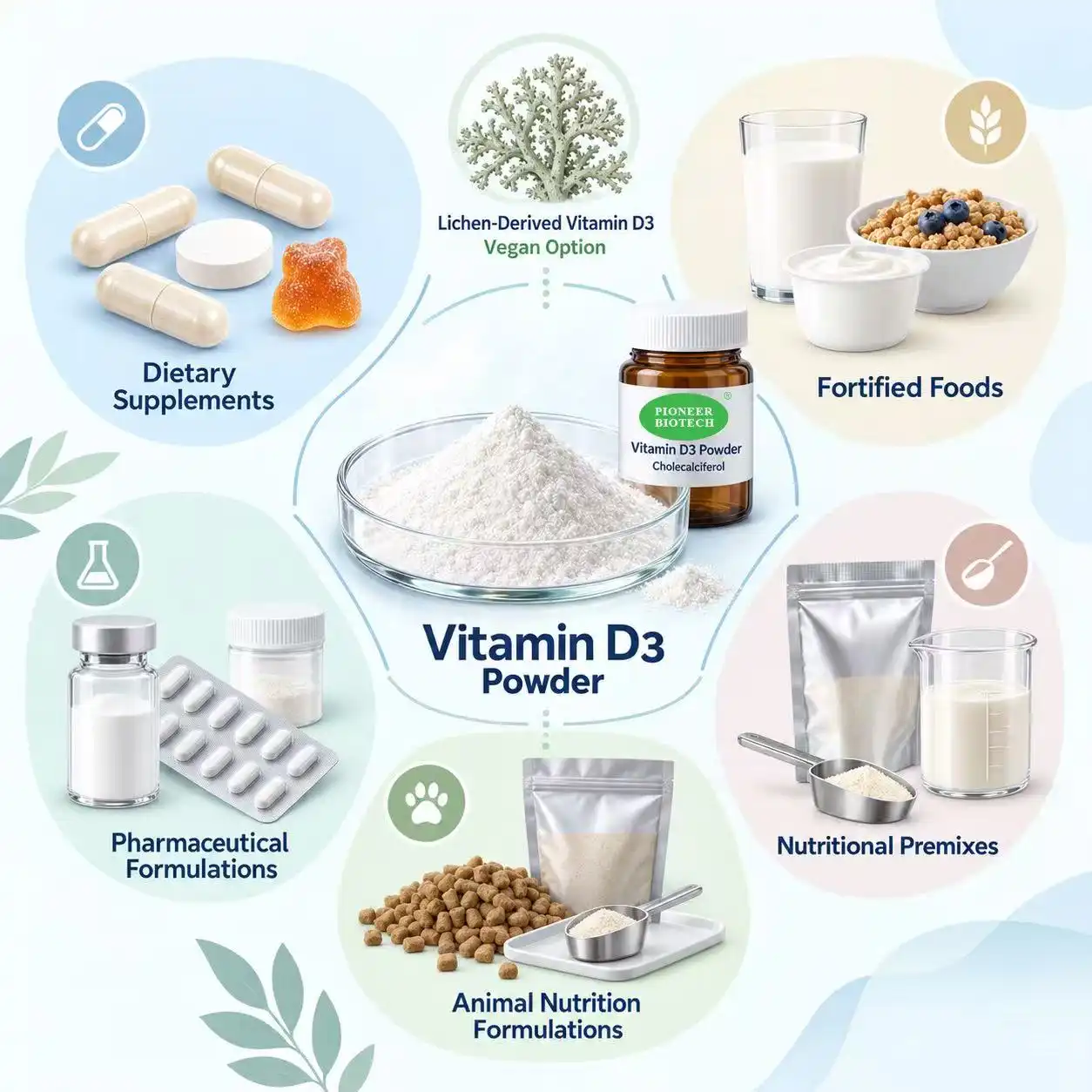
Getting vitamin D3 powder right makes a measurable difference in efficacy and safety. Vitamin D3 Powder is a stabilised, dry-form cholecalciferol ingredient that integrates easily into premix mixes, fortified beverages, gummies and tablets with incredible flexibility. This is fat soluble in nature; thus, when taken with a fat containing meal this greatly improves absorption. Whether a final product lives up to its label promise and whether your supply chain can support it, for B2B formulators and procurement managers, will depend on the delivery format, potency standard and source origin relationship.
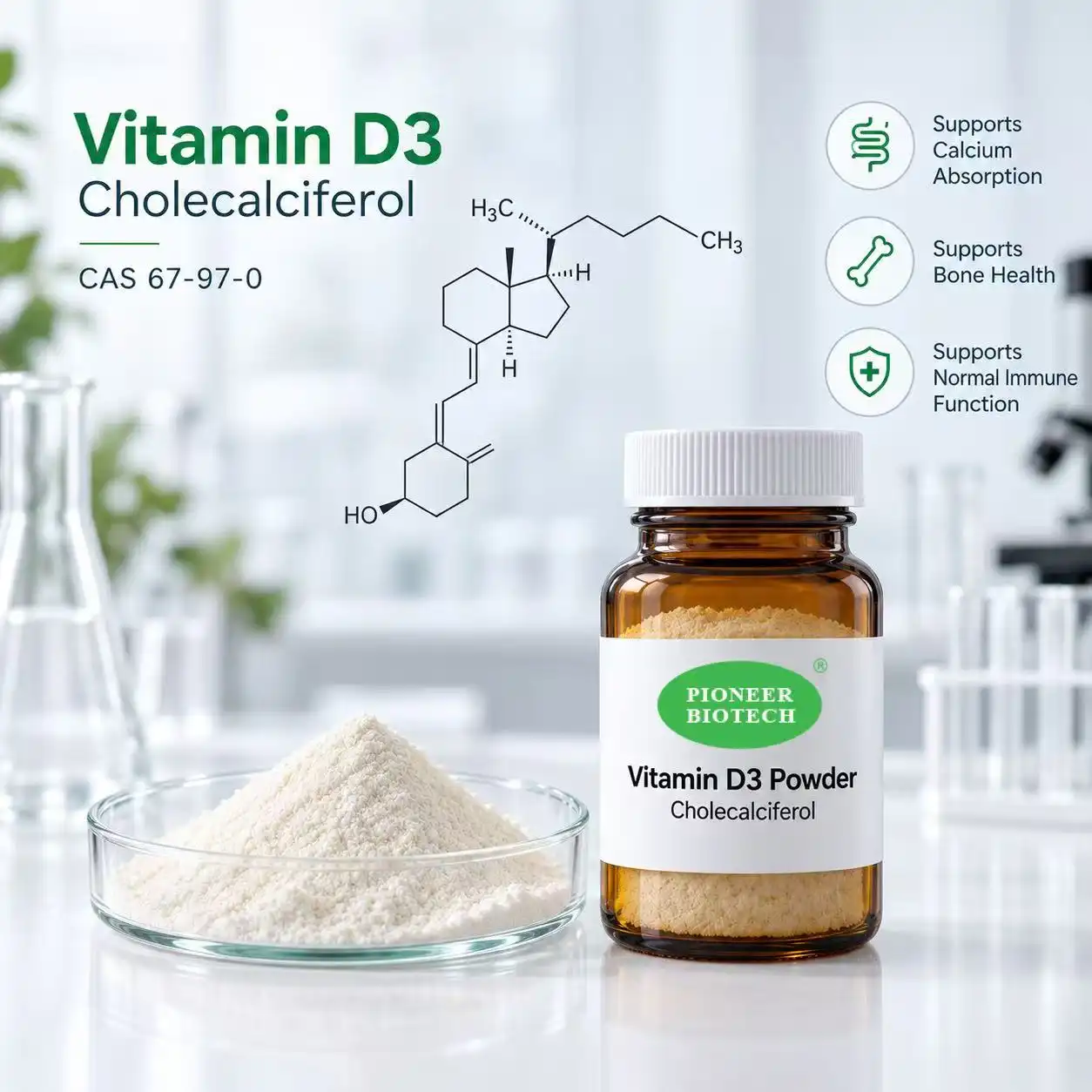
Understanding Vitamin D3 Powder: Basics and Benefits
What Makes Cholecalciferol Powder Different from Raw Crystal Form
Pure cholecalciferol oil is rapidly destroyed by exposure to light, heat and air. The manufacturers have solved this difficulty with microencapsulation. Active molecules of D3 were enclosed in a protective frame consisting of modified starch, gum acacia or maltodextrin. The end product is a white powder which can be combined, pressed into tablets, or heated for a short time, as in baking or extrusion. It keeps working. This encapsulating construction means Pioneer Biotech's vitamin D3 powder may be disseminated evenly throughout large batch sizes. This prevents the “hot spot” issue associated with low grade premix blends.
Lichen-Sourced vs. Lanolin-Sourced: Why Origin Defines Market Access
The source statement on a Certificate of Analysis is not only for show, it tells you what kind of clients a finished product can reach. The version most commonly sold in stores is D3 produced from lanolin, a grease from sheep’s wool. Lichen-derived D3 (Cholecalciferol from Cladonia sp.) is biochemically the same as plant D3 but it’s Vegan-certified and is 2–3x more expensive in North American and European supplement lines. Both sources are provided by Pioneer Biotech and each batch is accompanied by an HPLC validated COA that guarantees its strength and origin and is a necessity for Vegan product marking that complies with rules.
Cholecalciferol is a key ingredient in many kinds of products because it helps the body absorb calcium, builds strong bones, regulates natural immunological responses, enhances muscle function, and helps keep mood and thinking in line. These physical roles are well established and validated by decades of clinical literature. This keeps high demand in the supplement, functional food and animal nutrition markets.”
Best Practices for Taking Vitamin D3 Powder for Optimal Results
Dosage Calibration Across Demographic and Application Segments
The success or failure of a formulation depends upon the accuracy of dosage. The U.S. National Institutes of Health (NIH) recommend adults consume 600 IU of vitamin D daily and babies get 400 IU per day. The maximum acceptable dose for adults is 4,000 IU per day. When monitored by a professional as part of protocols, therapeutic or fortified foods can reach higher levels. For formulators, it means choosing the proper potency. A 100,000 IU/g grade is perfect for usage in sweets and drinks where precise micro-dosing is required, while a 40,000,000 IU/g concentrate is ideal for high-potency premix and feed applications where space and carrier weight are considerations.
Timing, Fat Co-Administration, and Delivery Form Comparison
D3 is fat soluble and taking it with a meal that has fat makes pure vitamin D3 powder it so much more accessible. A 2015 study published in the Journal of the Academy of Nutrition and Dietetics found that taking vitamin D with a high-fat meal increased the vitamin’s availability for absorption by the body by 32 percent compared to taking it without fat. This information should be the basis for dosing recommendations on labels for items designed for end consumers.
Here are the most important shipping format factors that buying and R&D teams always look at:
- Powder in premix or sachet: gives you the most options for customizing the strength; needs to be mixed evenly and follow strict dust-control rules at high IU/g concentrations. It works great for premix lines for animal feed, sports nutrition, and human nutrition.
- Tablet and capsule filling: When filling tablets and capsules, encapsulated beadlet grades keep their shape and temperature while being compressed. Quality microencapsulated material can keep more than 90% of its potency even when tablets are made under normal pressures.
- Gummy and soft chew: For gummy and soft chew, lower IU/g grades (100,000 to 500,000 IU/g) mix easily into gelatin or pectin bases. Label-claim accuracy must be maintained across a batch of thousands of units, and particle size must be kept the same.
- Liquid drops and emulsions: Liquid drops and emulsions: Cold-water-dispersible (CWD) grades with emulsifier systems keep lipids from separating, so final goods look clear or uniform.
The precise requirements for the raw material are different for each type. It is an important part of the buying process to match the strength grade to the application.
Comparing Vitamin D3 Powder to Other Forms: Making the Smart Choice
Powder Versus Capsules, Tablets, and Liquids: A Procurement Lens
When it comes to commercial manufacturing, vitamin D3 powder form gives you the most upstream flexibility. It works with more downstream formats, has a wider range of potencies, and usually has a lower cost-per-IU at scale than alternatives that are already enclosed. Capsule and tablet forms cut down on steps that need to be done in-house, but they make it harder to customize the potency. Liquid formats need infrastructure for emulsification and don't last as long on the shelf after being opened.
Organic, Vegan-Certified, and Synthetic: Certification Impact on Supplier Selection
The synthetic form of cholecalciferol passes pharmacopeial identity tests (USP/EP), but it doesn't have a unique marketing value in clean-label markets. Organic- or vegan-certified versions, especially D3 made from lichen, can be sold in high-end stores and have the value of an independent certification (e.g., Vegan Society, NSF) for pure vitamin D3 powder. While these licenses add to the paperwork needed for regulations, the higher prices and easier access to markets more than make up for it.
The D3 + K2 Synergy Opportunity
Putting cholecalciferol and menaquinone-7 (MK-7, vitamin K2) together answers a growing body of study that links the two vitamins in how calcium is used and the health of arteries. Formulators who are making SKUs for bone health or cardiovascular health are asking for D3/K2 co-formulations more and more. Pioneer Biotech helps clients who want to make their portfolio stand out by answering custom co-blend inquiries.
Procurement Considerations for Vitamin D3 Powder in B2B Market
Supplier Evaluation Criteria That Protect Your Supply Chain
When looking at a vitamin D3 powder provider, you need to look at more than just the catalog information sheet. In the functional food and vegan supplement industries, procurement managers always put four proof points at the top of their list:
- Per-batch HPLC/UV COA: The problem of overstating potency is well known in the business. Buyers who care about quality usually have a third party (like Eurofins or SGS) check the supplier's COA against it.
- Source traceability documentation: the origin of lichen or lanolin must be stated in writing and backed up by records of where the plants or raw materials came from.
- Heavy metal compliance: As ≤1 ppm and Pb ≤3 ppm are the standard limits; Pioneer Biotech's specification meets both.
- Certifications covering your target market: To get into the U.S. and EU markets, you must have certifications that cover your target market. These include ISO22000, HACCP, FDA registration, Non-GMO, Gluten-Free, and BSE/TSE-Free declarations.
Pioneer Biotech is certified by ISO9001, ISO22000, HALAL, KOSHER, and the FDA. The facility is spread out over 7,000 m² and is located in Hanzhong, which is known in China for its high-quality botanical sources used in pharmaceutical products.
Standard packing of 20 kg/carton helps with keeping track of goods and clearing customs based on weight. A nearby warehouse with ready stock lets samples be sent out quickly and trial orders weighing 25 to 100 kg can be filled more quickly.
Maximizing the ROI of Vitamin D3 Powder in Your Product Line
Adding a good cholecalciferol ingredient to your products isn't just a matter of following the rules; it's also a way to make money. The world vitamin D supplement market was worth about USD 1.8 billion in 2022, and it's still growing. This is because people are becoming more aware of their immune health after the pandemic and people are living longer. For example, lichen-sourced D3 takes up a lot of premium shelf space in Vegan and plant-based supplement lines, where people are still willing to pay a lot.
Brand trust is built over time when product makers put clear information on finished product labels about where the ingredients came from, third-party proof, and the accuracy of the product's potency. When procurement teams make quarterly supply agreements with verified manufacturers, they lower both the cost per unit and the risk of supply disruption. This is an advantage that grows over time.
Conclusion
The most important thing about making vitamin D3 powder work well is choosing the right potency grade, source location, and delivery method for the job. Whether you are making a line of vegan gummies that need cholecalciferol from lichen at a concentration of 100,000 IU/g or a high-concentration premix that needs 40,000,000 IU/g, the quality of the finished product depends on how carefully you buy the raw materials. Since 2012, Pioneer Biotech has sold cholecalciferol powder that is legal and HPLC-verified. Their paperwork meets the strictest B2B licensing standards in the U.S. and European markets.
FAQ
1.What potency grades of vitamin D3 powder are available for commercial formulation?
From 100,000 IU/g to 40,000,000 IU/g, Pioneer Biotech has a range of products. The lower end is for soft-chew and liquid fortification, and the higher end is for high-concentration feed and medicine premix.
2.How do I confirm the potency stated on the COA is accurate?
Ask for an HPLC-method COA for each batch of production and have an independent check done by a recognized lab like Eurofins or SGS. Third-party testing is accepted by reputable providers.
3.Is lichen-sourced D3 chemically identical to lanolin-sourced D3?
Yes. Both of them are Cholecalciferol (CAS 67-97-0) and meet the requirements for USP/EP identity. The difference is biological origin, which decides who can get Vegan approval.
4.What allergen and safety declarations apply to Pioneer Biotech's product?
The label says that the product is gluten-free, non-GMO, paraben-free, has no added colors, and is free of BSE and TSE, which is in line with U.S. and EU clean-label rules.
5.What is the standard minimum order quantity for trial purposes?
Trial sales usually start at 25 to 100 kg. Gift samples can be sent to approved B2B buyers before they make a promise.
Partner With Pioneer Biotech for Your Vitamin D3 Powder Supply
Pioneer Biotech offers certified, HPLC-verified cholecalciferol in a range of strengths, including vegan grades sourced from lichen. As a reliable vitamin D3 powder maker that has been in business since 2012, we offer full documentation support, ready-to-ship inventory, and trial order quantities that can be changed to fit your product development timeline. To get a sample or a unique quote, email sales@pioneerbiotech.com or go to pioneerbioinc.com and ask for our expert and sales team.
References
1. Holick, M. F. — New England Journal of Medicine, 2007
2. Dawson-Hughes, B. et al. — Journal of the Academy of Nutrition and Dietetics, 2015
3. National Institutes of Health, Office of Dietary Supplements — Vitamin D Fact Sheet for Health Professionals, 2023
4. Rosen, C. J. et al. — Journal of Clinical Endocrinology & Metabolism, 2012
5. Heaney, R. P. et al. — Journal of the American College of Nutrition, 2011
6. European Food Safety Authority (EFSA) Panel on Dietetic Products — EFSA Journal, 2016