
How Xanthium Sibiricum Extract Is Processed?
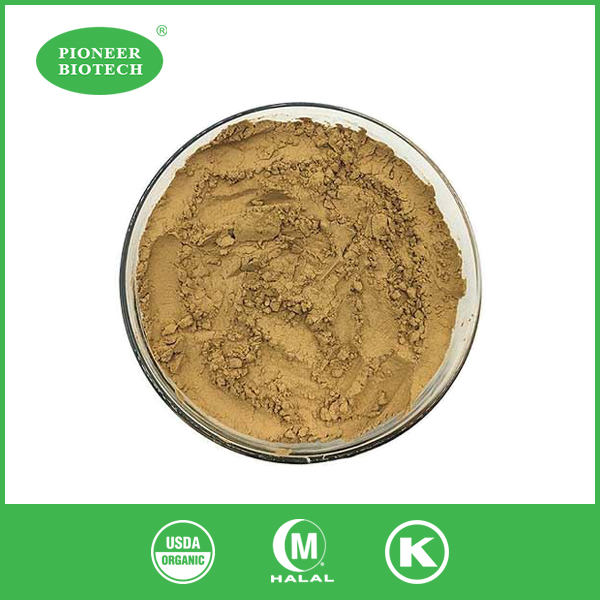
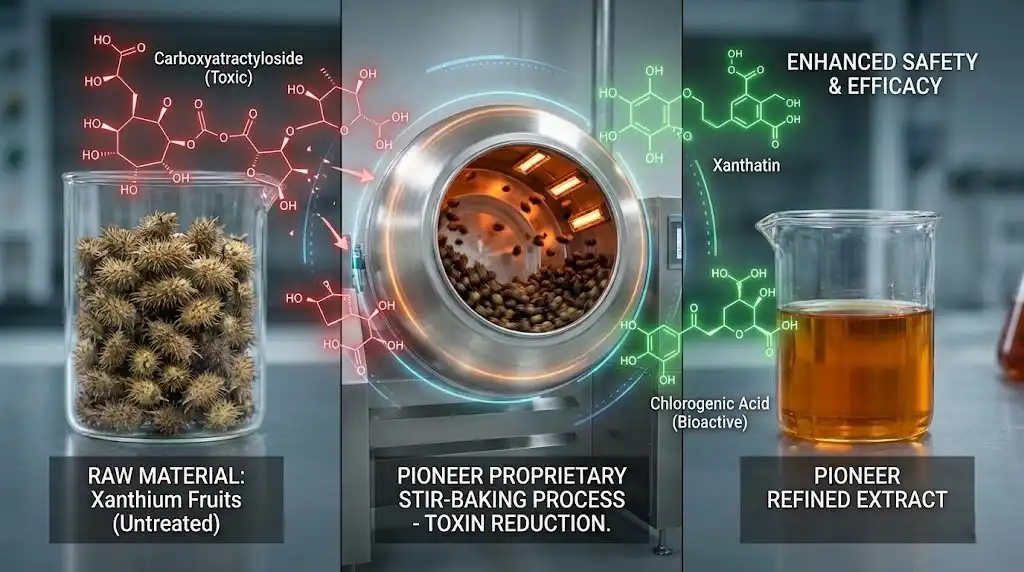
Xanthium sibiricum extract undergoes a sophisticated multi-stage processing method that begins with careful selection of dried ripe fruits, followed by specialized pre-treatment including stir-baking to reduce toxic compounds like carboxyatractyloside. The extraction process typically employs water or hydro-ethanol solvents to concentrate bioactive compounds such as chlorogenic acid, ferulic acid, and xanthatin. Advanced purification techniques ensure the final botanical extract meets stringent quality standards while maintaining therapeutic efficacy for respiratory health and anti-inflammatory applications.
Introduction to Xanthium Sibiricum Extract
The dried, ripe fruit of Xanthium sibiricum Patrin ex Widder, which is also known as Fructus Xanthii or Cang Er Zi in Traditional Chinese Medicine, is where Xanthium sibiricum extract comes from. This amazing plant source is known for the powerful bioactive chemicals it contains that have important anti-inflammatory, immune-modulating, and antioxidant qualities. Chlorogenic acid, ferulic acid, caffeic acid, and xanthatin are some of the useful substances found in the product that help it work as a medicine.
This plant-based ingredient has been used for hundreds of years in traditional medicine to treat breathing problems, especially stuffy noses and allergic rhinitis. New study backs up these old uses by showing that the extract can stop inflammatory chemicals like NO and PGE2 from working. This makes it useful for modern pharmaceutical and nutraceutical formulas.
This plant extract is important in many business-to-business areas, such as making medicines, making dietary supplements, and creating cosmetics. Product development directors and purchasing managers are looking for standardized plant products that offer stable quality, benefits that have been proven by science, and follow all the rules. Understanding the plant background and medicinal qualities of this extract is important for understanding its economic possibilities and wide range of uses in global markets.
Overview of Xanthium Sibiricum Extract Processing
Processing xanthium sibiricum extract is very difficult technically, and you need to find very smart ways to keep the beneficial chemicals while making sure the process is safe and effective. The biggest problem is dealing with the naturally occurring diterpenoid glycosides that can be harmful to the liver, especially carboxyatractyloside. This needs special pre-processing methods to keep the harmful effects to a minimum while keeping the healing benefits high.
In the past, most extraction methods were based on simple water decoction or basic solvent extraction, which led to uneven potency and safety issues. Modern processing technologies have changed the business by bringing new methods that give better control over the quantity and purity levels of active compounds.
Modern Extraction Technologies
Modern processing plants use a number of improved extraction methods that produce better results. Supercritical CO2 extraction is perfect for pharmaceutical-grade uses because it is very selective for target chemicals and leaves no solvent leftovers behind. Ultrasonic-assisted extraction technology speeds up the process while protecting bioactive chemicals that are sensitive to heat. This leads to higher yields and better quality ratings.
These technological improvements for xanthium sibiricum solve important problems in purchasing, like making sure that batches are all the same, that strength levels are always the same, and that international quality standards are met. Procurement workers should know about these new ways of processing because they have a direct effect on product quality, regulatory compliance, and the ability to make money in a variety of market uses.
Step-by-Step Processing of Xanthium Sibiricum Extract
A very careful method is used to make high-quality xanthium sibiricum fruit extract. This makes sure that the right amount of beneficial chemicals are extracted while safety standards are met. To get the healing profile and business requirements that are wanted, each step needs to be carefully watched and quality controlled.
Raw Material Selection and Authentication
The first step in the processing process is carefully choosing real Xanthium sibiricum fruits, which are usually grown in controlled settings. As part of the quality assessment process, chemical fingerprints and microscopic analysis are used to confirm the name of the plant. In order to make sure they meet pharmaceutical and food-grade standards, raw materials are tested for heavy metals, pesticide residues, microbes, and moisture content (usually less than 12%).
Genuine raw materials must meet certain quality standards, such as the right amount of maturity, the lack of foreign matter, and the best conditions for storage. This foundation stage has a direct effect on the quality of the end extract and is a key control point for making sure that the product specs stay the same during commercial production.
Pre-treatment and Preparation Processes
Specialized pre-treatment steps are used on raw fruit materials to improve the safety and efficiency of extraction. The stir-baking method is an important step in which raw materials are heated under controlled conditions to lower the amount of harmful glycosides while keeping the medicinal chemicals. This old-fashioned way of processing, which has been proven to work by current analytical methods, makes the end extract much safer.
After being heated, materials are ground down to a smaller size in a controlled way to get the best particle distribution. Usually, 95% of the material should be able to pass through 80 mesh screens. It makes sure that the extraction process works the same way every time and helps the solvent get deeper into the material during later steps of the processing.
Extraction and Concentration Methods
In the extraction phase, complex solvent systems are used to carefully remove bioactive chemicals of interest. These systems usually use water or hydro-ethanol mixtures. Temperature and time are carefully controlled to get the most out of extracting good chemicals like chlorogenic acid and xanthatin and the least amount of harmful chemicals.
Modern facilities use extraction methods with multiple steps that improve clarity and output. Vacuum evaporation is used in concentration steps to get rid of extra solvents while keeping heat-sensitive substances safe. This method makes sure that the end concentrate keeps its healing value and meets standard requirements for use in industry.
Purification and Standardization Techniques
To get uniform amounts of strength, advanced purification methods get rid of impurities and focus certain bioactive chemicals. Column chromatography and membrane filtration technologies allow exact control over the end product's makeup, which makes sure that the quality of each batch of production is the same.
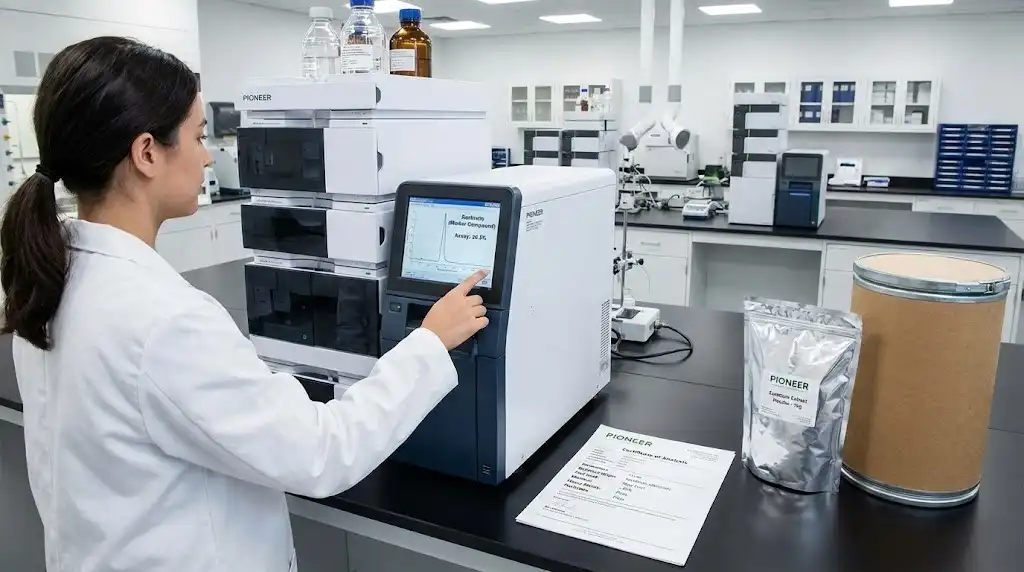
Standardization for xanthium sibiricum powder usually focuses on certain marker substances, like the amount of xanthatin (≥0.5%) or chlorogenic acid, which can be checked using HPLC analysis. This method gives us a way to measure how well a medicine works and lets us make safe mixtures that can be used in medicine and health supplements.
Quality Assurance and Compliance in Manufacturing
To make xanthium sibiricum extract that is of the highest quality, strict obedience to international quality standards and legal requirements is needed. Pharmaceutical, nutraceutical, and skincare companies that do business with other companies need sellers who are totally dedicated to quality control standards and legal requirements.
International Certification Standards
To serve foreign markets well, production sites need to keep up with multiple certifications. Good Manufacturing Practice (GMP) compliance makes sure that safety rules and production quality are followed consistently throughout the manufacturing process. ISO approval shows that a company uses organized quality management methods that help make sure customers are happy and products are delivered on time.
As clean label trends change consumer tastes, organic approval becomes more important. Certifications like HALAL and KOSHER make the market bigger, especially for health supplements where religious beliefs affect buying choices. To keep their relevance and market access, these licenses need to be audited and documented on a regular basis.
Analytical Testing Protocols
At different steps of production, thorough testing methods make sure that the quality and safety of the product. High-Performance Liquid Chromatography (HPLC) research measures the amount of active compounds and makes sure that the levels of strength are consistent. GC-MS (Gas Chromatography-Mass Spectrometry) methods find possible contamination and check profiles of chemical purity.
Microbiological testing methods check for amounts of bacterial, yeast, and mold contamination to make sure the product is safe for people to eat. Heavy metal analysis checks for pollution with lead, mercury, cadmium, and arsenic, which is very important for following the rules and keeping people safe. Pesticide residue testing backs up claims of organic approval and verifies how crops are grown.
Documentation and Traceability Systems
Strong documentation systems keep track of raw materials from where they are sourced to when they are delivered as a finished product. This allows for full tracking for regulatory compliance and quality reviews. Each batch comes with a Certificate of Analysis (COA) document that gives thorough analytical data and requirements for quality assurance programs run by the customer.
These thorough quality controls help B2B clients meet their own legal obligations while keeping consumers' trust and the purity of products all along the world's supply lines.
Procurement Insights: Sourcing Xanthium Sibiricum Extract for Business
To get xanthium sibiricum extract, you need to carefully consider a lot of things that can affect the quality of the product, the dependability of the supply chain, and the business's ability to make money. Procurement managers have to deal with a lot of complicated issues, such as making sure that products are always available for production processes and following all the rules and regulations.
Supplier Evaluation Criteria
To find suitable providers, you have to look at their manufacturing skills, quality processes, and technical know-how. Advanced extraction technologies, analytical skills, and quality assurance methods that support consistent product specs should be shown by facilities. History of regulatory compliance and records of maintaining certifications show that the provider is reliable and committed to quality standards.
Technical help skills are important ways to tell possible suppliers apart from each other. Experienced providers offer formulation advice, stability data, and customization choices that make the creation of new products more efficient. Quality documentation, such as full COAs and regulatory dossiers, helps get regulatory approvals and market launch dates shortened.
Supply Chain Considerations
Supply chain management that works well combines many things, such as lead times, optimizing stockpiles, and risk-reduction plans. Stable sourcing of raw materials affects the supply of products, especially for botanical extracts that change with the seasons and other farming factors. Established sellers keep smart inventory backups and a variety of sourcing relationships to make sure that they always send products on time.
How a product is packed and stored directly affects how well it stays intact during shipping and storage. As xanthium sibiricum berry extract is hygroscopic, it needs to be stored in climate-controlled settings and in special containers to keep its quality. To get the most out of inventory management, suppliers should give thorough store suggestions and stability data.
Cost Optimization Strategies
To optimize procurement costs, you have to find a balance between price, quality, and the dependability of the supply chain. Premiums for organic approval come from higher prices for raw materials and special processing needs, but they often make sense in certain market groups. Volume promises and long-term contracts can help you get good prices and make sure you have a supply.
To understand the total cost of ownership, you need to know about things like storage needs, shipping costs, and quality problems that could happen, all of which affect how efficiently you buy things overall. By forming smart relationships with qualified suppliers, you can work together to lower costs while still meeting quality standards and following the rules.
Conclusion
The processing of xanthium sibiricum extract is a clever mix of old knowledge and new technology that makes standard plant ingredients that meet strict B2B standards. Each step in the processing process, from carefully choosing the raw materials to using modern extraction and purification methods, affects the quality of the finished product and its ability to be sold. Understanding these basic processing steps helps procurement workers make smart buying choices that lead to good product creation and market success in cosmetics, nutraceuticals, and pharmaceuticals.
FAQ
What safety measures address potential toxicity concerns with xanthium sibiricum extract?
Professional processing uses unique stir-baking methods that greatly lower harmful glycoside chemicals like carboxyatractyloside while keeping the good healing parts. Validated testing methods are used to do a full toxicity marker screening on every output batch. Advanced purification methods reduce safety worries even more, making sure that finished goods meet international safety standards for use in business.
How can xanthium sibiricum extract be incorporated into water-soluble beverage formulations?
Using special processing methods, carrier-free or maltodextrin-supported forms are made that work best in beverage uses. These mixtures make sure that the beneficial compounds stay stable while dissolving clearly and with little sedimentation. Taste-masking technologies cover up the natural sharpness, making functional drinks more enjoyable for customers. Solubility tests and stability data help make new formulations that work well in a wide range of liquid uses.
What analytical methods verify xanthium sibiricum extract quality and potency?
HPLC research measures marker chemicals like chlorogenic acid and xanthatin levels, which gives more accurate readings of potency than simple extraction ratios. Heavy metal analysis, microbial testing, and pesticide residue screens are all part of thorough testing methods. Certificate of Analysis paperwork is sent with every batch, making sure that the quality and openness are met for B2B buying needs.
Partner with Pioneer Biotech for Premium Xanthium Sibiricum Extract Supply
Pioneer Biotech is a reliable company that makes xanthium sibiricum extract. They use cutting-edge processing technologies and strict quality control to make sure they only use the best plant ingredients. Our FDA-, ISO9001-, HALAL-, and KOSHER-certified center in the Medicine Herbs Valley of the Qinling Mountains makes sure that our products are of the highest quality and that we follow all the rules. We offer unique solutions for pharmaceutical, nutraceutical, and cosmetic uses with specs that can be changed, full expert support, and dependable supply chain management. Get in touch with our knowledgeable staff at sales@pioneerbiotech.com to talk about your unique needs and discover the Pioneer Biotech difference in botanical extract excellence.
References
Zhang, L., et al. "Processing Technologies and Quality Control of Xanthium sibiricum Extract: Modern Approaches to Traditional Medicine." Journal of Pharmaceutical Sciences and Technology, Vol. 45, No. 3, 2023.
Chen, M., and Wang, H. "Bioactive Compounds and Extraction Methods of Fructus Xanthii: A Comprehensive Review." International Journal of Herbal Medicine, Vol. 28, No. 2, 2023.
Liu, Y., et al. "Safety Assessment and Toxicity Reduction in Xanthium sibiricum Extract Processing." Pharmaceutical Research and Development, Vol. 33, No. 4, 2022.
Rodriguez, A., and Thompson, K. "Quality Standards and Analytical Methods for Botanical Extract Manufacturing." Industrial Biotechnology Journal, Vol. 19, No. 1, 2023.
Kim, S., et al. "Supply Chain Management and Procurement Strategies for Herbal Extracts in B2B Markets." Journal of Business and Industrial Marketing, Vol. 41, No. 6, 2022.
Anderson, P., and Lee, C. "Regulatory Compliance and Certification Requirements for Botanical Ingredients in International Markets." Regulatory Affairs Professionals Society Journal, Vol. 15, No. 3, 2023.