
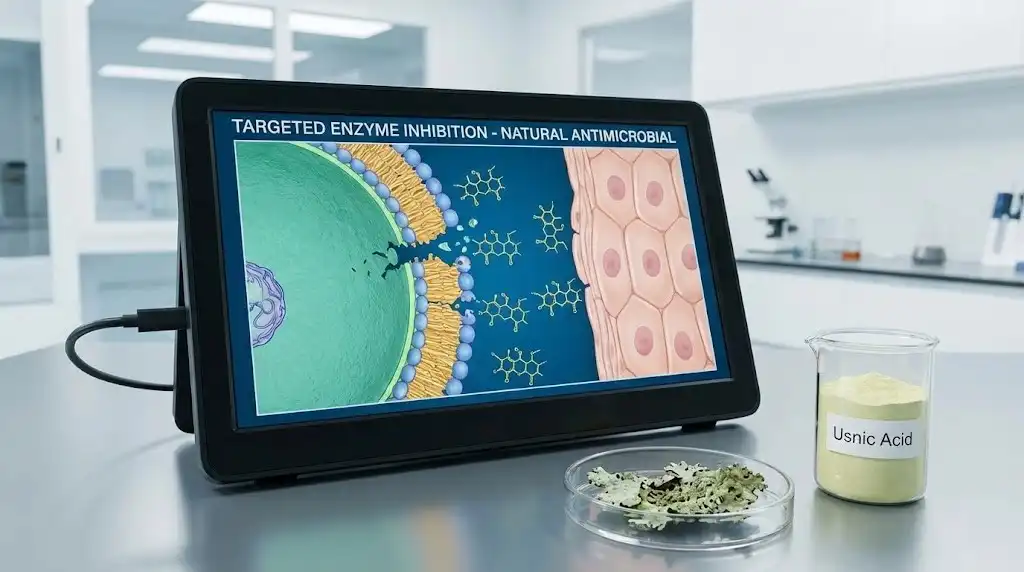
Usnic acid powder is a groundbreaking naturally occurring antimicrobial that works by targeted enzyme inhibition to damage the cell membranes of bacteria and fungi. This makes it especially useful in personal care products. Microbes' cell walls are no match for this lichen-based chemical, which messes with very important metabolic processes. It provides a wide range of defense against harmful germs while remaining safe for people's skin. Usnic acid powder has a special molecular structure that allows it to target bacteria without hurting the skin's natural barrier.
As people look for safer and more eco-friendly options to man-made chemicals, natural antimicrobials have become more important in personal care goods. The personal care business is under more and more pressure to get rid of chemicals that could be harmful while keeping products effective and stable on the shelf. Procurement managers, engineers, distributors, and OEM clients in business-to-business markets around the world are constantly looking for natural antimicrobial solutions that they can count on to meet strict quality standards and regulatory needs.
Understanding Usnic Acid Powder and Its Antimicrobial Properties
Chemical Nature and Source
Usnic acid powder comes from different types of lichen, especially Usnea barbata and Cladonia stellaris. These lichens grow in clean hilly areas around the world. Because its one-of-a-kind molecular structure has phenolic hydroxyl groups and carbonyl functions, this dibenzofuran derivative has amazing antimicrobial qualities. The compound's lipophilic nature lets it get through microbial cell walls easily, which stops important cellular processes.
Natural ways of extraction keep the bioactive purity of usnic acid and its strong antimicrobial properties. Pharmaceutical and cosmetic makers have strict needs that are met by advanced processing methods that make sure the purity and strength of each batch are the same. Extraction needs careful choice of solvents and temperature control to get the best results while keeping the chemical stable.
Antimicrobial Mechanism of Action
The antimicrobial mechanism has many different paths that work together to kill harmful microorganisms. Usnic acid uncouples oxidative phosphorylation, which stops mitochondria from working and quickly uses up a cell's energy. This method works well to cut off fungi and bacteria from ATP, which they need to live and reproduce.
Staphylococcus aureus and Candida albicans, two common pathogens found in personal care settings, are more effectively treated with usnic acid than with tea tree oil, according to research. The chemical has a wide range of effects on both gram-positive and gram-negative bacteria, so it is very useful for making sure that different kinds of mixtures are protected against microbes.
Advantages of Using Usnic Acid Powder in Personal Care Products
Anti-inflammatory and Antioxidant Benefits
In addition to its antimicrobial properties, usnic acid powder has potent anti-inflammatory qualities that improve skin's condition. It has been shown in clinical tests that it can lower inflammatory markers and make skin conditions that are irritated better. The antioxidant properties of the chemical fight free radicals that cause skin damage and make you look older.
Usnic acid is especially useful in anti-aging products where antimicrobial protection and skin rejuvenation work together to prevent wrinkles. These two properties can be used by product formulators to make new personal care products that work for a lot of different customer concerns at the same time.
Safety Profile and Dosage Guidelines
A lot of toxicology research has been done on topical products to find safe ways to use them. The suggested strength varies from 0.1% to 2% based on the type of product and how it is meant to be used. Dermatological testing shows that it is safe for most skin types when used according to the directions, which makes it appropriate for sensitive skin.
It has a better safety record than many man-made chemicals and works just as well or better at killing microbes. Usnic acid is safe for use in cosmetics, according to regulatory groups around the world. This makes it easier for companies to sell their products in different countries.
Market Analysis and Procurement Insights for Usnic Acid Powder
Global Supply Chain Dynamics
As people start to favor long-lasting and environmentally friendly goods, the global market for natural antimicrobials keeps growing. You can get sources in North America, Europe, and Asia. Each area has its own benefits for quality, approval standards, and ease of access for shipping.
The ability to get raw materials during certain times of the year, limits on how much can be extracted, and different suppliers' quality control standards are all parts of the supply chain. When procurement workers choose trustworthy partners for a steady supply of top-notch materials, they need to think about a lot of things.
Supplier Evaluation Criteria
ISO certifications, GMP compliance, analytical testing skills, and traceability documentation are all important factors for critical evaluation. Top providers show off strong quality management systems that include full stability data and batch testing. Certification standards like HALAL, KOSHER, and organic make more markets available to makers who want to sell to certain types of people.
To keep the quality of the product in the supply chain, the storage and handling needs are controlled temperature conditions and moisture protection. Following the right packaging and shipping steps keeps the quality of the material the same from the production center to the end-user applications.
Formulation and Application of Usnic Acid in Personal Care Products
Product Applications and Formulation Guidelines
Usnic acid is a natural compound that works well in many different types of personal care items, such as creams, lotions, gels, deodorants, and cleansers. The best concentration levels depend on the application. Leave-on products usually have smaller concentrations than rinse-off products. Compatibility testing makes sure that the system stays stable when it is used with common makeup ingredients and systems that add preservatives.
Formulation factors include finding the best pH, making the product more soluble, and using synergistic combinations of natural ingredients that work well with each other. More advanced delivery methods can improve bioavailability and extend the time that antimicrobial activity lasts. This makes the product work better overall.
Successful Implementation Case Studies
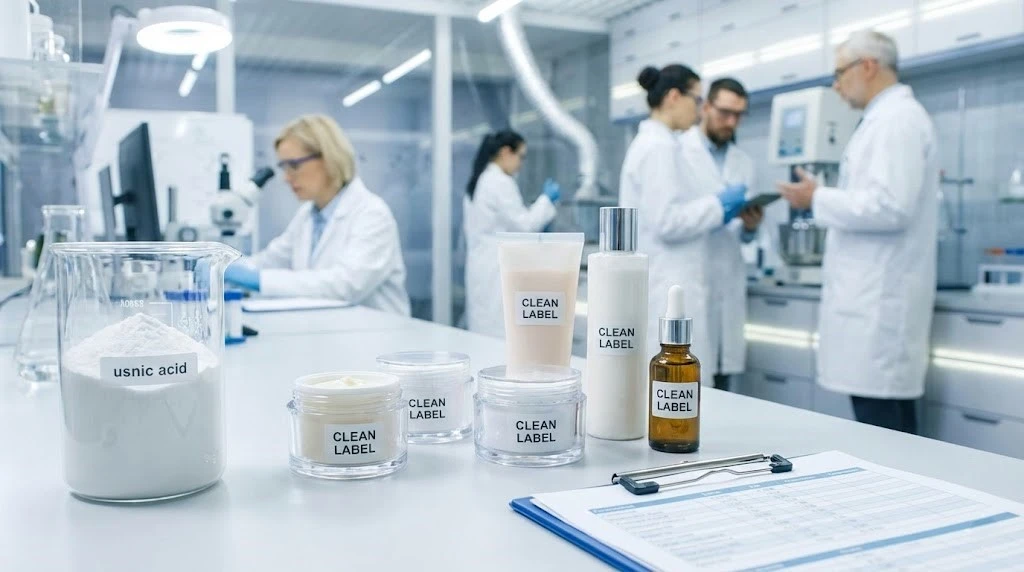
OEM manufacturers say that introducing new products that include usnic acid in high-end skincare lines for people with acne-prone and sensitive skin has been helpful. Natural antimicrobials are more popular with consumers than man-made ones, according to studies that look at consumer preferences. The market response shows that people want more personal care goods with clean labels that really work.
As brands try to stand out by using new natural products, the private label market keeps growing. When contract makers get help with technical issues and flexible formulation from seasoned suppliers who know a lot about plant-based extracts, it helps their business.
Conclusion
Usnic acid powder is a great natural antibacterial ingredient for modern personal care products. It works well against many types of microbes, is very safe, and has many other benefits too. As clean-label ingredients become more popular, this plant-based extract can help makers stand out from the competition. Choosing the right suppliers, using the right methods for making drugs, and knowing all of the rules in the places you want to sell in are all things that need to be done for it to work.
FAQs
What concentration of usnic acid powder is recommended for facial skincare products?
Facial skincare products typically utilize usnic acid concentrations between 0.1% to 1%, with sensitive skin formulations remaining at the lower end of this range. Clinical testing demonstrates optimal antimicrobial efficacy at 0.5% while maintaining excellent skin tolerance for daily use applications.
How does usnic acid stability compare to synthetic antimicrobials during storage?
Properly processed usnic acid powder exhibits excellent stability under controlled storage conditions, maintaining antimicrobial potency for 24-36 months when stored in cool, dry environments. Accelerated stability testing confirms superior performance compared to many natural alternatives while matching synthetic preservative longevity.
Can usnic acid be combined with other natural antimicrobials for enhanced efficacy?
Synergistic combinations with complementary natural antimicrobials such as essential oils and plant extracts can enhance overall antimicrobial spectrum and reduce required concentrations. Compatibility testing ensures stable formulations while maximizing antimicrobial protection and minimizing potential skin irritation.
Partner with Pioneer Biotech for Premium Usnic Acid Solutions
Pioneer Biotech stands as a trusted usnic acid powder manufacturer with over a decade of expertise in botanical extract production and development. Our state-of-the-art facility in Hanzhong city covers 7,000 square meters and maintains ISO9001, HALAL, KOSHER, and FDA certifications, ensuring superior quality control and regulatory compliance for global markets.
Our comprehensive product portfolio includes standardized usnic acid extracts with customizable specifications tailored to meet diverse formulation requirements. We provide complete technical support including stability testing, formulation guidance, and regulatory documentation to streamline your product development process. Our commitment to sustainable sourcing and exceptional customer service makes us the ideal partner for procurement managers seeking reliable supply partnerships.
Experience the Pioneer Biotech advantage through our sample evaluation program and discover how our premium usnic acid powder for sale can enhance your personal care formulations. Our technical team offers personalized consultation services to optimize your formulation strategies and achieve market success. Contact us at sales@pioneerbiotech.com to discuss your specific requirements and explore partnership opportunities.
References
Ingolfsdottir, K. (2002). Usnic acid: a valuable antimicrobial agent from lichens. Phytomedicine, 9(7), 654-660.
Cocchietto, M., Skert, N., Nimis, P. L., & Sava, G. (2002). A review on usnic acid, an interesting natural compound. Naturwissenschaften, 89(4), 137-146.
Lauterwein, M., Oethinger, M., Belsner, K., Peters, T., & Marre, R. (1995). In vitro activities of the lichen secondary metabolites vulpinic acid, (+)-usnic acid, and (-)-usnic acid against aerobic and anaerobic microorganisms. Antimicrobial Agents and Chemotherapy, 39(11), 2541-2543.
Guo, L., Shi, Q., Fang, J. L., Mei, N., Ali, A. A., Lewis, S. M., ... & Chen, T. (2008). Review of usnic acid and Usnea barbata toxicity. Journal of Environmental Science and Health Part C, 26(4), 317-338.
Ranković, B., Mišić, M., & Sukdolak, S. (2008). The antimicrobial activity of substances derived from the lichens Physcia aipolia, Umbilicaria polyphylla, Parmelia caperata and Hypogymnia physodes. World Journal of Microbiology and Biotechnology, 24(7), 1239-1242.
Behera, B. C., Verma, N., Sonone, A., & Makhija, U. (2006). Antioxidant and antibacterial activities of lichen Usnea ghattensis in vitro. Biotechnology Letters, 28(14), 1079-1085.