

How Is Heme Iron Polypeptide Powder Made?
Highly controlled bioprocessing, starting with food-grade animal blood, often pig or bovine haemoglobin, leads to the production of heme iron polypeptide powder. The haemoglobin is enzymatically hydrolysed . Specific proteases will cut the protein chains into shorter polypeptide fragments, but the iron - porphyrin ring structure will remain intact. The hydrolysate obtained was subjected to a multi-stage membrane filtration with the aim of removing contaminants and concentrating the active fraction. The liquid concentration is then converted to a stable, free-flowing powder with well-defined test criteria by a final process of spray drying or freeze drying. Each step is carried out under GMP-compliant conditions to assure batch-to-batch uniformity.
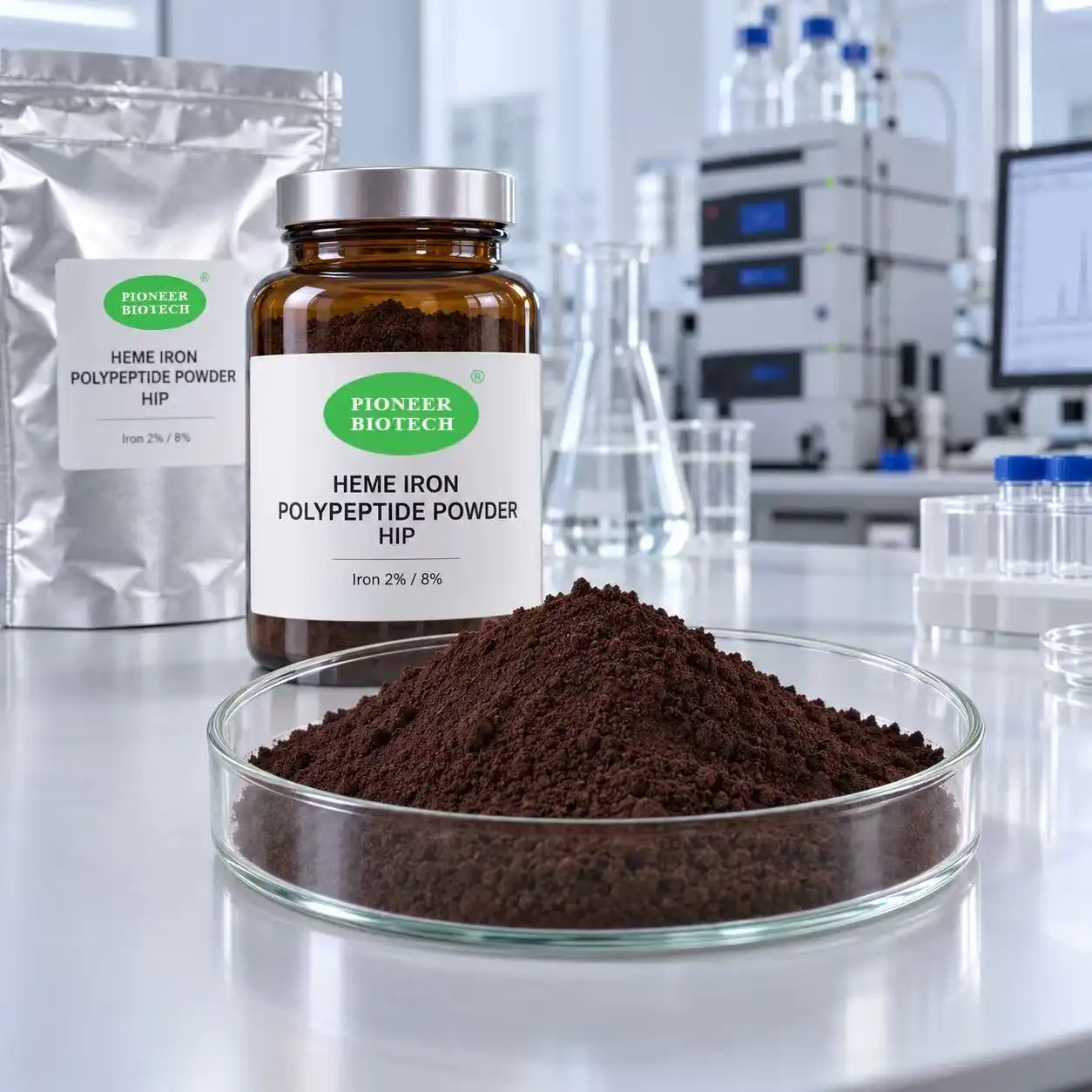
What Exactly Is Heme Iron Polypeptide Powder?
Before we move into the manufacturing process, it’s useful to grasp what this element is and why it’s relevant to your formulation strategy.
The Chemistry Behind the Ingredient
Heme iron polypeptide powder is not simply crushed up beef. It is a simple compound of an iron atom in the center of a porphyrin ring. The ring remains connected to short-chain peptides that are produced as haemoglobin breaks down. This structure is recognised by the gut Heme Carrier Protein 1 (HCP1) transporter. This suggests that absorption can occur in the absence of the pathway of divalent metal transporter 1 (DMT1), used by inorganic iron salts such as ferrous sulphate.
How It Differs from Non-Heme Iron
Non-heme iron is found in plants and most manufactured iron products. Dietary inhibitors like phytates, tannins and calcium can significantly mess up the absorption of this type of iron. When people eat real food, the absorption of ferrous sulphate might be as low as 2–5%. Heme-bound iron is taken up to the extent of about 15-35%, and this is not significantly affected by the concomitant intake of food. This solubility edge is what makes it attractive in nutraceuticals and OTC medicines and functional food systems.
Safety Profile and Sensitive Populations
Regulatory experts and procurement teams should be aware that heme iron polypeptide powder is not suitable for people who have iron overload disorders like hemochromatosis or hemosiderosis, or for people who are known to be allergic to products made from meat. The chance of an overdose is a real safety concern, especially for children. Clinical evidence supports its tolerability for use as a prenatal supplement, but sourcing documentation and safety dossiers are still things that responsible formulators have to do.
Traditional vs. Modern Production Methods
The way this item is made has changed a lot in the last twenty years. Knowing how things have changed helps procurement managers make more accurate assessments of suppliers' abilities.
Acid hydrolysis and liquid precipitation were used in the first extraction methods. These methods broke down a big part of the porphyrin ring, made it harder for the iron to stay in place, and left behind chemical leftovers that needed extra steps to be cleaned up. Yield rates were all over the place, and the powders that were made had different colors, smells, and assay values all the time. In controlled markets, these are problems that automatically rule out a seller.
The thinking behind modern output is very different. Here are the main steps that make up a manufacturing process for pharmaceuticals:
- Controlled hemoglobin sourcing: Raw materials come from slaughterhouses that have been inspected and have paperwork that can be used to track them. To separate the hemoglobin-rich fraction from the plasma proteins, blood is collected in a clean environment, treated to stop it from clotting, and centrifuged.
- Enzymatic hydrolysis: Food-grade proteases, like alkaline protease or papain, break down hemoglobin at the right temperature and pH level (usually 45–55°C, pH 7.5–8.5) to make protein pieces with a molecular weight of 1–3 kDa. This molecular weight window is linked to the most efficient movement in the intestines.
- Membrane ultrafiltration: The hydrolysate goes through ultrafiltration membranes that have set molecular weight limits. This step gets rid of proteins that haven't been digested, enzymes that are still present, and large groups of molecules, focusing the active heme-peptide complex very precisely.
- Spray drying or freeze-drying: For spray drying, the concentrated liquid is turned into powder at temperatures between 160°C and 180°C. For heat-sensitive forms, sublimation drying is used. Spray drying is more common in business settings, while freeze-drying is used when keeping the integrity of the lipid bilayer is important, like in liposomal heme iron formats.
Because of these improvements, it is now possible to get liposomal versions with encapsulation rates above 90%, moisture contents below 5%, and particle sizes ranging from 100 to 250 nanometers for improved delivery systems.
Comparing Production Variants and Iron Supplement Alternatives
Heme iron polypeptide products are not all made the same. Comparing them to other iron sources helps people who make goods make better decisions about how to formulate them.
Because the porphyrin ring structure is very similar to what the human intestine has evolved to take, natural versions made from animal hemoglobin are more bioavailable than synthetic analogs. Porcine hemoglobin is especially liked because the shape of its heme binds strongly to human HCP1 carriers.
Compared to ferrous sulfate and iron bisglycinate, heme-derived polypeptide powder is better at being absorbed by the GI tract. Because a lot of the dose doesn't get absorbed and ends up in the colon, ferrous sulfate often leads to constipation, black stools, and irritation of the mucosa. That profile is better with iron bisglycinate, but it still needs DMT1 pathways to work. The heme iron polypeptide powder method gets around all of these problems. If a supplier has liposomal heme iron forms, they can further reduce GI side effects by enclosing the heme complex in a phospholipid film that keeps the molecule safe in the stomach.
Procurement Considerations Worth Knowing
There are more than just price factors that need to be looked at when looking for a reliable heme iron polypeptide powder source.
Certification stack is very important. To get into the U.S. market, you must meet the minimum requirements for ISO 9001, GMP compliance, HALAL, KOSHER, and FDA registration. Certificates of analysis (COA) that include iron content test, heavy metal screening, microbial limits, and moisture data should be used to prove that the uniformity between batches is real. Before you sign a supply deal, make sure you have verified analytical methods and stability data.
Simple, non-negotiable storage conditions are needed: cool, dry places out of direct light that are usually below 25°C and have a relative humidity below 60%. Lead times depend on how many orders are placed and when they are made. Minimum order amounts (MOQs) that are easy to change and technical help that is quick to respond are signs of a mature supplier relationship.
Formulation Integration Guidance
In clinical nutritional uses, the usual daily dose range is between 10 and 30 mg of elemental iron. For functional food fortification, lower addition rates of 5–15 mg per dose are typical. This is especially true for health bars and fortified drinks that want to keep the same taste.
Heme iron polypeptide powder can be mixed with most of the ingredients that are used to make capsules and tablets. Hard capsules work well with it, and powder sachets work well with it too. Stabilizing the pH between 4.5 and 6.5 helps keep the structure of liquid mixtures intact. Do not process with high amounts of ascorbic acid at high temperatures, as oxidative interactions may change the porphyrin ring over a longer period of time.
Conclusion
Purchasing teams can really get ahead of the competition if they know how heme iron polypeptide powder is made. Each step in the production process, from enzyme hydrolysis and membrane filtration to spray drying and quality certification, has a direct effect on how bioavailable, safe, and regulatory-friendly the final ingredient is. Whether you're making a clinical nutraceutical, a prenatal supplement, or a functional food with added nutrients, picking a maker with clear sources, strong GMP infrastructure, and approved analysis methods will protect your formulation investment from the start.
FAQ
1.Is heme iron polypeptide powder suitable for vegan products?
Not at all. Because this ingredient comes from animal blood, it can't be used in products that say they are vegan or vegetarian. Formulators who want to reach those markets should look into alternatives that don't contain heme.
2.How does it compare to iron in standard multivitamins?
Most multivitamins contain ferrous sulfate or ferric oxide, which are not as bioavailable and have more GI side effects. Heme-derived polypeptide iron is a special positioning ingredient because it absorbs better and causes less stomach pain.
3.What safety documentation should I request from a supplier?
Ask for the analysis certificate, reports on heavy metals tested, microbial data, allergen statements, and any toxicological or clinical safety details that are available. For markets that are regulated, you need GMP compliance certificates and an FDA facility registration.
4.Can it be used in liposomal formats?
Yes. The encapsulation efficiency of liposomal heme iron powder is above 90%, and it reduces GI side effects even more by skipping direct mucosal contact. This is because it combines the absorption benefits of heme iron with phospholipid encapsulation.
Source Heme Iron Polypeptide Powder from Pioneer Biotech
Pioneer Biotech has been making high-quality plant and bioactive products since 2012. They do this from a GMP- and ISO-certified center in Hanzhong, China, which is also certified by HALAL, KOSHER, and the FDA. Our heme iron polypeptide powder source offers low minimum order quantities, thorough batch paperwork, and committed technical support for formulators and procurement teams in the United States. You can email sales@pioneerbiotech.com or go to pioneerbioinc.com to talk about sample orders, specs, and supply terms.
References
1. Carpenter, C. E., & Mahoney, A. W. (1992). Contributions of heme and nonheme iron to human nutrition. Critical Reviews in Food Science and Nutrition.
2. Hallberg, L., & Hulthén, L. (2000). Prediction of dietary iron absorption: an algorithm for calculating absorption and bioavailability of dietary iron. The American Journal of Clinical Nutrition.
3. Domellöf, M. (2007). Iron requirements, absorption and metabolism in infancy and childhood. Current Opinion in Clinical Nutrition & Metabolic Care.
4. Lynch, S. R. (2000). The effect of calcium on iron absorption. Nutrition Research Reviews.
5. Miret, S., Simpson, R. J., & McKie, A. T. (2003). Physiology and molecular biology of dietary iron absorption. Annual Review of Nutrition.
6. Hurrell, R., & Egli, I. (2010). Iron bioavailability and dietary reference values. The American Journal of Clinical Nutrition.