

How does Yeast Extract Powder work in fermentation processes?
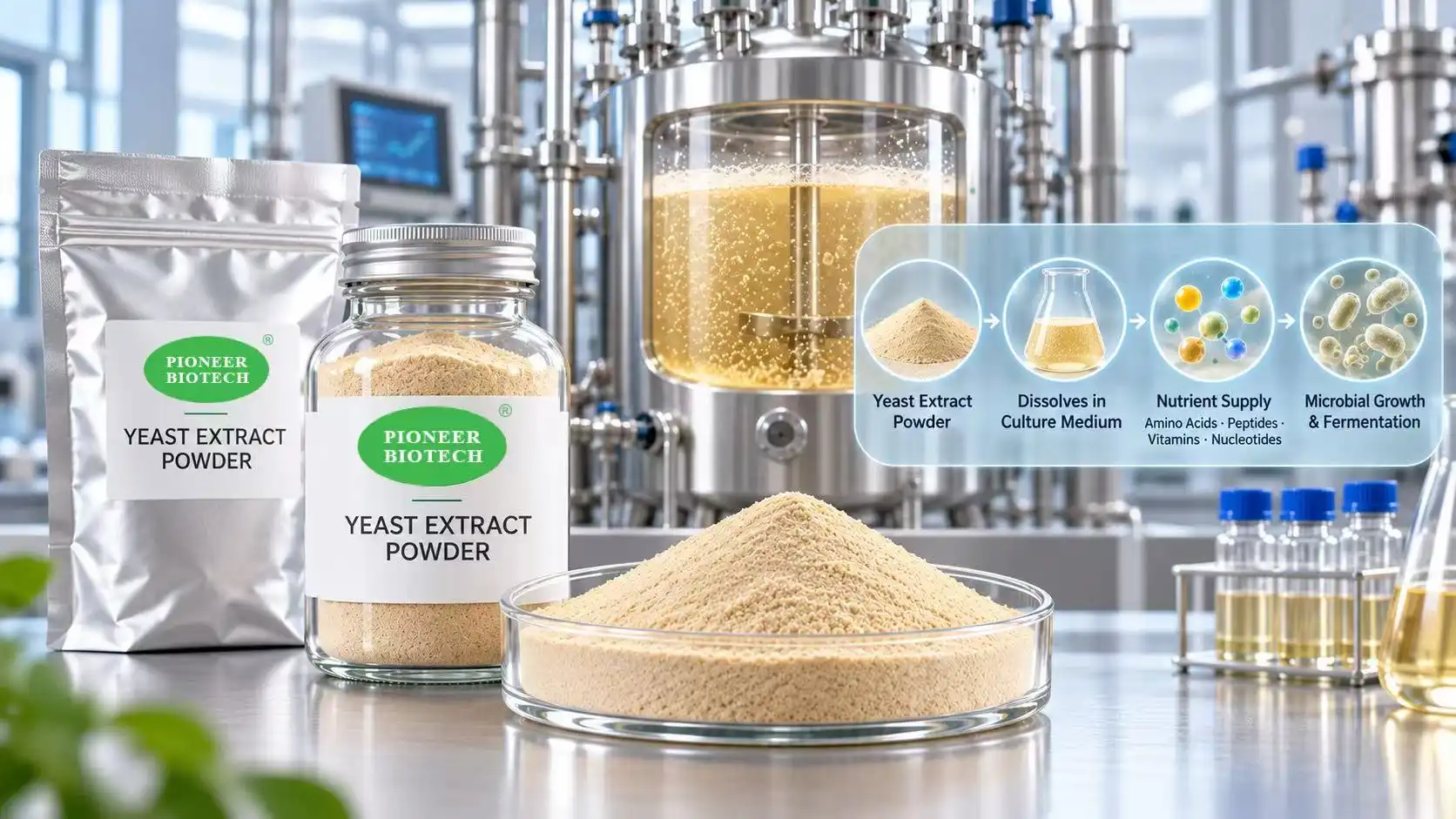
Yeast extract powder plays a central role in industrial fermentation by supplying microbial cultures with a dense, bioavailable spectrum of nitrogen, amino acids, nucleotides, and B-vitamins derived from autolyzed Saccharomyces cerevisiae cells. When introduced into a fermentation medium, it accelerates cell proliferation, shortens lag phase duration, and stabilizes metabolic output across batch cycles. Unlike synthetic nitrogen sources, this natural substrate delivers IMP and GMP nucleotides alongside free amino acids, creating conditions that simultaneously support robust microbial growth and contribute umami-forward flavor precursors — a dual function that synthetic additives simply cannot replicate.
Understanding Yeast Extract Powder in Fermentation
What It Is and How It Is Made
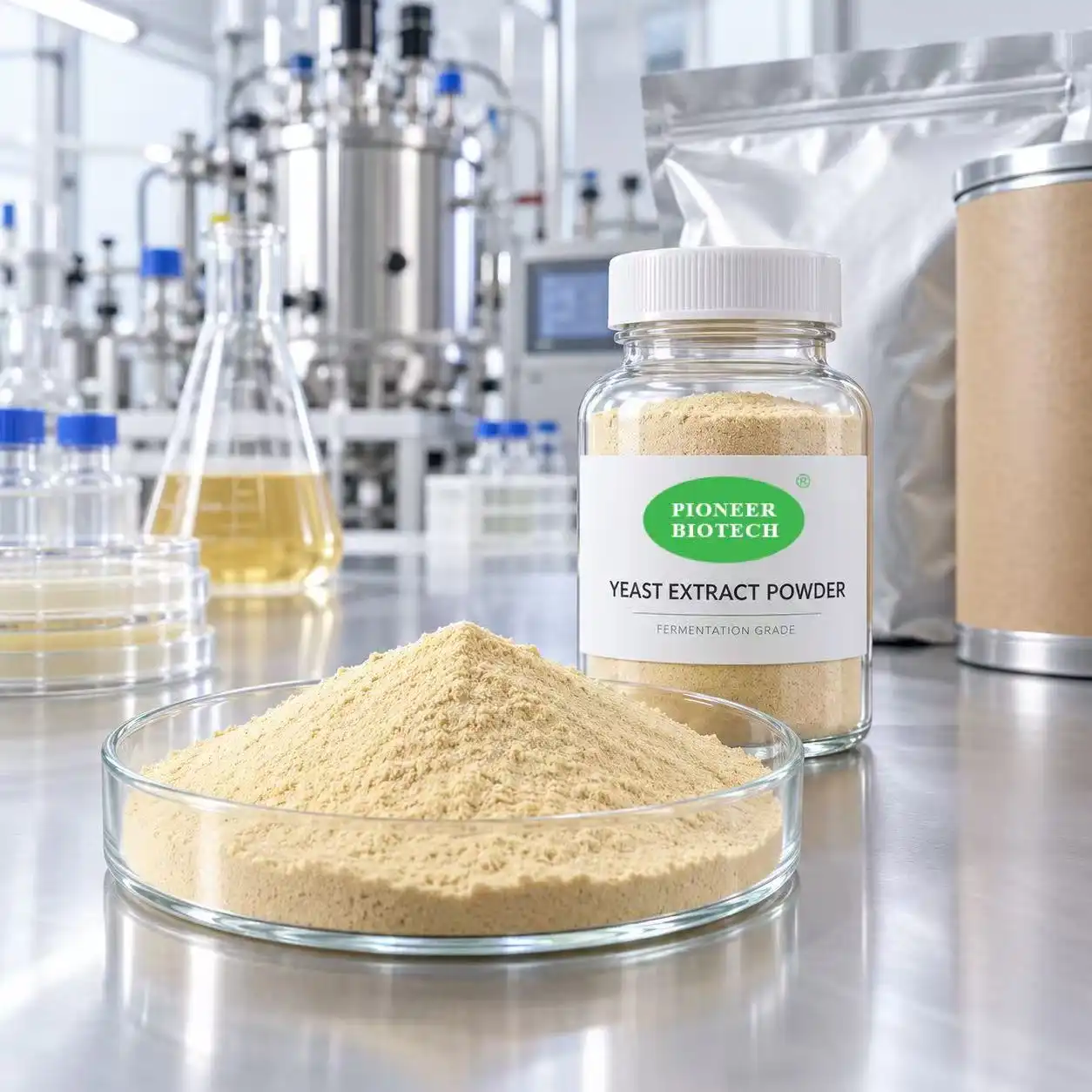
When yeast cell walls are broken by autolysis or controlled chemical breakdown, peptides, free amino nitrogen (FAN), nucleotides, vitamins, and trace minerals that are inside the cells become soluble. The liquid is then made clearer, stronger, and sprayed dry to make a fine powder that can absorb water. Pioneer Biotech's product has a pH level that stays between 5.5 and 6.5 and has at least 60% protein and 15% amino acids. This means that it dissolves right away and can be used by a wide range of fermentation organisms.
How It Compares to MSG and Bouillon
Bouillon powder and MSG add flavor on the surface, but they don't provide any nutrients for microbes to use. MSG is just monosodium glutamate concentrated, while autolyzed yeast extract powder has a lot more than that. It has peptides, IMP/GMP synergists, and vitamins. Yeast-derived extracts are classified as food ingredients by the EU and FDA, not additives. This directly supports clean-label claims and "zero added MSG" messaging, which is important to makers of modern seasonings and ready-meals.
Challenges in Traditional Fermentation and How This Ingredient Addresses Them
The Core Problem with Conventional Media
Traditional fermentation media, like those made from cow peptone or tryptone, cause differences between batches, raise questions about the ethics of purchasing them, and lead to inconsistent amounts of free amino nitrogen. Unpredictable lag phases and lower-than-ideal yields are caused by these changes. In food-grade fermentation for condiment bases, sauce concentrates, or plant-based broth formulations, even small differences in the number of microbes can cause flavor complaints from customers.
Yeast-derived nitrogen sources solve this problem by providing a plant-based, non-GMO material that is easier to control in terms of its makeup. Applied Microbiology and Biotechnology released research that adding yeast extract powder to bacterial fermentation media improves the number of viable cells by 20–35% compared to casein-based equivalents while lowering the fermentation cycle time significantly.
Compatibility Across Microbial Strains
This hydrolyzed yeast extract material is very useful because it can be used in many ways. It allows for high-density culture of lactic acid bacteria, which are needed to make probiotics and fermented seasonings, as well as Bacillus species that are used to make nattokinase and enzymes and recombinant expression systems in biopharmaceutical settings. Because Pioneer Biotech's product has a low ash content and a tightly controlled pH, it can be used in both aerobic and anaerobic fermentation processes without needing extra pH correction.
Comparative Analysis: Yeast Extract Powder vs. Other Fermentation Enhancers
A lot of the time, procurement engineers compare different fermentation media. To make good decisions about where to get yeast extract powder, you need to know where it stands in comparison to other options.
Here is a structured comparison across the most relevant parameters:
- Autolyzed yeast extract vs. enzymatic hydrolysate: Autolysis produces a wider range of peptides that are good for developing complex flavors, while enzymatic hydrolysis produces higher levels of FAN that are better for pharmaceutical-grade fermentation media. Pioneer Biotech's process combines the two to make a substrate that can be used for both food and biotech purposes at the same time, without the need for two separate SKUs.
- Yeast flakes vs. yeast extract powder: Yeast flakes contain intact cell wall components such as beta-glucan and mannan, which makes them nutritionally dense but takes longer for the body to absorb. In fermentation processes that need to be finished quickly, the pre-hydrolyzed, liquid form works better as a nitrogen source.
- Bouillon powder: Basically, bouillon powder is a flavoring that people eat. Its high sodium content goes against the 25% sodium reduction goals that drive buying choices in the clean-label market right now. At usage rates of 0.2% to 1%, yeast extract powder achieves a similar level of umami while actively supporting claims of lowering salt, which is an advantage that bouillon cannot match.
These distinctions matter beyond technical performance. Non-GMO claims, allergen-free status, Kosher and Halal certification, and not having an E-number are all regulatory benefits that have real business value for food companies that want to export.
Procurement Insights for B2B Clients: Sourcing Quality Yeast Extract Powder
More than just unit price affects where to get industrial fermenting materials. When procurement directors and R&D engineers are looking for a supplier, these are the main things they should look at:
- Batch consistency: Ask for Certificate of Analysis data for at least six production lots that come right after each other. The FAN level, nucleotide content (I+G ratio), pH, moisture, and total plate count are some of the most important things to look at. Pioneer Biotech uses ISO9001-certified production methods to make sure that each batch of yeast extract powder is the same.
- Certification portfolio: At the very least, ISO9001, HALAL, KOSHER, non-GMO, and FDA registration are required for food manufacturers who want to sell their products abroad. Pioneer Biotech has all of these, plus an extra PCT patent that protects its main way of production.
- Packaging and storage integrity: For large sales, multi-wall kraft bags with plastic inner covers are needed. To keep hygroscopic caking from happening, which can mess up automated dosing systems, storage conditions should keep relative humidity below 60%.
- Audit and technical support readiness: Pioneer Biotech is ready for audits and technical support. The company takes plant audits and third-party laboratory testing, and it also offers CRO/CMO/CDMO collaboration services, which makes it stand out when it comes to getting a new substrate approved for GMP-regulated fermentation settings.
These criteria, when applied rigorously, substantially reduce the risk of flavor inconsistency complaints downstream and simplify annual framework contract negotiations.
Practical Applications and Optimization Strategies
Dosage and Integration in Food Fermentation
When fermenting sauces and condiments, the dose of hydrolyzed yeast extract powder is usually between 0.5% and 2.0% of the total medium weight. Higher-nucleotide grades are getting closer to being functionally equivalent to I+G seasoning mixes. Overdosing creates a noticeable "yeasty" background note—the point where the flavor starts to change is dependent on the formulation and can only be found by blind tasting a small amount of the mixture against a known standard.
Salt Reduction and Kokumi Enhancement
Yeast extract powder helps make kokumi in retort-stable soups and low-sodium broth mixes by adding consistency to the taste and flavor that makes up for the lower salt levels. Using an optimized yeast extract powder mix instead of 25–30% of sodium chloride in clinical sensory tests has been shown to keep customer acceptance scores the same without any sensory loss. Because of this, clean-label claims like "reduce salt 25%" are now common on most big private-label and named condiment lines in the US market.
Conclusion
Yeast extract powder is a key ingredient because it helps with clean labels, fermentation efficiency, and umami flavor making. It can supply free amino nitrogen, IMP/GMP nucleotides, and B-vitamins all at the same time, which makes it unique as both a fermentation medium and a natural flavor system. It's easy for procurement teams in the condiment, plant-based, or fermentation biotech sectors to make decisions based on batch consistency, certification depth, and the ability to audit the supplier. As of 2012, Pioneer Biotech has a history of meeting all of these standards.
FAQ
1. Is yeast extract powder vegan and allergen-free?
Because it only comes from Saccharomyces cerevisiae growing on sugar, it is naturally vegan and doesn't contain any of the major allergens that are banned by FDA and EU food law. Pioneer Biotech's production process does not use any processing aids that come from animals.
2. How does it differ from nutritional yeast in fermentation use?
Nutritional yeast is made up of whole cells that have been inactivated. It is mostly used to add taste and protein to whole foods. Yeast extract powder is the liquid part that is taken from inside the cell. It has a lot more free amino acids and nucleotides that make flavors work. The absorption is a lot higher in fermentation media.
3. What certifications should buyers verify before procurement?
The company must have at least ISO9001, FDA registration, HALAL, KOSHER, and an official Non-GMO statement. For fermentation in pharmaceutical settings, ask for proof that the sources of the enzymes are also non-GMO.
4. Can it support a "zero added MSG" label claim?
Yes. Both the FDA and the EU consider yeast extract powder to be a food ingredient, not an additive. This means that it does not need to be labeled with MSG and actively supports clean-label messages.
Partner with Pioneer Biotech — Trusted Yeast Extract Powder Supplier for Industrial Fermentation
Pioneer Biotech has been providing verified yeast extract powder to companies around the world that make food, drinks, and fermentation biotech since 2012. Their products are certified by ISO9001, FDA, HALAL, and KOSHER. Ready stock in warehouses abroad makes sure that delivery doesn't stop. B2B clients who meet certain requirements can get free samples, testing by a third party, and plant checks. To start the sample review process, email our expert team at sales@pioneerbiotech.com or go to pioneerbioinc.com.
References
1. Randez-Gil, F., Córcoles-Sáez, I., & Prieto, J. A. — Applied Microbiology and Biotechnology, 2013.
2. Stoppok, E., & Buchholz, K. — Bioresource Technology, 2010.
3. Ingledew, W. M. — The Alcohol Textbook, Nottingham University Press, 2009.
4. Hofvendahl, K., & Hahn-Hägerdal, B. — Enzyme and Microbial Technology, 2000.
5. Shu, C. H., & Lung, M. Y. — Process Biochemistry, 2004.
6. Food Chemicals Codex (FCC), 12th Edition — United States Pharmacopeia (USP), 2018.