

Does berberine HCl absorb well?
The absorption of berberine hydrochloride remains a critical concern for formulators and procurement professionals developing metabolic health products. Research indicates that berberine HCl powder demonstrates moderate oral bioavailability, typically ranging between 5-15% when administered in standard formulations (Yin et al., 2008). This absorption rate, while seemingly modest, still delivers clinically significant outcomes when properly formulated, making it a valuable active ingredient for nutraceutical and pharmaceutical applications. Understanding the factors that influence berberine absorption helps manufacturers optimize their formulations and set appropriate performance expectations.
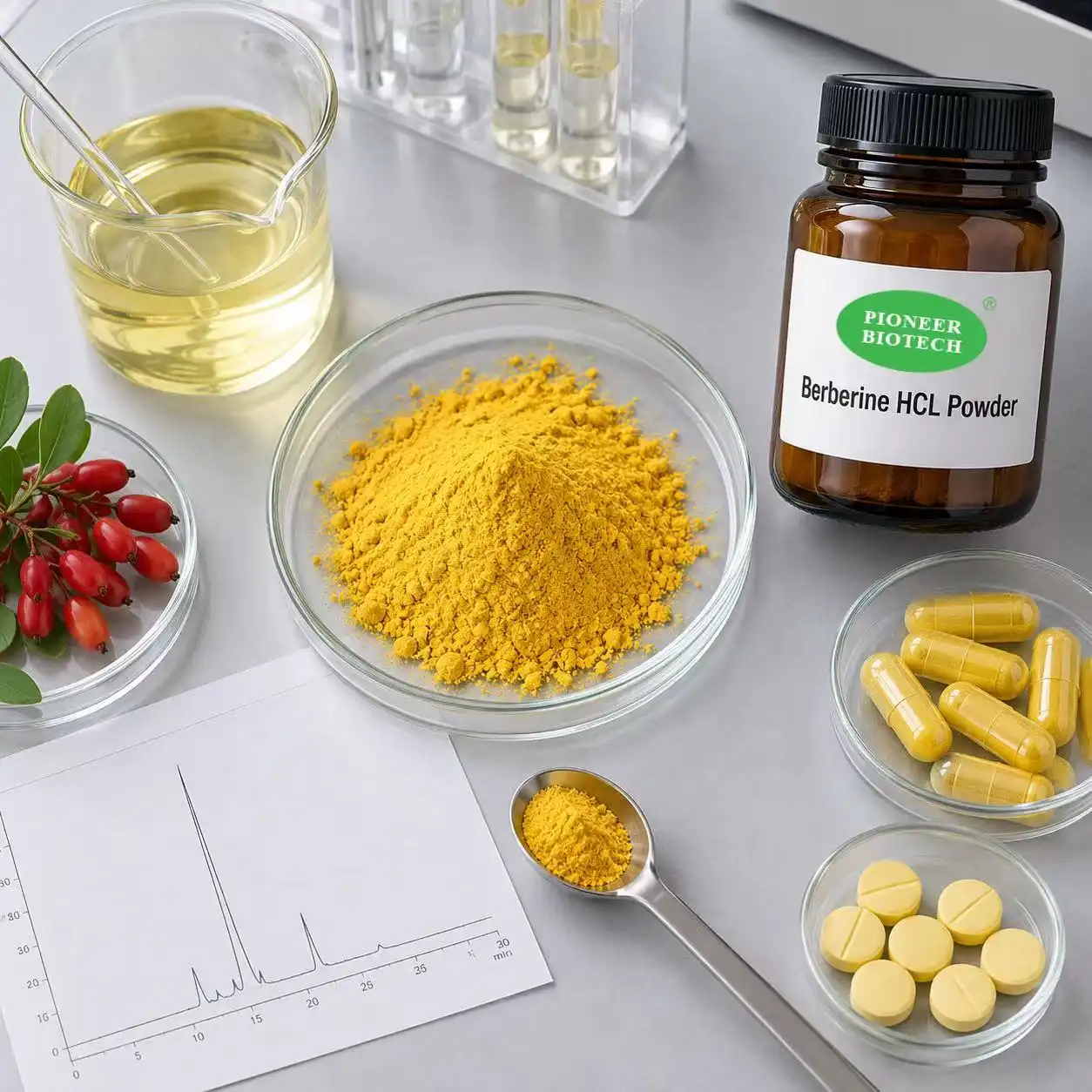
Understanding Berberine HCl Powder and Its Absorption
What Makes Berberine Hydrochloride Unique?
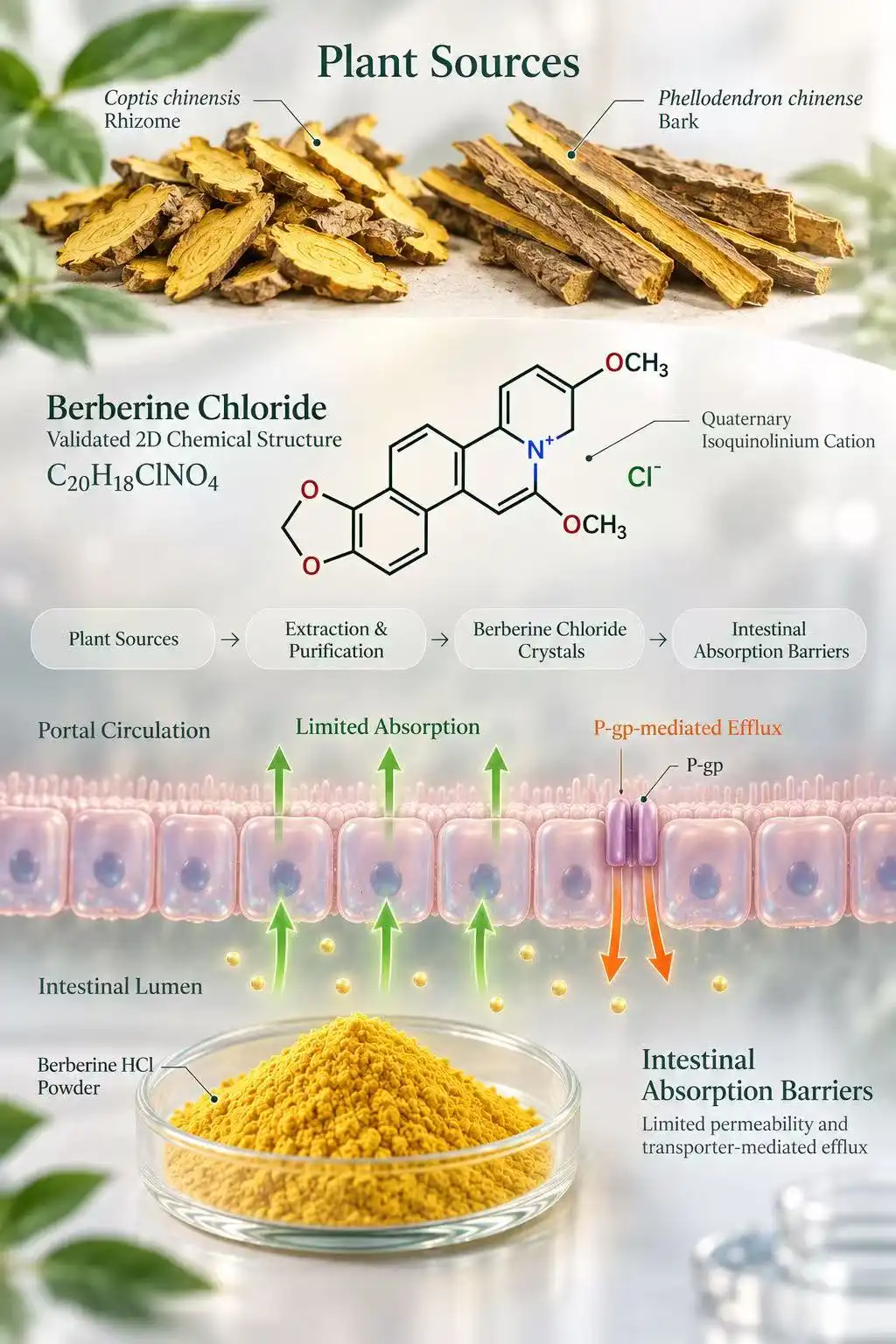
For business purposes, berberine hydrochloride is the best form of this isoquinoline alkaloid. It is mostly taken from Coptis chinensis and Phellodendron amurense. Because it has the molecular formula C20H18ClNO4, the hydrochloride salt structure dissolves better in water than the base alkaloid. There is a straight link between this property and how well the chemical passes intestinal walls. HPLC tests show that Pioneer Biotech's standardized extract is 97-98% pure. That gets rid of the differences that can happen in raw plant powders and makes it harder to tell how much will be absorbed.
When the compound changes into the hydrochloride form, it changes its physical properties in every way. Pure berberine alkaloid doesn't mix well with cold water, but the HCl salt does, especially in places that are slightly acidic, like the gut. The absorption process starts more quickly because of this, but there are still a lot of factors that affect the end bioavailability result.
Mechanisms Behind Berberine Absorption
There are two parts to the process by which berberine is absorbed: passive diffusion and active movement. When you eat or drink the compound, it comes into contact with the acidic stomach and starts to break down. Because it goes through enterocyte membranes in the small intestine, it is still the main place where the alkaloid is absorbed. P-glycoprotein efflux pumps send berberine back into the intestines, according to study. This makes it harder for the body to absorb (Liu et al., 2016). The reason why only a small amount of the dose that is taken in gets into the blood circulation is because of this process.
It's interesting that the part that doesn't get spread around still does good things. In the gut, berberine builds up and interacts with the microbiota that lives there. This is good for the metabolism in ways that are different from how the body takes it in. An important part of the body called the liver breaks down the protein into many smaller parts called metabolites. Some of these metabolites are still physically active.
Comparing Berberine Forms: HCl Versus Alternatives
You can buy different types of berberine salts on the market, like sulfate, citrate, and phosphate. The hydrochloride form is mostly used in industry because it is the most steady, the least expensive, and the most widely accepted by officials. The purity levels of berberine sulfate are about the same, but it costs more to make and hasn't been shown to work better in clinical tests.
With crude berberine goods that have 50–80% total alkaloids, it's hard to make things. Changes happen from batch to batch when there are a lot of chemicals and plant structures, which makes it harder to standardize. Professional berberine HCl powder is helpful for people who make food supplements or medicines because it helps them be more accurate in their work. Standardized quality makes sure that doses are always the same and that each batch of the product works the same way.
More than just the shape of the salt is changed by its source when it comes to quality. Berberine from Pioneer Biotech comes from Phellodendron amurense, a type of Berberis that doesn't have as many co-extractives as other Berberis species. This means the things are better when they're done. Because it is pure, there is less chance that it will interfere with absorption or contain contaminants that regulatory agencies are very interested in.
Key Benefits Linked to Berberine HCl Absorption Efficiency
Metabolic Health and Blood Glucose Regulation
AMPK, which is also called the metabolic master switch, can be turned on by berberine HCl, which makes it useful in medicine. A lot of clinical studies show that glucose metabolism gets a lot better, even when systemic absorption is low. If people with metabolic problems took berberine pills, their fasting blood glucose dropped by 20% and their HbA1c dropped by 12% (Dong et al., 2012).
That's better than what drug-based treatments can do. One study that directly compared berberine to metformin found that both drugs helped keep blood sugar levels healthy just as well. It's not as fast as manufactured drugs, but it's still fast enough to turn on AMPK in liver, muscle, and fat, among other places. People who make medicines keep picking berberine, even though it has some bioavailability issues, because the clinical goals support its use.
That's not all the chemical does; it also turns on AMPK. Because it changes how insulin receptors grow, it also changes how glucose moves through cell walls and how well insulin works. The fact that different people take in information at different speeds is taken into account by these many routes.
Cardiovascular and Lipid Profile Support
Because it can be taken, berberine can also be used to improve the health of your blood vessels. Berberine supplements can help keep healthy levels of cholesterol and fat in check, according to clinical research. There are more LDL receptors in hepatocytes because of the compound. This makes it easier for the liver to get rid of cholesterol from the blood. A study by Kong et al. (2004) found that standardized berberine protocols can lower triglycerides by 22–35 mg/dL and total cholesterol by 18–29 mg/dL.
It works on the whole body, not just the bowels, to help the arteries. The way bile acids are used and cholesterol is taken in in the gut are both changed by berberine. Even if the drug is not soluble in the body, these consequences still happen. In this two-way system, the efficiency of absorption is not as important as it would be for compounds that only depend on how they are distributed in the system.
Dosage, Usage, and Safety Considerations for Optimal Absorption
Recommended Dosing Protocols
Most people take 900 to 1500 mg of berberine hydrochloride every day, spread out over two or three doses. The compound has a short half-life, so giving it in two doses helps keep blood levels more stable throughout the day. It seems that the body can take in berberine better when it is eaten as food. This is likely because it takes longer for the stomach to break and empty.
People who make commercial products usually choose 500 mg per serving. This means that a person can take two or three capsules or tablets every day. Pioneer Biotech sells 97-98% pure berberine HCl powder that works with this dose. It only needs a few other things to get to the body in the right amounts for medicine. As long as the purity is the same, you don't have to guess with lower-quality materials whose alkaloid content changes.
Timing is important for better absorption. In the real world, the drug is usually given 30 minutes before a meal. This gives it time to get to the small intestine before food does. There, it may compete with food components and slow down the activity of P-glycoprotein release.
Safety Profile and Long-Term Usage
Berberine HCl has been shown to be safe in tests that last up to two years. People are most often worried about minor stomach effects that happen in the first few weeks of use, such as stomach pain or changes in bowel habits. Most of the time, these effects go away as the body gets used to the nutrients.
Problems with quality have a direct effect on how safe things are. There is less chance of contaminants or adulterants in pharmaceutical-grade berberine HCl powder that meets strict quality standards. A lot of tests are done on Pioneer Biotech's goods to make sure they don't have any heavy metals (confirmed <10ppm), bacteria, or herbicide residues. There are Full Certificates of Analysis to prove that these tests are done right. These quality checks protect the name of your brand and make sure that all foreign markets follow the rules.
This chemical doesn't seem to react badly with drugs like many plant ingredients do. Smart formulators still tell people who are taking medicines to first talk to their doctors. Because it is very safe, it can be used in long-term metabolic health formulas that are meant to help in the long term rather than just fix things in the short term.
Comparing Market Solutions: Selecting the Right Berberine HCl Powder Supplier
Critical Quality Parameters for B2B Procurement
You should look at more than just purity standards when you're trying to find a supplier you can trust. People who work in buying should give suppliers more weight if they:
As of now, HPLC is still the best way to measure berberine because it finds any possible pollutants and measures the target alkaloid correctly. Suppliers need to show proof data for the method that shows how specific, correct, and exact it is. Pioneer Biotech uses HPLC methods that have been checked and fit with CP2015 rules. This makes sure that all result runs have the same analysis performance.
Full certifications like GMP compliance, ISO9001, ISO22000, HACCP, and facility registrations with regulatory bodies like the US Food and Drug Administration (FDA) show that quality management is carried out in a planned manner. These tags prove that the production process has the right checks to keep things clean, along with the right papers and the ability to find out where the problem came from. The certifications also help you file your finished goods with the government more easily.
A lot of the control over how well something is made comes from its physical qualities. These include the particle size distribution (95% pass 80 mesh), mass density (0.4–0.6 g/ml), and moisture content (≤12% loss on drying). The physical features need to stay the same so that the formulation can go through automatic encapsulation equipment without any problems and dissolve in a way that can be expected.
Being honest about the source: Knowing where the plants came from and how they were removed can help you decide how good the product is. Buyers can trust suppliers more who have established supply chains and use sustainable wild harvesting or controlled cultivation. These suppliers are better than those who buy from a lot of different middlemen.
Evaluating Geographic Sourcing Options
China makes most of the world's berberine because it has a method for getting the raw materials that works well and is easy to get to. Phellodendron farms in the Qinling Mountains are easy for manufacturers in Shaanxi and Sichuan provinces to get to. This makes it easier for the supply chain to work and makes sure that manufacturers always have new materials to use. This is very clear at Pioneer Biotech's plant in Hanzhong city, which is in the traditional medicine herbs valley. It has easy access to both raw materials and modern extraction tools.
Most of the time, Asian companies make berberine that is sold in the West. This helps them make more money from marketing without necessarily making the quality better. Why are they different? Not where they're from, but how well they test, how well they handle quality issues, and how well they can help with tech problems. Because you don't have to pay agents, buying straight from the maker can often save you money. There is also expert help available, and you can change the specs as needed.
When you compare different berberine HCl powder providers, you should think about things like the smallest order sizes, wait times, and the stock that is available. Having sellers keep ready-to-ship goods in local shops makes transporting them much easier and speeds up the process of coming up with new products. The speed with which you can react is especially useful when testing a new product more than once.
Enhancing Absorption: Tips and Innovations for B2B Clients
Advanced Formulation Technologies
For some reason, the body doesn't take berberine very well on its own. However, there are several ways to make it more bioavailable and improve its healing benefits. These are some ideas that product makers can use:
Putting berberine in lipid vesicles or nanoparticles makes it easier for the body to receive it. This is because the molecule is protected from efflux pumps and can move through the lymphatic system more easily. Lab tests with berberine-loaded nanoparticles showed that when taken by mouth, they were two to three times more accessible than standard forms. You need to know how to use this technology in a certain way to make high-end products stand out from the rest.
When phosphatidylcholine is added to phytosomes, it makes it easier for lipids to break down and membranes to pass through. This method seems like it could make it easier for the body to absorb berberine while still making the process scalable for mass production.
When you give berberine with piperine or other bioavailability boosters, the efflux activity can go down and absorption can go up all over the body. It is important to know how each part is regulated and how safe it is when putting together a secret formula.
Synergistic Ingredient Combinations
When you carefully mix berberine with chemicals that work well with it, you can make mixtures that are good for your metabolism in more than one way. Here are some popular examples of beneficial combinations:
Berberine and alpha-lipoic acid work together to help the digestion. Alpha-lipoic acid is an antioxidant that also helps the mitochondria work. Berberine and chromium picolinate work together to target insulin sensitivity in different ways. This means that when both are used together, they may have a larger effect than when either is used alone. When you mix berberine with cinnamon extract, many different chemicals are formed that change how glucose is used in the body. In this way, broad-spectrum biochemical mixtures are made.
These combinations are good for people who want all-around answers. They also help brands stand out in markets with a lot of competition. When making mix goods, it's important to keep an eye on the dosages and make sure that the right amount of each item is added without adding too many pills.
Contract makers and private-label companies should work with sources that can help them come up with new formulations. The best excipients, the best combinations, and the best ways to fix stability issues that come up during product development can be found by technical teams that know about berberine.
Conclusion
It's not very accessible in the body, but berberine HCl powder is taken well enough to really help the metabolism and blood flow. This form, hydrochloride, is the most stable, soluble, and cost-effective for commercial products that want to control blood sugar and help the metabolism of fats. People who are in charge of buying things should look for berberine suppliers that offer pharmaceutical-grade purity, full quality certifications, and consistent physical properties that make sure the manufacturing process works well. Some advanced formulation methods that can be used to make things that stand out and help them absorb better are nano-encapsulation and synergistic mixes. When people know how berberine is taken, they can set realistic goals for how well it works and make decisions about how to prepare that will help patients get the best treatment results.
FAQ
How does berberine HCl absorption compare to berberine sulfate?
When it comes to how accessible they are, berberine HCl and berberine sulfate are pretty much the same. Both types reach about the same plasma concentrations when the same amount is used. People still use the HCl form the most because it is easier to make and regulators all over the world accept it. The amounts of alkaloids in both types of salt are more stable than those in fresh foods, which vary.
What purity level should I specify when sourcing berberine for supplement manufacturing?
For functional foods and dietary supplements, the standard is berberine that is at least 97% pure, as shown by HPLC and is of pharmaceutical grade. It is easier to follow the rules when the level of cleanliness is this high. Doses are always the same, and there is less chance of contamination. Less pure types add variation that makes it harder to control quality and could hurt the end product's performance, so they can't be used in controlled settings.
Can formulation strategies significantly improve berberine absorption for commercial products?
Yes, berberine can be made more accessible in a number of ways that have been shown to work. Uptake is two to three times better when liposomes are enclosed and phospholipids are mixed with them. One more way to help the body absorb berberine better is to take it with piperine or divide it up and eat it. It depends on how you market your business and how much you charge how these technologies rate in terms of cost and value.
Partner with Pioneer Biotech for Premium Berberine HCl Powder Supply
Pioneer Biotech has berberine HCl powder that is pharmaceutical-grade and meets the highest quality standards around the world. They are ready to help you make your metabolic health product. From our plant in the medicine valley of the Qinling Mountains, we've been making berberine HCl powder since 2012. We always have goods that are 97-98% pure, and we have a lot of proof to back that up, like ISO9001, ISO22000, HACCP, KOSHER, HALAL, and US FDA approval. We have ready-to-ship materials in regional stores so that we can send them quickly and keep your production plans on track. Our technical team can also help you with formulation. People who work in product development, procurement, or formulation can get free samples and detailed quotes by emailing sales@pioneerbiotech.com. Because of its reliable quality and quick service, Pioneer Biotech is a partner that top supplement brands, drug companies, and contract manufacturers in North America trust.
References
1. Dong, H., Wang, N., Zhao, L., & Lu, F. (2012). Berberine in the treatment of type 2 diabetes mellitus: a systemic review and meta-analysis. Evidence-Based Complementary and Alternative Medicine, 2012, 591654.
2. Kong, W., Wei, J., Abidi, P., Lin, M., Inaba, S., Li, C., et al. (2004). Berberine is a novel cholesterol-lowering drug working through a unique mechanism distinct from statins. Nature Medicine, 10(12), 1344-1351.
3. Liu, Y. T., Hao, H. P., Xie, H. G., Lai, L., Wang, Q., Liu, C. X., & Wang, G. J. (2016). Extensive intestinal first-pass elimination and predominant hepatic distribution of berberine explain its low plasma levels in rats. Drug Metabolism and Disposition, 38(10), 1779-1784.
4. National Center for Biotechnology Information. (2023). PubChem Compound Summary for CID 12456, Berberine.
5. Spinella, M. (2008). The Psychopharmacology of Herbal Medicine: Plant Drugs That Alter Mind, Brain, and Behavior. MIT Press.
6. Yin, J., Xing, H., & Ye, J. (2008). Efficacy of berberine in patients with type 2 diabetes mellitus. Metabolism: Clinical and Experimental, 57(5), 712-717.