
Ashwagandha Root Extracts: Quality & Efficacy
For procurement managers, R&D professionals, and regulatory specialists, it's not enough to just find ashwagandha root extract powder; they also have to find suppliers who deliver consistent withanolide concentrations, follow strict testing protocols, and provide the paperwork needed to comply with FDA rules. Bad extracts make formulations less effective and risk the trustworthiness of a brand. On the other hand, premium standardized extracts help products stand out in a market that is becoming more and more competitive. This guide talks about the technical requirements, quality standards, and sourcing strategies that can turn buying plant ingredients from a transactional task into a strategic benefit. We will talk about the important connection between manufacturing processes and biological strength. We will also talk about validation methods that keep your supply chain safe and give you a way to check suppliers against pharmaceutical-grade standards.
Understanding Ashwagandha Root Extract Powder: Composition and Benefits
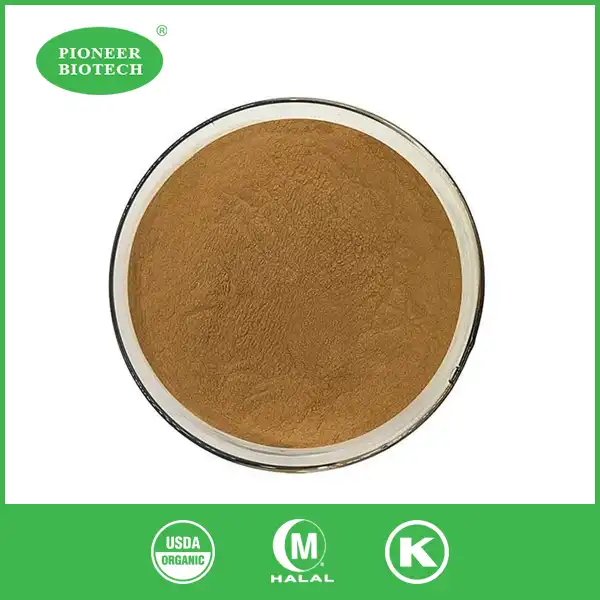
Ashwagandha root extract powder is a concentrated form of the beneficial compounds found in Withania somnifera, especially withanolides. Withanolides are a group of steroidal lactones that includes Withaferin A, Withanolide A, and Withanone. These molecules make up the pharmacologically active part of the extract that gives it its adaptogenic qualities. However, the amount of them in raw root powder (usually 0.3 to 0.5%) and standardized extracts (between 1.5 and 10 percent withanolides) is very different.
Extract Forms and Bioavailability Considerations
The release method has a big effect on both how well the drug works as a therapy and how well it works in manufacturing. Spray-dried extract powders are more stable and have a more even particle size distribution (usually 80–100 mesh), which makes them perfect for packaging and pill compression. Specialized processing methods make it possible for ashwagandha root extract powder to dissolve in water, which means they can be easily added to functional drinks and beauty-from-within items without causing problems with precipitation. While liquid extracts make it easy to make changes quickly, they need careful keeping methods to keep them safe from microbes.
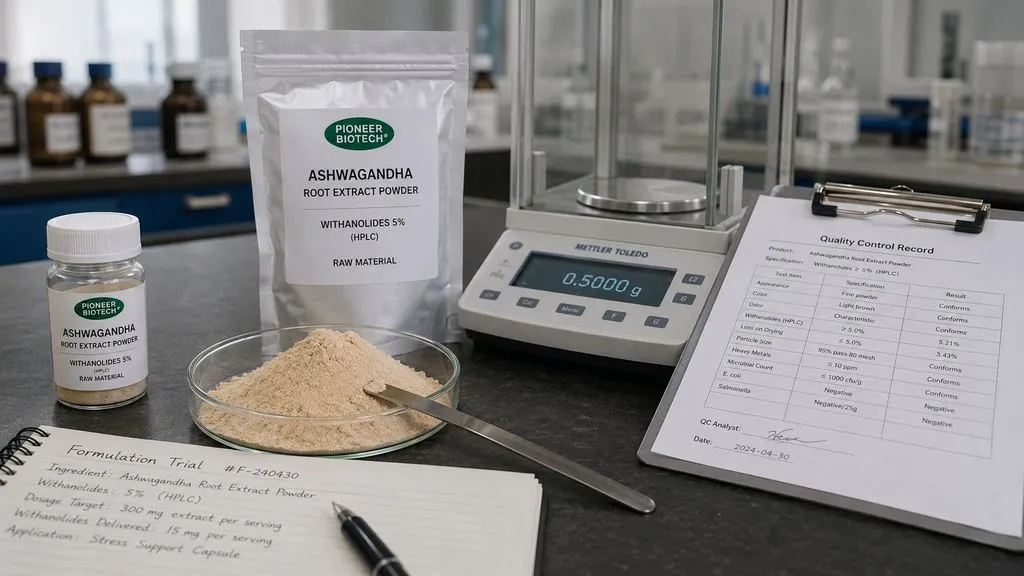
It's important to know these differences because a 5:1 extract ratio doesn't mean that the medicine will work; what counts is that the withanolide level has been checked using approved analytical methods. A 300mg dose of a 5% withanolide extract gives you 15 mg of active compounds, but the same dose of a 10:1 extract with only 1.5% withanolides only gives you 4.5 mg. This difference directly affects comments about how well a product works and how well customers do with it.
Clinical Applications Across Industries
The product can be used in a number of different B2B industries. Standardized extracts are used by nutraceutical makers in stress-management supplements, where clinical study has shown that they lower cortisol levels and ease anxiety. Functional food makers add water-dispersible forms to adaptogenic drinks that are meant to improve mental clarity and physical endurance. The antioxidant qualities of ashwagandha root extract powder are used in anti-aging serums. The withanolide content helps the body make collagen and lowers oxidative stress signs in skin tissue. Different uses need different specs. For example, supplement makers care most about how well the product works in the mouth and how stable it is in the stomach, while beauty chemists worry about how well it penetrates the skin and how well it works with pH levels.
Quality Factors and Manufacturing Processes Behind Ashwagandha Extracts
The level of quality control in the manufacturing process decides whether an ashwagandha extract is pharmaceutical-grade or not. The way the ingredient is extracted completely changes its chemical fingerprint, stable profile, and ability to pass regulatory tests.
Extraction Technologies and Chemical Profiles
Traditional hydroalcoholic extraction uses ethanol-water methods to concentrate withanolides while reducing the amount of tannins and polysaccharides that aren't needed. The amount of liquid used, the temperature (usually between 50 and 70°C), and the length of time the chemical is extracted all have a direct effect on the yield efficiency and degradation. Supercritical CO2 extraction is a more advanced option. It works at exact pressure and temperature levels that protect bioactives that are sensitive to heat while getting rid of worries about solvent waste. This method makes cleaner extracts with better organoleptic qualities. This is especially helpful for beauty and functional food uses where the bitter notes from regular extracts make formulation hard.
The important difference in quality shows up in processing after extraction. Spray-drying settings (inlet temperature, atomization pressure, and feed rate) impact the shape of the particles, the amount of water they contain, and the stability of withanolide. Because of thermal degradation, drying conditions that aren't ideal can lower the amount of withanolide by 15 to 20 percent. This is another reason why process validation paperwork should be sent with every business run.
Certification Requirements and Regulatory Compliance
In regulated markets, business-to-business buyers must make sure that suppliers keep their Good Manufacturing Practice (GMP) certification up to date. This shows that the suppliers have controlled production settings with validated tools, trained staff, and detailed quality systems. Having ISO 9001 approval is another way to make sure that quality control standards are always followed. Organic approval (USDA Organic, EU Organic) proves that the source material is non-GMO and was grown without using synthetic pesticides. This is becoming more and more important for presenting clean-label brands.
In addition to building certificates, batch-specific paperwork must include Certificates of Analysis (COA) that prove identity testing, assay results, and contamination screening. Kosher and Halal approvals help brands reach new customers in certain groups, and Non-GMO Project Verification is good for groups that care about being honest.
Purity Standards and Adulteration Detection
There are known problems with adulteration in the ashwagandha root extract powder market, especially when roots are switched out for leaves, which contain more withaferin A, a substance that needs to be strictly limited because high amounts of it can kill cells. The High-Performance Thin-Layer Chromatography (HPTLC) fingerprinting method confirms the identity of plants by comparing test results to verified reference standards. DNA barcoding is an extra way to check, and it can find species substitutions that chemical methods might miss.
When figuring out purity, you have to look at both the amount of active ingredient and the lack of contaminants. Premium extracts keep the amount of withanolide they contain within tight bands (±10% variation), which shows that they are reliable in where they get their raw materials and how they extract them. Poorer goods have differences between batches that are more than 25%, which makes manufacturing unpredictable and increases the risk of regulatory action.
Choosing the Right Ashwagandha Root Extract Powder for Your Business
As you choose a strategic provider, you need to compare their technical specifications to your formulation needs, legal responsibilities, and business goals. The choice process includes more than just comparing prices. It also takes into account things like consistent quality, clear analysis, and the reliability of the supply chain.
Critical Specification Parameters
The main thing that determines the standard is the amount of withanolide present. Manufacturers of supplements usually say whether the supplement contains 2.5%, 5%, or 10% withanolide. This is done through HPLC research, which is the only way to measure a molecule specifically. Gravimetric or UV spectrophotometric methods are not very specific, and the data they give are often skewed by including parts that are not withanolide. When looking at source COAs, make sure you check the analytical method used and ask for chromatograms that show how the individual withanolide spots are separated from the background.
The range of particle sizes affects both how well they can be made and how bioavailable they are. When extracts pass through packaging equipment at 80 mesh (180 microns), they go through it regularly and the tablets are compressed evenly. For smooth texture features in creams and serums, cosmetic uses may need smaller mesh sizes (100 to 120 mesh).
Moisture levels below 5% stop microbes from growing and extend the shelf-life, and bulk density requirements (usually 0.4 to 0.6 g/mL) make sure that automatic filling systems can accurately dose the right amount. These physical qualities have a direct effect on how well products are made and how stable they are.
Supplier Evaluation Criteria
Facility audits or third-party audit reports that prove GMP compliance and quality system robustness are the first step in making a provider reliable. Ask for samples to be kept from earlier production runs to see how consistent they are over time. Check to see if the seller can track the raw materials. Can they tell you where the materials came from, when they were harvested, and how they were grown for each batch?
Having the right technical help is very important during formulation creation. Suppliers who give stable data for different storage conditions (like temperature, humidity, and light exposure) make it possible to speed up shelf-life tests. Bioavailability can be improved by looking at how well substances dissolve in different carrier systems. Regulatory help, like ingredient safety dossiers, allergy statements, and country-specific compliance paperwork, speeds up the time-to-market for new products.
Format Selection and Packaging Considerations
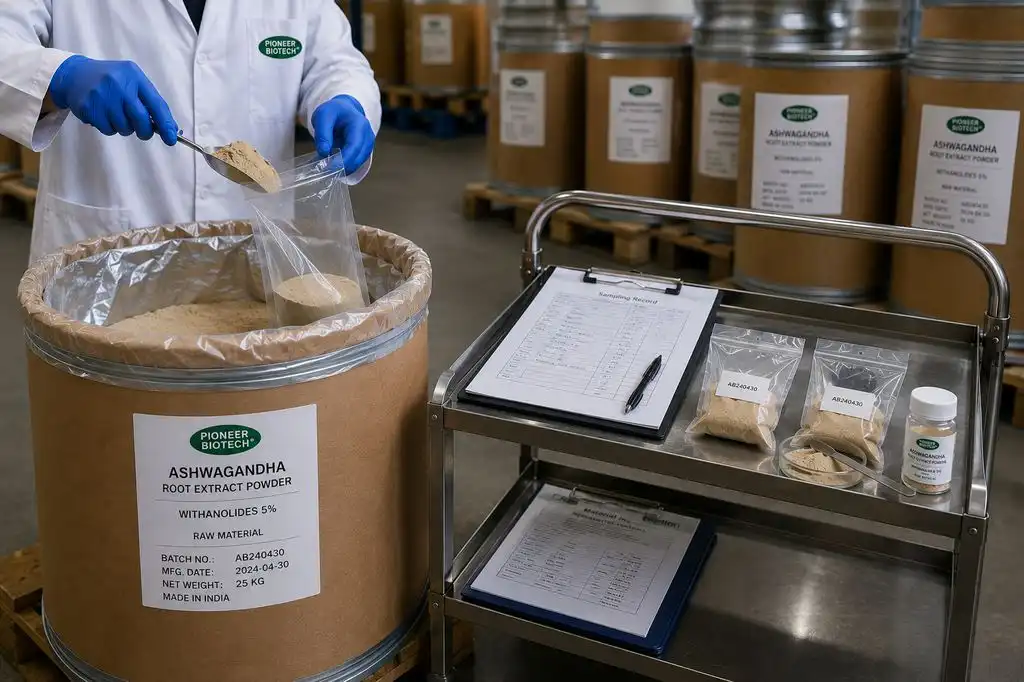
For high-volume supplement production, bulk ashwagandha extract can be packed in 25 kg fiber drums with polyethylene liners. For smaller amounts (1–5 kg), foil-lined cases work for cosmetic production sizes. Oxidative degradation is slowed down during storage and shipping by flushing the packing with nitrogen. Check with your suppliers to see if they offer intermediate packing choices that work with the sizes of your production batches. This will help you cut down on waste and make better use of your inventory.
To compare forms, you need to know about the benefits that are specific to each program. Powders allow for the most flexible formulations and the lowest costs for big production runs. While pre-encapsulated forms cut down on production steps, they make modification harder. Water-soluble extracts are more expensive, but they solve formulation problems in drinking uses where regular extracts don't dissolve.
How to Use Ashwagandha Root Extract Powder Effectively in Your Products?
To turn the specs of raw materials into the performance of the finished product, you need to know about dosage-response relationships, formulation suitability factors, and processing parameters that keep the functional integrity of the product.
Evidence-Based Dosage Guidelines
The recommended medicinal amount of standardized extract (containing 5% withanolides) is between 300 mg and 600 mg per day, usually spread out over two doses. When supplement makers figure out the end dose, they should use the amount of withanolide delivered instead of the weight of the extract. For example, a 500mg capsule of 2.5% extract contains 12.5mg of withanolides, so they need to use more extract per serve than when the concentration is 5%.
For functional food uses, doses need to be changed based on the size of the amount and how often it is eaten. An adaptogenic drink that you drink every day might have 200–300 mg of extract per dose, while items that you only use sometimes might have higher concentrations. Cosmetic formulators usually use 0.5 to 2.0% extract in finished products, combining how well they work with cost and how they feel.
Safety Profiles and Regulatory Considerations
Researchers have found that ashwagandha root extract powder is very safe. The only side effects that were reported were mild and rare, mostly stomach pain at high amounts. Regulatory bodies, such as the FDA, say that ashwagandha is generally recognized as safe (GRAS) for certain uses. However, claims about its structure and function need to be backed up by good scientific proof.
Because ashwagandha has effects on the body, formulation teams have to think about how it might combine with thyroid medicines, immunosuppressants, and sedatives. On the product label, it should say what should not be done by pregnant women, people with inflammatory diseases, and people who are going to have surgery. These safety messages keep people safe and show that the government is paying attention.
Formulation Strategies and Processing Stability
To keep the withanolide amount stable during production, heat, acidity, and oxidative situations need to be carefully monitored. Friction during tablet crushing makes heat; keeping die temperatures below 60°C stops compounds from breaking down. Alkaline conditions speed up the breakdown of withanolide, so liquid versions should keep the pH between 5.0 and 7.0.
Microencapsulation methods help make functional drinks by making it easier for water to mix with the ingredients and hiding any bitter tastes. When you mix ashwagandha root extract powder with plants that work well together, like Rhodiola and Holy Basil, you get synergistic adaptogenic blends. Combining the extract with hyaluronic acid and peptides in beauty serums slows down several signs of age at the same time. Technical case studies from contract makers show that the right mixture design can keep the withanolide content at 95% or higher for 24 months when stored at room temperature.
Bulk Purchase Strategies: Maximizing Value while Ensuring Quality
Understanding the cost drivers, building smart relationships with suppliers, and putting in place strong quality verification processes are all things that are needed to optimize buying economics while keeping quality standards.
Price Determinants and Value Analysis
The method of extraction has a big effect on prices; for example, supercritical CO2 extracts are 30–50% more expensive than hydroalcoholic options because they require more tools and are harder to process. Withanolide content sets stable price levels, with 10% standardized products costing about twice as much as 5% material of the same weight. Organic certification raises prices by 15–25% because of the rules for farming and the costs of keeping the certification up to date.
By making production more efficient and buying raw materials in bulk, volume agreements make it possible to get better prices. Annual contracts with supply every three months balance the costs of keeping supplies with price drops per unit. When comparing sources, you should look at the total cost of ownership, which is more than just the contract price. This includes the costs of quality testing, storage, and any waste that might come from materials that don't meet specifications.
Supplier Due Diligence and Risk Management
Comprehensive supplier qualification includes more than just initial checks. It also includes ongoing tracking of performance. Set up KPIs to keep track of things like the percentage of on-time deliveries, the percentage of specifications that are met, and the time it takes to answer expert questions. Ask well-known brands in your field for customer examples and make sure the provider has experience with similar applications and regulatory settings.
A financial stability study guards against supply disruptions. It looks at how long the business has been around, how much it can produce compared to its customer base, and how many different places it can get its raw materials. Maintaining ties with various ashwagandha growers shows that the supply chain can handle crop failures or problems in regional agriculture.
Logistics and Storage Optimization
Ashwagandha root extract powder stays stable for 24 to 36 months if it is kept in a cool (below 25°C), dry place that isn't in direct sunlight. The relative humidity in a warehouse should stay below 60% so that wetness doesn't get absorbed and microbes don't grow. Climate-controlled storage is especially important in wet places where things break down faster when they are not managed.
When you ship goods internationally, you need to make sure that your supplier's export skills and your import compliance methods work together. Make sure that sellers give you all the paperwork you need, like business invoices, certificates of origin, phytosanitary certificates, and material safety data sheets. Knowing the standardized tariff numbers that apply to plant extracts can help you estimate the time it will take to clear customs and the cost of the duty. If you need to move something that needs to be kept cool during the summer, you might want to think about refrigerated packages or faster air freight.
Conclusion
To find ashwagandha root extract powder, you need to know a lot about regulations, have scientific knowledge, and work with key suppliers. The difference in quality between pharmaceutical-grade standardized extracts and commodity-grade materials is what makes your product therapeutically credible and competitive in the market. Procurement teams protect brand image while giving real benefits to customers by focusing on HPLC-verified withanolide content, thorough contamination screening, and GMP-certified production. Analytical rigor and business realism must be balanced in order for sourcing strategies to work. This is done by building long-term relationships with suppliers that provide uniform standards, quick technical support, and full visibility into the supply chain. Putting money into quality checks and researching suppliers pays off in the form of fewer recipe fails, faster regulatory approvals, and better product performance that makes customers loyal and encourages them to buy again.
FAQ
What distinguishes ashwagandha root extract from raw root powder?
Solvent-based processing is used to concentrate withanolides to normal amounts (usually 1.5–10%) in ashwagandha root extract powder. Raw root powder, on the other hand, only has 0.3–0.5% withanolides, and their strength varies. Extracts consistently give bioactive substances and have higher absorption because they contain less fiber and make compounds more soluble.
How can I verify withanolide purity before purchasing?
Ask for Certificates of Analysis that show HPLC methods and the ability to identify individual withanolide peaks, namely Withaferin A, Withanolide A, and Withanone. Do not accept COAs that are only analyzed by UV spectrophotometry or gravimetric analysis, as these methods do not identify specific compounds. To make sure what the seller says is true, ask for retention samples to be tested by a third party in an accredited laboratory.
What safety considerations apply during formulation development?
Keep the amount of withaferin A below 0.5% of the total amount of withanolides to keep cells from being hurt. People who take thyroid medications, are pregnant, or have inflammatory diseases should not take this medicine. To make sure that the withanolide stays in the product throughout its shelf life, test its stability under fast conditions (40°C/75% RH). If you are making water-based goods, you should use microbiological tracking because ashwagandha's nutrients can help microbes grow if they are not properly preserved.
Partner with Pioneer Biotech for Premium Ashwagandha Root Extract Powder
Shaanxi Pioneer Biotech Co., Ltd. sells ashwagandha root extract powder that is safe for use in medicines. Their products are backed by strict HPLC confirmation and lots of quality evidence. Our 7,000m² GMP-certified plant has been in the Medicine Herbs Valley of the Qinling Mountains since 2012. It makes standardized extracts that meet USP standards for withanolide content, heavy metal limits, and bacterial safety. We keep our ISO9001, HALAL, KOSHER, and FDA certifications up to date, which means that your products will always meet the strictest regulations in all global markets. For nutraceutical, pharmaceutical, and cosmetic uses, our expert team helps with formulations and gives stable data and unique specs. As a well-known company that makes ashwagandha root extract powder, we can offer adjustable minimum order quantities, quick samples, and clear supply chain tracking from the grower to the finished product. You can talk to our team at sales@pioneerbiotech.com about your unique needs, ask for analytical samples, or set up a virtual tour of our site. We're dedicated to helping you come up with new products by providing plant ingredients that give you measured results and long-lasting brand differentiation.
References
Chandrasekhar, K., Kapoor, J., & Anishetty, S. (2012). "A prospective, randomized double-blind, placebo-controlled study of safety and efficacy of a high-concentration full-spectrum extract of ashwagandha root in reducing stress and anxiety in adults." Indian Journal of Psychological Medicine, 34(3), 255-262.
Mishra, L. C., Singh, B. B., & Dagenais, S. (2000). "Scientific basis for the therapeutic use of Withania somnifera (ashwagandha): a review." Alternative Medicine Review, 5(4), 334-346.
Singh, N., Bhalla, M., de Jager, P., & Gilca, M. (2011). "An overview on ashwagandha: a Rasayana (rejuvenator) of Ayurveda." African Journal of Traditional, Complementary and Alternative Medicines, 8(5S), 208-213.
Wankhede, S., Langade, D., Joshi, K., Sinha, S. R., & Bhattacharyya, S. (2015). "Examining the effect of Withania somnifera supplementation on muscle strength and recovery: a randomized controlled trial." Journal of the International Society of Sports Nutrition, 12(1), 43.
Pratte, M. A., Nanavati, K. B., Young, V., & Morley, C. P. (2014). "An alternative treatment for anxiety: a systematic review of human trial results reported for the Ayurvedic herb ashwagandha (Withania somnifera)." Journal of Alternative and Complementary Medicine, 20(12), 901-908.
Kulkarni, S. K., & Dhir, A. (2008). "Withania somnifera: an Indian ginseng." Progress in Neuro-Psychopharmacology and Biological Psychiatry, 32(5), 1093-1105.