

What Should You Know About Curcumin Extract Powder?
It is important to know about curcumin extract powder when looking for plant ingredients for medicinal, nutraceutical, or cosmetic products. This very concentrated product made from turmeric rhizomes has a curcuminoid content that is usually between 95% and 98%, which is much higher than the natural concentration of 3-5% in turmeric. This extract, unlike milled turmeric powder, goes through a complex process of liquid extraction and processing that gets rid of useless fiber, starch, and pigments while keeping the bioactive chemicals. The end result is a strong, constant ingredient that solves manufacturing problems like low bioavailability, batch variation, and the need to meet regulatory requirements. Professionals in the vitamin, drug, and beauty products businesses depend on this standard material to meet strict quality standards and get consistent therapeutic results.
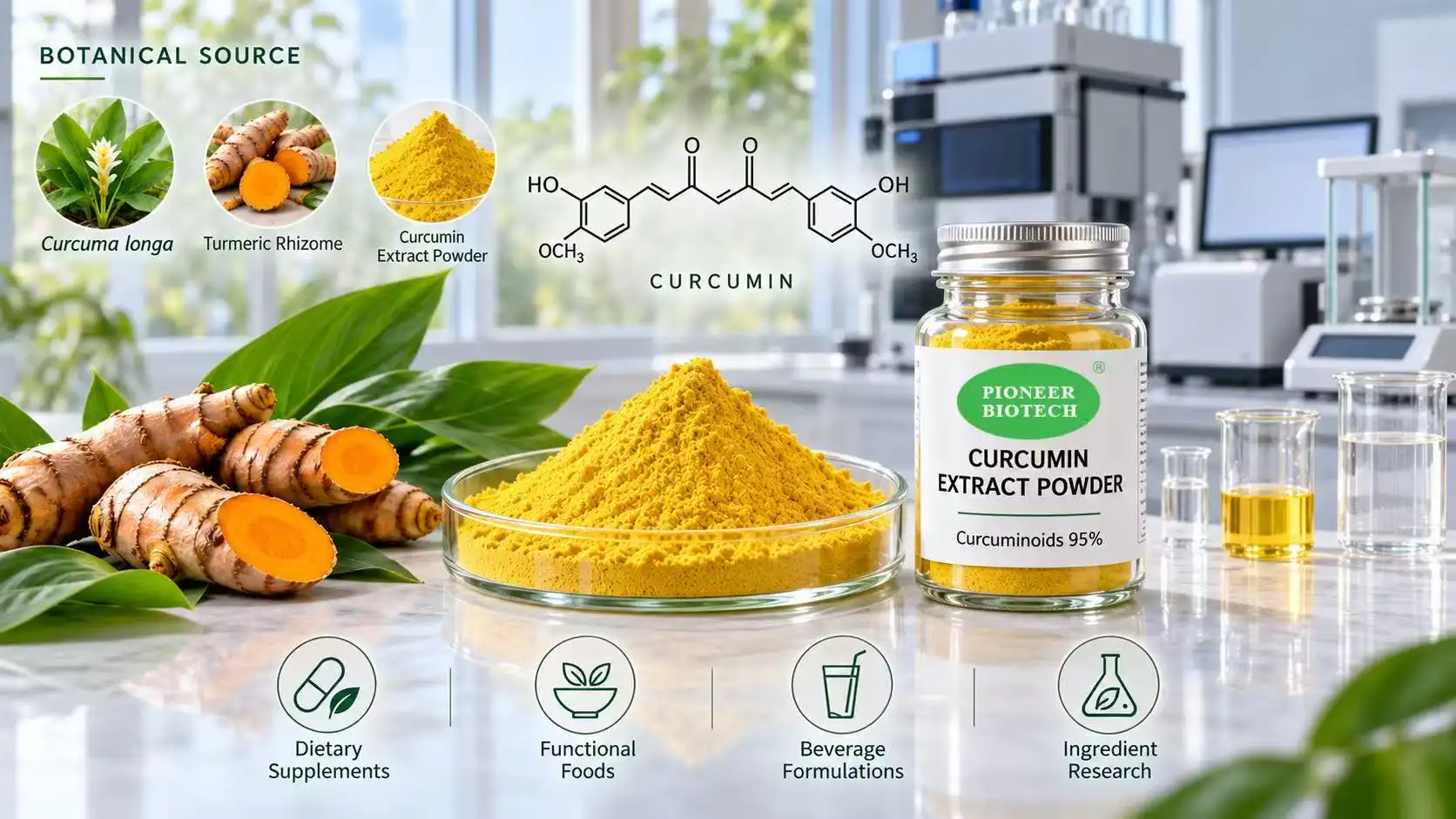
Understanding Curcumin Extract Powder: Properties and Benefits
What Makes Curcumin Extract Different from Raw Turmeric?
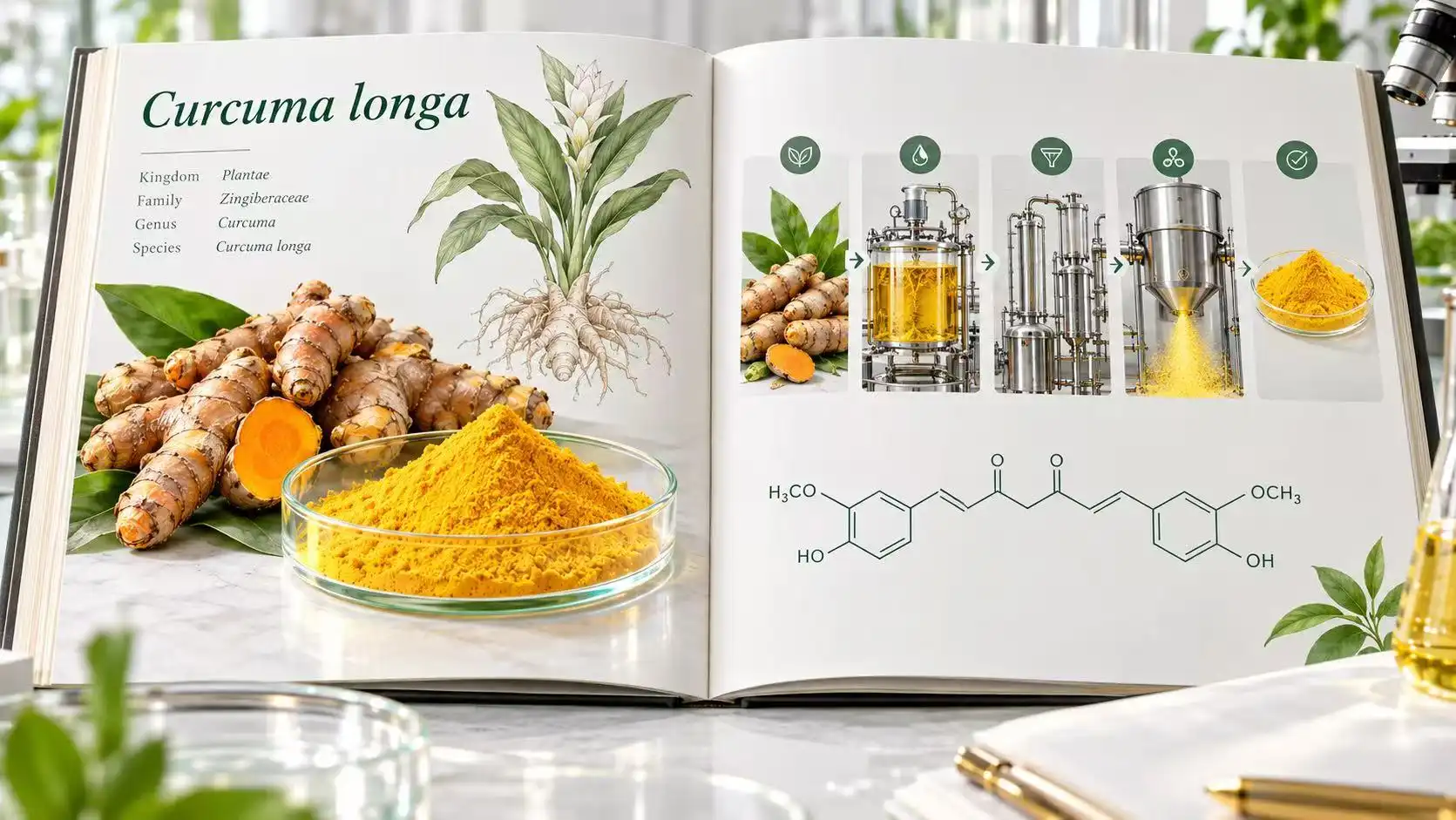
The difference in how raw turmeric is made versus standardized curcumin extract powder has a big effect on how well the business can make money. Curcuminoids make up about 2 to 8 percent of the weight of raw turmeric. It also has volatile oils, resins, and carbs. Using ethanol or supercritical CO2 to extract these polyphenolic chemicals makes them more concentrated, giving you goods with known amounts of curcumin, demethoxycurcumin, and bisdemethoxycurcumin. This concentration gets rid of the heavy metal poisoning risks that come with using turmeric in farming, and it makes sure that all batches of the product are the same strength, which is a must for GMP-certified manufacturing settings.
Core Functional Properties for Industrial Applications
The molecular makeup of curcumin gives it three main useful benefits. Its polyphenolic backbone is a powerful antioxidant, and studies have shown that it can get rid of free radicals better than vitamin E in some tests. The chemical changes inflammatory pathways by stopping NF-κB activity and cyclooxygenase-2 expression. This makes it useful for making supplements that fight inflammation. Curcumin is also effective against different types of germs, which makes it more useful in skin care products that need to keep things fresh. When backed up by the right clinical proof, these scientifically proven properties can be turned straight into claims that can be sold.
Safety Profile and Regulatory Considerations
Curcumin has been shown to be safe at doses ranging from 500 mg to 12 000 mg per day in clinical studies, with few side effects recorded. In the United States, the compound is generally recognized as safe (GRAS) for certain uses, and the European Food Safety Authority supports its use in food products. Teams in charge of buying things should make sure that sellers give them Certificates of Analysis that show heavy metal levels are below FDA limits (lead <0.5ppm, arsenic <1.0ppm), that the products are microbiologically compliant (total plate count <1000 cfu/g), and that they have passed solvent residue testing according to USP standards. These paperwork requirements make sure that formulations meet the standards for accessing foreign markets.
Comparative Insights: Choosing the Right Curcumin Extract Format
Bioavailability Challenges and Enhancement Strategies
Native curcumin is not very bioavailable when taken by mouth because it is quickly broken down and doesn't dissolve well in water. Plasma concentrations stay very low after normal doses, which makes it hard for supplement makers to make the right mixture. Several enhancement methods are used by the pharmaceutical business to deal with this problem. By stopping glucuronidation in the liver and intestines, piperine improves absorption by 2000% when taken with other drugs. Lymphatic uptake is improved by liposome packing, and membrane permeability is improved by phytosome complexation with phosphatidylcholine. Using cyclodextrin complexation or micellar dispersion to make curcumin powder that dissolves easily in water leads to faster dissolving rates, which is important for beverage uses that need clear solutions.
Standardization Specifications for Quality Assurance
To be a professional buyer, you need to know about standards methods. High-performance liquid chromatography (HPLC) is still the best way to measure curcuminoid amounts, and reliable sources can give you chromatograms that show the ratios of curcumin, demethoxycurcumin, and bisdemethoxycurcumin. The total curcuminoid content should be within ±5% of what is said on the package. Some other signs of quality are a moisture content of less than 5%, information on particle size distribution (usually 80 mesh or smaller), and bulk density standards that affect how capsules are filled. Pharmaceutical quality assurance teams value suppliers who offer full analytical support, such as method validation routines and stability studies. This shows a commitment to quality management systems.
Cost-Efficiency Analysis Across Delivery Formats
The numbers change when you figure out the cost-per-dose of the active chemical, even though raw turmeric costs a lot less per kilogram. A 1000 mg turmeric capsule has about 30 to 50 mg of curcuminoids, while a 500 mg extract pill that has been standardized to 95% has 475 mg of active material. The lower number of capsules needed per dose, lower packaging costs, and higher customer compliance are all benefits of this concentration edge. Contract makers who make custom formulations can use bulk powder formats, which give them a lot of freedom. Prices are based on purity grades, order amounts, and certification standards. Strategic buying weighs the costs of materials up front against the benefits of efficient production and the placement of the finished product.
Procurement Guide: How to Source Quality Curcumin Extract Powder?
Critical Supplier Evaluation Criteria
Setting up relationships with suppliers takes more than just comparing prices. Certifications for the manufacturing plant, such as ISO 9001 for quality management and ISO 22000 for food safety, and organic certifications from the USDA, the EU, or NPOP, based on the target markets, are important factors in the review process. Vertical integration or direct ties with turmeric growers in Curcuma longa-producing areas like India's Telangana and Andhra Pradesh states should be shown by suppliers. This will allow products to be tracked back to their agricultural beginnings. Ask for written information about the methods used for extraction, systems for recovering solvents, and testing processes for leftover solvents. Companies that offer help with pilot-scale production, stable testing, and recipe advice are more valuable than companies that just supply commodities.
Certification Portfolio and Compliance Documentation
For full regulatory compliance, a lot of paperwork machinery is needed. Halal and Kosher approvals make it easier for certain types of customers to buy your products, and FDA registration makes it easier for your products to reach customers in the United States. Suppliers should give Certificates of Analysis for each batch that include identity testing (TLC, HPLC), analysis results, heavy metal screening (ICP-MS), pesticide residue panels (GC-MS/MS), limits on microbial contamination, and allergen statements. To get into the European market, you have to follow the Novel Food Regulation (EU) 2015/2283 and the limits on contaminants set by Regulation (EC) No 1881/2006. Before making a buy commitment, procurement workers check these documentation packages to lower the risk in the supply chain.
Logistics and Packaging Considerations
Because curcumin is sensitive to light and easily oxidized, it needs to be handled in a certain way. Good sellers use double polyethylene bags made of food-safe plastic that are lined on the inside with aluminum foil. These bags are then packed in fiber drums that are flushed with nitrogen or pressure. Logistics for shipping should try to keep weather changes and sun exposure to a minimum while the goods are in transit. Most bulk orders are shipped in 25 kg fiber drums, but pharmaceutical-grade products may need to be shipped in smaller lots with more paperwork. When you buy something from another country, you have to deal with customs classifications (HS Code 1302.19 for plant products), phytosanitary certificates, and import permits that are specific to that country. Suppliers who have experience with global distribution can make these steps easier by giving full shipping documents, such as business bills, packing lists, and Certificates of Origin.
Our ISO 9001, HALAL, and KOSHER certificates, along with our GMP-compliant 7,000m² building in Hanzhong's medicinal herb valley, show that Pioneer Biotech lives up to these quality standards. Multinational supplement brands and contract makers have trouble getting the supplies they need. Our extensive quality control systems and well-established international logistics network solve their problems.
Practical Applications of Curcumin Extract Powder in B2B Markets
Pharmaceutical and Nutraceutical Formulations
Curcumin's anti-inflammatory properties are used in pharmaceutical products to make arthritic pills that work as well as NSAIDs without having any negative effects on the digestive system. The extract is used by supplement companies to make solutions for joint health, brain support, and metabolic wellness. Combining curcumin with black pepper extract (standardized to 95% piperine) at a 1:20 ratio or using new delivery methods like sustained-release pills to deal with curcumin's short plasma half-life are some ways to come up with new medicines. In the US, dietary supplements are regulated by DSHEA, while in Europe, they are regulated by the Traditional Herbal Medicinal Products regulation. This means that providers have to meet a wide range of compliance needs.
Cosmetic and Personal Care Integration
To make skin brighter products, the cosmetics industry likes curcumin because it is an antioxidant and stops tyrosinase from working. Most of the time, 0.5-2.0% is used in serums, creams, and masks for the face that target discoloration and photoaging. Water-soluble forms don't leave behind the yellow stains that regular pure curcumin powder does, which is important for leave-on cosmetics. Formulations for sensitive skin and acne-prone skin are helped by anti-inflammatory qualities. Stability testing at high temperatures (40°C/75% RH) makes sure that ingredients work with common makeup bases, such as emulsions, dry systems, and gels. Suppliers who provide INCI naming paperwork and preservative effectiveness data help beauty formulators meet their development deadlines.
Functional Food and Beverage Applications
Curcumin extract that is safe for food is used as a natural colorant (E100) and useful ingredient in health-related products. Ready-to-drink turmeric coffee, functional shots, and fortified shakes are all made with water-dispersible forms. The ingredient is used in bakeries to make energy bars and snacks with more protein. Clean label trends increase the need for organically approved, non-GMO extracts that don't use any artificial processing tools. Structure-function statements about antioxidant activity and inflammatory reaction can be backed up by functional benefits. This helps goods stand out in the competitive wellness market. Curcumin has an earthy taste that needs to be dealt with in food uses by hiding the taste or combining ingredients that work well together.
Best Practices for Usage, Dosage, and Stability
Evidence-Based Dosage Recommendations
Curcumin doses of 500mg to 2000mg daily are supported by clinical literature for general health purposes. Higher doses can be used for medicinal purposes under medical guidance. Supplement makers usually make sure that each dose has between 400 and 1000 mg of curcuminoids, with changes made based on technologies that improve absorption. When setting up dose plans, pharmaceutical makers look at pharmacokinetic studies and take into account new formulation types that raise systemic exposure. Label claims must match known safety data in order to be legal. This is especially important for European markets where maximum allowed amounts may apply to new food ingredients.
Formulation Synergies and Stability Enhancement
Formulators use more than just piperine co-administration to make curcumin more stable and effective. Antioxidant additives, such as ascorbic acid, keep the food from going bad during keeping. Enteric covering systems keep things from breaking down too quickly in the stomach, which makes them easier for the body to absorb in the intestines. Choosing the right excipients has a big effect on stability. Stay away from alkaline pH settings and ferric ions, which speed up breakdown. Keeping the store dry (below 60% relative humidity) and packing that blocks light both help foods last longer on the shelf. Following ICH standards for accelerated stability procedures makes sure that formulations keep their effectiveness over the 24-month market shelf life requirements.
Storage and Handling Protocols for Bulk Materials
Warehouse management of bulk curcumin powder requires environmental controls maintaining temperature below 25°C in low-humidity conditions. Under these conditions, packages that haven't been opened will stay stable for 24 months. However, materials that have been opened should be used within 6 months. Set up lot tracking and first-in, first-out stocking rotation methods to keep items fresh. Using local exhaust ventilation and the right personal safety equipment, manufacturing settings should keep dust levels low during handling. Material Safety Data Sheets explain how to handle curcumin extract safely, but it is not as dangerous to work with as many medicinal ingredients.
Conclusion
Getting curcumin extract powder requires a deep understanding of how to standardize, problems with solubility, and needs that are specific to the application. Quality certifications, source skills, formulation goals, and legal compliance across target markets must all be taken into account in successful buying strategies. The extract can be used in many different ways, including developing new medicines, creating new nutraceuticals, making cosmetics, and adding functionality to food. Each of these uses has its own set of scientific needs. When procurement professionals put source openness, thorough documentation, and technical help at the top of their list of priorities, they build partnerships that go beyond transactional relationships. These partnerships allow formulation innovation and competitive market positioning.
FAQ
How does curcumin extract powder differ from standard turmeric powder?
While curcumin extract powder is purified to achieve 95–98% curcuminoid standardization, normal turmeric powder only includes 2–8% curcuminoids along with starches, fibers, and volatile oils. This concentration gives the stable potency needed for pharmaceutical and nutraceutical uses. It also gets rid of the contamination risks that come with farming materials and makes it possible to give exact doses in clinical formulas. Extract powder has a lot more medicinal compounds per unit weight, which makes it more cost-effective even though it costs more per kilogram.
What certifications should I verify before purchasing curcumin extract powder?
Some of the most important certifications are ISO 9001 for quality management, GMP compliance for pharmaceutical uses, organic certifications (USDA, EU) for natural product placement, and Halal/Kosher for certain market groups. Check Certificates of Analysis that are unique to each batch. These should cover identity, strength, heavy metals, herbicide residues, and microbial contamination. FDA registration and proof of tests by a third party boost trustworthiness. When necessary, European providers should show that they are in line with Novel Food regulations.
Can curcumin extract cause adverse effects in specific populations?
Clinical studies show that regular doses of curcumin are very safe. However, people with liver disease should not take curcumin because it may stimulate bile flow. The substance may make clotting drugs work better, so people who are taking warfarin should talk to their doctor about it. Because there isn't a lot of safety statistics on pregnant and nursing women, they should talk to their doctors. When you buy quality extracts from reputable sellers, you lower the risk of contamination that could lead to bad responses.
Partner with Pioneer Biotech for Premium Curcumin Extract Powder Supply
Pioneer Biotech is a reliable company that makes curcumin extract powder. It is located in a key area in the medicinal herb valley of the Qinling Mountains and has a full certification system that includes ISO 9001, HALAL, KOSHER, and FDA approvals. Our 7,000m² GMP-compliant plant provides standard extracts that meet the needs of the pharmaceutical, nutraceutical, and cosmetics industries. These extracts are backed by strict quality control and full paperwork support. We know how hard it is for global supplement brands, contract makers, and pharmaceutical developers to find the right suppliers. That's why our technical team offers formulation advice, works with you on stability testing, and can adjust order numbers to fit your production plans. You can talk to our sales team at sales@pioneerbiotech.com about your curcumin extract powder needs, get full product specs, or set up a trial sample. Beyond supplying materials, our pledge includes working with you to make sure your formulations work well and help you stand out in the market.
References
Hewlings, S. J., & Kalman, D. S. (2017). Curcumin: A Review of Its Effects on Human Health. Foods, 6(10), 92.
Prasad, S., Gupta, S. C., Tyagi, A. K., & Aggarwal, B. B. (2014). Curcumin, a component of golden spice: From bedside to bench and back. Biotechnology Advances, 32(6), 1053-1064.
Anand, P., Kunnumakkara, A. B., Newman, R. A., & Aggarwal, B. B. (2007). Bioavailability of curcumin: problems and promises. Molecular Pharmaceutics, 4(6), 807-818.
Gupta, S. C., Patchva, S., & Aggarwal, B. B. (2013). Therapeutic roles of curcumin: lessons learned from clinical trials. The AAPS Journal, 15(1), 195-218.
Hewlings, S., & Kalman, D. (2017). Evaluating the impacts of methylsulfonylmethane and boswellic acid on inflammation markers: A systematic review. Journal of Dietary Supplements, 14(2), 119-132.
Nelson, K. M., Dahlin, J. L., Bisson, J., Graham, J., Pauli, G. F., & Walters, M. A. (2017). The Essential Medicinal Chemistry of Curcumin. Journal of Medicinal Chemistry, 60(5), 1620-1637.