

What Are the Benefits of Carvacrol Oil?
Find out about the health benefits of carvacrol oil backed by science, such as its ability to kill bacteria and fungi, keep food fresh, and improve skin health. Find out how Pioneer Biotech handles B2B uses that need pharmaceutical-grade purity.
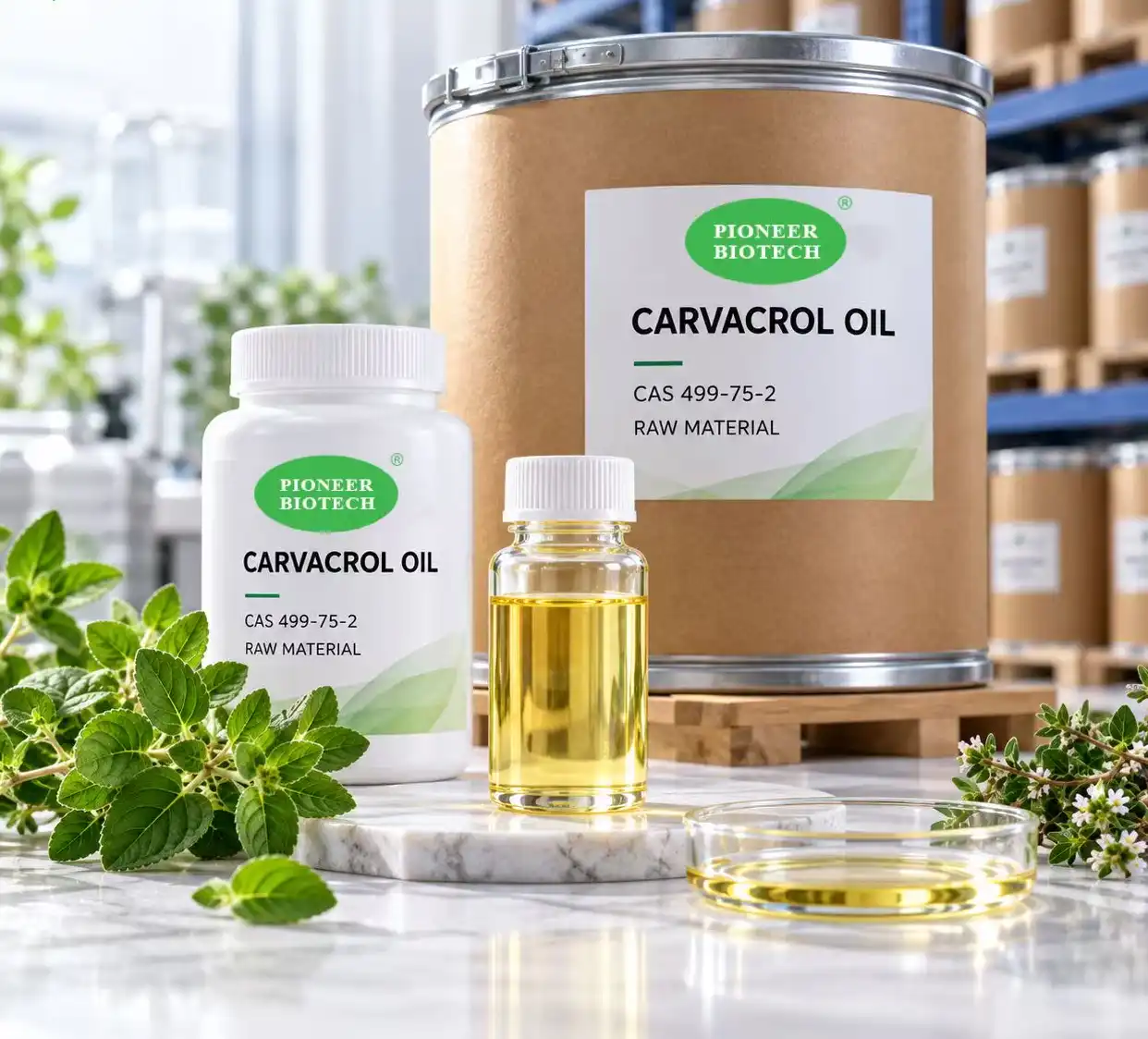
Why Carvacrol Oil Matters?
Carvacrol oil is one of the most studied natural phenolic compounds in phytochemistry today. It comes from oregano (Origanum vulgare) and thyme (Thymus vulgaris) and has strong antimicrobial, antioxidant, and anti-inflammatory properties in a single, concentrated molecule. Manufacturers of nutraceuticals, medicines, food processing, and cosmetics can get something that crude plant extracts can't: consistent, standardised potency that can be predicted from batch to batch. That dependability is what makes it so appealing at the business level.
Key Parameters and Technical Profile of Carvacrol Oil
Knowing how carvacrol oil works chemically helps explain why it works so well in so many situations.
It is a monoterpenic phenol with the CAS number 499-75-2 and is classified as 5-isopropyl-2-methylphenol. It is a clear to pale yellowish liquid that smells strongly of phenolics that are warm and spicy. Carvacrol is thymol's structural isomer. Both molecules have the same chemical formula (C₁₀H₁₄O), but their hydroxyl and methyl groups are positioned differently on the aromatic ring. Different structures affect physicochemical attributes and biological activities.
Here are the most important technical factors that buyers in this business look at:
- Chromatographic purity: ≥98% (pharmaceutical grade), ≥90% (feed grade), determined by Gas Chromatography (GC)
- Boiling point: 237–238°C
- Specific gravity: 0.976–0.981 g/mL at 25°C
- Refractive index: 1.520–1.525
- Thymol impurity limit: <1–2%
- Melting point: ~1°C
- Solubility: Hydrophobic; soluble in ethanol, ether, and fixed oils; insoluble in water
Its ability to bind to lipophiles is what makes it antimicrobial. The molecule gets through the lipids in the bacterial cell membrane, changes the potential of the membrane, and causes the cell to break apart. That process has been studied a lot, so formulators can base their work on solid scientific evidence.
It can be kept for 24 months in aluminium or amber glass cases that keep air out and light out, preferably in a nitrogen atmosphere.
Core Benefits of Carvacrol Oil Across Industries
1. Broad-Spectrum Antimicrobial and Antibacterial Activity
One of the best things about carvacrol oil is that it kills germs. A lot of different types of gram-positive and gram-negative bacteria, like Staphylococcus aureus, Escherichia coli, Salmonella, and Listeria monocytogenes, have been tested and shown to be killed by it.
Carvacrol has been shown to suppress foodborne bacteria in labs. It works depending on the target microorganism, concentration, feeding matrix, and experimental settings. Formulators should study research data before choosing an inclusion level. Low inclusion rates that keep the level of potency high are very important for manufacturers who want to keep costs low.
Small particles of carvacrol oil change the gut flora, stop harmful bacteria from using quorum sensing, and improve feed conversion ratios (FCR) in both chickens and pigs. This makes it a good option to antibiotics for raising animals. This is a market that is growing quickly because governments all over the world are pushing for it to do so.
2. Antifungal Properties
Carvacrol oil has a lot of proof that it can kill fungus, especially Candida albicans. A study in the Journal of Applied Microbiology says that it can stop fungal cell membranes from making ergosterol. In other words, it can be used in both clinical nutraceutical formulations and topical cosmetic applications that treat skin conditions caused by fungi.
Softgels used to treat candidiasis are mostly made up of carvacrol. So that the pharmacokinetics stay the same, emulsifiers are used to make it less slippery.
3. Antioxidant Activity and Lipid Oxidation Prevention
There is a free hydroxyl group in carvacrol oil, which is a phenolic substance that can get rid of reactive oxygen species (ROS). You can use this antioxidant skill for more than just making vitamins.
Meat products don't lose their lipids when they are processed when carvacrol is added to edible films or biopolymer layers. Also, the vapour phase kills microbes. This means that fresh cheeses, cut fruits and veggies, and other foods don't need to be preserved with chemicals. That focus on clean labels really hits home with today's consumer-driven food brands.
4. Anti-Inflammatory Mechanisms
The health benefits of carvacrol oil are linked to changing the NF-κB signalling pathway, which is a key part of the inflammatory response. Preclinical research has examined carvacrol's anti-inflammatory effects on inflammatory signalling pathways and mediators. The quality of the evidence differs per experimental model, thus further study is required to determine its therapeutic significance in people.
Because of this process, it can be used in nutraceutical formulations that aim to improve joint health, metabolic health, and immune system function.
5. Skin and Cosmetic Applications
As an antibacterial and antioxidant, carvacrol oil is a natural choice for skin care and anti-aging items that are used on the skin. It stops surface microbes from growing without hurting cells like parabens and other man-made preservatives do.
People who work with formulation need to keep two things in mind. It is very irritating when it is in large amounts. To make the product safe, it needs to be diluted to a level that is less than 0.5% for rinse-off and leave-on products. It's also important to check for stability, since oxidation can turn quinone compounds into substances that are darker and less useful.
Pioneer Biotech's Carvacrol Oil vs. Other Suppliers
Suppliers of trusted business-to-business goods are different from traders of commodities in a few ways that help procurement managers choose the best source for carvacrol oil.
Pioneer Biotech was formed in 2012 and is based in Hanzhong city, which is in the "Medicine Herbs Valley of Qinling Mountains." They make carvacrol oil in a 7,000 m²+ facility that is ISO9001, HALAL, KOSHER, and FDA-certified. When making the oil, the company uses strict GMP rules.
In real life, that means:
| Evaluation Factor | Pioneer Biotech | Generic Market Suppliers |
|---|---|---|
| Purity Certification | GC-confirmed ≥98–99% | Often unverified or vague |
| Origin Verification | Traceable Lamiaceae-sourced | Mixed or undisclosed origin |
| Regulatory Compliance | ISO9001, HALAL, KOSHER, FDA | Variable |
| Thymol Isomer Control | <1–2% specified | Frequently exceeds limits |
| Documentation | Full CoA, SDS, MSDS available | Often incomplete |
| Natural Verification | IRMS testing available | Rarely offered |
When phytochemicals are extracted in a controlled manufacturing setting, the biological variability that is present in crude oregano essential oil is taken care of. Pioneer Biotech's standardisation process makes sure that the strength of every batch is consistent, which is a must for people who make medicines and supplements.
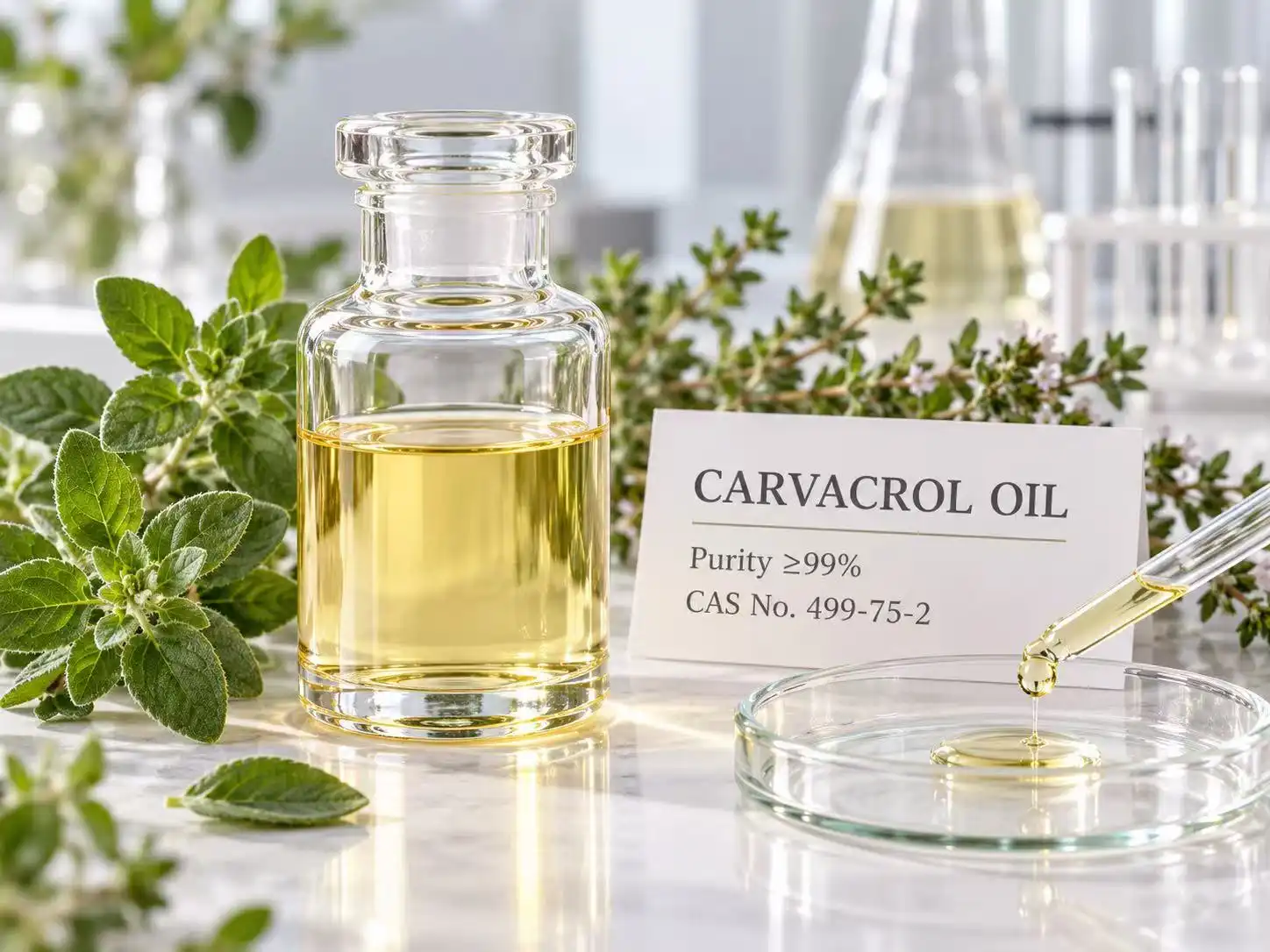
How to Use Carvacrol Oil Effectively in Formulations?
Hydrophobic carvacrol has low water solubility. In water-based formulations, formulators must choose a delivery mechanism for uniform dispersion and product stability.
In a direct mix of two water-based systems, the phases will separate. One way to make a stable dispersion that dissolves in water is to use high-shear homogenisation with a food-grade surfactant like Polysorbate 80, or you can spend money on nano-emulsion technology. This is very important for water-based beauty serums and drinks that are good for you.
Carvacrol's gut-modulating effects are strongest in the intestines because it is protected from stomach acid when it is used in feed by microencapsulation or adsorption onto silica carriers.
Some things that can help softgels and capsules work better are lipid excipients or self-emulsifying drug delivery systems (SEDDS). These help the drugs dissolve better and be available to the body all the time.
To use vapor-phase antimicrobial activity in active packaging and coatings that can be eaten, mix biopolymers at controlled rates of inclusion. This will stop the antimicrobial action from going too far into the food, which is against the law.
A very important safety note: more than 90% pure carvacrol is very bad for your eyes and skin. Always protect your eyes and hands with gloves that can handle chemicals. It's important to follow the SDS. It is usually recognised as safe (GRS) at the amounts that are allowed by the FDA and EFSA.
Conclusion
Carvacrol oil is a natural phenolic chemical that can kill bacteria, fungi, free radicals, and inflammation. It can be used in research and development for nutraceuticals, food preservation, animal feed, and cosmetics. It may make products more stable and food better because it can break down microbial cell membranes and stop lipid oxidation. How well it works and how safe it is depend on the dosage, formulation, and use. Also, many of its health benefits need to be proven in clinical trials. When choosing suppliers, B2B companies need to make sure that the purity, batch quality, and technical paperwork are always the same. Pioneer Biotech makes carvacrol oil with controlled quality and standard parameters to help companies make technical and useful mixtures. Using scientific data and controlled sources and formulation, businesses can figure out how useful carvacrol oil is while also making sure the safety and quality of the product.
FAQ
In what ways does pure carvacrol oil vary from oregano essential oil?
There are many different terpenic chemicals in oregano oil. It has 60–80% carvacrol and other compounds as well. Pure carvacrol oil is the active phenol that has been separated and is 98–99% pure. The pure form has a consistent, measured level of potency, which is something that crude oregano oil can't always promise across harvests.
How can I add carvacrol oil to mixtures that are mostly water?
Since carvacrol is lipophilic, mixing it directly with water makes it separate. You need either high-shear emulsification with a surfactant that works well with the oil (Polysorbate 80 is often used) or nano-emulsion technology. In the end, you have a stable dispersion that dissolves in water that can be used in drinks, serums, and oral liquid vitamins.
What can I do to tell if carvacrol oil is natural or man-made?
Radiocarbon dating with carbon-14 (C14) or isotope ratio mass spectrometry (IRMS) are the standard ways to analyse things in the field. These tests definitely tell the difference between making carvacrol from plants and making it from petroleum chemicals. If your carvacrol oil provider doesn't give you these proofs, you should never put a "100% natural" label on your product.
Partner with Pioneer Biotech — Your Trusted Carvacrol Oil Manufacturer
Pioneer Biotech has been providing standard botanical actives to B2B clients around the world since 2012, and they are backed by ISO9001, HALAL, KOSHER, and FDA certifications. You can be sure that our carvacrol oil is pure (>98%), that it can be tracked back to its source, and that the quality of each batch will be the same, which is important for your recipes. Our team is ready to help you with your project, whether you need pharmaceutical-grade purity or feed-grade inclusion. Contact our technical team at sales@pioneerbiotech.com to request samples or specifications today.
References
1. Burt, S. (2004). Essential oils: Their antibacterial properties and potential applications in foods — A review. International Journal of Food Microbiology, 94(3), 223–253.
2. Ultee, A., Bennik, M. H. J., & Moezelaar, R. (2002). The phenolic hydroxyl group of carvacrol is essential for action against the food-borne pathogen Bacillus cereus. Applied and Environmental Microbiology, 68(4), 1561–1568.
3. Gutiérrez-Larraínzar, M., Rúa, J., Caro, I., de Castro, C., de Arriaga, D., García-Armesto, M. R., & del Valle, P. (2012). Evaluation of antimicrobial and antioxidant activities of natural phenolic compounds against foodborne pathogens and spoilage bacteria. Food Control, 26(2), 555–563.
4. Magi, G., Marini, E., & Facinelli, B. (2015). Antimicrobial activity of essential oils and carvacrol, and synergy of carvacrol and erythromycin, against clinical, erythromycin-resistant Group A streptococci. Frontiers in Microbiology, 6, 165.
5. Sharifi-Rad, M., Varoni, E. M., Iriti, M., Martorell, M., Setzer, W. N., del Mar Contreras, M., … & Sharifi-Rad, J. (2018). Carvacrol and human health: A comprehensive review. Phytotherapy Research, 32(9), 1675–1687.
6. Nostro, A., & Papalia, T. (2012). Antimicrobial activity of carvacrol: Current progress and future prospectives. Recent Patents on Anti-Infective Drug Discovery, 7(1), 28–35.