

The Difference Between Reishi Powder & Reishi Spore Oil
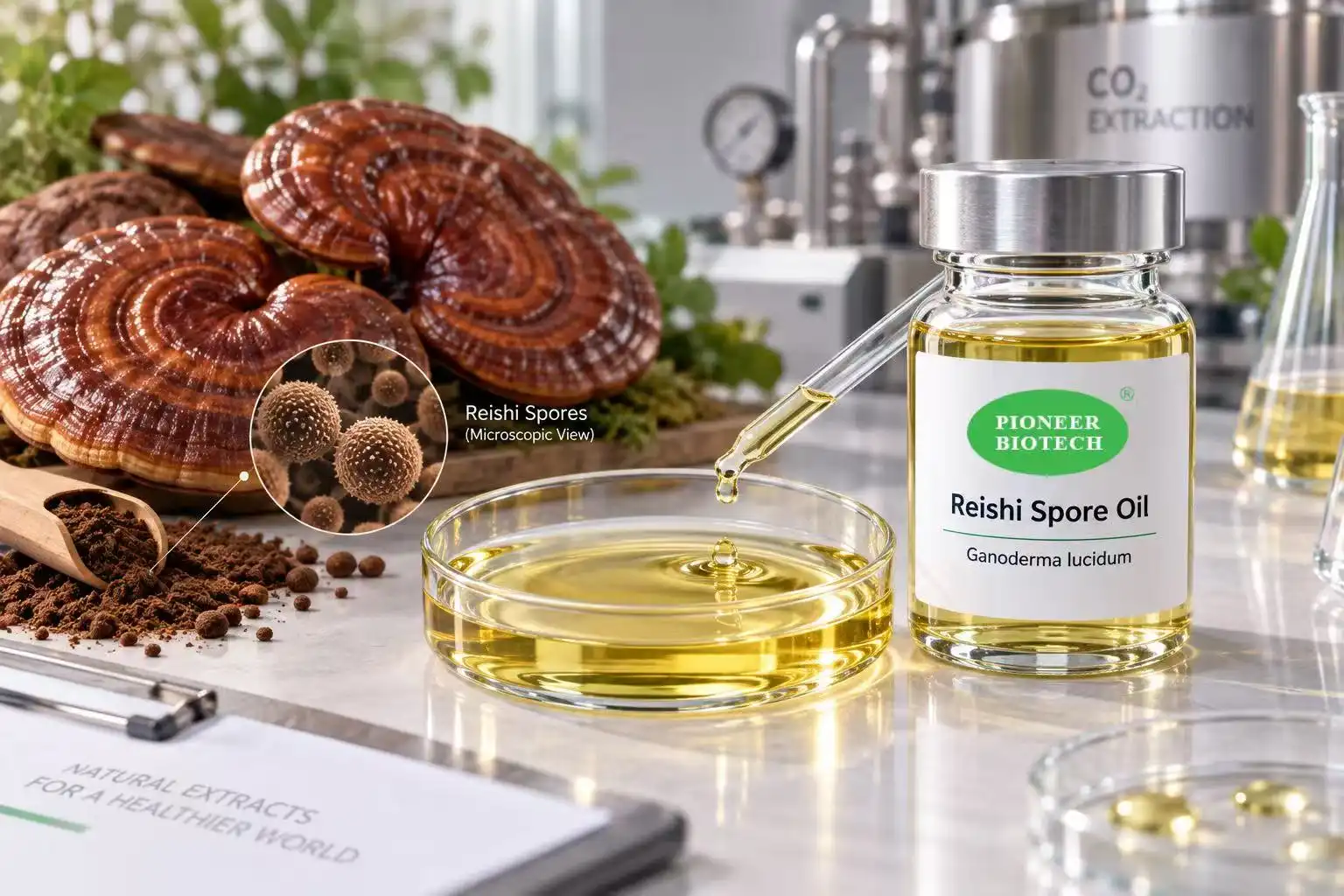
Reishi powder and reishi spore oil are mostly different by the sources they come from, how they are extracted, and the medicinal substances they contain. The growing bodies or mycelium of Ganoderma lucidum are dried out and then ground into reishi powder. Polysaccharides and beta-glucans make up most of it, which are good for your health in general. On the other hand, reishi spore oil is a fat-loving mixture that is made from spore cells using supercritical CO2 technology. It has 20–30 times more triterpenoid than regular powder types. This difference in make-up has a direct effect on solubility, dose needs, and the uses that are meant for both nutritional and medicinal formulas. Now that procurement professionals know these differences, they can pick the style that best fits their product development goals and the rules that apply.
What Are Reishi Powder and Reishi Spore Oil?
Understanding Reishi Powder Composition and Processing
Reishi powder is the usual form. It comes from the growing body of the mushroom, which is also called mycelium. The first step in production is growing things in places that are closely watched and controlled. The amount of carbohydrates present is directly related to the substrate's temperature, humidity, and make-up. Low-temperature drying is used by manufacturers to keep heat-sensitive chemicals safe after they are picked. Then, mechanical grinding is used to get the material down to a certain mesh size.
Standardised tests, like UV spectrophotometry, show that the powder generally has between 10 and 30 percent carbohydrates. The main part that changes the immune system is made up of these beta-glucans and heteropolysaccharides. Good product makers give exact information about each batch, such as how many carbohydrates, bacteria, heavy metals, and wetness there are. This helps the teams that buy things make sure that every batch is the same and that they follow all the rules for selling in other countries.
Reishi Spore Oil: Advanced Extraction and Concentration
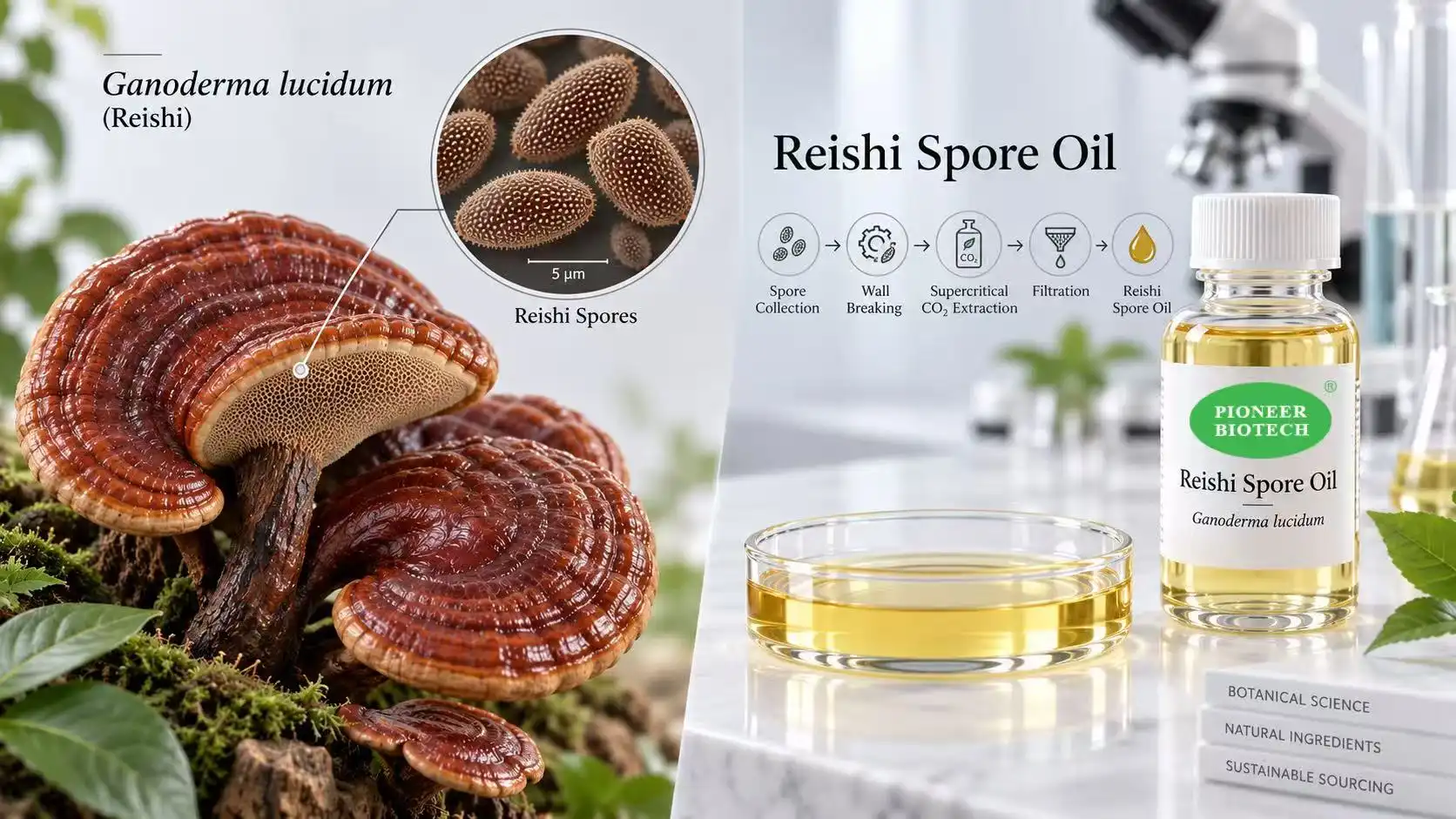
Reishi spore oil is a highly refined extract made from Ganoderma lucidum spores through a series of processing steps. There are billions of tiny spores that are released by each fully grown mushroom. These are protected by a chitinous cell wall that can't be broken down by digestion. In order to get around this solubility problem, manufacturers break up the cell walls more than 98% of the way before they are removed.
Most of the time, supercritical CO2 fluid extraction technology is used to get lipid-soluble actives out of cracked spores. A lot of care is taken to make sure that the temperature and pressure are just right so that the triterpenoids, sterols, and unsaturated fatty acids are removed and nothing else. To show that the oil is clear, like golden amber, and has total triterpenoid levels of around 20% to 30%, an HPLC test can be used to prove this. This concentration level gives beneficial doses in small softgel forms, which helps formulators work with less room and makes sure that the lymphatic system absorbs the medicine quickly.
Comparative Nutrient Profiles and Bioactive Components
The different ingredients in powder and oil form directly affect the ways that each can be used. There are water-soluble carbohydrates, nutritional fibre, minor minerals, and extra proteins in reishi powder. The matrix is made up of many different parts that work together to make many different health goods. It has been shown that the polysaccharide part can change the immune system by turning on macrophages and controlling hormones.
Reishi spore oil contains a lot of ganoderic acids and related triterpenoids. These are chemicals that dissolve in lipids and can easily cross cell walls. Researchers have found that these triterpenoids are powerful antioxidants that protect the liver and change the inflammation response. About 70% of the empty space in whole spore powder is removed when it is put into oil. This helps the people who make the pills get the right doses without making them too heavy. The buying teams need to think about how the compositional patterns match up with the health claims they want to make, the people they want to sell to, and how they want to place their products.
Key Differences in Health Benefits and Applications
Immune Modulation and General Wellness Support
Because it has a lot of polysaccharides, reishi powder is a strong competitor in the market for health supplements. Studies in humans have shown that beta-glucan fractions make natural killer cells work better and make them more active. This makes them better at phagocytosis, which is an important part of immune monitoring. This is why powder types are great for daily maintenance vitamins for people who care about their health and want to stay healthy.
To feel the effects on your immune system, you need to take between 1,500 mg and 3,000 mg every day. This means taking more than one pill or a larger serving size. This size factor affects product development choices, especially for brands that put ease of use and safety first. Powder's good cost-to-benefit ratio helps companies target the general fitness market. This lets them price their products competitively in shops while still making good profits.
Concentrated Bioactivity and Specialized Applications
Some people think that reishi spore oil is the best because it has a lot of triterpenoids and the body absorbs it better. It can get rid of free radicals well because it has a lot of it; ORAC numbers that are much higher than those of other products show this. Because these antioxidants are so strong, they can be used in high-tech health goods that shield cells from reactive stress.
Pharmaceutical businesses that are interested in plant drug routes are especially interested in reishi spore oil because the amount of triterpenes in it stays the same from batch to batch. It's easier to follow exact treatment guidelines when the drug is in oil form, which is needed for regulatory applications and clinical validation studies. Most people find that 500 mg to 1,000 mg per day works best. They come in softgel form to make them easier to take and hide the bitter taste that Reishi chemicals are known for. Customers are more likely to follow through because of this service edge. This is an important part of outcome-based product positioning.
Dermocosmetic and Topical Formulation Potential
Reishi spore oil can be used in makeup in ways that powder extracts can't because they don't mix well with water. This is because reishi oil pulls fat. Formulation scientists who make goods to fix barriers and fight ageing like the oil because it works well with systems that supply lipids. It has been shown that the triterpenoid fraction can lower inflammation in the skin by helping the skin's barrier function and lowering reactive oxygen species in skin that is stressed.
More and more, cosmetic companies that use Reishi products pick organic reishi spore oil over water-based extracts because it mixes better with other ingredients. It's easy to mix the oil into dry mixtures, oleogels, and lipid nanoparticle carriers, and it's also simple to dissolve. If a makeup company's procurement team needs to find out if suppliers can give them custom ratios and stability data for different pH settings and storage systems, they should speak with the suppliers.
Production Processes and Quality Considerations
Reishi Powder Manufacturing Standards and Certification
Picking the medium for growth is the first thing that needs to be done to make good powder. Companies that make things can pick between wood logs and materials that have been mixed with sawdust. The trace element and carbohydrate makeup that are made are different for each method. Substrate materials must be able to be tracked, the growing surroundings must be watched, and any banned substances in the growth cycle must be checked.
How the food is dried affects how well it was processed after it was picked. Modern producers keep the temperature of their products below 60°C by hoover drying or spray drying. This keeps the bioactivity and structure of the polysaccharide. Bits have to be spread out in a certain way while milling so that as little heat is made as possible. To do this, the material can be ground up in stages, with time for each stage to cool down. As part of the rules, polysaccharides, heavy metals like lead, cadmium, mercury, and arsenic, and a wide range of bacteria like yeasts, moulds, coliforms, and viruses should all be checked for.
Spore Oil Extraction Technology and Purity Parameters
You need special tools and a lot of technical know-how that goes beyond what you need for regular extraction to make reishi spore oil. Getting rid of the cell wall is the first and most important step. Most of the time, this is done by physically breaking them at low temperatures that don't leave any chemicals behind. A microscope should be used by the manufacturers to keep track of the number of breaks. When it comes to quality, at least 98% of the breaks need to be broken in order to get to all the fatty parts inside the cells.
It is a closed-loop device where carbon dioxide is used as a solvent and the temperature and pressure are carefully managed. The solvent can also be changed. It is clear that this process is better than the old way of using organic solvents to get oil because it doesn't leave behind any waste and doesn't heat the oil up. To get the most triterpenes while also getting the least amount of other chemicals that aren't needed, the extraction factors must be fine-tuned. After extraction, manufacturers use molecular distillation or chromatographic processing to get the amount of purity they need.
Quality Assurance Protocols and Regulatory Compliance
There is more to quality assurance than just testing the end product. It also means keeping an eye on the surroundings, checking the raw materials, and running the process. The best producers follow HACCP rules all the way through the production process. They figure out key control places where quality standards need to be checked and written down. Third-party lab testing at ISO 17025-accredited facilities makes sure that standards are met by a third party. This makes paperwork packages for regulatory applications stronger.
GMP compliance is a basic standard for uses in pharmaceuticals and nutraceuticals for organic reishi spore oil. Different target markets have different needs. In the European Union, rules say that you have to send in full dossiers that include safety data, studies that prove the manufacturing process is safe, and studies that show the product will stay stable. Dietary supplement companies in the US must follow the rules in 21 CFR Part 111. These rules include making sure their equipment is qualified, their methods are safe, and they keep accurate records. People who are in charge of buying things should ask for Certificates of Analysis for sample batches, as well as up-to-date copies of facility certifications like GMP, HACCP, and ISO 9001, and any HALAL or KOSHER certifications that are needed for the market.
Comparing Market Options: Brands, Prices, and Supplier Insights
Supplier Landscape and Quality Differentiation
There are many companies that make reishi products. Some are small, craft businesses, while others are big companies that handle the whole process, from growing the mushrooms to making the finished product. Suppliers who have been around for a while and have clear business practices usually have their own growing facilities. This way, they can directly control the air, prepare the base, and choose when to gather. It is less likely that pollution will happen because of this vertical integration, and polysaccharide patterns can stay the same from one work cycle to the next.
Regional buying changes how people think about quality and how quickly things get moved. A lot of the world's Reishi is made by Chinese companies. They do this by using the warm weather in places like Zhejiang and Anhui areas and their hundreds of years of experience growing plants. Anyway, buying teams need to look into things a lot because quality changes a great deal between sellers. Suppliers who offer site checks, detailed process breakdowns, and a lot of paperwork show that they care more about quality control than just meeting legal requirements.
There are now new sellers from North America and Europe in the market. They often market their goods as options to those grown locally and subject to strict quality controls. People often give these businesses higher rankings because they make what they think are better products, even though there may not be many changes in the ingredients between certified organic goods that meet the same standards. When deciding what to buy, people shouldn't just guess where it came from; they should also check the quality, make sure they can get it, and think about the total cost of ownership.
Pricing Structures and Value Analysis
Different brands of Reishi powder have different prices based on their specs, certifications, and how well they handle the powder. People who are just starting out can buy common powder forms that don't have special polysaccharide standards. On the other hand, certified organic powders with a minimum assured carbohydrate content cost more. Extraction powders at the premium levels are reduced to 30% or 50% polysaccharides using hot water extraction and spray-drying methods. These powders are harder to work with and take up less space when piled up.
Because it needs special tools to extract, the raw materials are harder to find, and the bioactivity is concentrated, the price of reishi spore oil is much higher than other oils. The price can't go down because the production process is too involved. It involves gathering germs, breaking down cell walls, and supercritical extraction. People who work in buying should be wary of prices that are below market because the quality could be lower if the oil wasn't extracted properly or if carrier oils were added.
Commitments to buy a certain amount have a big effect on the prices of both types of goods. It shows that a company is ready to share the efficiency gains that come from being able to plan production with trust when they offer good terms for yearly contracts or big one-time orders. But purchasing teams have to think about how much it costs to keep supplies, how long a product will last, and how accurate demand predictions are. It's possible that flexible partnerships with sellers who can handle a range of order sizes will be cheaper than contracts that are set in stone for large amounts of work.
Evaluating Supplier Capabilities and Risk Mitigation
More than just the product specs are looked at when a supplier is fully evaluated. Some of the other things it looks at are operating security, expert help, and risk management practices. Preferred sellers have quality management systems that are well-documented, refund processes that are thorough, and enough product liability insurance. On top of offering basic materials, technical support services like making help, tips on stability, and help with regulatory paperwork are very useful.
More and more buying teams are aware of the risks that come with depending on a single source. This has made supply chain robustness more important. When manufacturers have written business continuity plans, enough raw materials on hand, and more than one production line, they show that they are ready for when their usual operations are halted. Quality systems are kept up to date and rules are followed by regularly auditing key providers. This could include visits to the sites and reviews of papers.
It is important to think about intellectual property problems when you hire suppliers to make custom extraction ratios or secret formulas. Partnerships can last for a long time if there are clear written terms that protect formulation details, clear limits on secrecy when needed, and good ways to settle disagreements. A lawyer who knows about foreign ingredient supply deals should be hired by buying professionals to make sure that business interests and secret information are properly protected.
Conclusion
The decision between Reishi powder and Reishi spore oil is heavily based on the planned use, the quality level, and the price range that are particular to each buy. Powders have cheap carbohydrates that can be used in health products. Spore oil, on the other hand, has concentrated triterpenoids that should be more expensive because they are more accessible. It is important to carefully screen sellers, check the quality of the goods, and make sure that contracts are set up in a way that protects long-term supply security for buying to go well. By knowing about the different types of products, how they are made, and how the market changes over time, people in charge can pick the best ones that fit with the brand's image and government rules. This will ultimately provide better value for consumers.
FAQ
Is there a difference in how long Reishi powder and spore oil last?
If you keep reishi powder in sealed cases that aren't near water or too much heat, it should be safe for 24 to 36 months. The amount of polysaccharides stays mostly the same in these situations. Small amounts of volatile chemicals are the only things that change slowly. Reishi spore oil has shorter stability profiles (18 to 24 months on average) because unsaturated fatty acids and triterpenoids are quickly oxidised. Stability data should be included by manufacturers to back up the shelf life listed on the label, and tests should be done regularly to make sure the standards are met during the given time. Using nitrogen to clear the oil, putting it in amber glass containers, and putting it in the fridge all make it much more stable.
Is it possible to use both Reishi powder and spore oil in the same recipe?
They are used for different things, so they can't just be switched out without changing the recipe. Because of their different solubility profiles, bioactive amounts, and quantity needs, the mixture has to be redone from scratch every time. Powder needs to be mixed with water or put straight into capsules in pretty large amounts. Instead, reishi spore oil can be used in lipid-based delivery methods, though only in very small amounts. If a company wants to change the form of a product, they need to test its stability, solubility, and maybe even clinical validity to make sure it is medically similar and meets legal standards.
Partner with Pioneer Biotech for Premium Reishi Ingredients
Pioneer Biotech has been in the nutrition business since 2012, selling plant products that have been through a lot of tests. Our GMP-certified factory is in Hanzhong, which is known as the "Medicine Herbs Valley of the Qinling Mountains." The wide range of reishi spore oil and powder we offer meets the strict needs of companies around the world that make medicines, supplements, and cosmetics. We keep full records of the whole process, from raising the plants to putting them in boxes. Each batch is backed by tests done by a third-party lab and full reports. You can get standardised polysaccharide-rich powder for immune support formulations or concentrated spore oil for high-end health products from our expert team. They can help you with formulation, offer regulatory support, and make sure you get the right MOQ for your needs. Email our buyers at sales@pioneerbiotech.com to talk about your project needs and find out more about our certified organic Reishi products. They come from a reputable reishi spore oil source who is committed to quality and relationship success.
References
Wachtel-Galor, S., Yuen, J., Buswell, J.A., & Benzie, I.F.F. (2011). Ganoderma lucidum (Lingzhi or Reishi): A Medicinal Mushroom. In Herbal Medicine: Biomolecular and Clinical Aspects, 2nd edition. CRC Press/Taylor & Francis.
Sanodiya, B.S., Thakur, G.S., Baghel, R.K., Prasad, G.B., & Bisen, P.S. (2009). Ganoderma lucidum: A Potent Pharmacological Macrofungus. Current Pharmaceutical Biotechnology, 10(8), 717-742.
Zhao, H.B., Lin, S.Q., Liu, J.H., & Lin, Z.B. (2004). Polysaccharide Extract Isolated from Ganoderma lucidum Protects Rat Cerebral Cortical Neurons from Hypoxia/Reoxygenation Injury. Journal of Pharmacological Sciences, 95(2), 294-298.
Boh, B., Berovic, M., Zhang, J., & Zhi-Bin, L. (2007). Ganoderma lucidum and its Pharmaceutically Active Compounds. Biotechnology Annual Review, 13, 265-301.
Ahmad, M.F. (2018). Ganoderma lucidum: Persuasive Biologically Active Constituents and Their Health Endorsement. Biomedicine & Pharmacotherapy, 107, 507-519.
Xu, Z., ocean, X., Zhong, Z., Chen, L., & Wang, Y. (2011). Ganoderma lucidum Polysaccharides: Immunomodulation and Potential Anti-tumor Activities. American Journal of Chinese Medicine, 39(1), 15-27.