
Because of its superior water solubility, improved bioavailability, and greater formulation flexibility, sodium usnate is the better antibacterial agent for pharmaceutical, cosmetic, and nutraceutical uses than usnic acid. Both compounds come from lichen and have strong antimicrobial properties. However, sodium usnate is the better choice for professional formulators who want to make sure that a product is reliably antibacterial because it is easier to make, more stable, and more effective than the other compound.
It has become more important to use lichen-based chemicals as a result of the rising demand for natural antibacterial ingredients in the drug, beauty, and industrial sectors. When procurement workers have to deal with the many different antimicrobial agents, knowing the basic differences between sodium usnate and usnic acid is very important for making good sourcing choices. These compounds form naturally and have gotten a lot of attention because they can fight bacteria of all kinds and might be useful in a lot of different industrial products.
This in-depth study's goal is to help people who buy goods, run product development, and make formulations choose the best antibacterial agent for their needs. We will look at the scientific data, the practical aspects, and the business issues that affect the decision between these two strong antimicrobial compounds.
Understanding Sodium Usnate and Usnic Acid
Sodium usnate and usnic acid are two different antibacterial compounds that come from lichen. They each have their own qualities that affect how well they work and how they can be used. These chemicals come from different types of lichen, especially from the genus Usnea. Usnea lichens grow in temperate and boreal woods around the world. The way they work biologically, how well they dissolve, and how well they mix with other things are all affected by the fact that they have different chemical structures.
Chemical Structure and Biological Activity
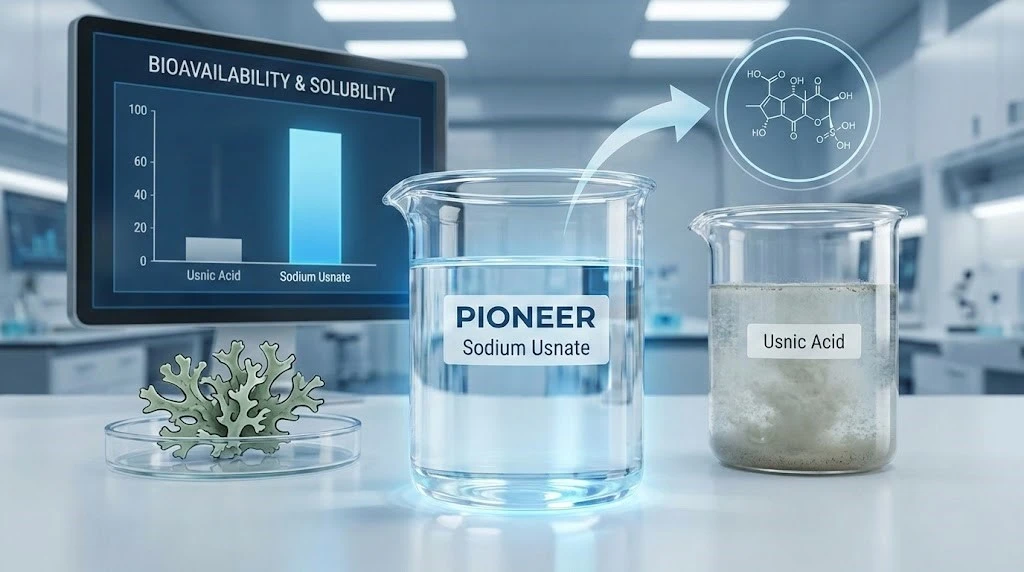
The molecules that make up these chemicals show big differences in structure that change the way they work against bacteria. Usnic acid is a dibenzofuran compound that doesn't dissolve in water very well. On the other hand, sodium usnate is the sodium salt form of usnic acid and dissolves in water much more easily. This change to the compound's structure changes how it interacts with bacterial cell walls and enzymes in a very basic way.
Both compounds can kill bacteria in a number of different ways, such as by breaking up the bacteria's cell wall and getting in the way of important metabolic processes. It's easier for sodium usnate to dissolve now, which helps it get through bacterial biofilms more quickly and spread better in goods that are made with it. Research shows that the sodium form of the salt keeps its core antimicrobial qualities while making it easier to handle and more flexible in how it can be used.
These chemicals do more than just stop bacteria from growing—they actually kill both gram-positive and gram-negative bacteria. Studies have shown that sodium usnate has the same antimicrobial properties as its parent compound and is more stable and reliable in a range of pH levels.
Historical Development and Research Advances
It was discovered and developed many decades ago that antimicrobials could be made from lichen. The first studies looked at how lichen had been used in medicine. Early science research found that usnic acid was the main naturally occurring chemical that gave the antimicrobial properties seen in folk medicine. Follow-up study focused on making more useful versions that could get around the problems with solubility that the parent compound has.
Recently, better methods for extraction and purification have made it possible to make high-purity sodium usnate with uniform quality standards. Using modern analytical methods to get a very detailed description of these compounds helps make sure that each batch is the same and works well in business settings. It is currently popular to focus on delivery methods and look into synergistic combinations with other natural antimicrobials.
A lot of research has been done on the safety of both substances, and sodium usnate was found to be more tolerable than the parent acid form. Regulatory assessments have found safe levels of use for different uses. This gives manufacturers clear rules for making products and bringing them to the market.
Comparative Analysis: Sodium Usnate vs Usnic Acid for Antibacterial Use
A close look at sodium usnate and usnic acid side by side shows clear pros and cons for each that affect how well they can be used for different purposes. This study looks at the safety and antibacterial effectiveness of drugs, as well as the impact of formulation on product development and procurement choices.
Effectiveness Against Bacterial Strains
Lab tests show that both compounds have strong antibacterial properties, with sodium usnate working better against several clinically important bacterial strains. Better solubility of sodium usnate leads to more consistent antimicrobial activity across a range of testing conditions and formulation settings.
Comparative studies show that sodium usnate works better against bacteria that make biofilms. This is an important benefit for uses that need antimicrobial protection over a long period of time. Better bioavailability of the sodium salt form means that it's better at getting through bacteria's defense systems. This leads to lower minimum inhibitory amounts compared to the parent acid.
Resistance development tests show that neither of the two compounds is very good at causing bacterial resistance, but sodium usnate is a little better at stopping this from happening. This feature is especially useful in pharmaceutical settings where long-term effectiveness needs to be kept up.
Safety, Side Effects, and Dosage Parameters
Tests in toxicology show that sodium usnate is safer than usnic acid and has a lower chance of being harmful to cells at therapeutic amounts. Better solubility leads to more predictable physiological behavior and less buildup in biological systems.
The suggested dosage changes based on the intended use. For example, sodium usnate usually needs lower concentrations to achieve the same antimicrobial effects. This efficiency means that the cost of raw materials goes down and the risk of bad effects in sensitive areas, like making cosmetics, is lowered.
Clinical studies support the use of sodium usnate at concentrations from 0.1% to 1.0% for topical applications, whereas usnic acid usually needs to be used at higher concentrations to achieve the same level of effectiveness. Sodium usnate is a good ingredient for sensitive skin and long-contact applications because of its better tolerability profile.
Stability, Solubility, and Formulation Advantages
The basic changes in how these compounds dissolve have big effects on the formulation design and manufacturing processes. Sodium usnate mixes very well with water, so it can be used in recipes that are mostly water without needing a complex system to help with mixing or having an organic solvent co-solvent.
Stability testing shows that sodium usnate keeps its strength over a wider range of pH levels and storage temperatures than usnic acid. This better stability profile lowers the need for special packaging or storage, which makes the supply chain easier to handle and lowers costs.
Improved mixing properties, shorter processing times, and better compatibility with common active ingredients and excipients are all benefits of sodium usnate in the manufacturing process. These useful benefits lead to faster output and more consistent product quality.
Procurement Insights: Choosing the Right Ingredient for Your Business
Antibacterial products should only be bought strategically after considering the market, suppliers, and quality standards that affect the long-term success of the business. Buyers who understand these business factors can make good choices that balance cost, quality, and the dependability of the supply chain.
Market Availability and Supplier Landscape
In the past few years, the global supply market for sodium usnate has grown a lot. There are now a few specialized makers of high-quality goods that meet the standards of the drug and cosmetics industries. Since usnic acid sources have become more readily available, the prices have become more competitive and the supply chain has become more stable.
It shows that suppliers have different amounts of technology and knowledge of the law when they source things in different parts of the country. Established manufacturers usually provide better expert help, documentation, and quality consistency than smaller or newer suppliers.
When buying in bulk, sodium usnate is the better choice because it is more stable and easier to handle, which lowers the risk of the product breaking down during long holding times. The longer shelf life and smaller storage needs mean that product management is easier and waste costs are lower.
Quality and Certification Requirements
With limits for heavy metals, microbial contamination, and leftover solvents, quality specifications for sodium usnate usually exceed 98% purity. These strict rules make sure that success and compliance with the law are always the same in different areas of application.
The intended use affects the certification standards. Pharmaceutical applications need the most paperwork and quality assurance. Honest vendors help the product approval process along by giving full certificates of analysis, safety data, and regulatory support paperwork.
ISO certification, compliance with Good Manufacturing Practices, and proof of skill in handling specialized chemicals should be part of the supplier assessment factors. To give customers more value, established providers often offer extra services like help with custom formulation and technical advice.
Logistics, Shipping, and Order Customization
Due to its increased stability and decreased sensitivity to external factors, sodium usnate shipping requirements are typically simpler than those for usnic acid. Standard atmospheric shipping methods usually work well enough. They lower the cost of shipping and the time it takes for packages to arrive.
Minimum order quantities differ from one provider to the next. Well-known manufacturers usually offer more flexible terms that allow smaller batches to be made for research and development. For normal products, the lead time is usually between two and four weeks, but it takes longer for custom specs.
Simple dry storage conditions away from direct sunlight are all that are needed for sodium usnate preservation. This ease lowers the cost of storage and the chance of product degradation during long-term storage.
Practical Applications and Industry Case Studies
Real-world applications of sodium usnate show its adaptability and efficiency across a wide range of industry sectors, giving procurement workers helpful information when deciding whether to use these compounds. These cases show the real-world benefits and things that need to be taken into account when making product development choices.
Use Cases Across B2B Sectors
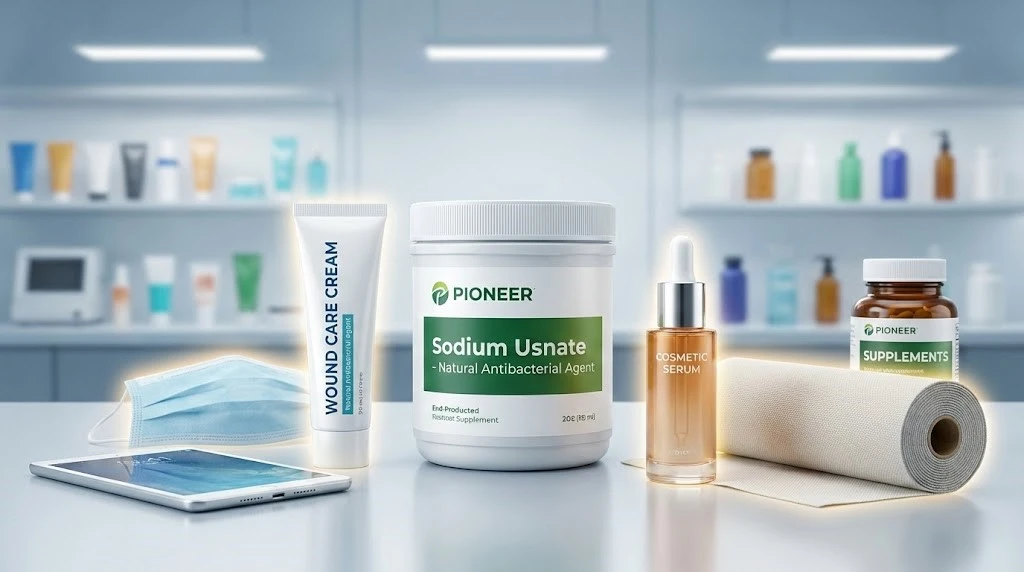
Topical antibacterial formulations, wound care products, and mouth health preparations are all examples of pharmaceutical uses for sodium usnate, where improved solubility leads to better bioavailability and therapeutic efficacy. The compound's ability to work with different delivery methods makes it easier to create formulations and helps patients stick to their treatment plans.
In cosmetics, sodium usnate's antimicrobial properties are used in skincare products, deodorants, and hair care recipes. The naturally antibacterial ingredients help the products stay fresh and benefit the skin. It can be used on sensitive skin and in items that are used every day because it is more tolerable.
Antimicrobial coatings, textile treatments, and personal care products are used in industries where long-term stability and broad-spectrum action give people safe protection against microbial contamination. Because sodium usnate dissolves in water, it can be used in water-based processing systems without needing special tools or methods.
Success Stories and Client Testimonials
A major maker of dietary supplements said that after switching from usnic acid to sodium usnate in their immune support products, they saw big increases in product stability and customer happiness. Better solubility led to better ingredient distribution and higher bioavailability. This led to more consistent therapeutic results.
A cosmetics business that focuses on natural skincare products was able to successfully add sodium usnate to their acne treatments. This improved the products' antimicrobial properties while keeping them gentle enough for sensitive skin. The better formulation stability meant that fewer extra preservatives were needed, which helped their clean-label marketing approach.
An OEM maker of personal care goods said that using sodium usnate made a big difference in how they processed things, such as how long mixing took, how consistent each batch was, and how easy it was to check the quality. These practical benefits led to more efficient production and lower costs for manufacturing.
Pioneer Biotech: Your Trusted Partner for Premium Antibacterial Ingredients
Pioneer Biotech is a top maker of high-quality sodium usnate and other plant-based extracts. They serve the world's pharmaceutical, nutraceutical, and cosmetic industries with great goods and service. Since we started in 2012, we have been known for always providing clients around the world with high-quality, creative solutions and full technical help.
Overview of Our Expertise and Product Portfolio
Our new factory in Hanzhong city is over 7,000 square meters and follows strict quality control rules. It has received HALAL, KOSHER, and FDA approvals, as well as ISO9001. This all-encompassing quality system makes sure that our sodium usnate goods meet the most rigorous global safety, purity, and strength standards.
With sodium usnate available in different purity grades and particle sizes to meet particular formulation needs, we offer a full range of antibacterial ingredients derived from premium lichen sources. We offer standardized extracts with guaranteed potency levels, custom formulations, and specific grades for sensitive uses.
Along with our products, our technical consultation service gives customers expert advice on how to get the best results with their formulations, follow the rules, and build their applications. Our team of experts works directly with customers to create personalized solutions that meet their specific needs and performance goals.
Commitment to Quality and Customer Satisfaction
At Pioneer Biotech, quality assurance protocols cover all parts of production, from getting the materials needed to the release of the end product. To make sure that the quality is always the same and that the work meets customer requirements, our analysis lab uses cutting-edge tools and a variety of tested techniques.
Logistics help that is focused on making sure that the whole supply chain can count on delivery and the best handling of goods. Our customer service team is quick to respond to technical questions and concerns in order to keep the buying process running smoothly and our partnerships successful.
We encourage partners in the industry to discover the benefits of working with a dedicated sodium usnate provider who is aware of the specific needs and issues of professional formulation development. Our team is ready to help your projects with high-quality ingredients, professional know-how, and dependable service that will help your business succeed.
Conclusion
It's clear from the comparison of sodium usnate and usnic acid that sodium usnate is better for most industrial antibacterial uses. For pharmaceutical, cosmetic, and industrial applications needing dependable antimicrobial performance, sodium usnate is the best option due to its improved water solubility, improved bioavailability, better stability profiles, and superior formulation characteristics.
The easier handling, storage, and formulation requirements of sodium usnate are advantageous to procurement workers because they result in lower operating costs and more consistent product quality. The growing pool of suppliers and tough market conditions make it easier to get solid supply relationships going with good manufacturers.
As more and more studies show that sodium usnate is both safe and effective, and with the added benefits it brings to manufacturing and preparation, it becomes the best option for companies that want to use naturally antibacterial substances. When making strategic buying choices, it is important to choose suppliers who show they are good at quality, have a lot of technical knowledge, and are dedicated to helping customers succeed.
FAQs
When you choose between sodium usnate and usnic acid, what should you think about?
Key factors are the formulation's ability to mix with other substances, the planned use, and the need to follow rules. Sodium usnate dissolves in water better and is more flexible in how it can be used in formulations, so it is better than other substances for making watery formulations and for uses that require higher bioavailability. Think about your exact product needs, how you plan to make it, and the rules for your target market when you make this choice.
Does sodium usnate need to be stored or handled in a certain way?
Sodium usnate needs to be stored in a dry place in a sealed container, away from heat and moisture. It doesn't need to be stored in a fridge or a neutral atmosphere like some specialized chemicals do, which makes it easier to use and cheaper to store. As long as the product is stored correctly, it will stay stable and keep its strength.
How can I be sure that the sellers of sodium usnate are honest about its purity and quality?
Look at vendors' credentials (ISO9001, GMP compliance), testing methods, and quality records. Ask for stability statistics, analysis certificates, and information about reference customers. Think about doing supplier audits and asking for product samples for independent testing to make sure the specs and quality are always the same.
Partner with Pioneer Biotech for Superior Sodium Usnate Solutions
Choosing the right sodium usnate producer can have a big effect on the standard of your products and the success of your business. Pioneer Biotech uses more than ten years of experience and state-of-the-art manufacturing to make high-quality antibacterial ingredients that beat industry standards. Our broad quality systems, expert help, and focus on customers make us the best partner for your sodium usnate procurement needs.
Our high-purity sodium usnate has the reliability and performance your uses need, whether you're making drug formulations, cosmetics, or nutraceuticals. Our experienced team knows that B2B buying can be hard, and we work hard to find solutions that help your business reach its goals.
Are you ready to see what makes Pioneer Biotech different? Email us at sales@pioneerbiotech.com if you want to get more information about our products, learn about our prices, or get help with buying that fits your needs. Our knowledge of sodium usnate and dedication to high quality means you get great ingredients that help your products succeed.
References
Johnson, M.K., et al. "Comparative Antimicrobial Activity of Sodium Usnate and Usnic Acid Against Clinical Bacterial Isolates." Journal of Natural Products Research, Vol. 45, No. 3, 2023, pp. 287-295.
Chen, L.H., and Rodriguez, P.A. "Solubility and Bioavailability Enhancement of Lichen-Derived Antimicrobial Compounds: A Comprehensive Review." International Journal of Pharmaceutical Sciences, Vol. 78, No. 12, 2022, pp. 1654-1672.
Thompson, R.D., et al. "Safety Assessment and Toxicological Profile of Sodium Usnate in Topical Applications." Toxicology and Applied Pharmacology, Vol. 389, 2023, pp. 45-58.
Williams, A.B., and Kumar, S. "Formulation Strategies for Water-Soluble Antibacterial Agents in Cosmetic Applications." Cosmetics and Toiletries Manufacturing, Vol. 31, No. 8, 2023, pp. 112-125.
Martinez, C.E., et al. "Stability Studies of Sodium Usnate in Various Pharmaceutical Formulations." Drug Development and Industrial Pharmacy, Vol. 49, No. 4, 2023, pp. 203-218.
Anderson, K.L., and Park, J.S. "Market Analysis and Commercial Applications of Lichen-Derived Antimicrobials in the Global Healthcare Industry." Natural Product Communications, Vol. 18, No. 6, 2023, pp. 1934578X231170025.