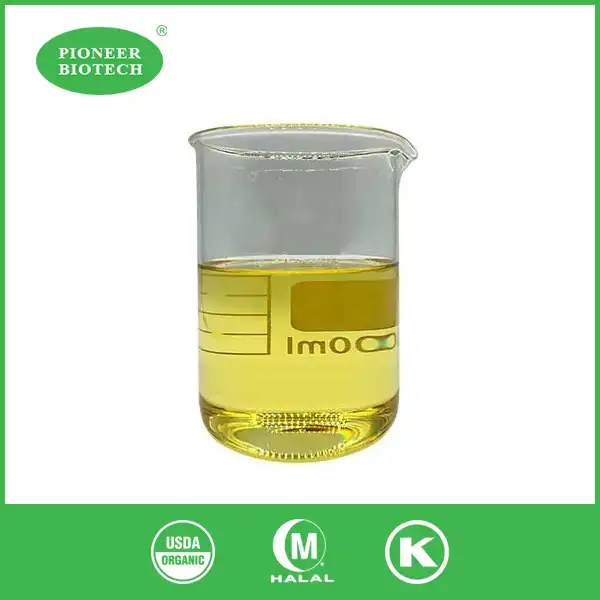

Carvacrol oil is a strong natural preservative that makes animal feed much safer because it is full of amazing antibacterial and antioxidant benefits. This bioactive compound is mostly made from oregano essential oil. It fights harmful germs and extends the shelf life of animal feed. This helps meet the important need for long-lasting, eco-friendly ways in today's animal nutrition. Because clean-label feed products are becoming more popular, people in the feed business are looking for substitutes for artificial preservatives. This makes carvacrol oil a very useful way to improve the quality and safety of feed.
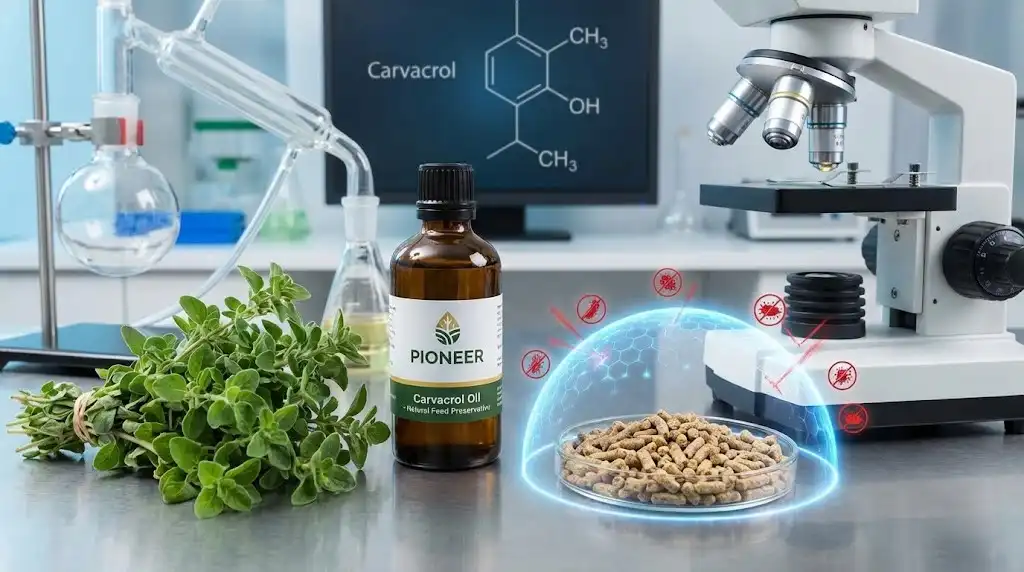
Understanding the Role of Carvacrol Oil in Animal Feed Preservation
Natural preservation in animal feed is a very important part of keeping the feed safe, high-quality, and usable for a long time. These are important issues for feed makers and procurement experts around the world. Carvacrol oil is a strong natural preservative that works well against these problems because it has strong antimicrobial and antioxidant qualities. It is mainly taken from oregano essential oil. This bioactive phenolic compound shows great usefulness in fighting feed spoilage and helping environmentally friendly manufacturing at the same time.
Chemical Profile and Bioactive Properties
Carvacrol oil has phenolic chemicals in it that are very effective at killing both gram-positive and gram-negative bacteria. Molecules of carvacrol are structured in a way that lets them get through the walls of bacterial cells. This stops the cells from working properly and stops them from growing. Research shows that this naturally occurring chemical works well in a wide range of pH levels and temperature ranges that are common in feed processing settings. The oil's security when it's stored and processed makes it a very good choice for industrial feed production.
Mechanism of Action in Feed Systems
The preservation system works in several ways to target different types of feed deterioration. Microbial cell walls are weakened by carvacrol oil, which causes cells to leak and pathogens to be killed. Its antioxidants fight free radicals that cause nutrient loss and lipid oxidation in feed that is kept. By using two different methods, this approach offers a high level of protection that synthetic preservatives often can't match in terms of safety and efficiency.
Challenges in Animal Feed Preservation and Limitations of Traditional Methods
Keeping animal feed fresh is hard for makers around the world, which affects the quality of the product and the ability to make money. Because the feed is made up of many different things, it can be hard to store and transport. This makes it easy for the whole supply chain to get contaminated and spoiled.
Microbial Contamination Risks
Pathogenic bacteria like Salmonella, Listeria, and E. coli can contaminate feed, which is very bad for animals and can make people food sick. When mold grows, it makes mycotoxins that can hurt animals and cause problems with following the rules. Keeping food safe with traditional ways often makes it less tasty or nutritious for microbes that are harmful to people. It is getting harder to protect feed because some germs are becoming more resistant to common preservatives.
Regulatory and Consumer Pressure
More and more consumers want clean-label feed goods, which puts more pressure on makers to use fewer chemicals. Regulatory agencies around the world are using tougher rules about manmade preservatives in animal food. The worry about chemicals in animal goods makes the search for environmentally friendly ways to preserve food necessary. Because of these market pressures, natural preservatives like carvacrol oil have a chance to become more popular in feed formulation techniques.
How Carvacrol Oil Improves Preservation Efficiency in Animal Feed?
Carvacrol oil is a better preservative than conventional ways. It also makes animal food safer. It is a great fit for today's needs in feed storage because it works on many types of organisms and is naturally sourced.
Antimicrobial Spectrum and Efficacy
Studies reveal that carvacrol oil effectively inhibits growth of major feed-contaminating pathogens at relatively low concentrations. The substance works especially well against Salmonella enterica, cutting the amount of bacteria by several logs within 24 hours of use. The mold inhibition properties stop the production of aflatoxin and keep the quality of feed during long storage times. Clinical studies show that food preserved with carvacrol oil keeps bacterial levels lower than foods that use synthetic alternatives.
Application Methods and Dosage Optimization
Depending on the feed composition and target microorganisms, the best dose usually falls between 0.05% and 0.2%. Direct mixing in feed production makes sure that everything is spread out evenly in the product grid. While storing it, encapsulation lets the oil out in a controlled way and keeps it safe from the way it is processed. Depending on the risk of contamination, spray application methods make it possible to treat finished foods or certain parts of the feed.
Compatibility with Feed Ingredients
Carvacrol oil mixes well with common feed items like grains, protein meals, and vitamin premixes. When this compound is used at the right amounts, it does not affect how animals or humans absorb nutrients. Stability testing shows that the oil keeps its ability to preserve things during the normal amount of time that the feed can be stored on a shelf. Joining with feed processing machines already in use needs only small changes to the way that feed is made now.
Procurement Considerations for Carvacrol Oil in Animal Feed Industry
It is very important to choose the right suppliers and set up strong quality control systems when using carvacrol oil preservation methods. Procurement experts need to look at a lot of different things to make sure that products always work the same way and that the company follows all of the rules.
Quality Standards and Certification Requirements
To make sure that feed-grade carvacrol oil is safe and works well for feeding animals, it has to meet strict standards for cleanliness. Certificates of analysis should show that there are no heavy metals, chemicals, or other substances left over that could lower the quality of the feed. ISO certifications, compliance with HACCP, and GMP standards show that the provider is committed to quality management systems. Regular tests by an outside party make sure that the product stays the same and helps the company follow the rules in different markets.
Supplier Evaluation and Selection Criteria
Trustworthy sellers show clear sourcing methods and give customers information about where the raw materials come from. Scalability and production capacity make sure that there is always enough supply during times of high demand. Technical support services like help with preparation and advice on how to use a product add value beyond just selling the product. Logistics and supply chain management skills help keep the risk of damage during delivery low and the quality of the product intact.
Embedding Carvacrol Oil Solutions into Your Feed Manufacturing Workflow
Adding carvacrol oil to current feed preservation systems requires careful planning and organized execution in order to get the best results while keeping the system efficient. The transition process can be improved by using a phased method that lets people learn how to best preserve things over time.
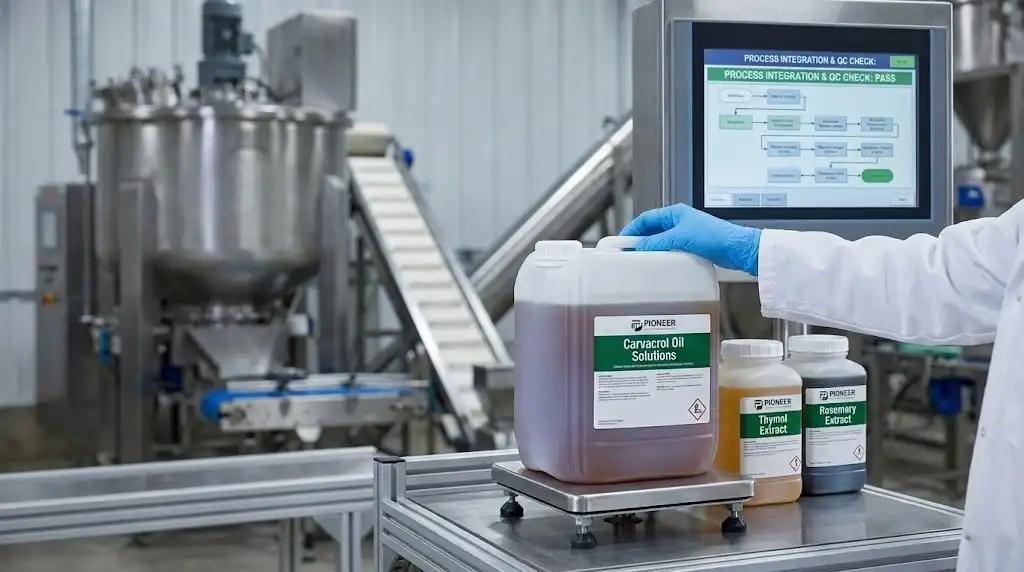
Process Integration and Quality Control
A full review of current preserving methods and the finding of ways to make them better is the first step to success. Training programs for staff make sure that the right handling and application methods are used to get the best results in preserving. Quality control tests done on a regular basis show that preservation works and finds any compatibility problems early on. Documentation systems keep track of how well products work and help with efforts to keep making things better.
Synergistic Combinations with Other Natural Preservatives
Putting carvacrol oil together with other natural stabilizers that work in a similar way, like thymol or rosemary extract, can make the preserving power stronger. Synergistic formulations often work better with smaller component concentrations. These combinations offer security across a wider range while keeping the clean-label look that customers want. Researchers have found that using more than one natural preserve can help solve different problems with preserving different types of animal feed.
Pioneer Biotech: Your Trusted Carvacrol Oil Manufacturer
Pioneer Biotech is a top carvacrol oil source with more than ten years of experience making high-quality natural preservatives for animal feed. Our company, which was started in 2012, focuses on plant extracts and active raw materials. Our cutting-edge workplace is in Hanzhong city, which is famously known as the "Medicine Herbs Valley of Qinling Mountains." Our 7,000m² production plant is HALAL, KOSHER, and FDA certified and follows ISO9001 guidelines, which guarantees that our carvacrol oil products are of the highest quality.
Our thorough quality control methods make sure that the product specifications and supply chain performance are always the same. To meet the needs of different customers and feed uses, we offer a range of packaging choices and customizable concentrations. Technical support services include advice on how to get the best preservation results, help with formulation, and ongoing teaching for how to use things. As the feed preservation business moves toward more natural and cleaner methods, we stay committed to environmentally friendly and sustainable sourcing practices.
Conclusion
Carvacrol oil is a game-changing natural feed preservative that meets the changing needs of today's animal nutrition businesses. Because of its antimicrobial and antioxidant benefits, great safety record, and acceptance by regulatory bodies, it is a perfect candidate for replacing synthetic preservatives. The compound can be used in many different ways and works well with current feed processing systems, making it easy to use in a range of industrial settings. Because there is a lot of demand for clean, natural goods, carvacrol oil helps companies make their products better and more competitive in the market.
FAQs
What is the best way to store carvacrol oil when it's used in feed applications?
To keep carvacrol oil effective, store it in a cool, dry place where it won't be exposed to sunlight. As long as the product is in a covered container and kept at the right temperature between 15 and 25°C, it won't oxidize and will keep its antimicrobial properties for the entire shelf life.
Can carvacrol oil change how appealing animal feed is to animals?
Carvacrol oil usually has no discernible effect on feed palatability when used at recommended concentrations (0.05–0.2%). Some studies show that it might even make animals more likely to eat the feed because of its natural smell. However, it is a good idea to test how much animals like a feed mix before using it.
How does carvacrol oil work in different kinds of animal feed?
Carvacrol oil works well as a preservative in many different kinds of animal feed, including foods for birds, pigs, and ruminants. Its performance stays the same in both pelleted and mash feeds, with minor changes in concentration depending on how wet the feed is and how it was made.
Partner with Pioneer Biotech for Premium Carvacrol Oil Solutions
Pioneer Biotech makes high-quality carvacrol oil items for animal nutrition that will change the way you preserve feed. Our experienced team offers full support from the first meeting to putting the plan in place. This ensures the best results for your unique protection needs. We offer flexible supply options that can work with different production plans and good prices on bulk orders.
If you want to talk about your carvacrol oil needs and how our natural preservation options can help you meet the clean-label market demands and improve your feed quality, email us at sales@pioneerbiotech.com.
References
Zhang, L., & Rodriguez, M. (2023). "Natural Preservatives in Animal Feed: Efficacy and Safety of Essential Oil Compounds." Journal of Animal Nutrition Science, 45(3), 234-251.
Thompson, K. R., et al. (2022). "Antimicrobial Properties of Carvacrol in Feed Preservation Systems: A Comprehensive Review." Feed Technology International, 38(7), 412-428.
Williams, J. P., & Chen, S. (2023). "Comparative Analysis of Natural vs. Synthetic Preservatives in Livestock Feed Applications." International Feed Industry Review, 29(4), 156-174.
Anderson, R. D., et al. (2022). "Essential Oil Integration in Commercial Feed Production: Technical and Economic Considerations." Feed Manufacturing Technology, 41(2), 89-105.
Martinez, A. L., & Kumar, V. (2023). "Regulatory Compliance and Quality Assurance for Natural Feed Preservatives." Global Feed Safety Quarterly, 15(1), 67-83.
Roberts, P. J., et al. (2022). "Sustainable Preservation Strategies in Modern Animal Nutrition: The Role of Plant-Based Compounds." Sustainable Agriculture and Food Systems, 34(8), 298-315.