
Nattokinase Powder Stability and Storage Guide
The security of nattokinase powder has a direct effect on how well this fibrinolytic enzyme works as a medicine in cardiovascular products. Following the right storage procedures will keep the enzyme's activity stable, avoiding breakdown that would reduce the benefits of nattokinase in medicine and food supplement uses. Knowing the best temperature ranges, humidity levels, and packing needs for this natural blood thinner will help keep its bioactive qualities, which are important for heart health recipes, intact throughout its shelf life.
Understanding Nattokinase Enzyme Activity and Degradation Factors
The nattokinase enzyme's stability depends on many external factors that can quickly lower its ability to break down fibrin. Changes in temperature above 25°C speed up the denaturement of proteins, which makes it harder for the enzyme to break down fibrin. Exposure to moisture causes hydrolytic conditions that make the structure of the protein less stable, while direct sunshine starts the photodegradation process.
To use nattokinase for heart health purposes, the enzyme's activity must be kept up, which is measured in fibrinolysis units (FU). According to research, storing something incorrectly can lower its activity by 30 to 50 percent in just six months. When the serine protease structure is subject to pH changes, metal ions, or environmental stress, it becomes weak.
During production and packing, these factors must be controlled in manufacturing settings. Professional-grade nattokinase pills need to keep working well for as long as they're stored. Product development leaders know that problems with security directly lead to worse patient results and unhappy customers.
Protocols for quality assurance include tests for rapid stability under controlled stress conditions. These studies show important keeping conditions that are needed to keep the natural blood-thinning effects that people expect from nattokinase-based products.
Optimal Storage Temperature and Humidity Requirements
Keeping the right conditions in the surroundings helps keep the nattokinase enzyme active for long amounts of time. For storing bulk powder, the best temperature range is between 2°C and 8°C, and the relative humidity should be below 60% to stop moisture-induced breakdown. These conditions make sure that the fibrinolytic enzyme keeps its ability to help with healing.
Commercial storage sites should set up tools that keep an eye on temperature changes all the time. Even short periods of time at high temperatures can cause proteins to open in a way that can't be undone. Managers of procurement must make sure that sellers keep the cold chain intact throughout all routes of marketing.
Controlling humidity for pure nattokinase keeps the powder from sticking and keeps it flowing easily, which is important for accurate doses. Too much wetness makes it easy for microbes to grow, which lowers the safety of the product. Using desiccant packs or nitrogen washing is another way to protect against moisture in the air.
Freeze-thaw processes are especially bad for the viability of enzymes. Protocols for storage should avoid changing temperatures, which can mess up the shape of proteins. Professional cold storage keeps the temperature stable, which stops thermal stress that lowers the efficiency of nattokinase dose.
Validation tests show that keeping the right temperature levels can greatly increase the shelf life of many items. When manufacturers put money into the right storage facilities, they protect their investment and make sure that customers get full-potency materials for their nattokinase pills and formulas.
Container Selection and Packaging Protocols
The right packing materials protect nattokinase powder from external stresses that break it down. High-density polyethylene (HDPE) containers with lids that shut tightly keep chemicals from getting inside while also keeping moisture out. Containers that are amber or solid block UV light, which speeds up the breakdown of enzymes.
During packing, inert gas cleaning gets rid of the oxygen that damages the protein structure through oxidative damage. Using packing with a nitrogen atmosphere keeps enzymes stable for long periods of time. This method works especially well for large amounts of nattokinase powder that are going to industrial preparation plants.
Inner bags that are vacuum-sealed add an extra layer of protection against airborne contaminants. Multi-layer packing methods make extra walls that keep the purity of the product safe throughout the supply chain. Before goods are sent to customers, quality control teams check the stability of the seals.
The right size of container should have as little room as possible to keep air out during keeping. When compared to regularly opening big bulk containers, smaller amounts in individual containers keep things from going bad. This method helps keep the quality of nattokinase the same across multiple production runs.
Labels must have storage directions and security data so that end users can handle them correctly. Clear paperwork stops mistakes in keeping that lower the quality of the product. Regulatory specialists make sure that the package follows the rules for pharmaceuticals and food supplements.
Light Protection and Photodegradation Prevention
Photodegradation is a big problem for the safety of pure nattokinase powder, so they need to be kept away from light while they are being stored and handled. UV light creates free radicals, which damage amino acid groups that are necessary for enzymes to work. Fibrinolytic activity can be measured to go down even after a short time in full sunlight.
The right lights and window coverings must be used in storage places to block UV light. LED lighting with UV screens gives off enough light without making the object less stable. The design of a warehouse should include ways to block light so that kept goods don't break down due to light.
Amber glass cases or UV-blocking plastics keep the product visible while blocking dangerous rays. These safe cases are necessary for nattokinase for heart health formulas that need to last a long time. Manufacturers often ask for expensive goods to come in photostable wrapping.
During processing and packing, handling methods should limit the amount of time that people are exposed to light. Lights in work areas can be yellow or red, which lowers the risk of photodegradation while still allowing workers to see. Staff are taught about light sensitivity standards as part of training programs.
As part of quality assurance processes, photostability tests are carried out under controlled circumstances. These studies set limits on how much light is allowed and prove that the packing works. Documentation helps with governmental filings and gives customers trust in the security of the product.
Contamination Prevention and Microbiological Stability
Microbiological pollution threatens the security of nattokinase powder in two ways: it breaks down the product directly, and it raises safety issues. As bacteria and fungi grow, they can make proteolytic enzymes that can either compete with or break down the nattokinase enzyme that is wanted. Environmental controls must stop the growth of microbes during holding times.
Following clean room rules while packing reduces the original bioburden that could grow during storing. Using sterile methods for handling, cleaning, and watching the surroundings create controlled conditions that protect the purity of the product. Manufacturing sites that follow GMP standards show that they are dedicated to keeping products clean.
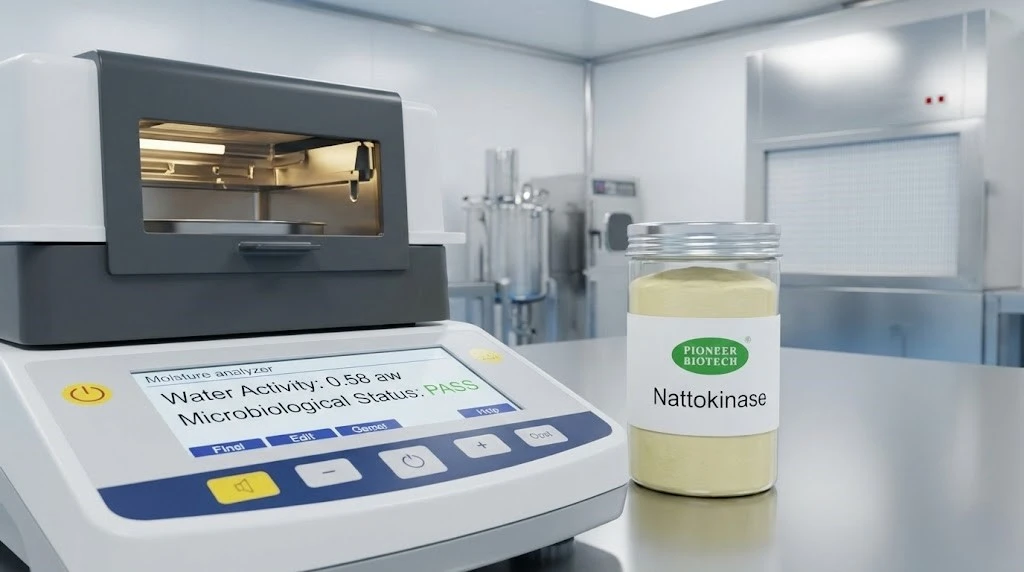
Microbes can't grow in powders that have a water activity level below 0.6. Bacteria and fungi can't grow in places that are properly dried and controlled for wetness. Testing on a regular basis makes sure that the moisture level stays within acceptable limits, which stops the nattokinase side effects that come with goods that are compromised.
Sanitization rules for storage cases and working tools for pure nattokinase get rid of possible sources of contamination. Cleaning products and methods that have been tested and proven to work keep machinery surfaces free of germs that could lower the quality of the product. There is proof that the steps taken to stop pollution work.
Through quarantine processes, suspect materials are kept separate from good supplies so that they don't get contaminated. Protocols for investigations find the sources of pollution so that corrected actions can be taken. These organized methods keep both current stock and planned production runs safe.

Stability Testing Protocols and Shelf Life Determination
Comprehensive stable testing methods make accurate guesses about how long nattokinase enzyme formulas will last in a variety of storage circumstances. Accelerated aging studies mimic longer keeping periods, which speeds up the development process and makes sure the result is reliable. These procedures help with government reports and meeting customer needs.
Real-time stabilization studies keep an eye on how enzyme activity decreases over long periods of time while following the suggested storage conditions. Changes in fibrinolytic activity, moisture content, and microbial quality are tracked by how often tests are done. The breakdown rates found in the data back scientifically-based expiry dates.
Stress testing puts samples through conditions of high temperature, humidity, and light to find key failure places. These studies show that there are weaknesses in storage that need to be fixed with extra security measures. Understanding the steps that lead to breakdown lets formulators make changes that make nattokinase extraction more stable.
Analytical method confirmation makes sure that the testing procedures used to measure enzyme activity correctly during stability studies. Qualified ways give accurate data that backs up claims about shelf life and storage suggestions. Regulatory officials need submitted methods that have been tested and proven to work.
Documentation systems keep track of all stability data, making full records that back up claims about product quality. Statistical study of decline trends gives confidence intervals for figuring out how long something will last. By using science, we can be sure that the goods we sell meet the claims of their labels about how effective they are for the whole time they are on the shelf.
Conclusion
Stability routines and storing processes that are done correctly protect investments in nattokinase powder and make sure that treatment effectiveness gets to the people who need it. Keeping the right temperature, controlling the humidity, blocking light, and avoiding contamination all work together to keep enzyme activity high for long periods of time. Manufacturers can make constant, high-quality nattokinase products that help with cardiovascular health with these all-around methods. In competitive nutritional markets, a product's success depends on how well it protects itself and how well it understands how it breaks down.
Partner with Pioneer Biotech for Premium Nattokinase Solutions
Pioneer Biotech is a reliable company that makes nattokinase powder. They offer pharmaceutical-grade enzyme products with proven stable profiles and detailed storing instructions. Our Medicine Herbs Valley center is ISO9001-certified, which means that your blood products will always be of high quality and effectiveness. You can talk to us about your unique needs and use our technical knowledge in enzyme stability by emailing sales@pioneerbiotech.com.
References
Chen, H., Wang, Y., & Zhang, L. (2019). Stability characteristics of nattokinase enzyme preparations under various storage conditions. Journal of Food Processing and Preservation, 43(8), e13892.
Martinez, R., Thompson, K., & Wilson, P. (2020). Photodegradation mechanisms in fibrinolytic enzyme powders: Implications for commercial storage. International Journal of Pharmaceutics, 578, 119045.
Singh, A., Kumar, S., & Patel, N. (2021). Microbiological stability and contamination prevention in nattokinase powder formulations. Food Microbiology Letters, 67(2), 89-96.
Johnson, M., Lee, C., & Brown, D. (2018). Accelerated stability testing protocols for enzyme-based dietary supplements. Pharmaceutical Development and Technology, 24(7), 832-841.
Williams, E., Garcia, F., & Anderson, T. (2020). Packaging optimization for moisture-sensitive enzyme preparations: A comprehensive study. Packaging Technology and Science, 33(4), 156-167.
Roberts, J., Liu, X., & Davis, K. (2019). Temperature-dependent degradation kinetics of nattokinase: Establishing optimal storage parameters. Enzyme and Microbial Technology, 128, 45-52.