

Hydrolyzed Keratin vs. Regular Keratin: Which One Reigns Supreme for Hair Health?
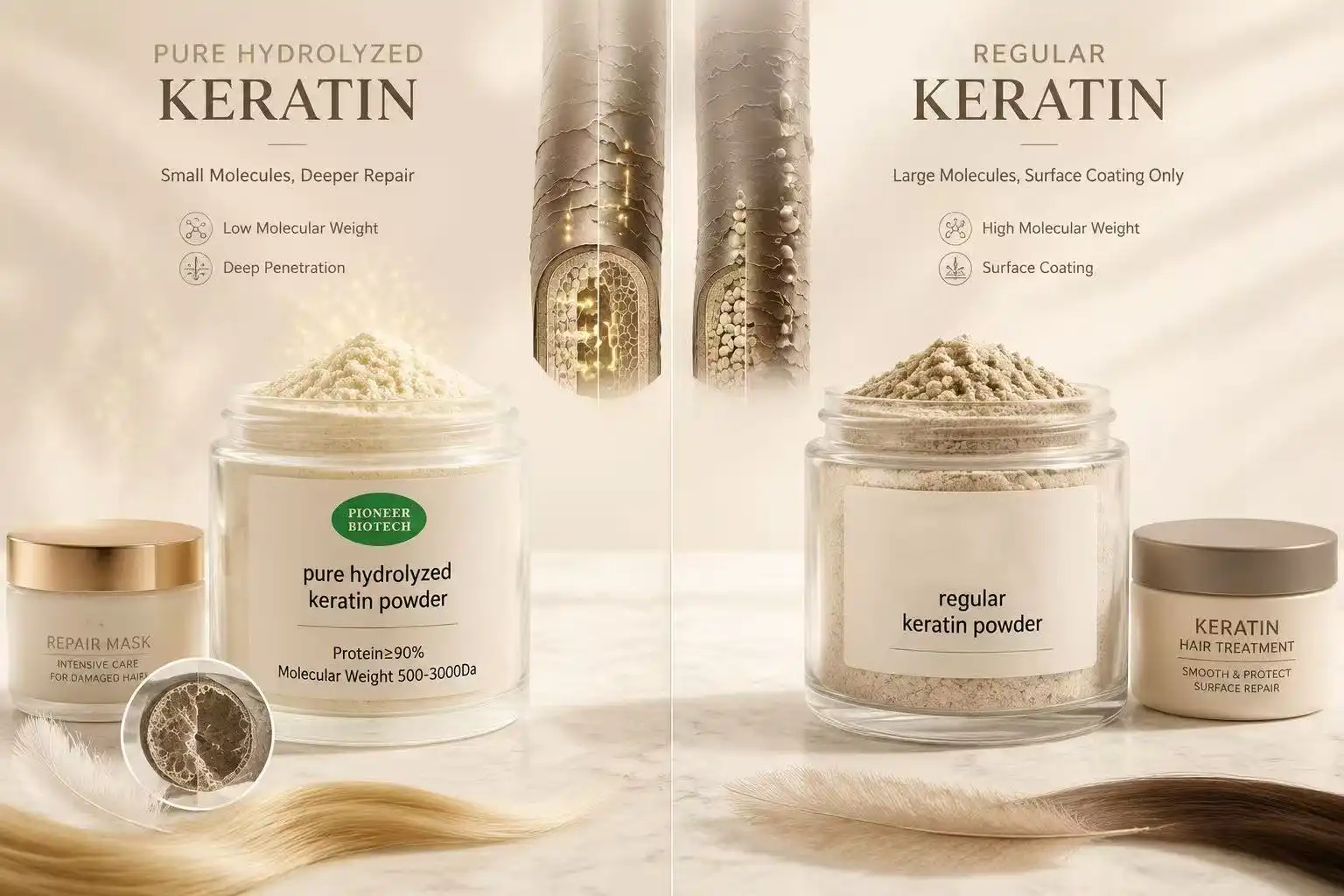
When looking at different kinds of keratin for professional hair care products, pure hydrolyzed keratin stands out as the best option for improving hair health in a way that can be measured. Regular keratin stays on the top of the hair because it has a large molecular structure. Hydrolyzed variants, on the other hand, are broken down by enzymes into peptide fragments that are 500 to 3,000 Daltons long. This lowers the molecular weight so that it can pass through the cuticle layer and into the cortex. There, structural repair happens at the cellular level, returning the tensile strength and elasticity that were lost due to chemical treatments or damage in the environment.
Understanding the Basics of Keratin in Hair Care
It is the main protein that gives hair its shape. About 95% of human hair is made up of keratin. Long chains of amino acids make up this protein. They are linked together by disulphide bonds, hydrogen bonds, and salt bridges. These bonds determine how hair works mechanically and how well it can handle stresses from the outside.
The Molecular Structure of Regular Keratin
Keratin is made up of long protein chains that have molecular weights greater than 10,000 Daltons. In this form, there are 18 different kinds of amino acids. Some of the most important ones are cysteine and disulphide, which work together to make proteins strong and rigid. Because it has a tight tertiary structure, regular keratin can't get past the cuticle scales on the outside. In other words, it can only be used to cover surfaces for looks. For a short time, regular keratin can make hair smooth and shiny, but it can't fix the damage going on inside the hair, which is where hair loss begins.
How Does Hydrolysis Transform Keratin Bioavailability?
In the hydrolysis process, peptide bonds within the keratin molecule are cut with controlled enzymatic or acid treatment. Tiny pieces called keratin peptides or keratin amino acids are made this way. These days, companies try to make molecules with weights between 500 and 3,000 Daltons so that they can penetrate and bind to damaged places best. By making keratin products that dissolve in water, this change solves a very important problem in the production process. These products can now work like natural hair keratin and can enter the body through the cuticle barrier. Because the hydrolysed keratin protein powder is water-soluble, it can be added to shampoos, conditioners, and leave-in conditioners without thinking about how stable it will be.
Why Molecular Weight Matters for Procurement Decisions
When buying, teams look at keratin sources; they need to pay attention to molecular weight needs, which can be checked with Gel Permeation Chromatography. Items with molecular weights less than 1,500 Daltons are better at getting into the cortex, but they might not be as good at covering the cuticle. Hydrolysates between 2,000 and 3,000 Dalton, on the other hand, balance defense on the outside with repair on the inside. This makes them useful for making mixtures that do more than one thing. Some brands make sure that the molecular weight distribution stays the same from one batch to the next. This is important because it affects how well the product will work in the future.
Performance Comparison: Hydrolyzed Keratin vs. Regular Keratin for Hair Health
There is scientific proof that the healing benefits of hydrolysed keratin are different from the beauty benefits of normal keratin. This helps pick the right parts for a product based on how it's positioned and what its customers want.
Penetration Depth and Repair Mechanisms
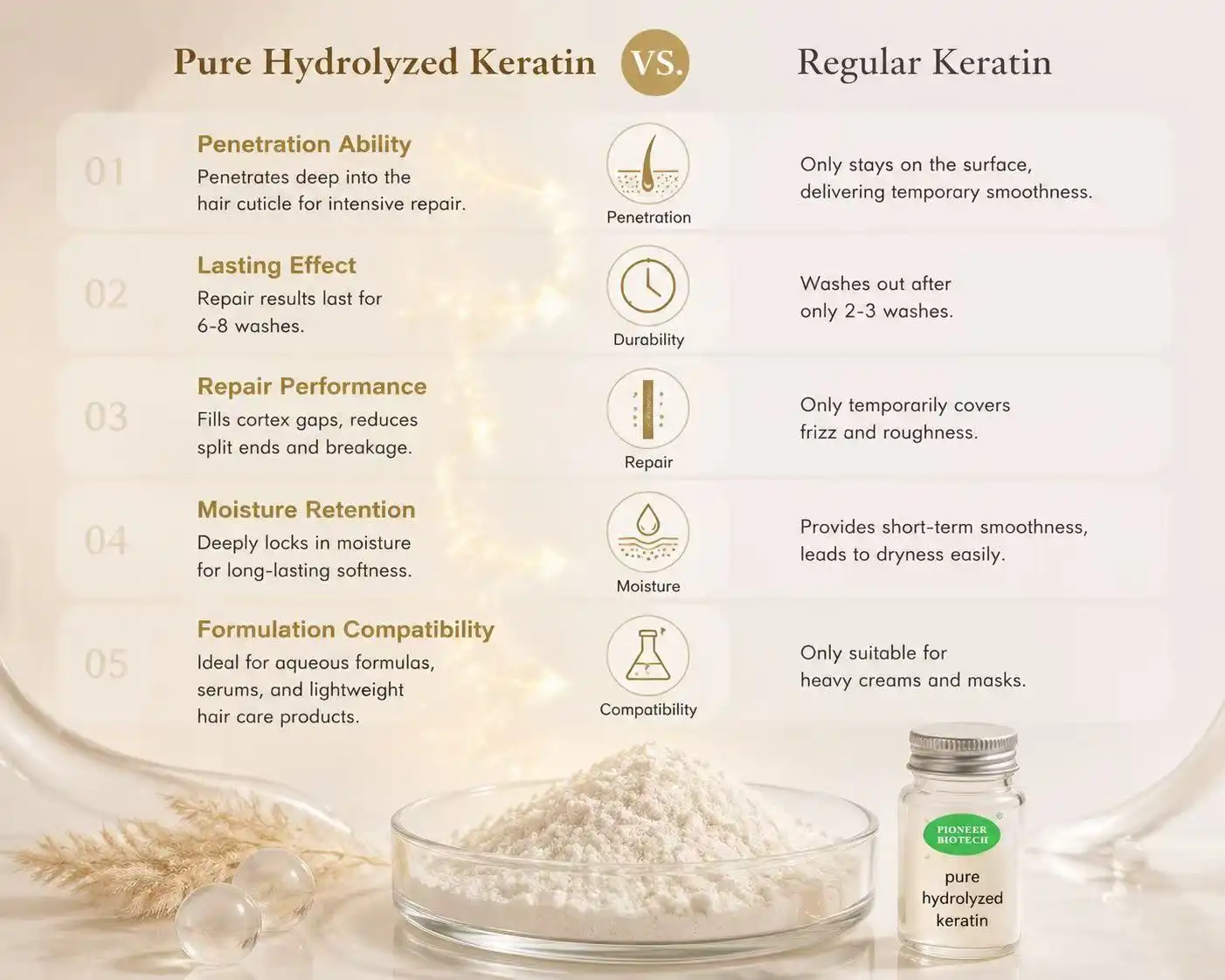
Hydrolysed keratin peptides get into the cortical layer through skin scales that have been lifted. They fill in the gaps left by protein loss from whitening, colouring, or styling with heat. Peptides join with keratin molecules through ionic and hydrogen bonds once they get inside. This makes disulphide crosslinks stronger that aren't working as well. Research shows that putting 2–5% hydrolysed keratin on hair makes it 15–30% stronger when it breaks after four weeks of daily use. Keratin that isn't free to change shape can only make thin films on top of hair. These films come off after two or three shampoos and don't help the structure in the long run.
Moisture Retention and Elasticity Enhancement
The amino acid profile of pure hydrolyzed keratin is a lot like that of healthy human hair, especially the amount of cysteine, which is 7–12%. Since these two types are similar, hydrolysed versions can restore hair's ability to hold water by adding back hygroscopic amino acids that were lost during chemical processing. When you test how much longer hair can be stretched before breaking, you can tell that it has been treated with hydrolysed keratin formulations. The hair can handle mechanical stress from being brushed and being outside in the weather. Regular keratin blocks water and makes things soft for a short time, but it doesn't make it easier to hold water inside for long-term flexibility.
Comparative Efficacy on Chemically Damaged Hair
When hydrolysed keratin is added to formulas that are meant to help hair that has been badly damaged by bleaching or relaxing it over and over, those formulas work best. When researchers compare different treatments, they find that hydrolysed keratin works much better on hair with porosity levels above 40%. Lifting of the cuticles and protein loss both went down a lot over the 8-week test times. If your hair is very thin, regular keratin won't help much because the outer layer can't make up for the lack of cortex protein. When you're making high-end repair lines or professional hair treatments, claims of effectiveness have to hold up under close scrutiny from customers and tests against similar products. This difference in performance is very important.
Application and Use Cases Relevant to B2B Procurement
Keratin materials need to be matched with the right technical specs for the goods they'll be used in. The chemistry of the mixture and what the target market wants must also be taken into account.
Optimal Concentration Ranges for Different Product Types
Most shampoos have between 0.5 and 2% hydrolysed keratin in them to help hair heal over time. This doesn't change how the shampoo foams or rinses off. A percentage of 3–7% is good for conditioners and masks because it helps the product stay on the skin longer. Up to 10% hydrolysed keratin can be found in styling products and leave-in serums to repair hair deeply. Especially true for products sold for hair that has been dyed or damaged by heat. When you make a purchase, the specs should include concentration ranges that are a good mix of performance and cost-effectiveness. Keep in mind that benefits stop growing above a certain loading level, which can be different for each delivery system.
Formulation Compatibility Considerations
Keratin that has been broken down by water is amphoteric, which means that depending on the pH, it can carry both positive and negative charges. To make it work better with cationic conditioners and anionic detergents, this needs to be changed. The pH level needs to be kept between 5.5 and 6.5 so that proteins stay steady and get the best adhesion to damaged hair spots that are negatively charged. During fast tests to see how stable proteins are, it is possible for stabilizers, chelating agents, or active ingredients like alpha hydroxy acids to interact with them in ways that could make them precipitate or break down. Suppliers who can help with creation are useful because they keep buying teams from having to wait, which wastes a lot of time and money.
Target Markets and Consumer Segment Analysis
People who want protein-rich hair care are different. Like, mass-market brands that focus on repair claims are not the same as luxury lines that focus on ingredients with clean labels and being environmentally friendly. It is very popular in the market for ethnic hair care because it can fix damage from chemical relaxing and safe styling. People who work in professional service outlets like treatments that work right away and are concentrated. They are also ready to pay more for treatments that work. Buyers can choose which quality levels to buy by understanding how these markets work. For premium groups, it makes sense to buy higher-purity grades with more than 90% protein content.
Supply Chain Logistics for Large-Scale Production
For continuous production lines to work, suppliers must always be able to send the right amount of things at the right time. When you buy hydrolysed keratin, you usually need to order at least 100 to 500 kilograms. If you buy more than one metric ton per year, you can get better deals. As part of the procurement process, you should talk about holding arrangements for inventory, backup supply agreements, and lead times of four to six weeks for custom hydrolysis specifications. This will keep production going. Some of the papers that need to be sent are Certificates of Analysis, Safety Data Sheets, allergen declarations, and proof that the product meets the requirements of different regulatory bodies, like the FDA, the EU Cosmetics Regulation, and regional standards.
Supplier Landscape and Quality Assurance for Pure Hydrolyzed Keratin
Choosing the right vendor has a direct effect on the quality of the product, following the rules, and the dependability of the supply chain throughout the product's lifecycle.
Critical Certification and Compliance Standards
Reputable companies that make pure hydrolyzed keratin keep their ISO 9001 quality management certification, which shows that they have strict controls over their processes and follow rules for continuous improvement. Facilities that sell cosmetics should have the right Good Manufacturing Practice licenses for their area. Suppliers that want to sell to U.S. names should also be registered with the FDA. HALAL and Kosher certifications make it easier for brands that sell to religious customers to get into new markets. However, organic certificates are still limited because keratin sources come from animals. Procurement audits should make sure that suppliers keep their certifications up to date and have regular third-party surveillance audits that keep track of their compliance.
Sourcing Transparency and Sustainability Considerations
Wool from sheep and feathers from chickens or ducks that are processed as waste from the food industry are the main sources of keratin. Ethical sourcing practices make sure that ingredients can be tracked back to farms that meet standards for animal care. This eases consumers' worries about where ingredients come from. Brands that are committed to sustainability and want to lower their carbon footprint will be interested in suppliers that use closed-loop water recycling and energy-efficient processing methods. Being open about where raw materials come from, how they are processed, and how trash is disposed of improves the brand's story and backs up marketing claims about responsible sourcing.
Quality Parameters Defining Product Excellence
Advanced buyers look at more than just basic specs. They use UPLC analysis to check the amino acid profiles and confirm the cysteine content, which is linked to hair attachment and repair ability. ICP-OES heavy metal screening makes sure that standards of less than 20 ppm total heavy metals are met, paying special attention to lead, arsenic, and mercury. Microbiological testing confirms that the Total Plate Counts are less than 100 CFU/g and that there are no bacteria present, such as Staphylococcus aureus, E. coli, and Pseudomonas. Organoleptic qualities are also important. Low odor profiles mean that less scent is needed, which is especially important for fragrance-sensitive brands or hypoallergenic formulas.
Long-Term Cost-Benefit Analysis
Hydrolyzed keratin costs more than synthetic polymers or vegetable proteins, but it works better, which lets companies make stronger product claims and stand out in crowded markets. When figuring out the return on investment, you should take into account things like fewer customer complaints, higher repeat rates because of clear results, and the chance to charge more. Long-term relationships with suppliers can often lead to volume savings, technical collaboration on custom specs, and priority placement during times of supply constraints. These benefits go beyond just comparing transactional costs and create strategic advantages.
Comparative Analysis with Other Proteins and Keratin Variants
Putting hydrolyzed keratin up against other protein ingredients helps to explain what makes it special and guides the development of a manufacturing strategy.
Hydrolyzed Keratin vs. Hydrolyzed Collagen
Collagen proteins from cow, pig, or sea sources can help keep skin moist because they have a lot of glycine and proline, but they don't have enough cysteine to form a disulfide bond with hair keratin. The amino acid makeup of pure hydrolyzed keratin is a perfect match for hair's natural protein, which gives it structural integration that collagen can't do. Because of this, keratin is best for products that focus on repair, while collagen works better for products that focus on hydration and surface conditioning. Although cost and the need to back up claims affect these choices, brands may mix both proteins to meet more than one hair need at the same time.
Comparison with Synthetic Polymer Alternatives
Silicones and man-made polymers like polyquaterniums help with cosmetics right away by making films and reducing friction, but they don't have the healing properties of bioactive proteins. Synthetic alternatives are often less pricey and more stable across a wider pH range, but they can't back up promises that they can replace proteins or fix biological damage. European market regulations are looking more closely at synthetic ingredients, especially silicones that don't break down, which opens up possibilities for natural protein replacements. People who care about natural products and clean looks will be interested in hydrolyzed keratin, which can get natural product certifications that synthetic plastics can't.
Vegan Keratin Alternatives and Market Positioning
"Vegan keratin" alternatives made from plant-based protein hydrolysates like quinoa, chickpea, and lentil have come up to address ethical concerns about ingredients that come from animals. Even though these proteins help with conditioning and have some of the same amino acid patterns, they are completely different in the amount of cysteine they contain and can't make the disulfide bonds that are necessary for true keratin function. Animal-derived hydrolyzed keratin is positioned in the market in a way that emphasizes its better repair effectiveness, which is backed up by clinical data. This is done while also taking into account the growing vegan population that values ethical sources over performance optimization. Both choices may be part of portfolio plans to meet the needs of a wide range of customers.
Innovation Trends in Keratin Technology
New technologies include biomimetic keratin made through fermenting, which provides constant quality without the need for changing where the animal comes from. Microencapsulation methods improve the delivery of hydrolyzed keratin by keeping peptides safe while they are being made and letting them be released slowly when they are needed. Combination technologies that mix keratin with ceramides, plant oils, or bond-building actives make the effects stronger and help the repair process go faster. When procurement teams keep an eye on these new ideas, they put their brands at the cutting edge of hair care science. However, early-stage technologies may have higher costs until they can be mass-produced.
Conclusion
Hydrolyzed keratin powder works much better than regular keratin in professional hair care applications that need to repair and rebuild hair structure. Its optimized molecular weight lets it penetrate the cortex and strengthen it from the inside, which surface-coating proteins can't do. When purchasing managers are thinking about which ingredients to buy, hydrolyzed keratin powder can help set a product apart from others, which can lead to higher prices and happier customers. Product development success and market competitiveness depend on choosing qualified suppliers who offer consistent quality, detailed documentation, and technical support. As the need for effective, science-backed ingredients keeps rising, hydrolyzed keratin powder stays a key ingredient in high-performance hair care products that meet the complex needs of damaged hair in a wide range of markets.
FAQ
What makes hydrolyzed keratin more effective than regular keratin for hair repair?
Enzymatic hydrolysis breaks down keratin into smaller peptide pieces that are 500 to 3,000 Daltons in size. These pieces can then pass through the cuticle layers and into the cortex, where damage to the structure takes place. Regular keratin molecules are bigger than 10,000 Daltons, so they can only coat the outside of cells and don't help with protein loss inside. This difference in size means that hydrolyzed versions have better tensile strength and elasticity, while standard keratin only gives brief cosmetic benefits.
How should procurement teams verify hydrolyzed keratin quality?
Ask for Certificates of Analysis that show the protein content is above 90% using the Kjeldahl method, the molecular weight distribution is shown using Gel Permeation Chromatography, and the amino acid profiles confirm cysteine levels are between 7 and 12%. Tests for microbes should show that the Total Plate Count is less than 100 CFU/g, which means that there are no pathogens. Heavy metal testing with ICP-OES must show levels below 20 parts per million. Reliable sellers include these analytical results with every batch, along with all the paperwork needed to meet regulatory requirements.
Can hydrolyzed keratin work effectively on all hair types?
Hydrolyzed keratin is good for all hair types, but it works best on chemically damaged, heat-stressed, or very thin hair where protein loss leaves structural gaps. To keep hair from getting stiff, fine hair needs lower amounts, while thick or ethnic hair can handle higher loading levels. Changes to the formula's concentration and the addition of complementary ingredients improve performance across a wide range of hair types, from healthy to seriously damaged.
Partner with Pioneer Biotech for Premium Hydrolyzed Keratin Solutions
You can count on Pioneer Biotech to be your reliable source for hydrolyzed keratin. They provide pharmaceutical-grade protein ingredients that make hair care products work better than ever. Our factory in Hanzhong city, which is registered with FDA, HALAL, ISO9001, and other organizations, makes pure hydrolyzed keratin with a protein content of more than 90% and a molecular weight accuracy of 500 to 3,000 Daltons. We get high-quality raw materials from chicken and duck feathers and use special hydrolysis methods that keep the integrity of the amino acids while achieving the best bioavailability. Technical benefits include the ability to change the amounts of hydrolysis to meet the needs of each formulation, detailed analytical paperwork to support regulatory applications for markets around the world, and flexible supply chain management with goods stored in overseas warehouses to ensure fast delivery. Whether you're making intensive repair treatments, daily maintenance products, or new beauty-from-within supplements, our applications team can help you speed up the time it takes to make your products by giving you formulation advice and clinical study help. You can email our purchasing agents at sales@pioneerbiotech.com to ask for free samples, learn more about our low bulk pricing, and talk about how our dedication to quality control and environmentally friendly sourcing can help you compete in the tough hair health market.
References
1. Robbins, C.R. (2012). Chemical and Physical Behavior of Human Hair (5th Edition). Springer-Verlag, Berlin.
2. Fernández, E., Barba, C., Alonso, C., Martí, M., Parra, J.L., & Coderch, L. (2012). Photodamage determination of human hair. Journal of Photochemistry and Photobiology B: Biology, 106, 101-106.
3. Popescu, C., & Höcker, H. (2007). Hair—the most sophisticated biological composite material. Chemical Society Reviews, 36(8), 1282-1291.
4. Gamez-Garcia, M. (1998). Hydrolyzed keratin and its derivatives: characteristics, production, and use. International Journal of Cosmetic Science, 20(3), 159-175.
5. Silva, C.J.S.M., Prabaharan, M., Gubitz, G., & Cavaco-Paulo, A. (2005). Treatment of wool fibers with subtilisin and subtilisin-PEG. Enzyme and Microbial Technology, 36(7), 917-922.
50 Nakamura, A., Arimoto, M., Takeuchi, K., & Fujii, T. (2002). A rapid extraction procedure of human hair proteins and identification of phosphorylated species. Biological and Pharmaceutical Bulletin, 25(5), 569-572.