

How Valerian Root Extract Helps You Relax and Sleep Better?
Valerian root extract powder works by providing concentrated bioactive chemicals, mostly valerenic acids and valepotriates, that change GABA receptors in the brain and spinal cord. This makes neurons less excitability and more relaxed. This system naturally calms the nervous system, which lowers stress reactions and helps people sleep better and longer, which is good for healing. Unlike synthetic sedatives, valerian offers a gentle, non-habit-forming way to calm down. This makes it a great active ingredient for professional supplement recipes that aim to reduce nervousness and improve sleep quality.
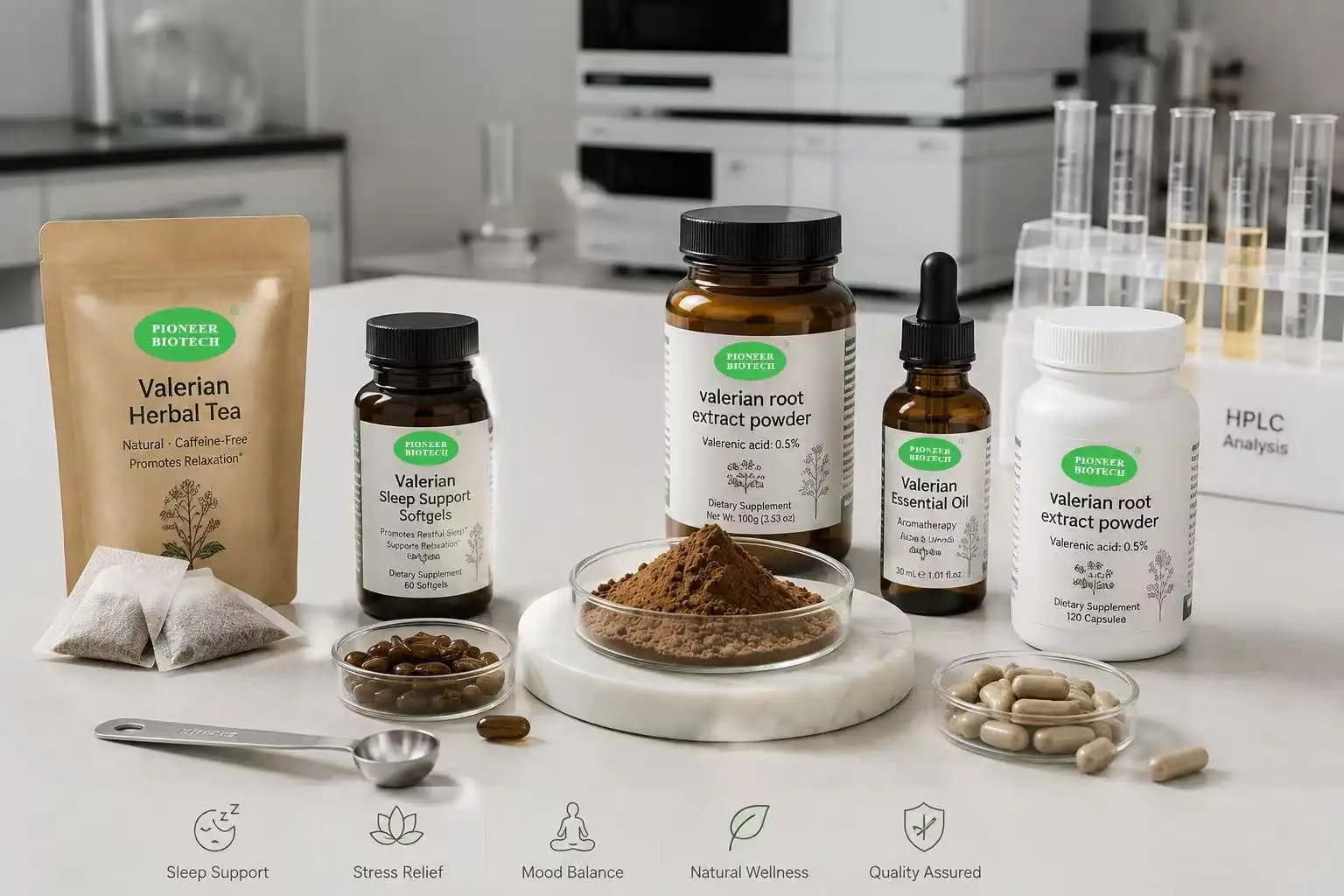
Understanding Valerian Root Extract Powder and Its Relaxation Benefits
Valerian root extract powder comes from Valeriana officinalis, an annual growing plant that has been used for healing for more than 2,000 years. In ancient Greece, valerian was used to treat mental problems, and herbalists in Europe kept doing the same thing up until the Renaissance. Today, advanced extraction methods concentrate the root's active ingredients into a standard powder form, which allows for accurate doses and consistent effectiveness in business settings.
The Science Behind Valerenic Acids and Nervous System Modulation
The ability to relax comes from valerenic acids, which change the way GABA-A receptors work in a good way. Gamma-aminobutyric acid (GABA) is the brain's main chemical that stops neurons from firing too quickly. Peer-reviewed research shows that valerenic acids improve GABA signaling without directly binding to benzodiazepine sites. This lowers anxiety without the cognitive damage or dependence risks that come with pharmaceutical anxiety medications. Because of this specific action, valerian is especially useful for relieving stress during the day when you need to keep your mind clear.
Clinical Evidence Supporting Sleep Quality Improvement
Several clinical studies have shown that valerian can help with insomnia. A review of 18 randomized controlled studies with more than 1,000 subjects showed that valerian significantly decreased sleep latency (the time it takes to fall asleep) and increased rates of perceived sleep quality. Studies using polysomnography show that the length of slow-wave sleep has grown. This is the deepest and most restorative type of sleep. These results make valerian extract a good option to melatonin for people who want to sleep better without using hormones. This opens up new market possibilities for nutritional brands.
Distinguishing Standardized Extracts from Raw Herb Products
The main difference between ratio extracts and standardized specs is something that procurement workers need to know. A 10:1 ratio extract shows content (10 kg of root makes 1 kg of powder), but it doesn't promise a certain amount of bioactivity. On the other hand, standardized products say how much valerenic acid they contain—usually between 0.8% and 1.2% by HPLC analysis—so that the medicinal effects are the same from batch to batch. For pharmaceutical-grade products and high-end supplement lines, where scientific proof is what drives brand image, this standardization is a must.
Safe and Effective Usage Guidelines for Valerian Root Extract Powder
The success of formulation rests on how well the extract specifications match the regulatory standards and the use cases that are planned. When compared to tinctures or whole-root mixtures, powders are more flexible and can be used in a wider range of delivery methods, from pills to functional drinks.
Recommended Dosage Ranges for Different Applications
In clinical tests, 300 to 600 mg of a pure extract (0.8% valerenic acids) is taken 30 to 120 minutes before bed to help people sleep. Lower doses (150–300 mg) may be used in daytime anxiety control products so that the calming benefits last longer without making people sleepy. Product designers should use these numbers to figure out how much active ingredient is in each serving size. The most common way to give drugs is still in veggie or gelatin pills, but tablets with controlled-release matrices are becoming more popular for long-lasting effects overnight.
When mixing powder, you need to be aware of valerian's natural ability to absorb water. The valerian root extract easily soaks up water from the air, which can make it hard to mix and flow during high-speed pill filling operations. When you store bulk powder in climate-controlled settings (<25°C, <60% relative humidity) and co-process with anti-caking agents like silicon dioxide (0.5–1.0%), the handling properties stay at their best throughout the manufacturing cycle.
Safety Profile and Contraindication Awareness
Valerian has a good safety margin in human studies, with side effects that are still rare and mild. Some people who take amounts higher than 900 mg say they feel sleepy in the morning or have stomach pain. In the regulatory paperwork, it should say that pregnant or nursing women shouldn't take it because there isn't enough safety data, and that it might interact badly with other CNS depressants like alcohol and prescription sedatives. Good providers give full safety sheets that cover these things and help with regulatory submissions for dietary supplement NDI notifications or European Novel Food applications.
Heavy metal pollution is an important part of quality control. Valerian roots take minerals from the dirt, which is why strict testing rules are needed. Leading makers test every batch of their products with ICP-MS (Inductively Coupled Plasma Mass Spectrometry). This makes sure that they follow the rules set by California Proposition 65 and international pharmacopeia guidelines for arsenic, lead, cadmium, and mercury. For B2B procurement checks, these analytical papers are necessary proof.
Comparing Valerian Root Extract Powder with Alternative Solutions
Figuring out how valerian root extract powder stacks up against other natural sleep aids helps with differentiating products and putting them in the right market.
Valerian Versus Melatonin: Complementary Mechanisms
Melatonin controls the body's internal clock, or circadian rhythm, which makes it perfect for people who have jet lag or work shifts. Valerian, on the other hand, uses neurotransmitter regulation to help people stay asleep and deal with stress-related sleeplessness. This difference in how they work suggests that formulas that combine the two ingredients may have combined effects that help more than one type of sleeplessness in a single product. These two-in-one pills are very popular with people who want complete sleep options and command high prices.
Advantages Over Chamomile and Passionflower Extracts
Passionflower and chamomile can help you relax a little, but they aren't as strong as valerian in terms of clinical proof and standard biomarker measurement. Standardizing valerenic acid gives formulators a way to predict dose-response relationships, which lets them make claims on the label that are based on proof. This level of scientific seriousness sets professional-grade supplements apart from generic herbal mixes, which helps build brand trust with doctors who have a say in what people buy.
Organic Versus Conventional Grades: Quality and Market Considerations
There are market prices for organic certification that represent how much it costs to grow food and how much people are willing to pay for pesticide-free food. When both meet the same valerenic acid standards, analytical testing shows that there are no major changes in how effective organic and conventional valerian extracts are. The choice of grade should be based on the target market. Organic approval supports clean-label claims for high-end natural goods, while standard grades make the best use of cost structures for value-focused mass market channels. The GMP manufacturing standards and quality assurance procedures for both types must be the same.
Procurement Insights: Sourcing High-Quality Valerian Root Extract Powder in Bulk
A good buying strategy strikes a balance between cost-effectiveness, quality assurance, and the dependability of the supply chain.
Critical Quality Certifications and Testing Protocols
Suppliers with a good reputation use ISO 9001 quality management systems, which show that the company is committed to using uniform methods. Certifications like HALAL and KOSHER make it easier for brands that cater to spiritually strict consumers to get into new markets. Good Manufacturing Practice (GMP) compliance, especially FDA registration for U.S. market sellers, means following standards for cleanliness, process validation, and tracking that are necessary for pharmaceutical and nutraceutical uses.
Beyond facility certifications, every batch should include:
- HPLC chromatograms showing the amount of valerenic acid
- Microbial testing (total plate count, yeast/mold, coliforms, viruses)
- Heavy metals analysis with ICP-MS
- Pesticide residue screening (if needed for the source area)
- Solvent residue testing (ethanol amounts for goods made from extraction)
Certificate of Analysis paperwork helps with regulatory compliance further down the line and gives an objective quality check that isn't based on what the seller says.
Evaluating Geographic Sourcing Options
The Qinling Mountain medical plant valleys are in China's Shaanxi province, which is a major world production hub with established facilities for extraction and economies of scale. Suppliers like Pioneer Biotech offer reasonable prices without lowering quality standards by using local access to raw materials and specialized knowledge in handling botanicals. European providers, especially in Germany and Poland, put a lot of emphasis on organic approvals and pharmaceutical-grade standards. As a result, their prices are usually higher to cover the costs of labor and regulations.
Geographic diversification strategies can mitigate supply chain risks. Maintaining qualified suppliers across multiple regions provides procurement flexibility during agricultural shortages, geopolitical disruptions, or quality incidents. Building relationships with two or three qualified sellers lets you bid competitively and makes sure that you always have a backup supply.
Negotiating Minimum Order Quantities and Payment Terms
The price of organic valerian root extract is based on tiers that are linked to the amount of the order. MOQs (Minimum Order Quantities) for normal grades are usually between 25 and 100 kilograms, and costs per kilogram go down as numbers go up to 500 kilograms or more. When negotiating terms, contract makers and private label businesses should think about how much they will use over the next six to twelve months. They should also weigh the costs of keeping inventory against the chances of getting a volume price.
Payment structures change depending on how long a company has been a partner. Initial orders usually require a 30–50% payment, with the balance due upon shipment. As a customer's buying history shows that they are creditworthy, terms change to net-30 or net-60. For foreign transactions over $50,000, letters of credit are still the norm. They protect both sides by letting banks act as a go-between.
Case Studies and Industry Applications of Valerian Root Extract Powder
Valerian's business flexibility across health and wellness product categories is shown by examples of how it is used in real life.
Sleep Aid Supplement Formulation Success
A medium-sized supplement company changed the recipe for its sleep aid capsules by changing a secret herbal mix with standardized valerian extract (500 mg, 0.8% valerenic acids) mixed with magnesium glycinate and L-theanine. After the product came out, polls of customers showed that they were 34% happier with their sleep than with the old recipe. The brand said that standardized active ingredient labels made people more likely to buy the product again, which made sense with smart customers who study products before they buy them.
Functional Beverage Applications
A new company that makes drinks came up with a ready-to-drink relaxation drink for the evening that contains water-soluble valerian ingredient. The technical problems included hiding the smell of valerian, which comes from isovaleric acid, and making sure the extract would stay stable in acidic liquids. These problems were fixed by working with an ingredient source that specializes in beverage-grade plant extracts. They did this by using microencapsulation technology and improving the flavor system. Taking advantage of the "functional beverage" trend, the product was sold in natural food stores and sold for more than standard tea-based competition.
Private Label Manufacturing Opportunities
OEM partners that work with supplement names sold online say that white-label valerian formulas are in high demand. When contract makers handle formulation development, sourcing, production, and packing, this is called a "turnkey solution." It lets small brands get into the sleep supplement market without having to spend a lot of money on production facilities. MOQs that are flexible (as low as 500 to 1,000 units) make it easier for new brands to test their market positioning without having to worry about money. This way of doing business increases the need for dependable bulk extract sellers who can help many industrial clients with consistent quality and quick shipping.
Conclusion
Valerian root extract powder is a safe and effective ingredient that can be used in products to help people relax and sleep. Its uniform valerenic acid content ensures consistent therapeutic results, setting professional-grade vitamins apart in the health market. Paying attention to quality standards, scientific testing rigor, and managing relationships with suppliers is important for successful procurement. The extract can be used in capsules, tablets, and functional drinks, which lets companies come up with new products that meet changing customer needs for natural sleep aids that don't turn into addictions and are backed by clinical proof.
FAQ
Why does valerian extract powder have such a strong, unpleasant odor?
The unique smell comes from isovaleric acid, which is a natural byproduct of valepotriates breaking down during storage and processing. This substance actually acts as a sign of authenticity—its presence proves that the valerian is real and not fake. Many sellers offer deodorized forms that work best in liquids, but harsh deodorization may make therapeutic terpenes less volatile. Putting finished goods in gelatin or veggie capsules hides the smell well without affecting their bioactivity.
What is the difference between ratio extracts and standardized extracts?
Ratio numbers (10:1, 5:1) only show the concentration factor, which is 10 kg of raw root makes 1 kg of powder. This doesn't promise a certain amount of active compounds because they change depending on how the plants are grown, when they are harvested, and how they are processed. Standardized extracts guarantee valerenic acid levels between 0.8% and 1%, which makes sure that all production batches have the same biological activity. Standardized specs are important for professional supplement makers to make sure that clinical effects can be repeated and that label claims can be trusted.
How do you ensure absence of heavy metals in valerian extracts?
Every output lot from reputable sources is tested with an ICP-MS to check for levels of lead, cadmium, mercury, and arsenic. Before putting products on the market, results must meet the requirements of California Proposition 65 and foreign pharmacopeia standards. Each package comes with a Certificate of Analysis that lists these results and can be used as objective proof for regulatory compliance and customer quality checks. For pharmaceutical-grade uses, this testing procedure can't be changed.
Partner with Pioneer Biotech for Premium Valerian Root Extract Powder Supply
Pioneer Biotech is based in Hanzhong city, which is in the famous Qinling Mountain medical herb country. This gives them direct access to high-quality Valeriana officinalis raw materials. Our 7,000-square-meter GMP-certified factory makes valerian root extract powder that is guaranteed to have a certain amount of valerenic acid, which can be checked using HPLC analysis. Our licenses with ISO9001, HALAL, KOSHER, and FDA show that we follow world quality standards. We work with contract producers, pharmaceutical companies, and nutraceutical brands that need trusted bulk valerian root extract powder providers. Technical support teams help with legal paperwork, special specs made just for your product, and improving formulations. Get in touch with our purchasing agents at sales@pioneerbiotech.com to talk about your project's needs and ask for samples that come with full analysis paperwork.
References
Bent, S., Padula, A., Moore, D., Patterson, M., & Mehling, W. (2006). Valerian for sleep: a systematic review and meta-analysis. American Journal of Medicine, 119(12), 1005-1012.
Fernández-San-Martín, M. I., Masa-Font, R., Palacios-Soler, L., Sancho-Gómez, P., Calbó-Caldentey, C., & Flores-Mateo, G. (2010). Effectiveness of Valerian on insomnia: a meta-analysis of randomized placebo-controlled trials. Sleep Medicine, 11(6), 505-511.
Khom, S., Baburin, I., Timin, E., Hohaus, A., Trauner, G., Kopp, B., & Hering, S. (2007). Valerenic acid potentiates and inhibits GABA(A) receptors: molecular mechanism and subunit specificity. Neuropharmacology, 53(1), 178-187.
Müller, S. F., & Klement, S. (2006). A combination of valerian and lemon balm is effective in the treatment of restlessness and dyssomnia in children. Phytomedicine, 13(6), 383-387.
Patocka, J., & Jakl, J. (2010). Biomedically relevant chemical constituents of Valeriana officinalis. Journal of Applied Biomedicine, 8(1), 11-18.
Shinjyo, N., Waddell, G., & Green, J. (2020). Valerian root in treating sleep problems and associated disorders—A systematic review and meta-analysis. Journal of Evidence-Based Integrative Medicine, 25, 1-12.