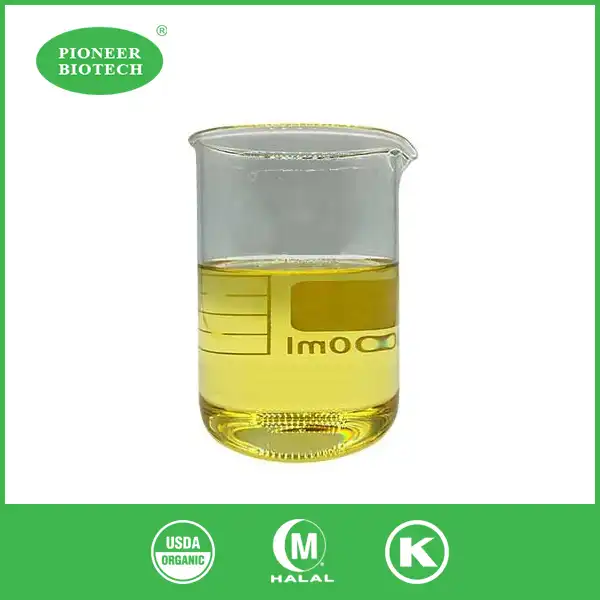

When choosing the best turmeric oil for skincare, it's important to take into account its medicinal properties, extraction techniques, and purity. High amounts of curcumin and other bioactive substances that have anti-inflammatory and antioxidant properties should be present in premium turmeric oil. Seek out goods with organic certification, third-party testing, and unambiguous labeling of the amounts of active ingredients. When compared to solvent-extracted alternatives, steam-distilled or CO2-extracted oils usually provide better quality. The perfect turmeric oil provides steady potency for formulation requirements while retaining its earthy scent and natural golden color.
Why Focus on Premium Turmeric Essential Oil?
Ingredients that blend conventional wisdom with contemporary scientific confirmation are in high demand in the skincare market. This ideal nexus is represented by turmeric oil, which has been used for centuries and has been shown to have medicinal benefits in recent studies. This fragrant substance has strong anti-inflammatory properties that help with typical skin issues like redness, irritation, and early aging.
Standardized concentrations of bioactive ingredients are supplied to formulators by premium turmeric oil, guaranteeing uniform product performance throughout batches. Compared to powder forms, the volatile components in high-quality essential oils are better able to permeate skin barriers, increasing the bioavailability of advantageous curcumin derivatives. The sensory appeal of final compositions is also influenced by natural scent qualities.
According to market research, customers actively look for products containing well-known botanical compounds that have been shown to have advantages. This need is satisfied by turmeric oil, which also gives formulators flexibility in a variety of product categories, including cleansers and serums. The chemical is beneficial for both water-based and oil-based formulations due to its compatibility with different carrier systems.
Selection Criteria for Superior Quality
A number of quality characteristics that directly affect formulation performance and skin benefits must be considered while choosing the best turmeric oil. The main factor influencing the quality of oil is extraction technique; steam distillation and supercritical CO2 extraction yield better medicinal ingredients than chemical solvent procedures.
Another important consideration is the dosage of curcumin, since larger concentrations are associated with stronger antioxidant and anti-inflammatory effects. Reputable vendors offer comprehensive certifications of analysis that verify the lack of dangerous impurities and display precise compound amounts. Organic certification guarantees that raw materials are free of artificial fertilizers and pesticides and meet stringent agricultural standards.
Data on stability shows how oils keep their potency under processing and storage settings. In order to maintain bioactive substances, premium suppliers do accelerated aging experiments and offer suggested storage conditions. Since deteriorated oils frequently exhibit color fading and decreased smell intensity, color consistency and aromatic profile also point to appropriate management along the supply chain.
Top 5 Premium Turmeric Oil Selections
Organic Steam-Distilled Turmeric Essential Oil
- Traditional steam distillation is used as an extraction method to preserve volatile chemicals
- 15–25% of concentrated bioactive chemicals are curcumin
- USDA Organic certification guarantees pesticide-free farming
- Stability Profile: 24-month shelf life when stored properly
- Benefits of aromatherapy: a pleasant, rich scent that helps people feel less stressed
- Formulation Compatibility: Outstanding solubility in emulsions and carrier oils
- Third-party testing for microbiological safety and heavy metals is part of quality assurance
Through meticulous distillation procedures that preserve therapeutic integrity, this premium grade offers remarkable purity. Delivering consistently high-quality batches, the organic certification guarantees sustainable sourcing methods. The entire range of volatile chemicals that give turmeric its unique medicinal qualities are preserved by steam distillation. The resultant oil has outstanding stability properties, retaining its potency over the course of normal product development timetables, and aligns well with turmeric extract powder applications.
The balanced aromatic character that improves the final product's appeal without overpowering other fragrance components is valued by formulators. The natural antibacterial qualities of the oil provide skin-soothing benefits and aid in product preservation. Thorough documentation that supports regulatory compliance in international markets includes thorough chemical analyses and safety data. Complete traceability from cultivation to final packing is ensured by batch tracking.
CO2-Extracted High-Potency Turmeric Oil
- Supercritical CO2 extraction technology ensures the highest level of chemical preservation
- 30–40% bioactive concentration of curcumin and associated substances
- 99%+ purity level with negligible processing residues
- Increased anti-inflammatory activity is a sign of therapeutic effectiveness
- Color Stability: A steady golden tint that denotes appropriate extraction
- Superior dispersion in a range of carrier systems is the solubility profile
- Documentation: Validation studies and a comprehensive analytical package
Cutting-edge CO2 extraction technique eliminates the need for harsh chemical solvents and yields oils with remarkable bioactive concentrations. Because this technique uses lower temperatures, heat-sensitive substances that support therapeutic efficacy are preserved. Throughout product development cycles, the resultant oil maintains color and potency and exhibits exceptional stability under a variety of formulation settings.
Formulators can attain the intended therapeutic advantages at reduced consumption rates with higher curcumin concentrations, increasing the final products' cost-effectiveness. By removing possible solvent residues, the extraction procedure satisfies strict requirements for medicinal and cosmetic purity. All production batches are guaranteed to have consistent quality specifications thanks to thorough testing procedures. The oil's increased bioavailability results in better therapeutic effects and skin penetration.
Pharmaceutical-Grade Standardized Extract
- GMP Compliance: Producing pharmaceuticals in accordance with quality requirements
- Standardization: A minimum of 20% curcumin content is assured
- Batch Consistency: Verified analytical techniques guaranteeing consistency
- Safety Documentation: Full set of toxicological information
- Regulatory Support: Records pertaining to compliance with international markets
- Stability Testing: Detailed reports and expedited aging studies
- Multi-point testing during the production process is a form of quality control
Pharmaceutical-grade processing uses strict quality control procedures at every level of production to guarantee the highest quality requirements. Confidence in manufacturing procedures that satisfy strict regulatory criteria in international markets is provided by GMP compliance. Standardized extraction techniques eliminate batch-to-batch variation that may have an impact on formulation performance by ensuring constant quantities of bioactive compounds.
Comprehensive toxicological studies supporting different application techniques and concentration levels are part of extensive safety documentation. For brands making particular effectiveness claims, the standardization procedure guarantees predictable therapeutic outcomes. Advanced analytical testing checks for possible impurities while verifying identification, potency, and purity. Timelines for product development and shelf-life calculations for final formulations are supported by comprehensive stability data.
Water-Soluble Turmeric Oil Complex
- Enhancement of Solubility: Specialized handling for water-based applications
- Versatility of Formulation: Suitable for water-based systems
- Bioavailability: Enhanced absorption via altering solubility
- Natural emulsification without artificial additives is known as "clean label."
- Features of Stability: Longer shelf life in aqueous formulations
- Concentration Options: Various intensities for various uses
- Performance testing: Verified effectiveness in systems of the final product
Water-soluble compounds produced by novel processing methods provide up new formulation options beyond conventional oil-based systems. With this method, the integrity of the therapeutic component can be preserved while being incorporated into serums, toners, and other aqueous formulations, including organic curcumin extract powder. Natural emulsification techniques assist clean-label ingredient declarations by avoiding synthetic surfactants.
Improved solubility properties that promote better skin absorption and therapeutic administration lead to increased bioavailability. The complex can accommodate a range of formulation requirements because it is stable in different pH conditions. Performance testing shows that the product's effectiveness is maintained under various storage circumstances and product types. Formulators can maximize therapeutic effects while controlling costs and regulatory constraints by choosing from a variety of concentration alternatives.
Organic Fair-Trade Turmeric Essential Oil
- Ethical Sourcing: Supporting rural communities through fair-trade certification
- Sustainability: Cultivation methods that respect the environment
- Traceability: Full documentation of the entire supply chain from the farm to the final oil
- Quality parameters: superior quality that satisfies global requirements
- Impact on the Community: Fair pricing directly supports farmers
- Certification Portfolio: Several validations from external parties
- Supporting consumer values for ethical consumption through brand alignment
In addition to providing high-quality botanical ingredients, ethical sourcing methods have a good social impact. Fair-trade accreditation guarantees farmers fair compensation, promoting community development and sustainable agriculture. Brands can tell compelling sustainability tales that appeal to ethical consumers when the supply chain is completely transparent.
Sustainable farming practices promote biodiversity and soil health while producing oils devoid of artificial additives. Quality management from cultivation to harvesting is made possible by direct farmer relationships, guaranteeing the best possible raw material quality. Numerous certificates offer thorough verification of ethical, safety, and quality criteria. Brand positioning on values-based customer preferences is supported by the mix of high quality and ethical sources.
Global Market Characteristics and Regulations
The use of turmeric oil in cosmetic formulations is impacted by the various regulatory environments found in international markets. Regulations from the European Union mandate thorough safety evaluations for botanical components, with particular documentation needs for essential oils. Strict rules about allergen labeling and concentration limits for cosmetic uses are upheld by the European Chemicals Agency.
According to US FDA standards, turmeric oil is generally recognized as safe (GRAS) for topical treatments; nevertheless, certain claims need to be supported by clinical research. Guidelines for appropriate labeling and safety considerations are provided by the Personal Care Products Council. Asian markets frequently exhibit more regulatory acceptability while upholding quality standards, especially in nations where turmeric is traditionally used.
Due to customary usage patterns, Asian consumers exhibit a strong acceptance of skincare products based on turmeric, despite cultural preferences that differ greatly across international markets. Growing interest in natural and ayurvedic ingredients is driving Western markets to embrace the health advantages of turmeric. Although formulation preferences may vary depending on environment and cultural skincare practices, Middle Eastern markets value turmeric's medicinal qualities.
Understanding the particular requirements for every target market, such as allowed concentration levels, labeling specifications, and safety documentation standards, is necessary for regulatory compliance. Reputable vendors offer extensive regulatory assistance packages that make it easier to enter markets in a variety of foreign countries.
Purchasing Recommendations and Key Considerations
Building connections with suppliers who exhibit reliable quality, regulatory compliance, and technical support capabilities is essential for the successful procurement of turmeric oil. Consider manufacturing qualifications, analytical skills, and the capacity to offer complete documentation packages when evaluating possible vendors. Ask for comprehensive certificates of analysis that include stability information, contaminant test findings, and precise levels of bioactive compounds.
When choosing suppliers, take supply chain dependability and minimum order numbers into account, particularly for continuous manufacturing needs. Reputable vendors keep sufficient stock levels and can adapt to diverse packaging specifications to satisfy various formulation demands. Assess technical support services, such as regulatory advice for target markets and help with formulation.
Given that premium extraction techniques and organic certifications are more expensive yet offer better therapeutic advantages, price considerations should strike a balance between cost and quality standards. Before placing orders, clearly define the quality requirements and acceptance standards to make sure the materials fulfill the formulation specifications. For preliminary assessment and compatibility testing with current formulation systems, request samples.
Regular quality checks, performance evaluations, and cooperative improvement projects are beneficial to long-term supplier partnerships. Think about vendors who spend money on R&D since they frequently give access to cutting-edge extraction methods and better product lines. To guarantee dependable supply chain performance, assess geographic location and logistical capabilities.
Industry Trends and Market Summary
The demand for natural skincare products with established therapeutic advantages is driving the growth of the worldwide turmeric oil market, along with curcumin extract powder. According to industry analysts, clean-label product preferences and growing knowledge of anti-inflammatory chemicals will fuel continued expansion. Higher bioactive concentrations are possible while preserving the natural product positioning thanks to technological advancements in extraction techniques. As companies prioritize ethical supply chains and environmental responsibility across their ingredient portfolios, sustainable sourcing procedures become more crucial.
Conclusion
A thorough assessment of extraction techniques, bioactive concentrations, and supplier quality credentials is necessary when choosing the best turmeric oil for skincare purposes. Superior medicinal ingredients are provided by premium oils obtained by steam distillation or CO2 extraction, all while preserving the natural product positioning. Long-term supplier relationships, thorough documentation, and technical support capabilities are key components of successful procurement strategies.
Good turmeric oil satisfies consumer need for natural ingredients while providing demonstrated anti-inflammatory and antioxidant effects that address a variety of skin issues. Successful product launches in international markets are ensured by an understanding of global regulatory requirements and market preferences. Ultimately, through improved product performance and clean-label positioning, investments in premium botanical actives increase consumer happiness and brand uniqueness.
FAQs
What level of curcumin content should I search for in a high-quality turmeric oil?
15–40% curcumin and associated beneficial components are commonly found in premium turmeric essential oil. Though formulation requirements may differ, higher concentrations typically offer greater therapeutic effects. When compared to steam-distilled competitors, CO2-extracted oils frequently have higher quantities of curcumin. To confirm quality claims, always ask for comprehensive certifications of analysis that include precise compound percentages.
How can I confirm the legitimacy and caliber of suppliers of turmeric oil?
Reputable vendors offer thorough documentation, such as third-party testing findings, extraction procedure specifics, and certifications of analysis. Seek out well-known production certificates like ISO, GMP, or organic certifications. Ask current clients for references, and assess the technical support capabilities of the supplier. Good suppliers keep open lines of communication about their procedures and welcome facility audits.
What storage circumstances preserve the potency and quality of turmeric oil?
Keep turmeric oil out of direct sunlight and heat sources and in a cool, dark location. Minimal temperature variations are advised between 15 and 25°C (59 and 77°F). Use opaque or amber containers to guard against deterioration from light. The volatile chemicals that provide medicinal effects are preserved and color stability is maintained by proper storage. Under ideal circumstances, the majority of high-quality oils retain their efficacy for 18 to 24 months.
Partner with Pioneer Biotech for Premium Turmeric Oil Solutions
Pioneer Biotech's extensive knowledge of plant extracts can be advantageous to cosmetic formulators looking to develop trustworthy supplier relationships for turmeric oil. Our Hanzhong factory sources premium raw materials with outstanding bioactive characteristics by utilizing the well-known "Medicine Herbs Valley of Qinling Mountains" area. Consistent quality that satisfies international regulatory standards is guaranteed by pharmaceutical-grade processing and advanced extraction methods.
Our manufacturing capabilities and quality management systems are backed by Pioneer Biotech's FDA, HALAL, KOSHER, and ISO9001 certifications. Our technical team helps manufacturers successfully integrate turmeric oil into cutting-edge skincare products by providing formulation support and regulatory guidance. Thorough analytical testing and stability investigations guarantee therapeutic efficacy claims while supporting product development schedules.
Through dependable supply chain performance and exceptional customer service, we have established trustworthy relationships with top cosmetic manufacturers since 2012. To satisfy a range of formulation needs, our turmeric oil solutions come in a variety of extraction techniques, concentration levels, and packaging choices. To discuss your unique project requirements and to view our portfolio of premium botanical extracts for your upcoming skincare invention, get in touch with us at sales@pioneerbiotech.com.
References
Aggarwal, B.B., Sundaram, C., Malani, N. & Ichikawa, H. "Curcumin: The Indian Solid Gold." Advances in Experimental Medicine and Biology, Vol. 595, 2007, pp. 1-75.
Vaughn, A.R., Branum, A. & Sivamani, R.K. "Effects of Turmeric (Curcuma longa) on Skin Health: A Systematic Review of the Clinical Evidence." Phytotherapy Research, Vol. 30, No. 8, 2016, pp. 1243-1264.
Panahi, Y., Rahimnia, A.R., Sharafi, M., Alishiri, G., Saburi, A. & Sahebkar, A. "Curcuminoid Treatment for Knee Osteoarthritis: A Randomized Double-Blind Placebo-Controlled Trial." Phytomedicine, Vol. 21, No. 11, 2014, pp. 1543-1549.
Zaccara, S., Panfili, G., Benvenuto, M., Lambertini, E. & Candini, O. "Antioxidant and Anti-inflammatory Activities of Turmeric Essential Oil in Human Dermal Fibroblasts." International Journal of Cosmetic Science, Vol. 38, No. 4, 2016, pp. 361-370.
Chainani-Wu, N. "Safety and Anti-inflammatory Activity of Curcumin: A Component of Tumeric (Curcuma longa)." Journal of Alternative and Complementary Medicine, Vol. 9, No. 1, 2003, pp. 161-168.
Krausz, A.E., Adler, B.L., Cabral, V., Navati, M., Doerner, J., Charafeddine, R.A., Chandra, D., Liang, H., Gunther, L., Clendaniel, A., Harper, S., Friedman, J.M., Nosanchuk, J.D. & Friedman, A.J. "Curcumin-encapsulated Nanoparticles as Innovative Antimicrobial and Wound Healing Agent." Nanomedicine: Nanotechnology, Biology and Medicine, Vol. 11, No. 1, 2015, pp. 195-206.