
Green Tea Extract Powder: Benefits, Uses, and Key Compounds
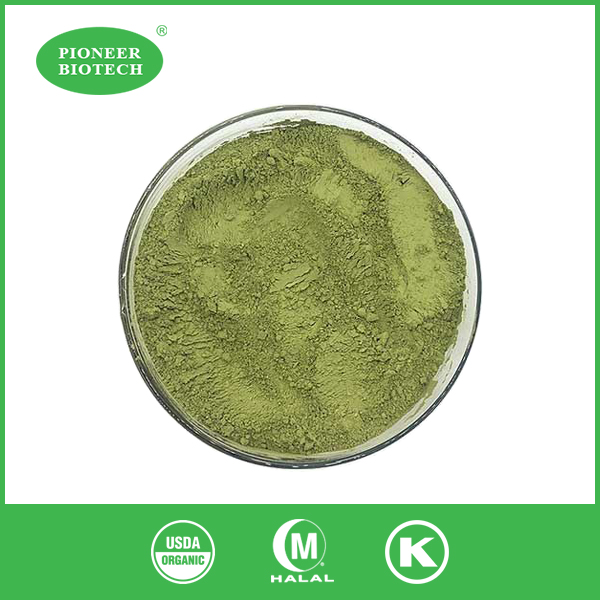
Green tea extract powder is a concentrated plant-based ingredient that comes from Camellia sinensis leaves. It has set amounts of beneficial compounds like polyphenols, epigallocatechin gallate (EGCG), and catechins. Compared to liquid extracts, this powdered form gives producers better stability, more accurate dosing, and longer shelf life. Because it is so concentrated, green tea extract powder is very useful for nutraceutical formulations, functional drinks, and cosmetic uses where constant strength and quality are very important for product effectiveness and regulatory compliance.
Understanding Green Tea Extract Powder: Composition and Nutrition
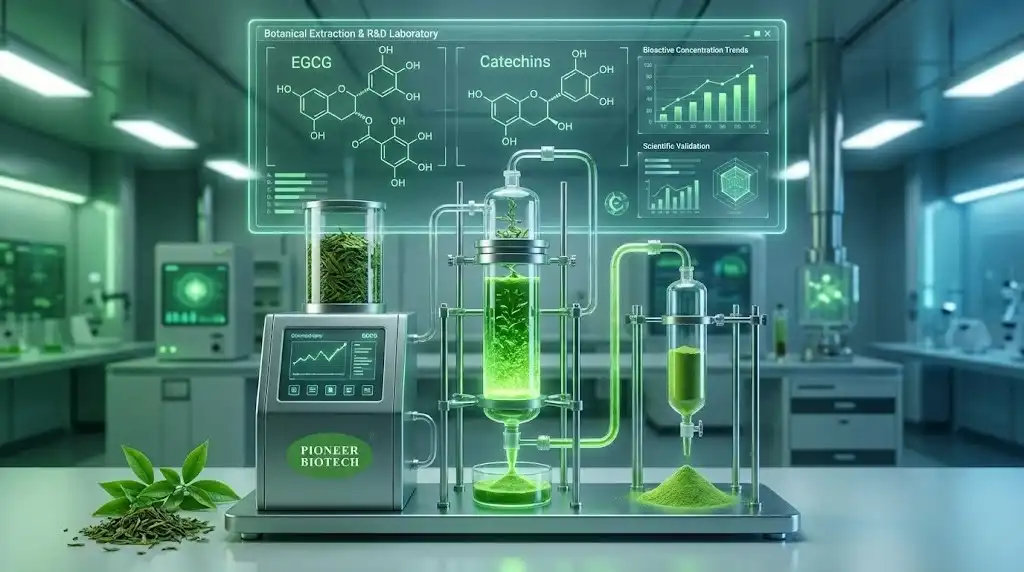
A complex process is used to concentrate the health benefits naturally found in Camellia sinensis leaves, which is what green tea extract powder is made of. Usually, water or ethanol extraction is used to make the product, and then spray-drying or freeze-drying is used to turn it into a stable powder. Traditional green tea leaves or matcha powder don't have nearly as many active chemicals as this concentrated plant ingredient.
Key Bioactive Compounds and Their Concentrations
Catechins are the main bioactive ingredients in high-quality green tea extract powder. Depending on the amount of standardization, they can make up 50–80% of the whole extract. Epigallocatechin gallate (EGCG) is the most common and well-studied catechin. It makes up 40–60% of all the catechins in quality products. Epicatechin (EC), epicatechin gallate (ECG), and epigallocatechin (EGC) are some other important substances.
Standardized extracts have polyphenol contents ranging from 80% to 98%. These polyphenols have strong antioxidant properties, as shown by ORAC values. The amount of caffeine in coffee changes a lot depending on how it was extracted. Decaffeinated coffee has less than 1% caffeine, while normal coffee has 3-8% caffeine. Because of this, formulators can choose the right specs for the tasks they want to use them in.
Nutritional Profile and Bioavailability Considerations
Beyond catechins, green tea extract powder has amino acids like L-theanine, vitamins C and E, and different minerals. Because these chemicals are concentrated and processed in a different way when they are extracted from whole tea, they are not as bioavailable when they are extracted.
Studies show that EGCG can be made more bioavailable from extracts by using certain preparation methods, such as lipid-based delivery systems or piperine together with EGCG. The powder form is better for controlled-release formulas because it lets makers make sure that specific therapeutic targets are absorbed in the best way possible.
Benefits and Uses of Green Tea Extract Powder in Industry
There has been a lot of interest in the therapeutic potential of green tea extract powder across many businesses. This is because a lot of clinical study has shown that it is good for your health. These benefits that have been proven to work can be useful for companies making practical goods in the nutraceutical, pharmaceutical, and cosmetics industries.
Metabolic and Weight Management Applications
Clinical tests have shown that green tea extract powder can help people handle their weight in a healthy way in more than one way. Because it speeds up thermogenesis and fat burning, EGCG is often found in products that help people lose weight. Researchers have found that giving healthy people 300–400 mg of EGCG every day can make them burn 4–5% more calories.
Green tea catechins improve insulin sensitivity and glucose tolerance, which are two more ways that they help the metabolism. Because of these qualities, the extract is useful for making beneficial foods that support metabolic health and diabetes control. Green tea extract is frequently mixed with other metabolism-boosting ingredients, such as chromium or bitter orange, to create combined benefits.
Cardiovascular and Antioxidant Benefits
Due to its strong antioxidant qualities and capacity to maintain healthy cholesterol levels, green tea extract powder has many heart-healthy benefits. Studies have shown that regular use can help keep LDL cholesterol oxidation in a healthy range and help arteries stay flexible. The high ORAC value of good extracts—often reaching 1500 μmol TE/g—makes them very good at getting rid of free radicals.
These antioxidant qualities protect cells in general and keep the heart healthy. This makes green tea extract useful in anti-aging products and protective formulas. The extract's ability to support healthy inflammatory reactions makes it even more appealing for goods that focus on health.
Industrial Applications Across Sectors
Green tea extract powder is used for many things in industry besides just vitamins. Its antimicrobial traits make it a natural preservative in the food and drink business, which extends the shelf life of products while also offering useful benefits. Manufacturers of drinks like it because it is stable in both hot and cold conditions.
Cosmetics use the extract's skin-protecting qualities, with formulas that target UV protection, anti-aging, and acne control. The powder form makes it easy to mix into different types of makeup bases, like serums and creams, without changing the shape or stability of the product.
How to Choose High-Quality Green Tea Extract Powder for B2B Procurement?
To choose high-quality organic green tea extract powder, you need to carefully look at a number of quality factors that have a direct effect on how well the product works and how well it meets legal requirements. Procurement managers have to deal with complicated specs and find a balance between quality standards, cost, and the dependability of the supply chain.
Critical Quality Metrics and Standardization
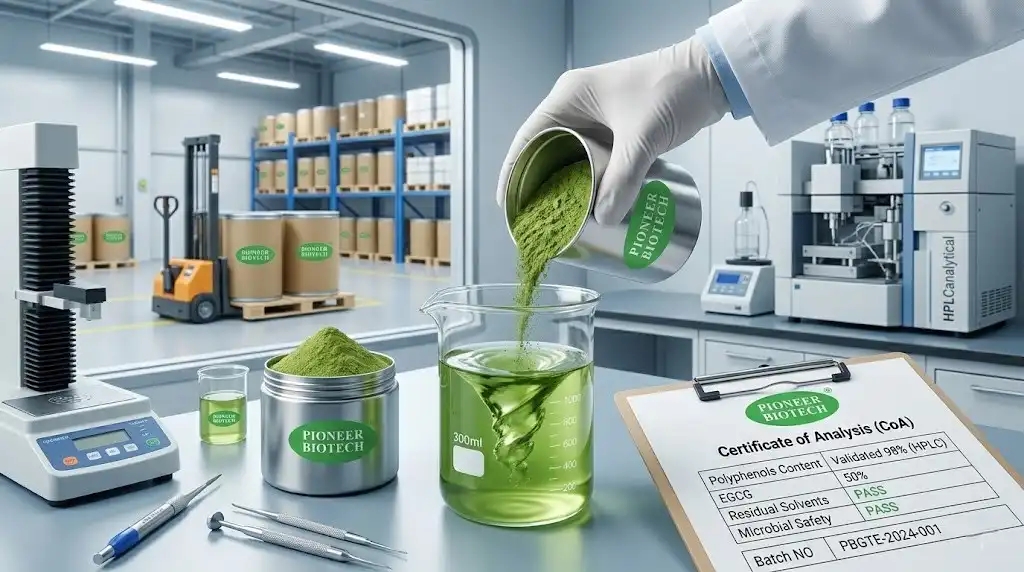
The first step in judging quality is to look at the standards levels, especially the EGCG and overall polyphenol content. The best extracts usually have more than 95% total polyphenols and 50% EGCG standardization. The analytical certificates should have pesticide residue testing results that meet international standards and high-performance liquid chromatography (HPLC) results that confirm the catechin profiles.
Another important factor is the amount of moisture present; good extracts keep this below 5% to keep them stable and stop microbes from growing. Heavy metals tests should follow USP guidelines, especially for mercury (≤0.1 ppm), arsenic (≤1 ppm), and lead (≤3 ppm). Microbiological tests must show that there are no pathogenic bugs present and keep overall plate counts at a good level.
Certification Requirements and Regulatory Compliance
Organic certification is helpful for companies that want to make clean-label goods, but regular extracts can be more consistent when it comes to standards. Depending on the market, USDA Organic, EU Organic, and JAS Organic are some of the most important certificates. Good Manufacturing Practice (GMP) and ISO 22000 standards for factories make sure that the quality of their products and that they can be tracked.
Certifications like Halal and Kosher make markets bigger, which is especially important for global brands. FDA approval and GRAS (Generally Recognized as Safe) standing make it easier to follow the rules in the US market. When it comes to novel foods, European producers should make sure they are following the Novel Foods Regulation.
Supplier Evaluation and Due Diligence
When you evaluate a supplier, you look at their producing skills, quality processes, and how open the supply chain is. Manufacturers who have been around for a while usually give out a lot of technical information, like stable studies, compatibility data, and formulation standards. Site checks or certificates from a third party make sure that the quality systems and stated skills are real.
Due to the farming nature of green tea production, supply chain dependability is even more important. Suppliers who have direct ties to areas where tea is grown often offer more stability and can be tracked. Backup sourcing methods help lower the risks that come with supply delays or changes in quality caused by bad weather.
Procurement and Logistics: Buying Green Tea Extract Powder at Scale
When buying green tea extract powder in large quantities, there are a lot of things to think about, such as making sure the seller is reliable, managing shipping, and following all the rules in different countries. A good buying strategy keeps the supply chain strong while also making sure that costs are kept as low as possible.
Global Sourcing Strategies and Market Analysis
There are many places to get green tea extract on the global market, with China, India, and Japan being the main production hubs. Chinese suppliers lead the market with low prices and the ability to make a lot of products. Japanese suppliers, on the other hand, tend to focus on high-end grades with better standardization. For certain uses, Indian sources offer good quality-to-cost rates.
Prices on the market vary a lot depending on the amount of standardization. Basic 50% polyphenol extracts are cheaper, while 98% polyphenol, 50% EGCG extracts are more expensive. Organic standards usually add 20 to 30 percent to the base price, and special extractions like decaffeinated forms may have extra costs.
Buying in bulk can save you a lot of money. Prices start to drop significantly when you buy 500 kg of something. When the market is tight, annual contracts with guaranteed amounts can help get better prices and first picks.
Logistics and Regulatory Compliance
When sending things internationally, you need to pay close attention to the paperwork and the way the items are stored. Green tea extract powder is usually sent in fiber drums lined with moisture-resistant materials to keep it stable while being shipped. For top grades or when the weather is very bad, temperature-controlled shipping may be needed.
Each country has its own rules about what can be imported, but in general, phytosanitary permits and certificates of analysis are needed. In the US, facilities that make food-grade extracts need to be registered with the FDA, and in Europe, imports of organic goods must meet TRACES standards. HS code 2106.90 is usually used for customs classification, but other classes may also be used.
Storage requirements include cool, dry conditions away from direct sunlight, with optimal conditions being 15-25°C and relative humidity below 60%. When you store extracts correctly, they stay stable and sensitive catechins don't break down.
Conclusion
Green tea extract powder is a useful and scientifically proven ingredient that can be used in many different ways in food, medicine, cosmetics, and nutraceuticals. The concentrated bioactive substances, especially EGCG and polyphenols, have been shown to be good for your health, which fits with the growing demand for functional ingredients. To make sure the product works and is accepted by the market, it's important to pay close attention to quality standards, seller credentials, and legal compliance during buying. Green tea extract powder is easy for companies that want to use proven plant benefits in their products to get because of the strong supply chain and the variety of buying options available.
FAQ
What is the typical shelf life of green tea extract powder?
When kept in the right way, high-quality green tea extract powder usually stays effective for 24 to 36 months. The shelf life relies on how much wetness is in the food, how well it is packaged, and where it is stored. The most stable extracts are those with a moisture content of less than 5% and are properly packed in containers that don't absorb moisture. Testing the catechin level on a regular basis helps make sure that it stays effective throughout the shelf life.
How do different extraction methods affect quality?
Most of the time, water extraction keeps the natural catechin profile, but the concentration amounts may be lower than with ethanol extraction. Higher amounts of standardization are reached with ethanol extraction, and unwanted chemicals like tannins are better removed. Even though it costs more, supercritical CO2 extraction makes the cleanest extracts with the least amount of solvent waste. The choice is based on the goal requirements and the planned uses.
Can green tea extract powder be customized for specific formulations?
Reliable sellers let you make changes, such as choosing the exact amount of EGCG, decaffeinated versions, and water-soluble versions. Custom particle sizes can help particles dissolve faster in drinks, and enteric coats can help supplements work better by increasing their absorption. Depending on how complicated the needs are, the minimum order numbers for custom specs are usually between 100 kg and 500 kg.
Partner with Pioneer Biotech for Premium Green Tea Extract Powder
As a reliable green tea extract powder manufacturer, Pioneer Biotech has over ten years of experience extracting botanicals and state-of-the-art facilities in China's famous "Medicine Herbs Valley of Qinling Mountains." Our many quality certifications, such as ISO9001, HALAL, KOSHER, and FDA registration, make sure that our products always meet your needs. We have standard extracts with EGCG amounts that can be changed and polyphenol levels that range from 50% to 98%. These are backed up by full analytical data and stability studies. Our expert team can help you with technical issues at any point in the product creation process, from the first samples to mass production. Get in touch with our experts at sales@pioneerbiotech.com to talk about your unique needs and find out how our premium green tea extract powder supplier services can help you add reliable, high-quality plant ingredients to your product line.
References
Chacko, S.M., Thambi, P.T., Kuttan, R., & Nishigaki, I. (2010). Beneficial effects of green tea: A literature review. Chinese Medicine, 5(1), 13.
Wolfram, S. (2007). Effects of green tea and EGCG on cardiovascular and metabolic health. Journal of the American College of Nutrition, 26(4), 373S-388S.
Yang, C.S., Chen, L., Lee, M.J., Balentine, D., Kuo, M.C., & Schantz, S.P. (1998). Blood and urine levels of tea catechins after ingestion of different amounts of green tea by human volunteers. Cancer Epidemiology, Biomarkers & Prevention, 7(4), 351-354.
Zaveri, N.T. (2006). Green tea and its polyphenolic catechins: medicinal uses in cancer and noncancer applications. Life Sciences, 78(18), 2073-2080.
Dulloo, A.G., Duret, C., Rohrer, D., Girardier, L., Mensi, N., Fathi, M., ... & Vandermander, J. (1999). Efficacy of a green tea extract rich in catechin polyphenols and caffeine in increasing 24-h energy expenditure and fat oxidation in humans. The American Journal of Clinical Nutrition, 70(6), 1040-1045.
Singh, B.N., Shankar, S., & Srivastava, R.K. (2011). Green tea catechin, epigallocatechin-3-gallate (EGCG): mechanisms, perspectives and clinical applications. Biochemical Pharmacology, 82(12), 1807-1821.