

Best and Original Ashwagandha Root Powder Health Benefits
Withanolides, which are good chemicals, are used to make ashwagandha root extract powder, which has been shown in tests to improve health. Withanolides lower stress, make the defense system stronger, and make the brain work better. Real extracts are different from regular root powders because they go through controlled extraction processes that make the active ingredients stronger. This lets B2B providers know ahead of time how stable and strong the formula will be. Scientists have shown that real ashwagandha root extract powder can help with a number of different types of treatments. This is why cosmetics, nutrition brands, and pharmaceutical companies choose it. You can be sure that your product line follows the law and really helps people's health if you know the changes in quality and the buying criteria.

Understanding Ashwagandha Root Extract Powder: What It Is and Why It Matters
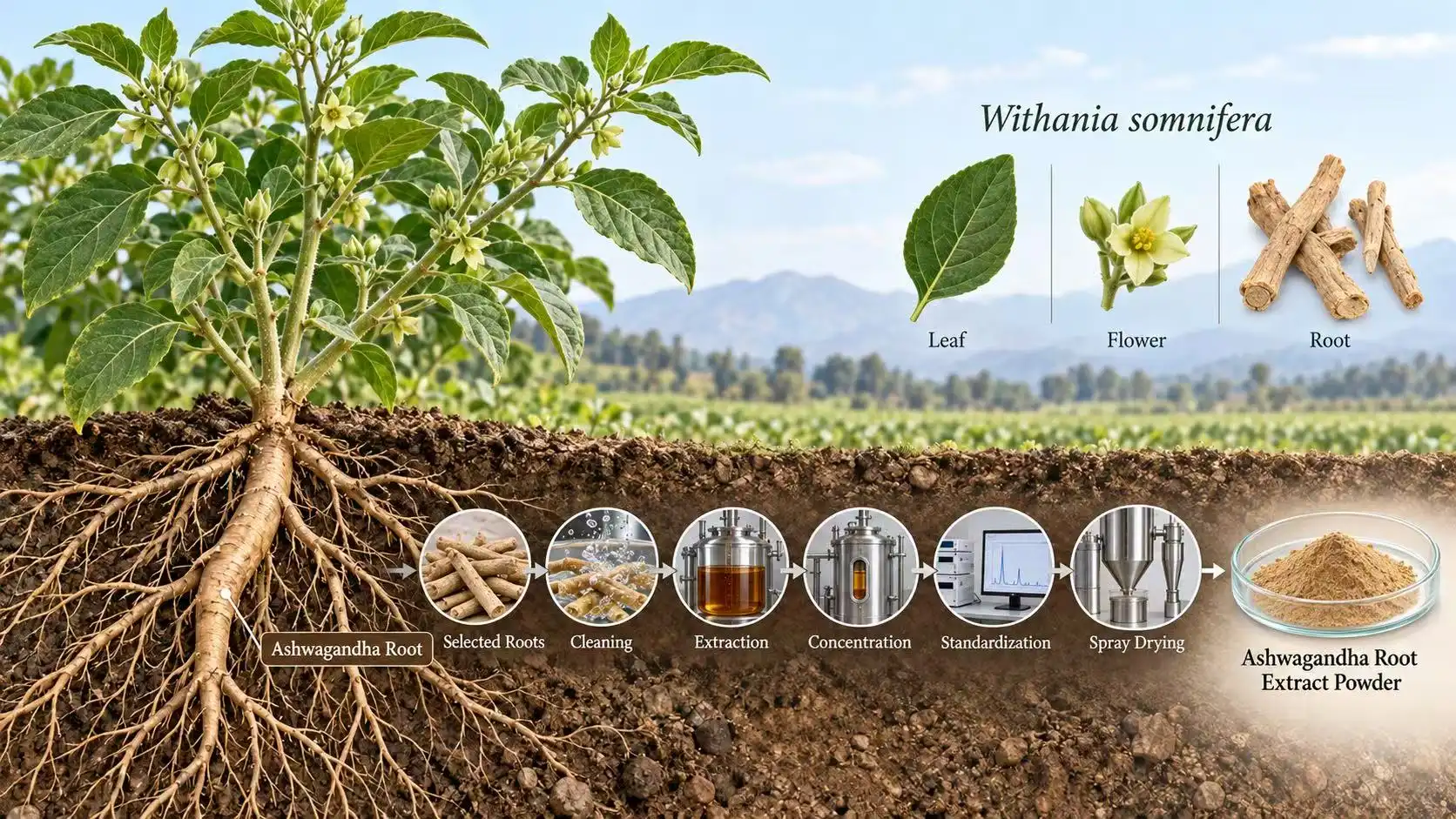
Botanical Identity and Extraction Process
There are a lot of withanolides in ashwagandha root extract powder, which comes from the Withania somnifera root. These include Withaferin A, Withanolide A, and Withanone. The method of extraction removes the product from plain ground root powder by getting rid of plant matter that isn't needed while keeping chemicals that are useful. The amount of withanolide in the extract is usually between 1.5% and 10%, but this can change depending on how the extract is made and what it is used for.
In modern extraction methods, aqueous-ethanolic systems are used to keep the biological qualities while still meeting the ICH Q3C guidelines for the amount of solvent that is left over. With this technical method, the formulas are tested to make sure they work with both pharmaceutical-grade items and market goods with clean labels.
Withanolides: The Active Compounds Driving Efficacy
That's what these chemicals are called, and they're steroidal lactones. The HPA system changes when they are taken, which helps the body react. A study in humans has shown that they change the balance of hormones, the way cortisol is controlled, and the processes that cause inflammation. It is very important for businesses to make sure they have correct analysis proof when they are buying things for other businesses. This is because the amount and type of withanolides used directly affect how well a treatment works.
Gravimetric tests aren't accurate enough to measure withanolide, but HPLC tests in the lab are. People who want to buy should look for sellers who offer full chromatographic data that shows the amounts of specific drugs. If a seller only gives aggregate readings, it might make the strength look stronger than it really is.
Nutritional Profile and Bioactive Components
A good ashwagandha root extract powder is good for you in more ways than one, and withanolides is one of them. It also has iron compounds, saponins, and alkaloids (such as isopelletierine and anaferine). All of these parts work together to support many body functions. This is why there have been so many effects, ranging from dealing with stress to keeping the metabolism in check.
Organic certification increases the worth of the goods because it ensures that they are grown without using man-made chemicals or herbicides. It's especially important for makeup, since the way they feel on the skin and the idea of clean beauty are big parts of the buying process. Standard and organic extracts are not the same in ways that are just marketing claims. These differences also change the types of residues that are left behind and how each country makes sure it follows the rules.
How to Use Ashwagandha Root Extract Powder for Maximum Effectiveness?
Dosage Standardization and Bioavailability Considerations
The best daily dose amounts for standardized extracts with 5% withanolides have been found to be between 300 mg and 600 mg, for example. For some uses, though, the amount might need to be changed because of how strong the extract is and how it is given. There are many ways to give something that can change how bioavailable it is. For instance, drugs are absorbed differently in packed powders than in liquid extracts or pill forms.
Through lipid-mediated transport routes, foods that are high in fats make it easier for the body to take in withanolide. This is why a lot of the drugs on the market have fat carriers or say to take them with food. B2B formulators who make functional drinks should think about these bioavailability factors when they decide how much to put on the label and what it says about the drink.
Application-Specific Formulation Parameters
Supplement companies frequently add ashwagandha root extract powder to blends of other ingredients that support brain health and stress. It's easy to fill pills, crush tablets, and put them in bags when you're making powder. The particle size distribution, which is usually 80 mesh, does, however, change how the powder moves and mixes.
Ashwagandha extract is used in serums, creams, and hair care products because it reduces inflammation and protects cells from damage. For systems that are based on water, extracts that dissolve in water are easier to mix. For systems that are based on oil, extracts that dissolve in oil work better. When extracts were handled properly, they keep their withanolide content for the normal 24- to 36-month shelf life, as shown by stability tests done quickly.
Functional food developers face unique challenges balancing efficacy with organoleptic properties, as natural bitterness from withanolides requires flavor masking strategies. With microencapsulation technologies and ingredients that work well together, problems with taste can be fixed while the bioactivity is kept.
Safety Profiles and Quality Standards
Toxin, allergen, and long-term use tests, as well as short-term toxin studies, show that ashwagandha root extract powder has a low risk rating when it comes from reliable sources. There should be very strict rules about microbes. For example, the total aerobic microbial count should be less than 1,000 CFU/g, the total yeast and mold count should be less than 100 CFU/g, and dangerous organisms like Salmonella and E. coli must be absent.
Heavy metal pollution is a big problem because plant-based goods can take heavy metals from the soil and store them. The ICP-MS test shows that the product is safe for use as it has less than 0.5 parts per million of lead, 1 part per million of arsenic, 0.3 parts per million of cadmium, and 0.1 parts per million of mercury. These standards are better than those set by California's Proposition 65. This means that people can trust things sold in all U.S. markets.
Comparing Ashwagandha Root Extract Powder with Other Adaptogens and Forms
Adaptogenic Profile Differentiation
Unlike other adaptogens, ashwagandha root extract powder works on both the pathways that make you feel more alert and calm. As a stress-relieving agent, it works better than adaptogens that mostly boost, like Rhodiola, or those that mostly calm, like Reishi. Formulators can now make products that can help with a lot of different health issues, from helping sports recover to making sleep better.
Comparative bioavailability studies show that concentrated extracts are better at being absorbed than raw powders. This means that you only need a smaller dose to get the same medicinal benefits. Because of this better dosage efficiency, finished products cost less and have better supplement facts panels with fewer fillers.
Format Comparison: Powder versus Standardized Extracts
There are between 0.3 and 0.5% withanolides in ashwagandha root extract powder when used in its raw form, so it needs to be dosed at the gram level to get to amounts that are practically useful for eating. It is possible to dose with milligram accuracy and get the same results from batch to batch when you use standardized extracts that reduce withanolides to 2.5–10%. This is important for medicinal uses and regulatory support.
The powder extracts are easy to add to a lot of different delivery methods, such as two-piece gelatin pills and effervescent tablets. This is another important difference. They stay solid even when they are processed normally, like when they are exposed to mild heat during the encapsulation or tableting process.
Synergistic Formulation Opportunities
Putting ashwagandha root extract powder with plants that work well together has effects that are stronger than the sum of their parts. These effects have been seen in traditional ethnobotany and are now being studied in clinical settings. When Bacopa monnieri is mixed with other herbs, it makes them better at helping with memory. When mixed with turmeric extract, it makes them better at fighting inflammation. And when mixed with Rhodiola, it makes them more immune to stress by supporting many biochemical processes.
By choosing ingredients based on research, these strategic mixes help B2B brands make their goods stand out and meet a range of health goals of customers. This lets them charge higher prices in markets where competition is high.
How to Choose Quality Ashwagandha Root Extract Powder: Procurement and Supplier Insights
Critical Quality Verification Parameters
Using HPLC to check the amount of withanolide in an extract is the most important quality check because it tells the difference between real, high-potency extracts and fake or low-quality ones. If someone wants to buy something, they should ask for Certificates of Analysis (COAs) that show each withanolide substance separately instead of taking measurements that include parts that don't do anything.
When you use HPTLC fingerprinting to check the authenticity of plants, you can find fakes made from cheaper ashwagandha extract leaves that have different withanolide patterns and different health benefits. There is another way to be sure that the plant is Withania somnifera and rule out other species that look like it but are not the same.
Certification Standards and Regulatory Compliance
The ISO 9001 approval proves that the quality management system works well and can be used in supply chains for drugs and supplements. When it comes to making, GMP compliance talks about specific steps that must be taken to keep goods clean and allow them to be tracked. If you like natural products, you might like USDA Organic approval. But when you buy something, you should make sure that it is organic all the way through the supply chain, from growing the crops to extracting them and putting them.
Goods made for certain groups of people can reach more people more easily when they are HALAL and Kosher-approved. But all of the processing tools and extraction liquids need to be checked to make sure they don't break any religious food rules. Because they have to meet the needs of different area markets, these badges often change what big brands buy.
Strategic Sourcing and Procurement Approaches
Geographical buying choices weigh the validity of the raw materials against the ease of processing. India is still the main growing area, and farmers there have been doing this for a long time. The quality is controlled by secondary processing in centers with the most up-to-date tests and extraction equipment. When you work with fully integrated sources that take care of cultivation, extraction, and quality tests, the supply chain is easy to understand and keep track of.
People who work in buying should do full checks on possible sources that look at things like how the plants are grown, how they are extracted, the people who work there's analysis skills, and how well they keep records. By asking for samples of the product to be tested by a third party, you can make sure the seller is telling the truth and set quality standards before you place big orders.
When you know the minimum order amounts, payment terms, and wait times, you can make realistic plans for output and track supplies. Many well-known providers have flexible MOQ structures that can work with both new makers and experienced makers who need a lot.
Ashwagandha Root Extract Powder in Your Product Line: Use Cases and Market Opportunities
Nutraceutical Supplement Applications
The biggest market for ashwagandha root extract powder ingredients is in pills that help people deal with stress at work, while they learn, or when they are going through big changes in their lives. Ashwagandha root extract powder is usually found in amounts of 300 to 600 mg per dose in products that list it as one of their main ingredients. The results of a clinical study back this up. They show that cortisol levels drop statistically significantly and stress levels rise.
A popular way to improve brain function and nootropic formulations is to mix ashwagandha root extract powder with Bacopa, Lion's Mane, or B-vitamin mixes. These items are liked by both older people who want to keep their memories sharp and younger people who want to focus and think more clearly.
Functional Food and Beverage Integration
Because of the "beauty from within" trend, ashwagandha root extract powder is being added to functional drinks, protein shakes, and enriched food bars that are at the point where health and nutrition meet. Clear drinks like adaptogenic sparkling waters and ready-to-drink health shots for customers who like things to be easy can use water-soluble extract versions.
The main problems in this application space are hiding flavors, keeping things stable at different pH levels, and the need to heat process them. Products that do well have good taste profiles and work well with their doses. This is because they use smart flavoring systems and ingredients that work together to make the product taste better and help it relieve stress.
Cosmetic and Personal Care Formulations
Ashwagandha root extract powder ingredients are used in skin care products because they are known to be vitamins. They advertise their goods as natural ways to slow down aging and protect skin from damage caused by reactive stress and inflammation. Sometimes, between 0.5 and 3% is used in serums, eye creams, and face lotions for older skin that you leave on.
Ashwagandha root extract powder helps keep the skin and hair healthy and strong. It is found in shampoos, conditioners, and leave-in treatments for hair. The anti-inflammatory properties help with products that treat acne and sensitive scalps. They have also been used for a long time to help hair grow, though the proof needed for these claims changes a lot from one regulatory area to the next.
Market Growth Dynamics and Future Opportunities
If you look at the market, ashwagandha root extract powder ingredients will keep growing at rates higher than 12% per year until 2028. As more people learn about the health benefits of adaptogens, more people want to use plants to help their health. It's happening very quickly in North America and Europe because rules are becoming less strict about claims that plant-based chemicals work based on scientific proof.
Medicines could be given in new and better ways, such as through sublingual strips, transdermal patches, and microencapsulated time-release forms that are easier to use and work better in the body. By making ashwagandha root extract powder ingredients that are easier to process and don't make things taste as bitter, they can be used in products that couldn't use them before.
Conclusion
Ashwagandha root extract powder comes from a plant and has been shown to help with many different health issues. It has been shown to help lower stress, make the brain work better, and keep the immune system strong. While buying, it is important to follow withanolide standards and make sure the quality is good by testing for heavy metals and bacteria. Suppliers should also agree to follow the rules and make sure sources are reliable. Companies that add ashwagandha root extract powder to their products get an edge over their competitors because they can market their products to health-conscious customers who want natural options that have been used for a long time and have been shown to work in modern clinical trials.
FAQ
The ashwagandha root extract powder is not the same as other root powders. The amount of withanolides in simple root powder is between 0.3 and 0.5%. On the other hand, the amount of withanolides in ashwagandha root extract powder is between 2.5 and 10% because it goes through controlled extraction. Due to this difference in concentration, extracts keep their strength even when used in smaller amounts, and they are more uniform from batch to batch, which is important for business products and legal requirements.
How do I verify the authenticity and quality before bulk purchasing?
As for proof of identity, ask for HPTLC plant fingerprinting to show the amount of withanolide that has been tested, ICP-MS heavy metal testing to show that the product meets USP standards, and microbial testing to show that there are no diseases. Test samples by someone other than the seller before committing to big orders. This makes what the supplier says more reliable and sets quality standards for future purchases.
Is ashwagandha extract safe for long-term product formulations?
Ashwagandha root extract powder is safe to take for a long time, as long as it comes from sources that have been checked for quality and meet standards for heavy metals and microbes. Manufacturers' stable data shows that withanolide doesn't change over the course of its normal 24- to 36-month shelf life if it is kept correctly. This works for both supplement and makeup uses that need stable promises for more than one year.
Partner with Pioneer Biotech for Premium Ashwagandha Root Extract Powder
The pharmaceutical-grade ashwagandha root extract powder that Shaanxi Pioneer Biotech Co., Ltd. sells comes with all the quality paperwork and lab results that B2B companies need. Our plant is in the medical herb valley in Hanzhong. It has advanced extraction technologies and is approved by the FDA, HALAL, ISO9001, and other groups. It makes standard products that are up to the highest standards around the world. We've been selling ashwagandha root extract powder for a long time, so we know how hard it is for makeup formulators, drug companies, and snack brands to find stable supply lines and technical support.
As part of our quality control, we use USP-approved HPLC methods to find out how much withanolide is in the product. We also use HPTLC fingerprinting to make sure the plant is real and ICP-MS analysis to make sure the heavy metal levels are higher than what Prop 65 requires. We don't have a set minimum order size, so we can work with both new makers and experienced makers who need a lot. We also offer skilled scientific advice on how to improve formulations and help with regulatory issues. You can email our team at sales@pioneerbiotech.com to get information about the product and a sample to test. You can also find out how our controlled supply chain can help you make new products by giving you pure, effective, and reliable materials.
References
Chandrasekhar K, Kapoor J, Anishetty S. A prospective, randomized double-blind, placebo-controlled study of safety and efficacy of a high-concentration full-spectrum extract of ashwagandha root in reducing stress and anxiety in adults. Indian Journal of Psychological Medicine. 2012;34(3):255-262.
Singh N, Bhalla M, de Jager P, Gilca M. An overview on ashwagandha: a Rasayana (rejuvenator) of Ayurveda. African Journal of Traditional, Complementary and Alternative Medicines. 2011;8(5S):208-213.
Wankhede S, Langade D, Joshi K, Sinha SR, Bhattacharyya S. Examining the effect of Withania somnifera supplementation on muscle strength and recovery: a randomized controlled trial. Journal of the International Society of Sports Nutrition. 2015;12:43.
Lopresti AL, Smith SJ, Malvi H, Kodgule R. An investigation into the stress-relieving and pharmacological actions of an ashwagandha extract: A randomized, double-blind, placebo-controlled study. Medicine (Baltimore). 2019;98(37):e17186.
Durg S, Bavage S, Shivaram SB. Withania somnifera (Indian ginseng) in diabetes mellitus: A systematic review and meta-analysis of scientific evidence from experimental research to clinical application. Phytotherapy Research. 2020;34(5):1041-1059.
Kelgane SB, Salve J, Sampara P, Debnath K. Efficacy and tolerability of ashwagandha root extract in the elderly for improvement of general well-being and sleep: A prospective, randomized, double-blind, placebo-controlled study. Cureus. 2020;12(2):e7083.