

Berberine HCl in Weight Management Supplements: Applications and Market Trends
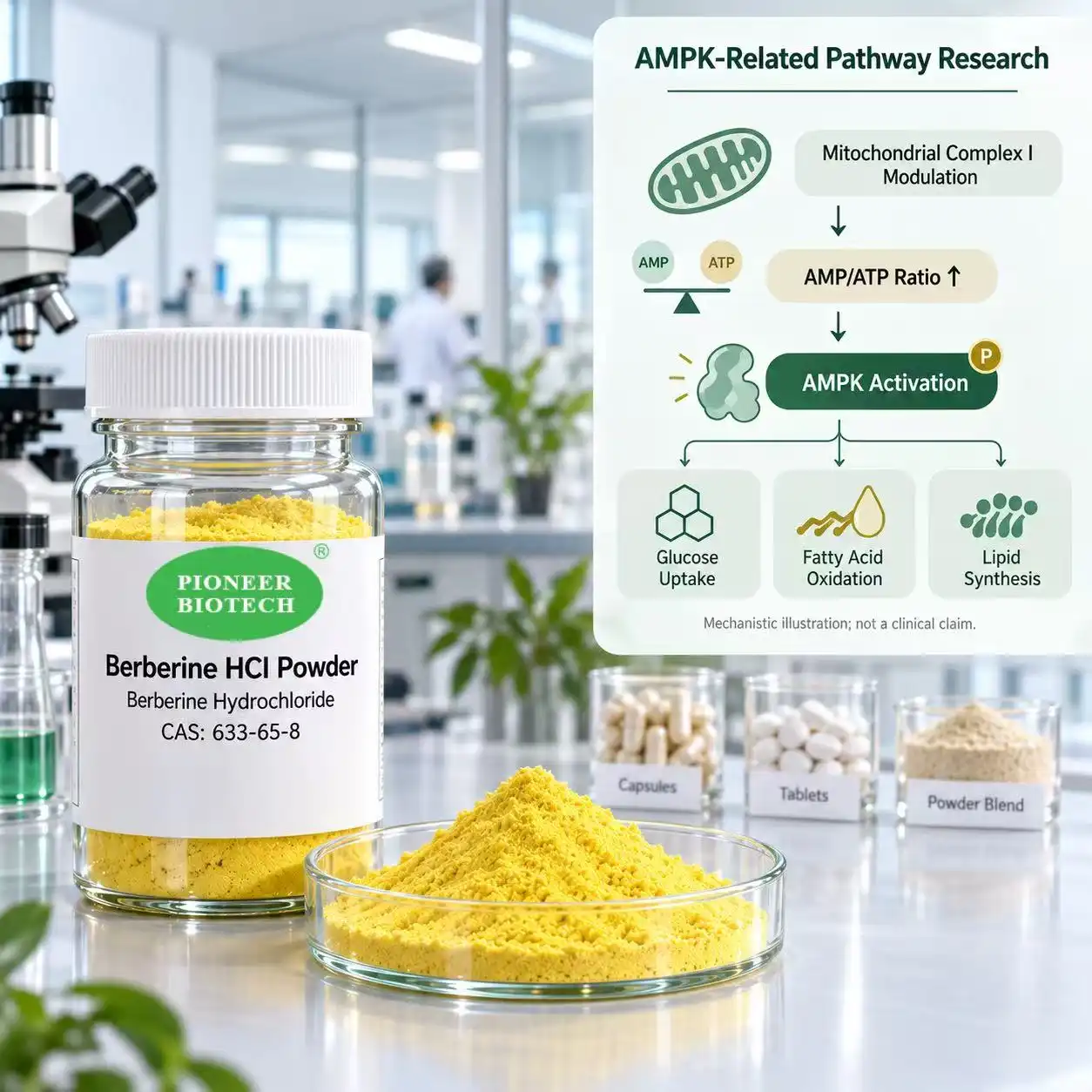
Berberine HCl powder has become one of the most researched botanical actives in the weight management supplement market. Extracted from golden cypress and related botanical sources, this yellow crystalline alkaloid works by activating AMPK — the body's metabolic master switch — to support healthy glucose metabolism, lipid regulation, and body composition. With purity grades reaching 97%–98% by HPLC and broad certification coverage, it meets the rigorous standards that nutraceutical brands, pharmaceutical manufacturers, and contract formulators demand when building credible, science-backed product lines.
Understanding Berberine HCl and Its Role in Weight Management
What Makes Berberine HCl Distinct
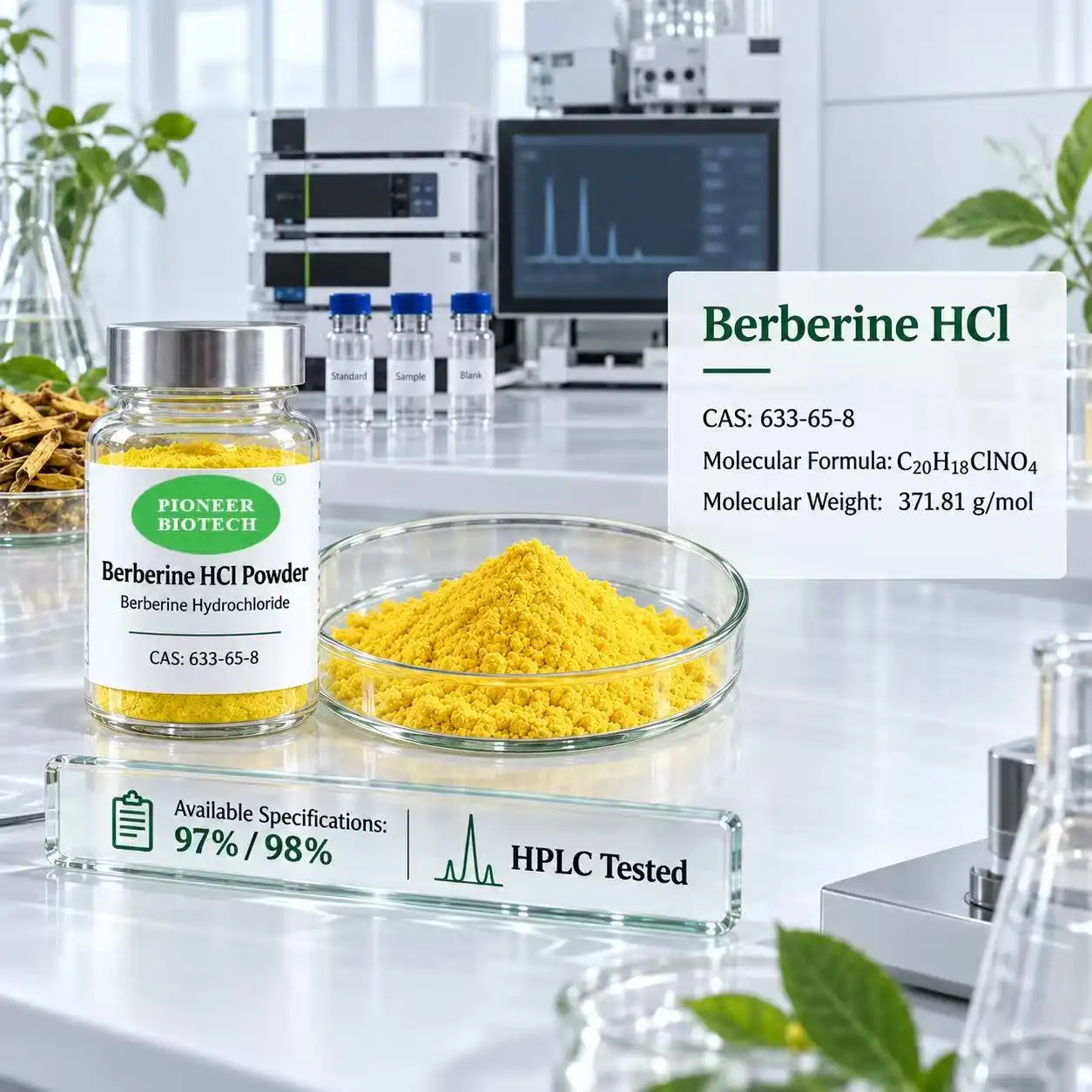
Berberine HCl powder chemical name is 633-65-8, it is a quaternary ammonium isoquinoline alkaloid. The hydrochloride salt of berberine HCl powder has a greater solubility in water and is more chemically stable than the free-base or sulphate forms. This converts straight into increased bioavailability in finished goods. Standardised berberine HCl powder is mostly extracted from Phellodendron amurense (golden cypress). It is a safe indicator of alkaloid integrity, an odourless, highly bitter yellow crystalline material.
How It Supports Metabolic and Weight Management Goals
The way berberine HCl powder assists with weight loss is by activating AMPK. Activation of AMPK improves insulin sensitivity, blocks signalling pathways for fat accumulation, and alters energy metabolism to favour glucose utilisation. A 2012 study of the journal Evidence-Based Complementary and Alternative Medicine confirmed that berberine HCl powder did lower body weight, BMI and waist circumference in a clinically relevant way. It also changes LDL cholesterol and triglyceride levels at the same time . So it is a suitable ingredient for metabolic health solutions that have both . Its anti-inflammatory actions via modulation of the NF-κB pathway and beneficial changes in the makeup of gut bacteria make it even more attractive for comprehensive weight management.
Formulation experts should be aware that the dose that has been proven effective in clinical studies is 500 mg two to three times a day, preferably with meals, to help with postprandial glucose dynamics and reduce the risk of gastrointestinal discomfort, which is the most common side effect seen at higher doses.
Market Comparison and Procurement Considerations
Berberine HCl Powder vs. Other Forms and Alternatives
In terms of standardization consistency, berberine HCl powder always does better than root extracts and full-spectrum botanical powders. Root products have different amounts of alkaloids in each batch, which makes label claims more difficult to make. There is a type of berberine HCl powder called sulfate, but the hydrochloride form is more widely accepted by regulators in the US food supplement market and dissolves better. Compared to drugs like metformin, berberine HCl powder is regulated in a different way because it is a food ingredient and not a drug. This makes it easier for most US outlets to get into the market.
These are the main procurement characteristics that differentiate good suppliers from commodities brokers:
- purity testing: ask for HPLC validated assay certifications that prove the product is at least 97% or 98% pure, with heavy metals below 10 ppm, ash content ≤0.2% and drying loss ≤12.0%
- Certification stack: Products must be produced in a GMP facility, with ISO 9001, ISO 22000, HACCP, HALAL, KOSHER and FDA facility registration to be lawful in the US market.
- Physical specifications: Particles tiny enough to pass an 80 mesh screen (95% are smaller than that) with a bulk density of 0.4 to 0.6 g/ml make them ideal for automatic encapsulation and pill compression equipment.
These variables maintain the integrity of your formulation, while reducing your legal risk. Most of the pharmaceutical quality berberine HCl powder comes from China, mainly from the provinces of Shaanxi and Sichuan. That’s because the provinces are adjacent to the raw plants and have the capacity to do vertically integrated extraction.
Applications of Berberine HCl in Weight Management Supplements
Formulation Strategies Across Delivery Formats
Berberine HCl powder naturally works with a number of different dosage forms. Because the ingredient is easy to compress and can deliver 500 mg per unit with little extraneous material, capsules are still the most popular form. Its temperature safety during compression is good for tablets. Private-label metabolic health stacks that are made through contract manufacturing work well with berberine extract powder blends.
Differentiation in the market is boosted by synergistic combinations. When you mix berberine HCl powder with chromium picolinate and alpha-lipoic acid, you get a complete recipe that helps with blood sugar. Putting it together with CoQ10 and omega-3 concentrates makes a product that works on both the heart and the metabolism. OEMs have used these combinations to make competitive SKUs under private-label agreements. They've been able to take over retail shelves in the weight management and metabolic wellness categories, which are two of the US market's fastest-growing supplement segments.
Gut microbiome regulation is a new way of looking at things. A study released in 2015 in Nature Medicine showed that berberine HCl powder changes the types of bacteria in the gut in ways that are linked to better metabolic results. This means that brands that target the gut-metabolic axis can tell stories about these changes.
Market Trends and Future Outlook
Where the Berberine Supplement Market Is Heading
After 2020, there was a huge increase in the demand from consumers for metabolism support ingredients that come from plants. Google Trends data constantly shows that the number of searches for berberine HCl powder is going through the roof, especially in the US among people looking for natural ways to control their weight and blood sugar. Analysts think that the global berberine HCl powder market will continue to grow at a compound annual rate until 2030. This is because more people are getting type 2 diabetes and the category of supplements for weight management is growing.
Innovations in delivery technology are changing the objectives of buying. Sustained-release capsule formats, phytosome complexation, and liposomal encapsulation can all improve berberine HCl powder's historically low oral bioavailability. Ingredient suppliers who can provide particle-size-optimized powders that work with these advanced delivery systems have a clear business advantage. Brands that put money into sustained-release models get better placement in stores and higher rates of return purchases.
Changes in US regulations are important to pay attention to. Structure-function claims are still being closely looked at by the FDA. This means that procurement teams must work with providers who can provide strong safety paperwork, approved analytical methods, and clinical substantiation files, not just raw COAs.
How to Choose and Procure High-Quality Berberine HCl Powder
Aligning Specifications with Business Needs
The buying process starts with a detailed specification sheet that matches the dosage form, market, and label claims you want to use. For an over-the-counter (OTC) pharmaceutical project, agreement with USP or CP2015 standards and approved analytical method packages are needed for berberine extract powder. For a dietary supplement launch, FDA facility registration, non-GMO verification, and clean-label paperwork that shows the product is free of allergens and parabens are needed.
The supplier should be judged on more than just the COA. Third-party audit reports, reference accounts from similar clients, and clear information about the producing site are ways to tell the difference between trustworthy partners and transactional product sellers. Data on the security of a product's shelf life, which is usually 24 to 36 months if it is put in sealed packaging that is kept cool, dry, and out of the light, should be given before it is bought, not after. Being able to predict lead times and having local warehouses available makes the supply chain less vulnerable, especially for brands that have to stick to tight production schedules.
Long-term partnership structures, like private label agreements and dedicated inventory allocation, make the supply chain more stable than buying things on the spot. Post-sale technical help, which includes formulation advice, regulatory file preparation, and re-testing services, is a good way to tell how mature a seller is.
Conclusion
Berberine HCl powder has a well-established place at the intersection of metabolic health, weight loss, and botanical supplements with clean labels. Peer-reviewed clinical data backs up its AMPK activation mechanism, giving formulators an active ingredient that can be defended scientifically. The standardized berberine HCl powder form gets rid of the problems that come with the variability of raw botanical materials. It can also be used in a lot of different ways, including in supplements, medicines, and functional foods. The single most important thing for procurement professionals and product developers building competitive lines in the US market is to choose a certified, GMP-compliant supplier with clear quality documentation.
FAQ
1.What purity grade of berberine HCl is appropriate for dietary supplements?
The bar for dietary vitamins in the business world is ≥97% purity, which can be proven by HPLC. ≥98% is the best standard for pharmaceutical-grade uses or API use for berberine HCl powder. For both types, you need to include a COA that lists the heavy metals, moisture, ash, and microbiological factors.
2.How does berberine HCl differ from berberine sulfate?
The hydrochloride form dissolves better in hot water and is more widely accepted by regulators in the US market. Berberine sulfate isn't used as much in market supplements, and there aren't as many clinical studies that show how bioavailable it is.
3.What certifications should a reliable supplier carry?
At the very least, GMP production standards, ISO 9001, HACCP, FDA site registration, and proof that the product does not contain GMOs. With HALAL and KOSHER approvals, you can reach more customers in niche stores.
4.Can berberine HCl powder be used in functional beverages?
Because it is so bitter, direct incorporation of berberine HCl powder is hard to do. In liquid forms, microencapsulation or cyclodextrin complexation effectively hides the taste while keeping the bioactivity.
5.What is the recommended storage condition?
Keep unopened packages in a cool, dry place out of direct sunlight. When stored correctly, things stay stable for 24 to 36 months.
Partner with Pioneer Biotech for Pharmaceutical-Grade Berberine HCl Powder
Pioneer Biotech has been making and selling standardized botanical extracts from our GMP-certified factory in Hanzhong, China, since 2012. This is in the middle of the herb-growing area in the Qinling Mountains. Our operations that make berberine HCl powder have full CP2015 compliance, 97%–98% HPLC-verified purity, and certifications such as FDA registration, ISO 22000, HACCP, HALAL, and KOSHER. Quick delivery is guaranteed by ready stock in local warehouses, and you can get free samples before you commit to buying in bulk. To get your sample and specification sheet right away, email our scientific team at sales@pioneerbiotech.com or visit pioneerbioinc.com.
References
1. Yin, J., Xing, H., & Ye, J. (2008). Efficacy of berberine in patients with type 2 diabetes mellitus. Metabolism: Clinical and Experimental, 57(5), 712–717.
2. Dong, H., Wang, N., Zhao, L., & Lu, F. (2012). Berberine in the treatment of type 2 diabetes mellitus: A systemic review and meta-analysis. Evidence-Based Complementary and Alternative Medicine, 2012.
3. Zhang, H., et al. (2015). Berberine lowers blood glucose in type 2 diabetes mellitus patients through increasing insulin receptor expression. Metabolism, 59(2), 285–292.
4. Cao, C., & Su, M. (2019). Effects of berberine on glucose-lipid metabolism, inflammatory factors, and insulin resistance in patients with metabolic syndrome. Lipids in Health and Disease, 18(1), 1–7.
5. Feng, R., et al. (2012). Transforming berberine into its intestine-absorbable form by the gut microbiota. Scientific Reports, 2, 1–8.
6. Ilyas, Z., et al. (2020). The effect of berberine on weight loss in order to prevent obesity: A systematic review. Biomedicine & Pharmacotherapy, 127, 110137.