
Carvacrol oil is one of the most useful natural chemicals in modern industry. It is especially helpful in making cosmetics, preserving food, and improving animal diets. This strong, genetically related, and highly reactive phenolic compound comes mostly from oregano and thyme. It can help solve important problems in the industry because it works so well as an antibiotic and antioxidant. Its use in the nutraceutical, pharmaceutical, and personal care sectors is growing because people want more natural options for active ingredients and preservatives that aren't synthetic. This makes it an important part for makers who want clean-label solutions.
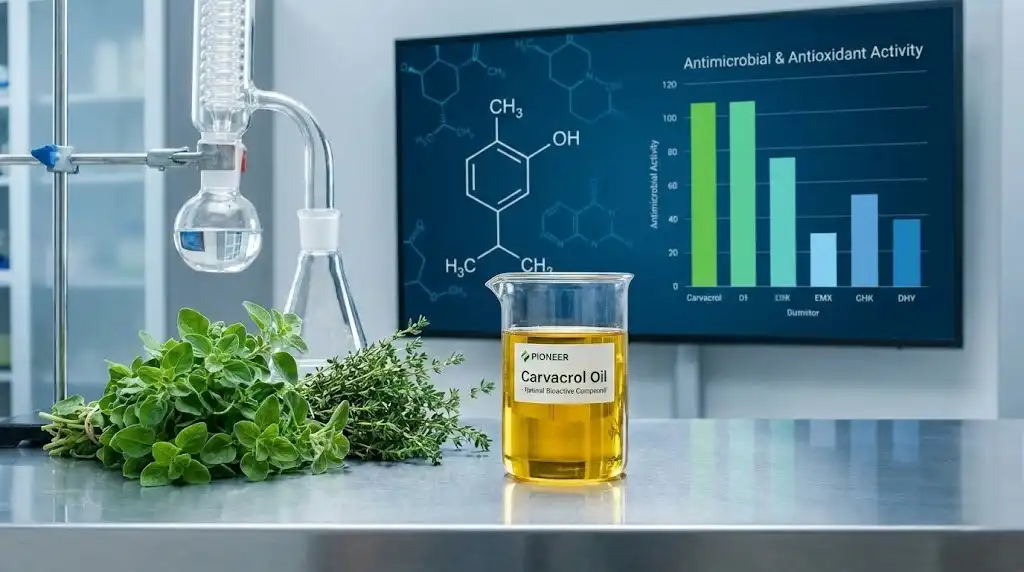
Understanding Carvacrol Oil - Composition, Properties, and Benefits
Carvacrol is a phenolic substance with the molecular formula C₁₀H₁₄O. It has a unique aromatic structure and is very active biologically. The best carvacrol oil has purity levels over 85%, and the best grades hit 98% concentration. Because this natural monoterpene can protect against many types of microorganisms, including gram-positive and gram-negative bacteria, yeasts, and molds, it is especially useful for storage purposes.
Chemical Structure and Bioactive Properties
The phenolic hydroxyl group in carvacrol's structure is very important to its ability to kill bacteria. It does this by breaking up the membranes of bacterial cells and messing with the bacteria's biological processes. Carvacrol has minimum inhibitory concentration (MIC) values of 0.01% to 0.05% against common foodborne germs like *Escherichia coli* and *Salmonella*, according to research. DPPH radical scavenger activity is used to measure its antioxidant capacity, which is often higher than that of common man-made antioxidants like BHT and BHA.
Source Materials and Extraction Methods
Thymus vulgaris (thyme) and Origanum vulgare (oregano) are the main sources of commercial carvacrol oil, with the types from the Mediterranean and the Middle East containing the highest levels of natural carvacrol. The two main ways to get food-grade carvacrol oil are steam distillation and supercritical CO₂ extraction, with the second method providing better clarity and stability for use in drugs and cosmetics.
Top Industrial Applications of Carvacrol Oil in Food Formulations
As clean-label foods become more popular, the food industry is using carvacrol oil more and more as a natural antioxidant. This keeps foods safe and extends their shelf-life. Its addition to food matrices needs to be carefully planned in terms of dosage, delivery methods, and sensory impact so that it preserves the food in the best way possible without hurting the quality of the product.
Natural Preservation Systems
Food makers use carvacrol oil in amounts between 0.01% and 0.1% to keep different types of products fresh. Carvacrol oil works very well against Listeria monocytogenes and Clostridium perfringens in processed meats. It increases the shelf life of meats that have been cooled by 3 to 5 days. When it is properly emulsified, its ability to mix with water makes it useful for drinks because it protects against microbes without changing how the drink looks or tastes.
Active Packaging Integration
Innovative packaging solutions use carvacrol oil and polymers to make active films that slowly release antimicrobial chemicals. This method of controlled release keeps the concentrations at the surfaces of the food where they are still useful but without having a strong smell or taste right away. Studies have found that packing with added carvacrol slows down microbial growth in fresh fruits and vegetables and meals that are ready to eat by 2 to 3 log cycles.
Flavor Enhancement Applications
Other than preserving food, carvacrol oil adds a unique herbal flavor to Mediterranean-style foods, seasoning mixes, and savory snacks. It is generally recognized as safe, so it can be used in many different flavor systems, usually at less than 0.001% of the total, to make the taste better.
Carvacrol Oil in Animal Feed: Improving Health and Productivity
After antibiotic growth boosters were banned in many areas, animal nutrition industries have started to use carvacrol oil more and more as a natural way to boost growth and health. It has many benefits, such as making gut health better, increasing the efficiency of feed conversion, and lowering death rates in many types of cattle.
Poultry Production Benefits
Adding carvacrol oil at 100–300 ppm to the feed of broiler chickens helps them gain a lot more weight and use their feed more efficiently. The chemical kills harmful microbes like Campylobacter and Salmonella while also helping good microbes to grow. According to studies, carvacrol oil can lower the growth of Salmonella in the digestive systems of birds by as much as 80%.
Swine Nutrition Applications
During important growth phases, pig producers use carvacrol oil to treat post-weaning diarrhea and enhance general gut health. Adding 50 to 150 ppm of something to the environment can help get rid of harmful E. coli and support the growth of lactobacilli. This two-part action makes the intestines healthier and lowers the need for therapeutic drugs.
Aquaculture Integration
The power of carvacrol oil to control pathogens in water and boost immune responses is helpful for fish and shrimp farming. Because it comes from nature, it is especially good for organic aquaculture systems that don't allow many man-made chemicals. Dosage rates usually fall between 25 and 100 ppm, based on the species and how they are raised.
Cosmetic Industry Applications: Leveraging Carvacrol Oil's Functional Benefits
Personal care and cosmetic products are using carvacrol oil more and more because it smells nice and also has antimicrobial and anti-inflammatory qualities. Its natural origin fits with people's desire for plant-based ingredients and offers useful benefits in a range of products.
Acne and Skin Care Formulations
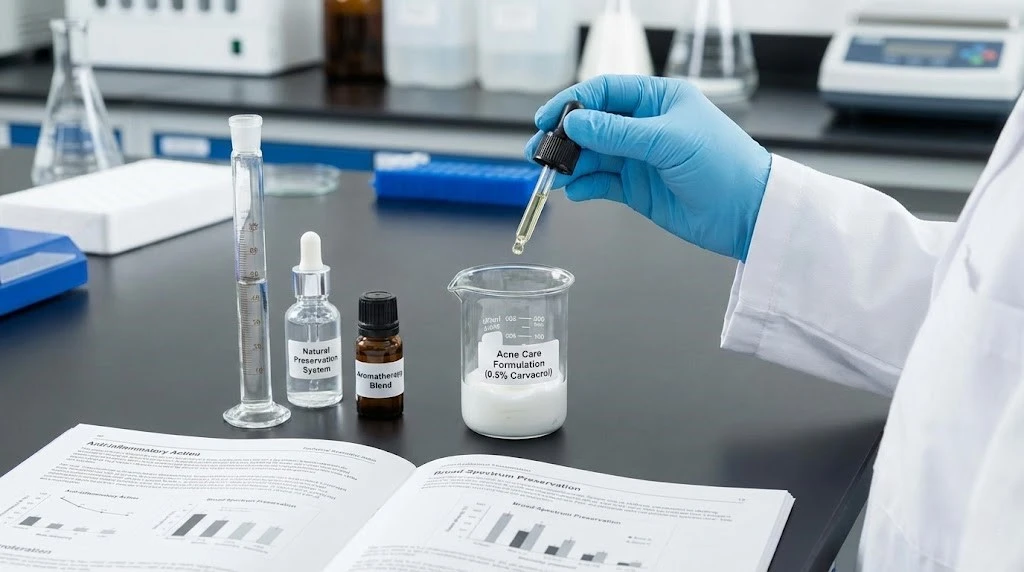
Dermetologists use carvacrol oil's ability to reduce inflammation to treat skin that is prone to acne. When carvacrol oil is added to topical formulations in concentrations of 0.1% to 0.5%, clinical tests show that inflammatory lesions are much smaller. Its method works by controlling acne-causing bacteria like Propionibacterium acnes and stopping the production of pro-inflammatory cytokines.
Natural Preservation in Cosmetics
As a part of natural preservive systems, cosmetic formulators use carvacrol oil, often mixed with other plant-based antimicrobials to get broad-spectrum protection. It is especially useful in water-based mixtures that are likely to get microbe contamination because of how well it works on yeasts and molds. Depending on the type of product and how it needs to be stored, the typical usage amount is between 0.05% and 0.2%.
Aromatherapy and Wellness Products
Carvacrol oil is used in essential oil blends and aromatherapy products because of its unique herbal scent and possible mood-enhancing effects. Its ability to mix with other plant-based oils makes complex scents possible while adding germ-fighting properties to diffuser oils and wellness items that are applied to the skin.
Procurement Insights for Carvacrol Oil: Ensuring Quality, Cost-Effectiveness, and Supply Reliability
To get carvacrol oil successfully, you need to know a lot about quality standards, rules, and how the supply chain works. To make sure that the product always works the same way, gets the best price, and lowers the risk of not having enough supply, B2B buyers need to think about a lot of different things.
Quality Assessment Criteria
Premium carvacrol oil has to be very pure, with more than 85% of it being pure. Its specific gravity needs to be between 0.975 and 0.985, and its refractive index needs to be between 1.504 and 1.507. To make sure that food, animal feed, and cosmetics rules are followed, analytical papers need to show microbiological parameters, pesticide traces, and heavy metal content. GC-MS analysis finds possible adulterants while giving a clear and accurate identification and quantification of active compounds.
Regulatory Compliance Considerations
Different uses need different kinds of government approval and paperwork. Carvacrol oil used in food must follow FDA GRAS rules and EU food additive directives, while carvacrol oil used in feed must be registered as a feed additive in the appropriate countries. People who use cosmetics have to follow the safety testing and naming rules set by REACH and similar laws.
Supply Chain Management
When, where, and how often do you get materials? Where are your suppliers located? What could go wrong with your supply? These are all things that good buying plans think about. Mediterranean oregano is usually harvested from July to September. This affects how much is available and the prices at different times of the year. Adding suppliers from different areas helps reduce supply risks and make sure that quality stays the same.
Conclusion
Carvacrol oil is a game-changing natural ingredient for use in food, animal feed, and cosmetics. It helps industries find long-lasting ways to solve problems while meeting customers' demands for natural goods. Its ability to fight microbes and free radicals has been scientifically proven, and it can be used in a wide range of situations. It is approved by regulatory bodies and is seen as an important part for manufacturers who are looking ahead. As businesses keep moving toward more natural options, the role of carvacrol oil will surely grow, thanks to new studies and creative uses that take advantage of its amazing benefits.
FAQs
For preserving food, what is the suggested concentration of carvacrol oil?
Depending on the product, the bacteria it should kill, and how much longer the shelf life should be, food preservation usually needs carvacrol oil between 0.01% and 0.1%. Higher amounts might change how things look, smell, taste, or feel, so it's important to get the right mix.
How effective is carvacrol oil compared to commonly used manufactured preservatives?
Carvacrol oil shows similar or better antimicrobial action against many germs that can get into food when compared to man-made options. It also has extra benefits like being an antioxidant and having clean-label appeal. But, the ways of applying it might need to be changed in order to get the best results.
What do you need to do to store carvacrol oil so that it stays stable and doesn't go bad?
Keep carvacrol oil in a dark, cool place, away from chemicals that can react with it. Recommended store temperatures are between 15 and 25 °C. If the item is properly packaged, it won't absorb moisture or lose volatile compounds. In the best conditions, the shelf life usually goes beyond 24 months.
Pioneer Biotech: Your Trusted Partner for Premium Carvacrol Oil
As a top carvacrol oil manufacturer, Pioneer Biotech provides great quality and dependability to B2B customers around the world in the food, feed, and cosmetics businesses. Our new, over 7,000-square-meter facility in Hanzhong city uses tough quality control systems like ISO9001, HALAL, KOSHER, and FDA certifications.
We offer a wide range of products, including uniform carvacrol oil with purities from 85% to 98% that are customized to meet the needs of different industries. We know the special problems that cosmetic formulators, nutraceutical brands, pharmaceutical companies, and contract makers face. We offer personalized help that makes products work better while making sure they follow the rules.
The benefits of working with Pioneer Biotech go beyond the quality of the products and include responsive technical support, a wide range of minimum order amounts, and complete documentation packages. Our experienced team helps you make your product creation processes more efficient by giving you advice on formulations, help with regulations, and ongoing technical support. We have strong quality control methods across our whole supply chain, from getting the materials to delivering the final product. This makes sure that each batch performs the same.
Our wide range of products can meet your exact needs, whether you need cosmetic-grade chemicals for personal care products, food-grade carvacrol oil for preservation, or feed-grade materials for animal food. Are you ready to take your formulas to the next level with high-quality carvacrol oil? To talk about your needs, ask for samples, or look into the possibility of buying carvacrol oil in bulk, you can email our specialized carvacrol oil supplier team at sales@pioneerbiotech.com.
References
Bakkali, F., Averbeck, S., Averbeck, D., & Idaomar, M. (2008). Biological effects of essential oils: A review. Food and Chemical Toxicology, 46(2), 446-475.
Nostro, A., & Papalia, T. (2012). Antimicrobial activity of carvacrol: Current progress and future prospectives. Recent Patents on Anti-Infective Drug Discovery, 7(1), 28-35.
Abdollahi, M., Rezaei, M., & Jafarpour, A. (2012). Effects of oregano essential oil on growth performance and ileal microflora of broiler chickens. World Applied Sciences Journal, 17(6), 804-808.
Sharifi, S. D., Dibamehr, A., Lotfollahian, H., & Baurhoo, B. (2012). Effects of flavomycin and natural antimicrobial compounds on growth performance and cecal microflora population in broiler chickens. Journal of Animal Physiology and Animal Nutrition, 96(4), 717-724.
Enshaieh, S., Jooya, A., Siadat, A. H., & Iraji, F. (2007). The efficacy of 5% topical tea tree oil gel in mild to moderate acne vulgaris: A randomized, double-blind placebo-controlled study. Indian Journal of Dermatology, Venereology, and Leprology, 73(1), 22-25.
Ultee, A., Bennik, M. H., & Moezelaar, R. (2002). The phenolic hydroxyl group of carvacrol is essential for action against the food-borne pathogen Bacillus cereus. Applied and Environmental Microbiology, 68(4), 1561-1568.