
When looking at natural mood-boosting ingredients for supplements, St. John's wort extract is one of the most well-researched plants for makers today. This ingredient comes from Hypericum perforatum, and it has shown a lot of promise in helping people stay emotionally healthy in a number of different clinical ways. Because of this, nutraceutical brands that make goods to help with mood have chosen it as their first pick. Herb procurement workers who want to make effective, market-ready formulations that meet customer expectations while staying within the rules and keeping costs down need to know how this traditional herb stacks up against other natural options.
Understanding St. John's Wort Extract as a Mood Support Solution
Botanical Origins and Active Components
St. John's wort extract comes from the flowering tops of Hypericum perforatum, a perennial plant that grows naturally in Europe but is now grown everywhere. The complex plant chemicals in the extract, including hypericin, hyperforin, and different flavonoids, give it the ability to improve mood. These bioactive chemicals work together to affect neurotransmitter pathways, especially by blocking serotonin release. This helps people control their moods and find emotional balance.
Clinical Evidence and Mechanisms of Action
Standardized preparations of St. John's wort have been shown to be as effective as regular antidepressants for mild to moderate sadness. The extract affects several brain systems, such as dopamine, norepinephrine, and serotonin. Standardized extracts with 0.3% hypericin and 3–5% hyperforin have been shown in clinical tests to make a big difference in depression scores. This science proof gives makers strong evidence to back up their product claims and build trust with customers.
Safety Profile and Considerations
St. John's wort extract is usually safe, but it can combine with some drugs, especially with prescription drugs that are broken down by cytochrome P450 enzymes. Photosensitivity is another thing to think about, but it doesn't happen much at the suggested doses. These things mean that consumers need to be taught about clear labeling rules, which makes supplier openness and paperwork very important for B2B buying choices.
Comparing St. John's Wort Extract with Other Natural Mood Support Ingredients
Adaptogenic Alternatives: Ashwagandha and Rhodiola
The adaptogenic properties of Rhodiola rosea and Ashwagandha withania help the body deal with stress instead of directly affecting neurotransmitter paths. These parts show different ways of working than St. John's wort extract. They focus on controlling cortisol and changing the hypothalamic-pituitary-adrenal axis. They are good at helping with mood issues linked to stress, but there isn't as much clinical research behind them as there is for St. John's wort for depressive symptoms in particular.
St. John's wort extract has very different bioavailability rates from these adaptogens. Standardizing rhodiola means measuring how much rosavin and salidroside it has, but withanolide concentration is the goal of ashwagandha standardization. Each ingredient has its own problems and benefits when it comes to creation. These affect how well the finished product works and how it is made.
Amino Acid-Based Options: L-Theanine and 5-HTP
L-theanine changes the GABA pathway in a way that makes people feel calm. It works quickly but doesn't last as long as St. John's wort extract. 5-hydroxytryptophan (5-HTP) has a direct effect on how serotonin is made, but it may combine with some drugs and needs to be carefully dosed. These ingredients work best in combination formulations instead of standalone goods. This opens up chances to make synergistic blends with St. John's wort extract powder.
Mineral and Vitamin Cofactors
Rather than working like drugs do, magnesium, B-complex vitamins, and omega-3 fatty acids can help support your health by providing your body with the nutrients it needs. These additions work well with St. John's wort extract to make up for nutrients that might cause mood problems when they are lacking in the body. They are useful as additional ingredients in broad mood support products because they are very safe and approved by regulators.
Procurement Considerations for St. John's Wort Extract and Alternatives
Quality Standardization and Analytical Requirements
Standardization to certain marker chemicals makes high-quality St. John's wort extract. It usually has 0.3% of hypericin and 3% to 5% of hyperforin. Testing for heavy metals, pesticide residues, and microbes should be part of the analytical report. These quality standards guarantee that each batch is the same, which is important for pharmaceutical and nutraceutical uses. This makes seller qualification very important for procurement success.
Organic approval makes a product more valuable, but it requires careful thought about the high prices that may be needed. When they come from well-known sources with strong quality systems, conventional extracts may be cheaper while still working well. Organic and conventional materials both have their pros and cons. The choice between them relies on the brand's target market and positioning strategies.
Supply Chain Reliability and Seasonal Factors
St. John's wort cultivation and harvesting happen during certain times of the year. This affects the price and supply of the raw material year-round. Established suppliers keep extra stock on hand to make sure they can always deliver, but procurement professionals should plan orders around harvest cycles and possible weather effects on crop quality and yield.
Geographic sourcing has some extra factors to think about, with European sources often being favored because of their traditional farming ways and history of following the rules. But sellers in North America and other nearby regions may offer better prices and lower shipping costs for their own markets.
Regulatory Compliance and Documentation
St. John's wort goods must follow certain labeling and manufacturing rules when it comes to dietary supplements, according to the FDA. Based on how the food is processed and how much of it is extracted, the European Novel Food rules might apply. Suppliers need to give full legal paperwork that has information on Generally Recognized as Safe (GRAS) status and compliance certificates for the target markets.
Integrating St. John's Wort Extract into Product Lines: Practical Insights for B2B Clients
Formulation Strategies and Dosage Considerations
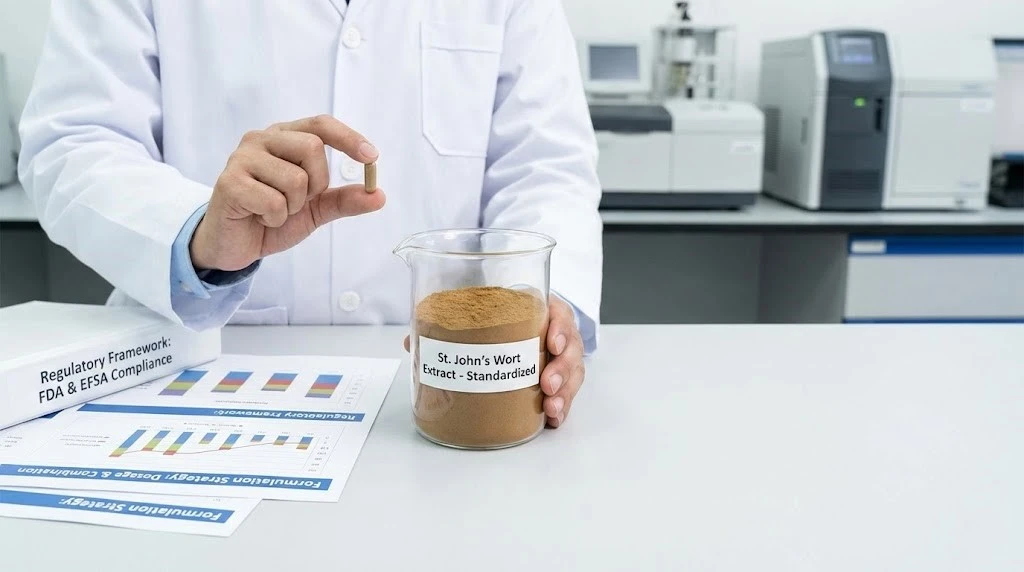
In order to maximize bioavailability and reduce side effects, effective St. John's wort extract powder formulations usually give 300–600 mg of standardized extract per day, split up into several doses. Capsules allow for very exact dosing and great stability, while powders allow for more freedom in making custom blends and using functional foods. People who like different ways of taking medicine may prefer liquid extracts, but these need more stability testing and preservation techniques.
Combination formulas make the product more appealing to the market by supporting mood in more than one way. Putting St. John's wort extract together with ingredients that go well with it, like magnesium, B-vitamins, or L-theanine, makes a complete product. This can help brands stand out in competitive markets while possibly lowering the amount of each ingredient and interaction risks.
Regulatory Framework Navigation
In the United States, you can make structure-function claims about St. John's wort extract without needing to get approval from the FDA first, as long as you don't use language that suggests the extract can help a disease. When it comes to health claims, European markets have stricter rules and require EFSA permission for certain therapeutic statements. Understanding these changes between areas makes it easier to put products in the right place and come up with marketing strategies that follow the rules in every market.
Labeling requirements make it necessary to clearly tell people about interactions and contraindications, especially when it comes to prescription drugs. These rules affect how products are packaged and how consumers are taught about them, which impacts the overall cost of making products and the timelines for getting them to market.
Market Positioning and Consumer Education
Scientific proof, high-quality sourcing, and open manufacturing methods are important for successful St. John's wort extract goods. Teaching consumers about projected onset time, proper use, and safety builds trust and lowers return rates. Organic certification, sustainability efforts, and quality testing programs by independent companies are all ways to stand out to health-minded customers.
Pioneer Biotech: Your Trusted Partner for Premium Botanical Extracts
Company Excellence and Manufacturing Capabilities
Since 2012, Pioneer Biotech has been a top producer of high-quality herbal extracts. Our 7,000m² plant is in Hanzhong city, which is known as the "Medicine Herbs Valley of Qinling Mountains." It makes use of the best geographic conditions for botanical processing. ISO9001, HALAL, KOSHER, and FDA are all certifications in our broad certification portfolio. These help make sure that goods meet high quality standards around the world in many different areas.
We use modern analytical methods to make sure that our St. John's wort extract has a consistent level of hypericin and hyperforin. From getting raw materials to final product packaging, we follow strict GMP rules during the whole production process. This gives customers dependable ingredients for their formulations.
Product Portfolio and Custom Solutions
Pioneer Biotech sells St. John's wort extract in a variety of forms, such as powders and granules, as well as in custom concentrations that are suited to the needs of different applications. Our technical team works with customers to find the best extraction ratios and levels of standardization that meet the needs of the goal product and follow the rules. This allows manufacturers to make a variety of goods while keeping costs low and quality high.
St. John's wort extract is just one of the many plants we use as ingredients. We also offer rhodiola, ashwagandha, and specific vitamin and mineral complexes that can help support mood. This wide range of products makes it easy to get complicated formulations all in one place, keeps the supply chain efficient, and makes it easier to manage vendor relationships.
Conclusion
St. John's wort extract is a naturally occurring mood booster that has been proven to work by science and is also popular with consumers. It has more benefits over other plant-based ingredients because of its strong support from clinical study and market acceptance. St. John's wort extract has been shown to help with mild to moderate anxiety and sadness, which makes it stand out from other natural mood support ingredients that work in combination with each other. Choosing the right supplier for standardization, quality verification, and legal compliance is important for the success of the product. As more and more people look for natural ways to improve their mental health, St. John's wort extract has become an important ingredient for supplement makers who want to stay ahead of the market and take advantage of new possibilities in the growing mood support category.
FAQs
How does the success of St. John's wort extract measure up to that of prescription drugs for depression?
Standardized St. John's wort extract works as well as selective serotonin reuptake inhibitors (SSRIs) for mild to moderate depression, and it has fewer side effects, according to clinical studies. But it shouldn't be used instead of prescription drugs without a doctor's care, and companies need to make this clear on the product's label and in advertising.
When you buy St. John's wort extract for industrial production, what quality factors are the most important?
Key quality factors are standardization to 0.3% hypericin and 3–5% hyperforin, compliance with heavy metals, testing for pesticide residues, and making sure that microbiological safety is verified. Suppliers should also give regulatory paperwork, stability data, and analytical records of analysis for each batch. This will make sure that the product quality and compliance with the rules are always the same.
Is it safe to mix St. John's wort extract with other natural ingredients that are meant to help with mood?
Yes, St. John's wort extract works well with magnesium, B vitamins, L-theanine, and other ingredients that are good for you. But, to avoid conflicts and make sure the right dose is given, careful formulation consideration must be taken. Some mixes, especially those with serotonergic ingredients, might need more testing to make sure they are safe, as well as clear rules for labeling.
Partner with Pioneer Biotech for Premium St. John's Wort Extract Solutions
Pioneer Biotech takes a broad approach to finding plant-based ingredients and making sure they are of good quality. Because of this, manufacturers looking for a dependable St. John's wort extract supplier will find great value in working with them. We have been making herbal extracts for more than ten years, and our location and foreign certifications make us the best choice for companies that want to make new mood support products. We know that nutraceutical brands, drug companies, and contract makers face unique problems in today's competitive market. That's why we offer personalized help that takes into account each customer's unique needs and market positioning goals.
Our technical support team is always available to help with product development, from choosing the first ingredients to making sure the end formulation is perfect. For bulk orders, we keep our prices low while making sure that the quality is always the same and the supply is reliable so that your production schedules and market commitments can be met. Whether you need organic approval, certain levels of standardization, or custom packaging, Pioneer Biotech offers personalized services that give you a better chance to win in the natural health market, which is growing quickly.
Team up with a St. John's wort extract maker you can trust to make the next step in creating great mood support goods. To talk about your exact needs, ask for product samples, or see the full range of plant ingredients we offer, email us at sales@pioneerbiotech.com.
References
Kasper, S., Anghelescu, I. G., Szegedi, A., Dienel, A., & Kieser, M. (2014). Superior efficacy of St John's wort extract WS 5570 compared to placebo in patients with major depression: a randomized, double-blind, placebo-controlled, multi-center trial. BMC Medicine, 12(1), 259.
Apaydin, E. A., Maher, A. R., Shanman, R., Booth, M. S., Miles, J. N., Sorbero, M. E., & Hempel, S. (2016). A systematic review of St. John's wort for major depressive disorder. Systematic Reviews, 5(1), 148.
Ng, Q. X., Venkatanarayanan, N., & Ho, C. Y. (2017). Clinical use of Hypericum perforatum (St John's wort) in depression: a meta-analysis. Journal of Affective Disorders, 210, 211-221.
Russo, E., Scicchitano, F., Whalley, B. J., Mazzitello, C., Ciriaco, M., Esposito, S., ... & De Sarro, G. (2014). Hypericum perforatum: pharmacokinetic, mechanism of action, tolerability, and clinical drug-drug interactions. Phytotherapy Research, 28(5), 643-655.
Linde, K., Berner, M. M., & Kriston, L. (2008). St John's wort for major depression. Cochrane Database of Systematic Reviews, 4, CD000448.
Singer, A., Wonnemann, M., & Müller, W. E. (1999). Hyperforin, a major antidepressant constituent of St. John's wort, inhibits serotonin uptake by elevating free intracellular Na+. Journal of Pharmacology and Experimental Therapeutics, 290(3), 1363-1368.