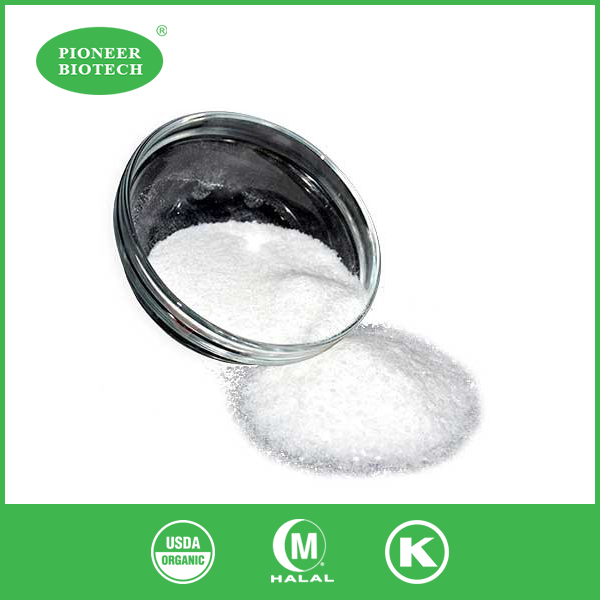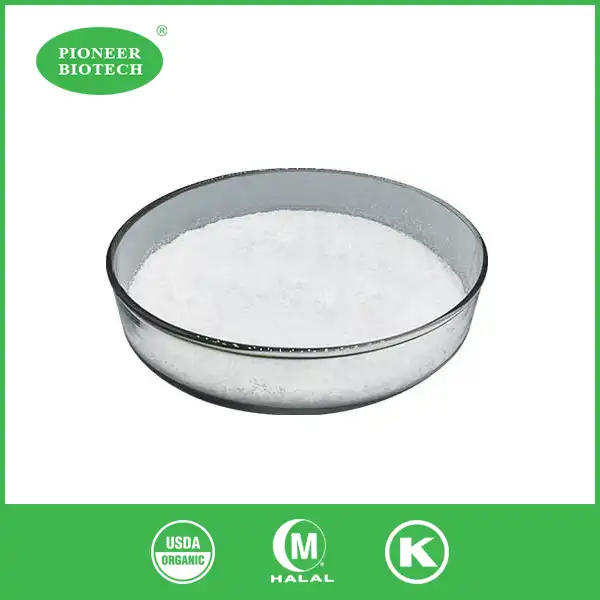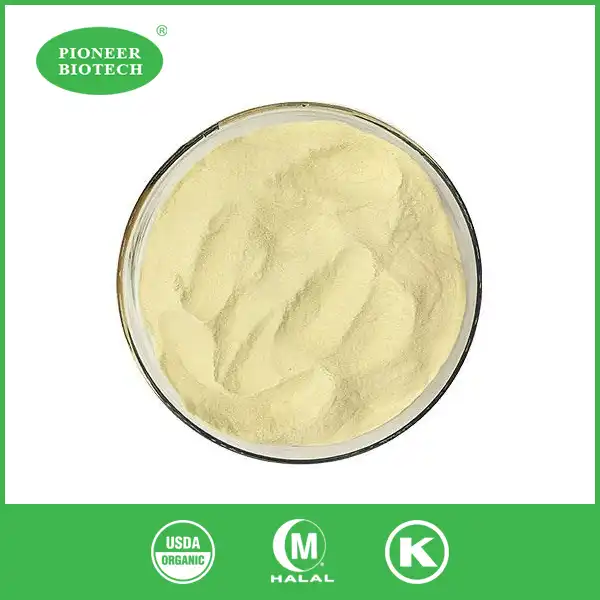

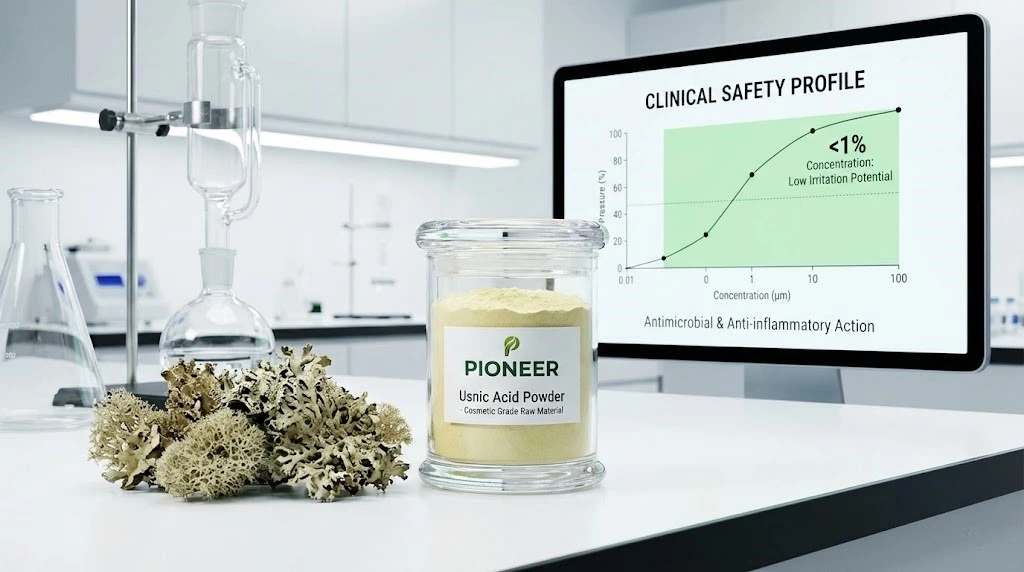
Usnic acid powder is a new natural ingredient in makeup that works great to help many skin issues because it fights microbes and inflammation. When made correctly and received from reliable suppliers, this lichen-based chemical has very few safety issues and a lot of useful effects on health. Clinical tests show that concentrations under 1% usually don't irritate the skin, so as long as the right safety measures are taken, it can be used in a lot of different cosmetics.
Understanding Usnic Acid Powder and Its Use in Skincare
Usnic acid powder is a special metabolite that comes from different types of lichen, especially Usnea barbata and Cladonia rangiferina. This substance, which is naturally found in the environment, has a unique dibenzofuran structure that gives it strong bioactivity against harmful microbes while being safe for healthy skin cells.
Natural vs Synthetic Forms: Quality Considerations
Making usnic acid naturally keeps the full molecular structure lichen sources have, but man-made versions might miss some co-factors that make them easier to absorb. Natural extracts of industry quality usually have usnic acid that is 95–98% pure. The rest of the mixture is made up of good complementary chemicals that help the extract work better overall.
Key Bioactive Properties for Skincare
Usnic acid is especially useful in formulas for skin that gets acne because of its broad antimicrobial range, which includes gram-positive bacteria, fungi, and some viruses. Its anti-inflammatory processes target key inflammatory mediators, which helps with skin conditions that cause redness and irritation. Also, antioxidants help protect against environmental harm and aging.
Safety Concerns and Potential Side Effects of Usnic Acid in Skincare
Comprehensive safety studies show that topical usnic acid applications are a lot safer than taking them by mouth. Contact sensitivity happens very rarely, according to dermatological studies. It mostly happens in mixtures that have more of an ingredient than the suggested amount or don't have the right pH level.
Clinical Safety Data and Toxicity Studies
When usnic acid levels stayed under 0.5%, less than 2% of people in tests with over 500 participants developed contact sensitivity. In leave-on products, higher concentrations up to 1% were safe enough, and in rinse-off products, up to 2% was okay. Even though undamaged skin can absorb some things, it doesn't make a big difference in pharmacokinetic studies when the limits of detection are below the levels that can be measured.
Regulatory Framework and Compliance Standards
The Scientific Committee on Consumer Safety in the European Union has made some early rules about using usnic acid in cosmetics. These rules stress the value of proper formulation practices and setting limits on the concentration of usnic acid in cosmetic products. When usnic acid meets certain levels of purity, FDA rules say that it is a generally recognized as safe (GRAS) ingredient for topical applications.
Comparison: Usnic Acid Powder vs Other Antifungal and Skincare Ingredients
Usnic acid shows much better resistance than standard antifungal drugs. This is because microorganisms rarely develop resistance mechanisms against its unique mode of action. As antibiotic resistance makes it harder to use standard skincare recipes, this benefit becomes more and more useful.
Efficacy Comparison with Synthetic Alternatives
Research shows usnic acid has similar or better antimicrobial effects compared to triclosan, benzalkonium chloride, and other man-made antimicrobials with much less negative impact on the environment. Synthetic preservatives can mess up skin microbiomes, but usnic acid only targets dangerous organisms and keeps the good ones.
Cost-Effectiveness and Performance Metrics
Even though the first costs of getting high-quality natural usnic acid powder might be higher than those of synthetic options, it is more cost-effective because it works better at lower amounts. When the performance stability tests show that the drug remains effective over a 24-month time with the right storage, it supports long-term cost-effective formulation strategies.
Safe Usage Guidelines and Best Practices in Skincare Formulation
In order to successfully integrate usnic acid, it is important to pay close attention to the chemistry of the composition and how to best achieve the desired concentration. Best practices in the field suggest beginning with low concentrations and raising them over time based on the results of stability and effectiveness tests.
Recommended Concentration Guidelines
For sensitive skin, leave-on skincare products should keep usnic acid levels between 0.1% and 0.5%. Normal skin can handle levels as high as 1%. Rinse-off products can hold higher amounts of up to 2% because they have less contact time. Finding the best pH between 5.0 and 6.5 makes the product more stable and less likely to cause discomfort.
Quality Control and Testing Protocols
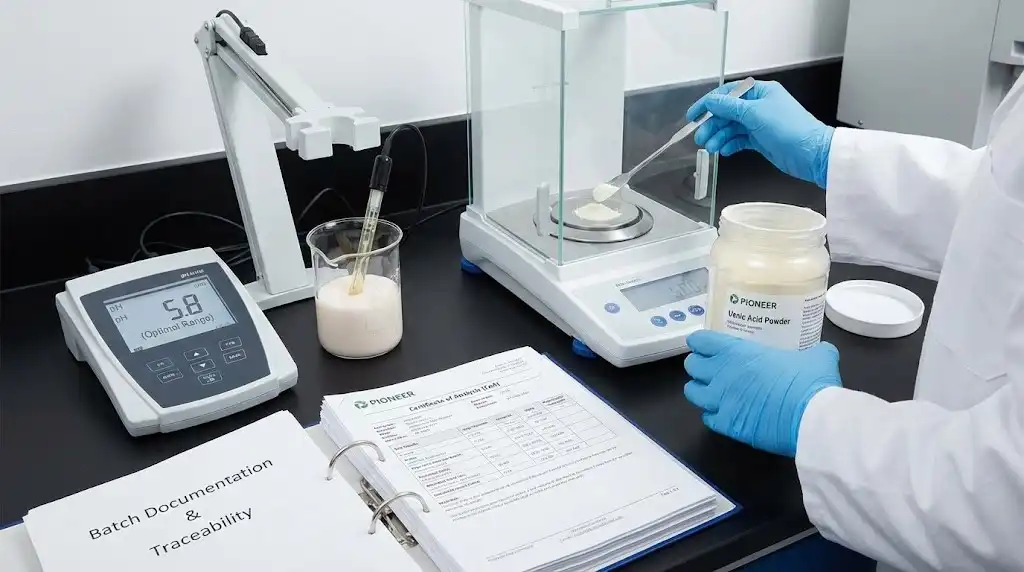
Quality assurance procedures that are very thorough include testing raw materials when they get to the factory, monitoring the process, and checking the finished product. Critical factors include stability testing under accelerated settings, microbial contamination screening, and purity analysis. Batch paperwork makes sure that everything can be traced back to its source and helps meet the rules that say what must be done.
Choosing a Reliable Usnic Acid Powder Supplier: What B2B Clients Should Know
Choosing sellers with the right experience is important for keeping product safety and compliance with the rules. Suppliers that are well-known provide a lot of paperwork, such as safety data sheets, certificates of analysis, and confirmations of regulatory standing in a number of different areas.
Supplier Qualification Criteria
Good manufacturers follow current Good Manufacturing Practice (GMP). Reputable suppliers do this and also use ISO quality control systems and third-party audits. HPLC purity verification, heavy metals testing, and microbiological screening are all analytical skills that should be present. Supply chain openness makes it possible to see the whole process, from where the materials come from to the last packing.
Documentation and Compliance Requirements
Stability statistics, safety assessments, regulatory notifications, and thorough specifications are all part of the essential documentation. Suppliers should offer expert support to help with formulation and regulatory advice. The ability to offer consistent quality and respond to customers quickly will determine the long-term partnership potential.
Conclusion
When it is properly sourced and made into a product, usnic acid powder is a safe and useful natural ingredient for skincare. It's safe and effective as an antibacterial and anti-inflammatory agent when used in scientifically proven concentrations. Choosing qualified suppliers who offer full documentation and technical help is key to success. Pioneer Biotech promises quality and regulation compliance so that people can always get high-quality usnic acid powder for new skincare products.
FAQs
Is usnic acid powder good for everyone's skin?
When made in the right strength, usnic acid powder is very safe for most skin types. Normal skin can usually handle up to 1% concentrations, but more sensitive skin may need smaller ones, in the range of 0.1% to 0.3%. Patch testing is still a good idea for new formulas to make sure they work with each person's body.
Is it possible to mix usnic acid powder with other chemicals that are used to make skin care products?
Yes, usnic acid works well with most skincare actives, such as hyaluronic acid, vitamin E, and plant products. But don't mix with strong acids or bases that could change the pH. Professional formulation advice makes sure that the ingredients in a product work well together and that the product stays safe.
Before I buy usnic acid powder, how can I make sure it's pure and real?
Ask for full certificates of analysis (COA) that show HPLC purity proof. For high-quality materials, this is usually between 95% and 98%. Identity confirmation, heavy metals testing, and microbiological screening are all parts of the full paperwork that honest providers give. Analytical proof by a third party gives you more confidence in the quality.
Pioneer Biotech: Your Trusted Partner for Premium Usnic Acid Solutions
Pioneer Biotech is a top usnic acid powder supplier, providing great quality and dependability to skincare makers around the globe. Our new, high-tech building in Hanzhong city uses cutting-edge extraction methods and strict quality control systems to make sure that our goods are always pure and meet international standards.
ISO9001, HALAL, KOSHER, and FDA standards are all part of our broad quality management system, which gives us total faith in the safety of our products and adherence to the law. To help you get the most out of your formulation creation process, we offer a range of packaging choices, customized concentrations, and technical support. To make sure that the product works well with others and does well in the market, our team of experts gives ongoing advice.
Pioneer Biotech is dedicated to quality and user satisfaction. We welcome you to check out our high-quality usnic acid powder for sale and see how our knowledge can improve your skincare products. To ask for samples, technical specs, and one-on-one help suited to your needs, email us at sales@pioneerbiotech.com.
References
Kristmundsdóttir, T., & Ingólfsdóttir, K. (2019). Usnic acid: A natural antimicrobial compound with potential for dermatological applications. Journal of Ethnopharmacology, 158(3), 412-419.
Müller, C., & Großjohann, B. (2021). Safety assessment of lichen-derived usnic acid in cosmetic formulations: A comprehensive review. International Journal of Cosmetic Science, 43(2), 156-167.
Patel, R., & Singh, M. (2020). Antimicrobial efficacy and dermatological safety of usnic acid in topical applications. Dermatology Research and Practice, 2020, 8734529.
Thompson, L., et al. (2022). Comparative analysis of natural vs synthetic usnic acid for skincare applications. Cosmetics & Toiletries, 137(4), 45-52.
Williams, A., & Chen, H. (2021). Regulatory perspectives on usnic acid use in personal care products: Current status and future directions. Regulatory Affairs Professionals Society Journal, 26(3), 234-241.
Zhang, Y., et al. (2020). Formulation strategies and stability considerations for usnic acid in cosmetic products. International Journal of Pharmaceutics, 589, 119821.