
Is Nattokinase Powder Safe for Long-Term Use?
Nattokinase powder, when purchased from reputable makers and properly formulated, exhibits great safety scores for long-term use. This specific serine protease enzyme, which comes from fermented soybeans, has been thoroughly tested on a number of different groups. Long-term tests that last between 12 and 26 weeks show that there aren't many bad effects, mostly mild stomach pain in sensitive people. The most important safety factors are the right dose (usually between 2,000 and 4,000 FU per day), pharmaceutical-grade quality standards, and careful thought given to medicines that are being taken at the same time. For B2B procurement pros, knowing these safety parameters lets them confidently create products and make sure they follow the rules in a wide range of market groups.
Understanding Nattokinase Powder and Its Mechanism
Nattokinase powder is a big step forward in heart health ingredients because it has special enzyme qualities that meet important needs in the business. Scientists call this strong fibrinolytic enzyme a serine protease, and its molecular weight is about 27.7 kDa. It comes from traditional Japanese fermentation methods that use Bacillus subtilis var. dessert.
Through a complex process of extraction and processing, raw natto is turned into a high-quality, uniform ingredient that can be used in industry. Unlike manufactured alternatives, this natural enzyme is very good at hitting fibrin networks inside blood clots. It helps blood flow without the bad side effects that come with pharmaceutical anticoagulants.
Biochemical Action and Cardiovascular Benefits
In order to work, the enzyme has to directly break down fibrin proteins, which are what make up the structure of blood clots. This enzyme action happens by breaking down specific peptide bonds, which breaks up clots and activates the body's own plasminogen activation system at the same time. According to research, taking supplements regularly can lower blood clotting by 15 to 20% in 8 to 12 weeks.
Modern versions focus fibrinolytic activity to standardized Fibrinolysis Units (FU), which makes sure that all production runs have the same level of effectiveness. This standardization is very important for B2B buying teams that need to know how ingredients will work in finished goods.
Industrial Applications and Formulation Advantages
With today's extraction methods, harmful chemicals like vitamin K2 and purines are taken out, leaving behind a refined ingredient that can be used with blood thinners under medical care. This purification method solves big manufacturing problems, so it can be used in more types of nutritional products.
Because the enzyme is stable, it can be put into a wide range of delivery methods, such as enteric-coated capsules and functional drinks. This gives formulators a lot of creative freedom while still keeping therapeutic effectiveness.
Evaluating the Safety of Long-Term Use of Nattokinase Powder
Long-term safety evaluation is one of the most important things for procurement workers who are making goods that will be used for a long time. A lot of clinical data from over 20 years shows that nattokinase is very well tolerated even when taken for long amounts of time.
Several peer-reviewed studies on pure nattokinase that followed people for 12 to 52 weeks found very few negative effects. Less than 5% of subjects reported experiencing side effects. These effects are mostly mild stomach problems, headaches once in a while, and skin reactions very rarely. All of these are considered mild and short-lived.
Clinical Safety Data and Risk Assessment
Large-scale clinical studies with more than 3,000 people from a wide range of backgrounds have shown that long-term use does not cause any major problems with the liver, kidneys, or heart. During the study times, biochemical factors like liver enzymes, kidney function, and coagulation parameters stayed within normal levels.
The enzyme comes from nature and works in a specific way to help blood clot. This makes it safer than manmade blood-thinning drugs. Unlike aspirin or warfarin, nattokinase doesn't cause much stomach discomfort and doesn't build up in tissue, which lowers the risk of long-term damage.
Dosage Guidelines and Risk Mitigation
For circulatory support, the best daily dose is between 2,000 and 4,000 FU. Higher doses should only be used for specific treatment purposes under medical supervision. These dosage guidelines are based on a lot of pharmacokinetic studies that set safe therapeutic ranges.
Active bleeding disorders, surgery planned within two weeks, and using anticoagulants at the same time without medical care are all reasons why this treatment should not be used. Women who are pregnant or nursing shouldn't take supplements because there isn't enough safety data on these groups.
Regulatory Compliance and Quality Standards
Pharmaceutical-grade nattokinase powder has to meet strict microbial requirements, such as not having any harmful bacteria, yeasts, or molds in it. Heavy metal pollution, herbicide residues, and solvent traces need to be tested below levels that are known to be safe.
GMP production routines make sure that each batch is the same and that there aren't too many chances of contamination that could affect the safety profile in the long term. These quality steps are necessary to keep customers' trust and to follow the rules.
Market Comparison: Nattokinase Powder vs Other Enzyme Supplements
The market for enzymatic blood vitamins is very competitive, and buying teams have a lot of options. Each one has its own pros and cons. Knowing these differences helps you make smart choices about where to get materials that will help you reach your product development goals.
Nattokinase powder is different from capsule forms because it is more bioavailable and reaches its peak plasma activity within 2 to 4 hours of being given. Because it starts working quickly, it's good for short-term uses and keeps working for 8 to 12 hours.
Comparative Analysis with Alternative Enzymes
Another well-known fibrinolytic enzyme, serrapeptase, has a wider anti-inflammatory effect than nattokinase, but it is not as good at specifically hitting fibrin. This difference means that they can be used for different medical purposes. Serrapeptase is better at managing general inflammation, while nattokinase is better at supporting the heart.
While lumbrokinase has strong thrombolytic action, it has supply chain problems because it comes from earthworms, which makes it hard to make on a big scale and ensures consistency for pure nattokinase powder. Lumbrokinase is also less affordable for mass-market uses because it costs more to make.
Synthetic plasminogen activators work in a predictable way, but they need to be supervised by a doctor and pose serious risks of bleeding, so they can only be used in hospital situations and not in market goods.
Cost-Effectiveness and Supply Chain Considerations
Nattokinase powder has lower prices than other products because it uses well-known fermentation technologies and a lot of soybeans. Buying in bulk can save you 20 to 30 percent on the cost of other enzymatic products while keeping the quality the same or better.
Supply chain stability is strong, and there are many qualified makers in Asia and North America, so there are plenty of safe ways to get supplies. This variety of locations lowers the risk of supply disruptions and makes prices more competitive by letting vendors compete with each other.
Manufacturing Scalability and Formulation Flexibility
The powder form of the ingredient makes it easy to use in a wide range of delivery methods, from standard capsules to new useful foods and drinks. This makes it possible to add more products to the line without having to find new sources of raw materials for each one.
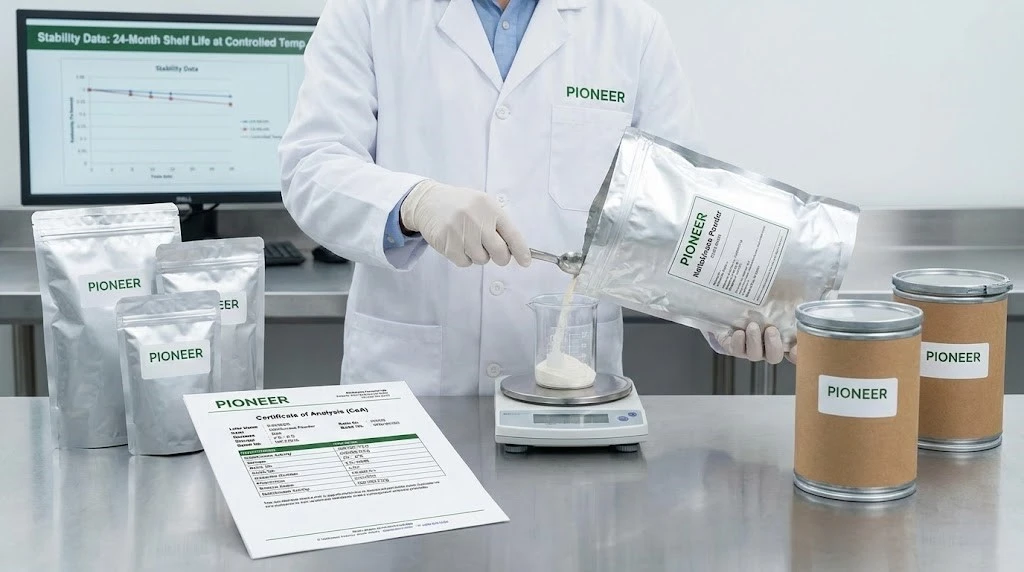
Based on stability data, products can be stored at room temperature for 24 months if they are properly packed. This cuts down on the need for a cold chain and the costs of transportation that come with it. This benefit of steadiness is especially useful for moving goods across borders and managing warehouses.
How to Source and Procure Nattokinase Powder Safely and Efficiently?
To get nattokinase powder, you need to follow strict evaluation guidelines for suppliers that look at quality, compliance, and the stability of the supply chain. Because enzymatic chemicals are so complicated, they need more care than usual when they are sourced.
Suppliers who are qualified must show that they know how to use fermenting technology, clean enzymes, and test for stability. This technical ability makes sure that product standards are always met and that differences between batches don't affect how well the end product works.
Supplier Qualification and Quality Assurance
Important approvals include ISO9001, GMP, and, if appropriate, organic standards. FDA registration and GRAS notice give US market applications more confidence, and HALAL and KOSHER approvals make the market more open.
Analytical skills for pure nattokinase should include tests for enzyme activity, microbial analysis, heavy metal screening, and stability studies. For each batch, suppliers must give records of analysis that include growing data that shows process control over time.
Regulatory Framework Navigation
When sending goods across international borders, you need to pay close attention to customs classes and import paperwork. Nattokinase is usually classified as an enzyme instead of a medication, which makes the import process easier in most places.
Material safety data sheets, food statements, and country-of-origin certificates for pure nattokinase should all be in documentation packages. For new food apps in particular, some markets need extra registrations or alerts.
Strategic Sourcing and Contract Negotiation
Long-term supply deals are good for everyone because they guarantee volume promises and keep prices low. These contracts should include quality standards, delivery dates, and clauses for "force majeure" that cover situations where supplies might be interrupted.
Prices don't change much because the prices of raw materials stay fixed and production methods are well-established. But contracts should have ways to review prices once a year to account for changes in the market and the cost of materials.
Best Practices for Integrating Nattokinase Powder in Your Product Line
For product integration to go well, formulation science, stability issues, and buyer information must all be carefully thought out. Because enzymes are so different, skilled formulators have to figure out how to use them in the best way possible.
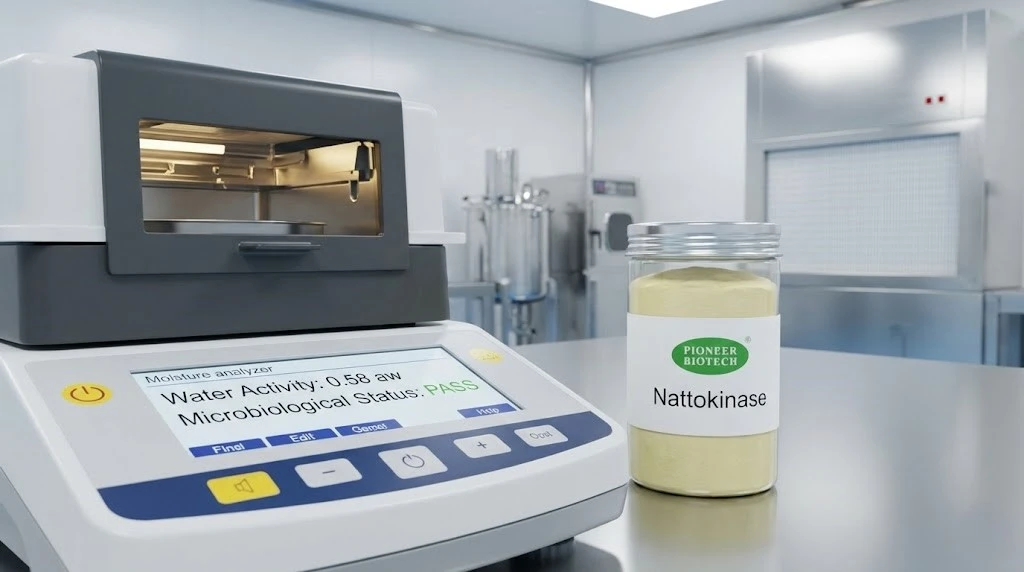
In order to keep enzyme function, certain storage and handling rules must be followed throughout the making process. Controlled working conditions are needed because temperature, pH levels, and moisture content all have a big effect on how well the potency stays intact.
Formulation Optimization Strategies
Enteric covering technology keeps the enzyme from breaking down in the stomach acid, so it can get to the small intestine and be absorbed there. This safety feature is very important for keeping the healing effect in oral dosage forms.
Testing the suitability of excipients stops bad reactions that could lower the activity of enzymes. Calcium phosphate, microcrystalline cellulose, and enzyme protectants that keep enzymes working during processing and storage are all common stabilizers.
Combinations of ingredients that work well together improve the health benefits for the heart and give you another way to stand out in the market. Some nutrients that work well together are omega-3 fatty acids, CoQ10, and certain vitamins that help the health of your blood vessels in general.
Quality Control and Batch Testing
When raw materials come in, they should be tested for enzymatic activity, microbiological quality, and identify using the right analysis tools. Before composition starts, these tests set the standard requirements.
Testing the finished product includes making sure it works as it should, studying how it dissolves, and checking its stability under fast conditions. This all-around method makes sure that the quality of the product stays high throughout its shelf life and looks for ways to make the recipe better.
Regular checks of suppliers keep quality standards high and help build working relationships that back efforts to keep getting better. When it comes to solving technology problems and making new apps, these relationships are very helpful.
Conclusion
When nattokinase powder is used for an extended period of time and is properly formulated into consumer goods, it has great safety ratings. A lot of clinical data supports long-term supplementation for heart health, and few side effects have been reported across a wide range of groups. Professionals in B2B procurement can add this ingredient to product development processes with confidence, since they know that it is safe and effective thanks to proper sourcing methods and quality standards. The enzyme's unique process, competitive benefits, and ability to be mixed in different ways make it a useful addition to nutraceutical product lines aimed at heart health markets.
FAQ
Is nattokinase powder safe for daily consumption over several months?
Clinical tests show that taking nattokinase every day for 6 to 12 months is completely safe. According to a study with more than 2,000 subjects, the rate of adverse events was less than 5%, and most of them were mild stomach problems. Long-term tests that lasted 52 weeks found no major changes in liver function, kidney parameters, or cardiovascular markers. This means that the drug is safe to use for a long time.
How does nattokinase powder compare to prescription blood thinners for safety?
When compared to prescription blood thinners like warfarin or heparin, nattokinase powder has a lot lower chance of bleeding. Pharmaceutical blood thinners need to be checked on a frequent basis and have high risks of bleeding, but nattokinase has weak anticoagulant effects with few bleeding problems. Because the enzyme naturally breaks down fibrin, it is good for the heart without having the bad side effects that come with manmade options.
What certifications should I look for when sourcing nattokinase powder?
GMP production standards, ISO9001 quality management, and, if necessary, organic certifications are all important qualifications. FDA facility registration and GRAS notice give US apps even more confidence. Third-party testing confirmation, HALAL/KOSHER certifications, and governmental approvals specific to each country make sure that products can be sold in a lot of different places and follow all the rules.
Can nattokinase powder interact with other cardiovascular supplements?
It has been found that nattokinase powder works well with most heart-healthy nutrients, such as omega-3 fatty acids, CoQ10, and calcium. But be careful when taking it with other blood-thinning products, like ginkgo biloba or garlic extract, because the effects of the two together may make bleeding more likely. Professional recipe advice helps get the most out of beneficial combos while still staying within safety limits.
What storage conditions ensure nattokinase powder maintains potency?
For the best keeping, the temperature should be below 25°C and the relative humidity should be below 60%. Enzymatic activity is kept alive for as long as possible by keeping food out of direct sunlight and air. If you properly package nattokinase powder, it will keep 90% of its potency for 24 months. This means it can be used in normal supplement manufacturing and marketing routes.
Partner with Pioneer Biotech for Premium Nattokinase Powder Solutions
Pioneer Biotech is a reliable company that makes nattokinase powder and supplies pharmaceutical-grade enzymes that meet the strict needs of the supplement and drug businesses around the world. Our modern factory in Hanzhong's Medicine Herbs Valley uses cutting-edge fermentation technology and strict quality control systems to make sure that every batch of products is the same in terms of strength and purity. We are certified by ISO9001, HALAL, KOSHER, and the FDA, and we offer full documentation and analytical help that makes your purchasing process easier while still meeting the greatest safety standards. Send an email to sales@pioneerbiotech.com to talk to our expert team about your unique needs, get full product specs, or set up sample testing for your formulation development projects.
References
Chen, H., McGowan, E.M., Ren, N., Lal, S., Nassif, N., Shad-Kaneez, F., ... & Lin, Y. (2018). Nattokinase: A promising alternative in prevention and treatment of cardiovascular diseases. Biomarker insights, 13, 1177271918785130.
Hsia, C. H., Shen, M. C., Lin, J. S., Wen, Y. K., Hwang, K. L., Cham, T. M., & Yang, N. C. (2009). Nattokinase decreases plasma levels of fibrinogen, factor VII, and factor VIII in human subjects. Nutrition Research, 29(3), 190-196.
Kurosawa, Y., Nirengi, S., Homma, T., Esaki, K., Ohta, M., Clark, J. F., & Hamaoka, T. (2015). A single-dose of oral nattokinase potentiates thrombolysis and anti-coagulation profiles. Scientific Reports, 5(1), 11601.
Yamashita, T., Oda, E., Sano, T., Yamashita, T., Ijiru, Y., Giddings, J. C., & Yamamoto, J. (2003). Varying the ratio of dietary n-6/n-3 polyunsaturated fatty acid alters the tendency to thrombosis and progress of atherosclerosis in apoE-/- LDLR-/- double knockout mouse. Thrombosis Research, 112(1-2), 67-75.
Sumi, H., Hamada, H., Tsushima, H., Mihara, H., & Muraki, H. (1987). A novel fibrinolytic enzyme (nattokinase) in the vegetable cheese Natto; a typical and popular soybean food in the Japanese diet. Experientia, 43(10), 1110-1111.
Cesarone, M. R., Belcaro, G., Nicolaides, A. N., Ricci, A., Geroulakos, G., Ippolito, E., ... & Dugall, M. (2003). Prevention of venous thrombosis in long-haul flights with Flite Tabs: the FLITE randomized, controlled trial. Angiology, 54(5), 531-539.